

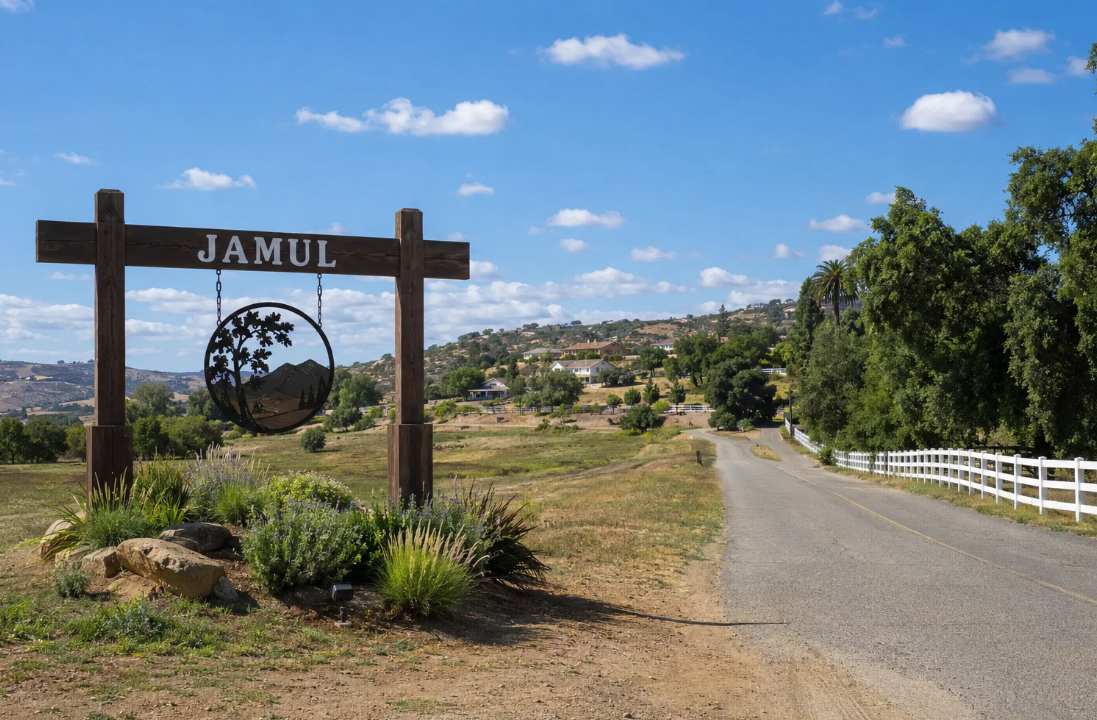
What Makes a Jamul Home Attract Multiple Offers?
Jamul homes receive multiple offers when demand is concentrated into a short launch window rather than spread thin over weeks. That requires four things done before the listing goes live: a defensible parcel-level price, resolved septic, well, and fire compliance, marketing that actually shows the land, and direct targeting of the specific buyers who want that property type. This is the mechanism behind The Svelling Group's 102.9% list-to-sale ratio and average of under 10 days on market — against a Jamul average of 45.
Multiple offers are not luck, and they are not a function of the market being "hot." They are manufactured. Here's how.
The Math Nobody Explains: Why Above-Asking Requires Competition
A 102.9% list-to-sale ratio means Svelling Group sellers close above their asking price. Understanding why that's only possible with competition is the key to everything below.
A single buyer, negotiating alone, has no reason to offer full price — let alone more. Their entire incentive is to find the number below list that you'll accept. One buyer produces a negotiation. Two or more buyers produce an auction.
| Number of Interested Buyers | What Happens to Price |
|---|---|
| Zero | Price reduction, then another |
| One | Negotiation below list; buyer holds leverage on inspections too |
| Two | List price becomes the floor rather than the ceiling |
| Three or more | Above-list offers, cleaner terms, waived contingencies |
That's the whole game. Everything a listing agent does in Jamul should be aimed at producing the third or fourth row of that table — not at "getting the home on the MLS."
The Core Principle: Demand Concentration
Buyer attention on a new listing is a finite, perishable resource. It arrives almost entirely in the first ten days and then decays permanently.
| Time on Market | Buyer Perception | Competitive Potential |
|---|---|---|
| Days 1–10 | "New — I should look now" | Maximum. This is where multiple offers happen |
| Days 11–21 | "Still available; worth watching" | Moderate. Single offers near list |
| Days 22–45 | "Why hasn't this sold?" | Low. Buyers stop competing and start waiting |
| Days 46+ | "Something must be wrong with it" | None. Buyers now shop it as a discount |
Here's the part most sellers never hear: that opening window arrives whether or not you're ready for it. It is not something you can request later. Every property gets exactly one launch, and the value of it is spent the moment the listing goes live — on a property that was either prepared to convert that attention into competing offers, or wasn't.
A Jamul home that launches with an unresolved septic question, no aerial photography, and a price built from tract comps spends its single most valuable asset on nothing.
The Seven Conditions That Produce Multiple Offers in Jamul
| # | Condition | Why It Creates Competition | What Happens Without It |
|---|---|---|---|
| 1 | Defensible parcel-level price | Buyers can justify the number to themselves and their agent | Buyers disqualify the property before showing |
| 2 | Resolved septic and well documentation | Removes the largest source of buyer hesitation in Jamul | Buyers hedge, offer low, or walk |
| 3 | Completed fire compliance | Buyer can insure and finance with confidence | Offers arrive conditional and fragile |
| 4 | Aerial and parcel marketing | Buyers understand what they're actually buying | Property reads as an overpriced tract home |
| 5 | Direct targeting of the right buyer | The people who want this property learn it exists | Passive syndication reaches the wrong audience |
| 6 | Coordinated single-moment launch | All demand arrives simultaneously | Interest trickles in and never overlaps |
| 7 | Structured offer deadline and process | Buyers know they're competing | Buyers assume they're alone and bid accordingly |
Miss one and you usually still sell. Miss three and you're looking at 45 days and a price reduction.
What Jamul Buyers Actually Compete Over
Competition doesn't happen over square footage. In this market it happens over a specific and predictable set of attributes, because the buyer pool is specific.
Usable flat land. Not total acreage — usable acreage. A property with three genuinely usable acres will draw competing offers while a 10-acre parcel with one usable acre sits. Buyers walk the land and they know the difference immediately.
Documented, strong water. A well with proven production in gallons per minute, current water quality testing, and clean permit records is a competitive asset. An undocumented well of unknown output is the single most common reason a Jamul buyer hesitates. Properties on Otay Water District service carry their own advantage with financing-sensitive buyers.
Real horse infrastructure. Jamul is an equestrian market. A barn with functional stalls, an arena with proper drainage, cross-fencing, a wash rack, and reliable water for livestock draws a buyer segment that competes hard — because there are far fewer properties meeting that description than there are buyers wanting one.
West-facing views from the living space. Direction, depth, obstruction risk, and where the view is experienced from. A layered ridgeline sunset seen from the primary living area and patio is a genuine premium in Jamul. The same acreage facing a near hillside is not.
Turnkey plus compliant. In 2026 this pairing matters more than it used to. A property that is move-in ready and has documented defensible space compliance, home hardening disclosures complete, and Zone 0 prepared is dramatically easier for a buyer to insure, finance, and close. That ease converts directly into willingness to compete.
Shop, RV, and equipment storage. An underrated driver in East County. A tall-door detached shop with power reaches a buyer segment that has been searching for months.
Access and privacy together. Paved county-maintained access to a private, unoverlooked parcel is a rare combination in Jamul, and it draws multiple buyers reliably.
Where Competition Concentrates: Jamul's Micro-Markets
"Jamul" is not one market. It contains several distinct submarkets, each with its own buyer and its own competitive trigger. Knowing which one your property sits in determines who you market to.
| Area | Who Competes Here | What They Compete Over |
|---|---|---|
| Rancho Jamul Estates | Move-up families from Rancho San Diego and Chula Vista | Turnkey condition paired with usable flat land |
| Steele Canyon corridor | School-motivated families | Access to Steele Canyon High; proximity to golf |
| Lyons Valley | Privacy and land buyers | Parcel size, documented water, quality of access |
| Deerhorn Valley | Self-sufficiency buyers | Remoteness, off-grid capability, large acreage |
| Lawson Valley | Equestrian buyers | Barn and arena quality, cross-fencing, livestock water |
| Skyline Truck Trail | View buyers and builders | View corridor, build feasibility, utility access |
| Gated and hilltop estates | Executive and relocation buyers | Privacy, build quality, unobstructed sunset views |
Across all of these, buyers are also weighing the SR-94 commute — realistically 30 to 40 minutes to downtown San Diego — and the Jamul-Dulzura Union School District with its feed into Grossmont Union High. A campaign that speaks to the equestrian buyer in Lawson Valley and a campaign that speaks to the school-motivated family near Steele Canyon are not the same campaign, and running one template across both guarantees at least one is underserved.
Two Properties, Two Outcomes
The following is an illustrative composite, not a specific transaction.
Two Jamul homes list the same week. Both are described as "4 acres, 3 bed / 2 bath, roughly 2,400 square feet." On paper they're twins.
Property A launches with 3.2 usable acres documented, a septic certification in hand, well production tested and recorded, defensible space inspected and Zone 0 prepared, aerial photography showing the parcel and the west-facing ridgeline, the two-stall barn and cross-fencing photographed and described, and pre-launch outreach already delivered to agents with active equestrian buyers. Showings are structured into a concentrated window.
Property B launches with eleven interior photos, an unknown septic condition, an undocumented well, brush against the structure, and a price pulled from a zip-code comp search that included three Rancho San Diego tract homes.
Property A receives competing offers inside the first week and closes above list. Property B receives one low offer on day 38, loses it to a septic finding in escrow, returns to market with a "back on market" flag, and reduces twice.
Same property on paper. The entire difference happened before either listing went live.
The Launch Sequence That Manufactures Competition
This is the sequence we run. Note that six of the eight steps happen before the property is publicly available.
Step 1 — Parcel-level valuation. Usable versus total acreage, water and septic position, view corridor, access, improvements, and a hand-built comp set matched on those factors. The price has to be defensible to a buyer's agent on first read.
Step 2 — Resolve every open item. Septic inspection and certification. Well production and water quality testing. Permit history on additions and outbuildings. Easements, shared well agreements, road maintenance agreements. Solar and propane documentation.
Step 3 — Complete fire compliance. Confirm Fire Hazard Severity Zone designation, schedule the AB 38 defensible space inspection, complete brush clearance, assemble the home hardening disclosure, and prepare the Zone 0 five-foot ember-resistant buffer.
Step 4 — Exterior preparation. Brush, fencing, gate function, driveway, landscaping, and cleared outbuildings. On acreage, the buyer's experience of the property begins several hundred feet before the front door.
Step 5 — Build the customized marketing. Aerial photography with parcel mapping, view corridor imagery, twilight, outbuildings and infrastructure, and listing copy written to the actual buyer's motivation. Built specifically to the property — never a template, because an equestrian parcel, a hilltop estate, and an updated ranch home require three entirely different buyer strategies.
Step 6 — Pre-launch buyer targeting. Direct outreach to the buyers and agents already searching for this specific property type, so demand is waiting when the listing goes live rather than discovering it slowly.
Step 7 — Single-moment launch. Photography, video, copy, syndication, signage, and outreach all fire together. Showings are structured to concentrate rather than scatter.
Step 8 — Managed offer process. A clear timeline and communication so buyers understand they are competing. Buyers who believe they're alone bid like they're alone.
When You Have Multiple Offers: The Highest Number Isn't Always the Best Offer
This is where Jamul diverges sharply from tract-market advice, and where sellers lose deals they thought they'd won.
| Offer Factor | What to Look For | Jamul-Specific Risk |
|---|---|---|
| Financing type | Cash, conventional, VA, FHA | Not every lender funds private wells, shared water, or large acreage |
| Lender's rural experience | Has this lender closed a septic-and-well transaction? | A lender learning on your deal costs 30–45 days |
| Down payment | Larger cushions appraisal risk | Acreage appraisals come in low more often than tract appraisals |
| Appraisal contingency | Waived, capped, or full | Critical when improvements exceed typical appraisal treatment |
| Inspection window | Length and scope | Long windows on rural property invite renegotiation |
| Septic and well contingencies | Specific terms and remedies | Where deals most commonly unravel in Jamul |
| Insurance contingency | Increasingly present in fire zones | Buyer's ability to obtain coverage now affects closings |
| Close date | Alignment with your next move | A perfect price on the wrong timeline isn't a win |
| Proof of funds | Verified and recent | Especially important above $1M |
A $1,010,000 offer from a buyer whose lender has never funded a rural property is worth less than a $985,000 offer from a buyer with a local lender who has closed twenty of them. The first one takes 45 days to fail and returns your listing to market with a "back on market" flag. The second one closes.
Evaluating offers on price alone is how strong listings become stale listings.
What Kills Competition Before It Starts
- Launching before the property is ready. The opening window gets spent on a property that can't convert it.
- Pricing aspirationally "to leave room." Qualified buyers pass, and they don't come back for the reduction.
- Interior-only photography. The land — often 40 to 60 percent of the value — is simply absent from the listing.
- Scattered, unstructured showings. Buyers who never sense another buyer never feel urgency.
- Accepting the first offer immediately. Sometimes correct, frequently a $30,000 mistake made in the first 48 hours.
- Unresolved permit or compliance items. Buyers' agents advise caution, and cautious buyers don't compete.
- Marketing square footage instead of lifestyle. Speaking to a buyer who was never moving to Jamul.
Does This Work in a Slower Market?
Yes — and it matters more, not less.
California's statewide median was near $904,640 as of June 2026, with mortgage rates in the mid-6% range and buyers more price-sensitive than they were three years ago. Jamul's trailing-twelve-month median has run near $975,000 across a range from roughly $725,000 to $2 million+.
In a frenzied market, sloppy listings still get offers; the tide carries them. In a normalized market like this one, the gap between a prepared launch and an unprepared one widens dramatically. The buyers who want land, privacy, and horse property in San Diego County still exist, and their alternatives are genuinely limited — Jamul is one of a small number of communities offering what they want within reasonable reach of the city. Reaching them deliberately is what converts a normal market into a competitive one for your specific property.
The 45-day Jamul average is not a market condition. It's an average of listings that launched well and listings that didn't.
Frequently Asked Questions
How do I get multiple offers on my Jamul home? Concentrate demand into the opening ten-day window. That requires a defensible parcel-level price, resolved septic, well, and fire compliance, aerial and parcel marketing that shows the land, direct targeting of the right buyer, a coordinated single-moment launch, and a structured offer process.
Can you really sell above asking price in Jamul? Yes — that's what a list-to-sale ratio above 100% means. The Svelling Group's average is 102.9%. It requires competition, and competition requires the preparation above.
Should I accept the first offer I get? Sometimes, but not reflexively. If the offer arrives in the first few days, it often signals that more interest is developing. Evaluate the terms carefully and understand what else is likely coming before responding.
Is the highest offer always the best offer? No. Financing type, the lender's experience with rural property, appraisal contingency, inspection windows, insurance contingency, and close date frequently matter more than a modest price difference — especially on septic-and-well properties where a lender unfamiliar with rural transactions can cost 30 to 45 days.
How long should I wait before reviewing offers? It depends on the property, the price point, and the level of pre-launch interest. The purpose of setting a timeline is to make sure every interested buyer has the opportunity to participate, which is what turns a negotiation into an auction.
Do multiple offers happen in a slow market? On well-prepared, well-priced, well-marketed properties, yes. Competition is a function of how the specific listing was launched more than of overall market conditions.
What kind of Jamul property gets the most competition? Properties with genuinely usable flat acreage, documented strong water, real equestrian infrastructure, west-facing views from the living space, and completed fire compliance. The pairing of turnkey condition with documented compliance is especially strong in 2026.
Who is the best listing agent in Jamul, CA? Zachary and Rochelle Svelling of The Svelling Group are Jamul's Knowledge Brokers: 23+ years of combined real estate experience, a 24+ year Jamul residency, a 102.9% list-to-sale ratio, and an average of under 10 days on market against a Jamul average of 45.
Why Svelling Group Listings Draw Competing Offers
We call ourselves Knowledge Brokers because manufacturing competition is a knowledge problem, not an effort problem.
Knowing which buyers are quietly searching for equestrian acreage right now. Knowing which lenders will underwrite a shared well without a 40-day detour. Knowing which septic contractors turn certifications around in three days. Knowing which ridgelines command a premium and which ones only look like they should. Knowing what a 5-acre parcel is worth when 1.5 acres are usable — and being able to defend that number to a buyer's agent on first read.
That knowledge is what lets a listing arrive fully prepared on day one, which is the only day that matters.
Zachary Svelling has lived in Jamul for over 24 years. Rochelle Svelling built her practice on the same ground. Together they bring 23+ years of combined real estate experience, running The Svelling Group from Jamul, in Jamul, for Jamul homeowners.
What that produces:
- 102.9% average list-to-sale ratio — sellers close above asking
- Under 10 days average on market — versus a Jamul average of 45
- 23+ years combined experience in Jamul and East County real estate
- 24+ year Jamul resident — knowledge that can't be researched, only lived
- A customized listing marketing strategy built specifically to your property — never a template
We live here. We operate our business here. When we launch your home, the buyers who want it already know it's coming.
Let's Build the Launch That Gets You Competing Offers
You get one opening window. What happens in it is decided by everything that happens before it.
Zachary and Rochelle Svelling will walk your property, build the parcel-level valuation, identify every compliance and preparation item that needs resolving, and show you the customized launch strategy designed to put your home in front of every qualified buyer at the same moment. No pressure, no obligation — just the plan and the number.
📞 Call or text: (619) 994-6828 📧 [email protected] | [email protected] 🌐 SvellingGroup.com
The Svelling Group — Jamul's Knowledge Brokers. 23+ years combined. 102.9% list-to-sale. Under 10 days on market. We live here, we work here, and we know how to make Jamul buyers compete for your home.
Schedule your Jamul listing strategy consultation today.
The Svelling Group is a real estate team serving Jamul, Rancho San Diego, Dulzura, Spring Valley, Alpine, and East County San Diego. Market statistics reflect available data as of 2026 and are subject to change. Offer strategy and multiple-offer handling must comply with all applicable fair housing and agency disclosure requirements. This article is informational and does not constitute legal, tax, or financial advice.
Check out this article next