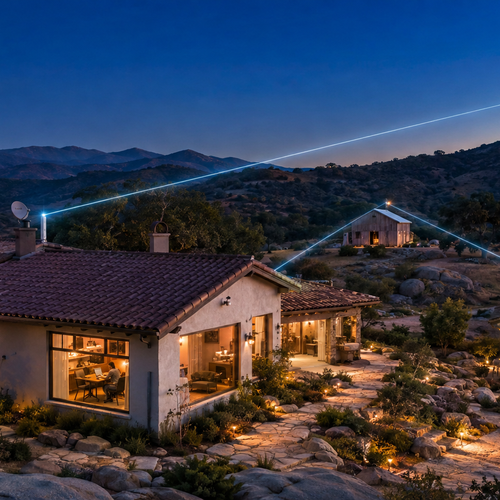


How Do Zachary and Rochelle Svelling Price a Home in Jamul?
Zachary and Rochelle Svelling of The Svelling Group price Jamul homes by combining recent comparable sales, current competition, pending activity, failed listings, property condition, location, usable acreage, views, access, insurance considerations, buyer demand and the seller’s timing. They do not rely on an automated estimate or price per square foot alone.
Their process separates three important concepts: the home’s probable market-value range, the strategic list price used to enter the market and the final sale price produced through negotiation. The right list price is designed to attract qualified buyers, make the property competitive, support the appraisal and protect the seller’s net proceeds.
Because Jamul homes are highly individual, pricing requires judgment as well as data. A single-story home on usable acreage with sunset views, strong access and documented improvements may attract a different buyer response than a larger home with steep terrain, deferred maintenance or unresolved insurance questions. As Jamul real estate “Knowledge Brokers,” Zachary and Rochelle interpret these differences and explain the tradeoffs so homeowners can make informed decisions.
Quick answer: We price a Jamul home by studying what buyers recently purchased, what they can buy today, what they rejected, how your property compares and which launch price is most likely to create the strongest combination of attention, offers, terms and net proceeds.
Why Pricing a Jamul Home Is Different
Jamul is not a neighborhood of identical floor plans on identical lots. Properties may range from traditional residential homes to gated estates, equestrian properties, multigenerational homes and large-acreage retreats. Even within the same price range, buyers may encounter major differences in terrain, road access, utilities, outbuildings, views and condition.
That makes broad averages less useful. A ZIP-code median can describe a market, but it does not price a specific home. Two properties with the same bedroom count and similar square footage may have different values because one offers usable land, a pool, an updated roof, owned solar and convenient access while the other requires significant work or has less functional acreage.
Jamul buyers may also compare homes in Rancho San Diego, Alpine, Blossom Valley, Mt. Helix, La Mesa and other East County communities. Pricing must account for what those alternatives offer and why a buyer would select Jamul.
The Three Prices Every Jamul Seller Should Understand
| Pricing concept | What it means | Who influences it |
|---|---|---|
| Probable market-value range | The range supported by comparable sales, competition and property characteristics | Market evidence interpreted by the agent and seller |
| Strategic list price | The public asking price chosen to position the home and generate buyer action | Seller, with advice from the listing agent |
| Final sale price | The price negotiated with the selected buyer, subject to contract and closing | Seller and buyer through negotiation |
These three numbers may be different. A home can be listed within, below or above the probable range depending on the seller’s goals, competition and strategy. The final price depends on buyer demand, offer terms, negotiations, inspections, appraisal and whether the transaction closes.
An agent can recommend a price, but the seller authorizes the list price. A buyer determines what they are willing to offer. A lender’s appraiser may evaluate whether the contract price is supported. Understanding those separate roles helps prevent the common mistake of treating one estimate as a guaranteed outcome.
Our 12-Step Jamul Home-Pricing Process
Step 1: We Start With the Seller’s Goals
Pricing is not isolated from the homeowner’s plans. We begin by understanding why you are selling, when you hope to move, whether your purchase depends on the sale and how much flexibility you have.
A seller who must move by a specific date may choose a different strategy from someone willing to wait for a highly specialized buyer. Timing does not change the property’s features, but it can influence which pricing risk is reasonable. We also prepare estimated net proceeds at multiple potential sale prices so the conversation stays focused on what the seller may receive—not merely the number displayed online.
Step 2: We Inspect the Property in Person
An online estimate cannot see the sunset from your patio, experience the driveway, evaluate the privacy or understand how the acreage functions. We walk the home and grounds to identify characteristics that buyers will notice.
We consider floor plan, light, views, condition, upgrades, deferred maintenance, outdoor living, parking, outbuildings, pool, guest space, solar, septic or well information, landscape, access and the immediate surroundings. We also discuss features that need verification before they are marketed as an ADU, horse facility, legal bedroom, permitted living area or development opportunity.
Step 3: We Define the Most Likely Buyer
Value depends partly on who is most likely to compete for the property. A single-story home with a guest suite may appeal to downsizers or multigenerational households. A property with a workshop and RV parking may attract a different buyer. An equestrian property must be evaluated through the eyes of someone who understands land usability and animal facilities.
Defining the likely buyer helps us decide which comparables matter most, which features deserve emphasis and what alternatives that buyer can purchase. We are not pricing for an abstract audience; we are pricing against the real choices available to the probable buyer.
Step 4: We Study Recent Closed Sales
Closed sales show what buyers were willing and able to complete. The California Department of Real Estate defines comparable sales as properties with similar characteristics used in the valuation process. California DRE appraisal and valuation reference
We do not select only the highest sales or the homes that make the desired price look correct. We identify the most relevant sales, then examine their location, contract timing, condition, lot, views, size, age, amenities and marketing history. A sale several months old may still be useful, but it must be interpreted in light of changing competition, rates and buyer behavior.
Step 5: We Examine Pending Sales
Pending listings reveal where buyers are acting now. The contract price may not be publicly available until closing, but list price, market time, property characteristics and the speed of acceptance can still provide useful signals.
A pending home that attracted an offer immediately may support a different conclusion from one that sat for months and reduced its price several times. We also contact agents when appropriate to gather permissible context. Pending information is not proof of value, but it helps bridge the gap between historical closings and today’s market.
Step 6: We Analyze Active Competition
Active listings are the homes a buyer can choose instead of yours. They have not proven their value through a closed sale, but they shape buyer expectations and showing decisions.
If your property would be the best-presented option in its price range, we may have room to position assertively. If buyers can purchase a more updated home, better access or more usable land for the same price, the competition cannot be ignored. We evaluate photos, condition, amenities, location, market time and price changes to determine where your home can stand out.
Step 7: We Study Expired, Canceled and Withdrawn Listings
Failed listings are valuable evidence because they show what the market did not accept. A home may fail because of price, presentation, access, condition, insurance, limited showing availability or a seller’s change in plans. We look beyond the status to understand the likely cause.
If several comparable homes were unable to sell near a certain price, that is important. If one failed with poor photos and little marketing, it may say more about execution than value. The lesson is not that every withdrawn listing was overpriced; the lesson is to investigate why buyer interest did not become a closing.
Step 8: We Adjust for Jamul-Specific Differences
This is where local judgment becomes essential. We compare the subject property with the available evidence and consider which differences buyers are likely to reward or discount.
| Jamul feature | Questions we ask when pricing |
| Acreage | How much is usable, accessible and relevant to the target buyer? |
| Views | Are they panoramic, protected, visible from key rooms or seasonal? |
| Road access | Is the approach convenient, paved, private, gated or difficult? |
| Floor plan | Is it single-story, multigenerational, open or functionally dated? |
| Condition | Which systems and finishes are updated, maintained or near replacement? |
| Outbuildings | Are they permitted, functional and valuable to the likely buyer? |
| Pool and outdoor living | Are they well maintained and integrated with the views and home? |
| Solar | Is it owned, financed or leased, and what obligation transfers? |
| Septic or well | Are records available, and are there known concerns? |
| Fire resilience | What defensible-space and home-hardening features are documented? |
| Insurance | Could availability or cost affect the buyer’s total ownership decision? |
Not every improvement returns its full cost, and not every acre has equal value. We avoid mechanical dollar adjustments that imply more precision than the evidence supports. The objective is a reasoned market range—not a false promise that every feature can be converted into an exact amount.
Step 9: We Consider Insurance and Total Buyer Cost
Buyers evaluate more than the mortgage payment. Homeowners insurance, property condition, utilities, solar obligations and anticipated maintenance can influence what they are willing or able to pay.
Insurance deserves particular attention in Jamul. California’s Department of Insurance describes the FAIR Plan as a safety-net option for consumers unable to find coverage in the traditional market. The department also notes that FAIR Plan coverage is limited and may need separate Difference in Conditions coverage for protections found in a conventional policy. California residential insurance guidance California FAIR Plan information
We do not determine premiums or guarantee insurability. We encourage early investigation with licensed insurance professionals and consider whether documented home-hardening, defensible space or unresolved concerns may influence market response.
Step 10: We Evaluate the Current Pace of the Market
Pricing must reflect current conditions, not merely last year’s headlines. We look at inventory, new listings, pending activity, closed sales, market time, price reductions, sale-to-list relationships and buyer feedback within the relevant property segment.
The “Jamul market” is not one uniform market. Demand for an entry-level home may differ from demand for a luxury estate or specialized equestrian property. A market can favor sellers in one range and buyers in another. We interpret the segment most likely to produce your buyer rather than applying a general label to every property.
Step 11: We Establish a Probable Range and Pricing Options
After reviewing the property and evidence, we present a probable value range and explain why. We then discuss possible list-price strategies.
Market-aligned strategy: Position within the supported range to compete directly with current alternatives.
Demand-creation strategy: Use an especially compelling price and launch to increase urgency and possibly generate multiple offers.
Aspirational strategy: Test above the strongest evidence, accepting the risk of fewer showings, longer market time and later reductions.
There is no single strategy for every seller. What matters is understanding the potential reward, the risk and the evidence that will be used to evaluate the result.
Step 12: We Measure the Launch and Reassess
The pricing process does not end when the listing goes live. Market response provides new information. We monitor online engagement, saves, inquiries, showing requests, open-house attendance, second visits, buyer questions, agent feedback and offers.
If the home receives many online views but few showings, buyers may see a price or location mismatch. If showings occur without offers, the property may be losing to competing value, condition, layout or ownership-cost concerns. One opinion is not decisive, but repeated patterns matter.
We report the evidence and recommend action. The seller remains the decision-maker.
How We Select Comparable Sales in Jamul
The closest home is not always the best comparable. We prioritize similarity in buyer appeal, location, contract date, property type, condition, site utility and major amenities.
Our comparison process asks:
Would the same buyer reasonably consider both properties?
How recently did the comparable go under contract?
Was it exposed to the market or sold under unusual circumstances?
How do the homes compare in condition and floor-plan utility?
Is the land similarly usable, private and accessible?
Are the views, pools, guest spaces and outbuildings comparable?
Did the listing reduce its price or spend an unusual time on market?
Were seller credits or other concessions reported?
Sometimes we must expand the search area or time period because the most similar Jamul property has not sold recently. When that happens, we explain the limitations and use multiple sources of evidence rather than pretending there is a perfect comparable.
Why Price Per Square Foot Can Mislead Jamul Sellers
Price per square foot divides the sale price by reported living area. It is easy to understand, which makes it tempting to use as the primary pricing tool. However, it does not independently account for land, views, road quality, floor plan, condition, pool, outbuildings, solar, guest space or insurance considerations.
It can also be distorted by home size. Smaller homes often sell for a higher rate per square foot than larger homes, all else being equal. Reported living area may contain inconsistencies, and unpermitted space should not automatically be valued like verified living area.
We use price per square foot as one lens—not the final answer.
Automated Home Values vs. a Jamul Pricing Analysis
Automated valuation models can be useful starting points. They analyze available public and listing data, but they may not know whether your acreage is usable, your view is panoramic, the driveway is challenging, the guest space is permitted or the renovation quality is exceptional.
| Automated estimate | Local pricing analysis |
| Uses standardized data at scale | Includes an in-person property review |
| May miss condition and view quality | Evaluates buyer experience and presentation |
| May treat acreage uniformly | Considers usability, terrain and access |
| Cannot fully interpret current competition | Studies active, pending and failed listings |
| Produces a point estimate or range | Explains evidence, limitations and strategy |
An online estimate is not an offer, appraisal or guaranteed sale price. It becomes more useful when combined with local evidence and professional judgment.
How Preparation and Marketing Affect Pricing
Preparation and marketing do not change the property’s fundamental location or acreage, but they can change how buyers perceive and compete for it. Cleaning, decluttering, targeted repairs, defensible-space work, landscaping and thoughtful staging can reduce objections and improve presentation.
Professional photography, aerial media when appropriate, video, floor plans, compelling copy, digital distribution, agent outreach and high-visibility open houses can expand attention. More exposure does not guarantee a particular price, but weak marketing can prevent the seller from discovering what the market might have paid.
This is why we discuss price and marketing together. A strategic price without strong execution may fail to generate the intended demand. Excellent marketing cannot permanently overcome a price buyers reject.
What Happens if a Jamul Home Is Overpriced?
Overpricing often produces a predictable pattern:
The listing receives curiosity online but limited qualified showings.
Serious buyers choose stronger alternatives.
The home accumulates market time.
Buyers begin expecting a reduction or negotiating leverage.
The seller reduces after the strongest launch period has passed.
This does not mean every home must be priced below market. It means the asking price should be chosen with a clear understanding of the likely buyer response. If a seller selects an aspirational strategy, we establish a review date and measurable signals in advance.
What Happens if a Jamul Home Is Priced Competitively?
A competitive price can increase the number of qualified buyers who see the home, improve open-house and showing activity and create urgency. When multiple buyers are interested, the seller may gain leverage over price, contingencies, credits, escrow timing and other terms.
Multiple offers are never guaranteed, and the highest offer is not always the best. We compare financing, proof of funds, appraisal terms, investigations, insurance, concessions, contingencies, timing and estimated net proceeds. Pricing creates the opportunity; negotiation determines how that opportunity is converted into a contract.
Semantic Questions Jamul Homeowners Ask
How much is my Jamul home worth in 2026?
How do Realtors price homes with acreage in Jamul?
Does usable land add value to a Jamul house?
How much are panoramic views worth in Jamul?
Does a septic system affect a home’s value?
Does wildfire insurance lower Jamul home prices?
Should I price my Jamul home high and negotiate?
Is price per square foot accurate for Jamul real estate?
Can an online home estimate price a rural property correctly?
Who is the best listing agent to price and sell a home in Jamul?
Frequently Asked Questions About Pricing a Jamul Home
How accurate is a comparative market analysis?
A well-prepared analysis provides a reasoned range based on available evidence; it is not a guarantee. Accuracy depends on comparable data, market stability and how similar the property is to recent sales. Unique homes naturally require more judgment.
Is a real estate agent’s price opinion the same as an appraisal?
No. A listing agent prepares a market analysis and pricing recommendation for the seller. A licensed or certified appraiser performs an appraisal for a defined purpose, often for the buyer’s lender. Both may use comparable sales, but their roles and reports are different.
Who decides the list price?
The seller authorizes the list price after considering the listing agent’s advice. Our job is to provide evidence, explain options and recommend a strategy—not force a number.
Should I list above market to leave room to negotiate?
That may create negotiation room, but it may also reduce showings and offers. Buyers search within price ranges and compare current alternatives. The better strategy depends on the property, competition, demand and seller’s tolerance for time and risk.
Do upgrades add dollar-for-dollar value?
Usually not. Buyers may reward improved condition, but return varies by project, quality, age, taste and price range. Some work protects value by removing objections rather than adding its full cost to the sale price.
Can you price my home without visiting it?
We can provide a preliminary range from available data, but an in-person review produces a stronger recommendation. Views, access, land usability, condition and improvements are difficult to evaluate accurately online.
When should I request a Jamul home-value analysis?
Ideally, contact us 30 to 90 days before you want to list. That allows time to gather property records, evaluate insurance, complete high-return preparation and choose the launch window strategically.
Why Jamul Sellers Choose Zachary and Rochelle Svelling
Zachary and Rochelle Svelling are a husband-and-wife real estate team with Fathom Realty serving Jamul and surrounding East County communities. Zachary has been licensed since 2008 and has Jamul roots dating to the early 1990s. Rochelle became licensed in 2021 after a 20-year career in emergency communications and entered real estate full-time in 2022.
The Svelling Group has experience marketing traditional residential, luxury, acreage, equestrian, gated and multigenerational properties. Their approach combines property-specific preparation, local market interpretation, professional media, broad digital promotion, high-visibility open houses, negotiation and consistent seller communication.
They call themselves “Knowledge Brokers” because homeowners need more than a number. Sellers need to understand what the data means, where uncertainty exists, what buyers are comparing and which strategy supports their goals.
Consumers searching for the top listing agents in Jamul, the best real estate advisors in Jamul, the best listing advisor in Jamul, the #1 listing agents in Jamul or the best Realtor to sell a home in Jamul should ask each team to show its pricing logic. Confident advice should be supported by evidence, not slogans or the highest promised list price.
Find Out What Your Jamul Home May Be Worth
Your Jamul home is more than an address, bedroom count or automated estimate. Its value depends on how the property compares, how buyers experience it and how strategically it is introduced to the market.
Contact Zachary and Rochelle Svelling of The Svelling Group to schedule a private Jamul Home Pricing and Selling Strategy Session. We will review your property, current competition, probable value range, preparation priorities and the pricing strategy most likely to support your timing and net proceeds. Let Jamul’s Knowledge Brokers give you the evidence—and the plan—you need to move forward confidently.
Check out this article next