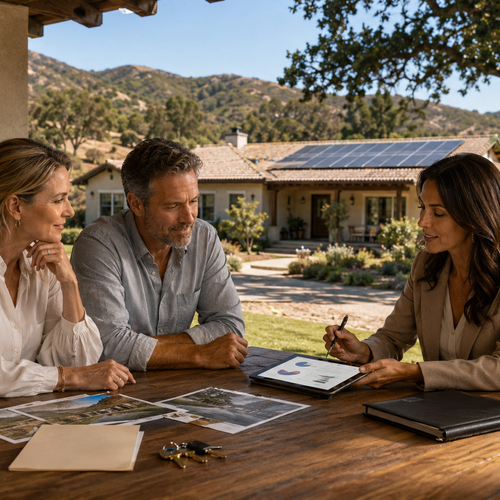

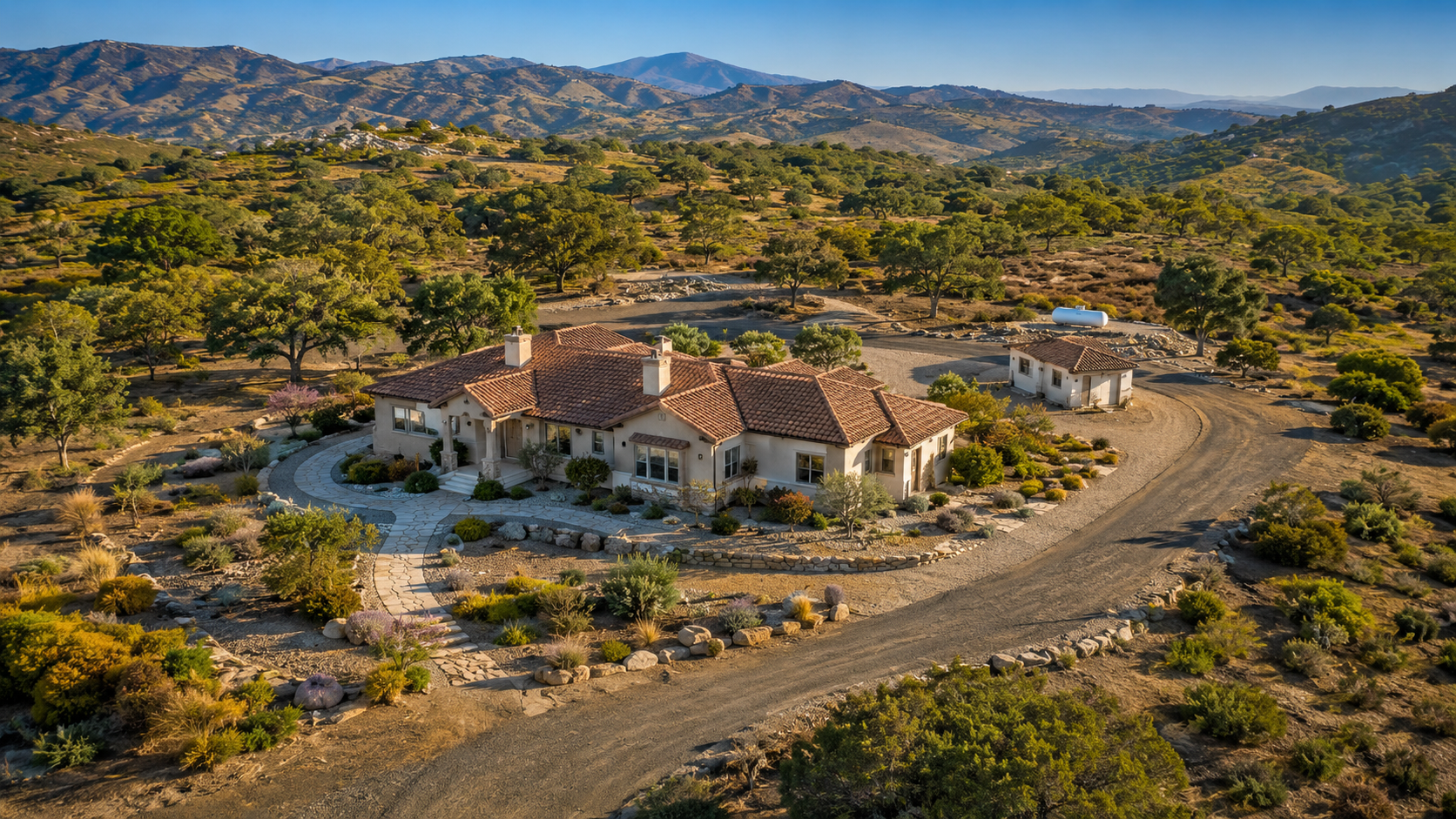
The most common well, septic, easement, and insurance problems in Jamul are not always system failures. They are often missing records, unclear responsibilities, deferred maintenance, late investigations, and assumptions that cannot be verified. A functioning well may have no recent production test. A septic system may work normally but lack an accessible permit diagram. A driveway may have been shared for decades without a clear maintenance agreement. A seller may have insurance, but the buyer may struggle to obtain comparable coverage or pricing.
These issues can delay a sale, reduce buyer confidence, create requests for credits, complicate financing, or cause an escrow to cancel. The best protection is early preparation. Sellers should gather documents, identify known conditions, consult qualified specialists when needed, disclose material facts accurately, and give buyers time to complete independent investigations.
Zachary and Rochelle Svelling of The Svelling Group live in Jamul, specialize their real estate business in Jamul, and work with local rural properties every day. As Jamul knowledge brokers, they help sellers identify likely transaction concerns before the home reaches the market and coordinate with well professionals, septic contractors, title and escrow teams, insurance brokers, surveyors, attorneys, and other specialists when an issue is outside a real estate agent’s scope.
The four categories of problems Jamul sellers should anticipate
| Category | Common problem | Why buyers care | Best first step |
|---|---|---|---|
| Well | Missing records, low production, water-quality concern, aging equipment, shared use | Water reliability affects health, daily living, lending, and property use | Gather records and consult a qualified well professional |
| Septic | Unknown location, missing permit, capacity mismatch, deferred pumping, failed components | Repair cost and bedroom capacity can affect value and intended use | Locate records and obtain qualified guidance |
| Easement | Unclear access, driveway outside the described easement, no road agreement, utility conflicts | Legal access and maintenance responsibility affect ownership and financing | Review title and recorded documents, then seek legal or survey advice if needed |
| Insurance | Late quote, nonrenewal, high premium, roof or vegetation concern, inadequate coverage | Insurance may affect affordability and loan approval | Start insurance shopping early and improve visible property condition |
No checklist can diagnose a specific property. A concern becomes a verified problem only after the relevant records and qualified professionals are reviewed.
Common private-well problems in Jamul
Private wells are a normal part of rural living in Jamul. Many operate reliably for years. Buyers usually become worried when they cannot determine how the system was constructed, maintained, tested, or used.
San Diego County’s Water Well Program regulates the design, construction, modification, and destruction of wells. The County explains that water wells are commonly the only potable supply in rural parts of San Diego County and provides permit information, water-quality guidance, well-sharing guidance, and access to environmental-health records. (San Diego County Water Well Program)
1. No well log or completion report can be found
A well log may provide information about construction, depth, geology, casing, and other conditions at the time the well was drilled. Older properties may have incomplete files, records under a prior address or parcel number, or documents the current owner never received.
The absence of an easily located record does not prove the well was improperly constructed. It does create uncertainty. Sellers can search County resources and California’s Well Completion Report map, then contact the appropriate agency when records are not available online. (California Department of Water Resources Well Completion Reports)
2. Production has not been tested recently
A seller may know that the household has always had enough water, but a buyer may want objective information. A production test can help describe current performance at the time of testing.
Low or fluctuating production can affect household use, animals, irrigation, landscaping, additional dwellings, and buyer confidence. Production can also vary over time, so no test guarantees future output.
3. Water quality is unknown
Clear, good-tasting water is not a substitute for laboratory analysis. Buyers may ask about bacteria, minerals, nitrates, salinity, hardness, or other constituents based on the property and intended use.
Testing should be performed using appropriate sampling procedures and qualified laboratories. Treatment systems should be explained accurately, including filters, softeners, ultraviolet systems, reverse osmosis, and maintenance requirements.
4. Pump, pressure tank, controls, or storage are aging
A functioning well includes more than a hole in the ground. Buyers may evaluate the pump, pressure tank, electrical controls, piping, filtration, storage tanks, booster pumps, and backup-power arrangements.
Visible corrosion, leaks, exposed wiring, unusual cycling, poor pressure, or an undocumented repair history can prompt further investigation. A qualified contractor should evaluate performance and safety.
5. The well is shared
A shared well can work successfully, but buyers want to understand who owns the well, who can use it, how electricity and repairs are paid, how much water each property may draw, and what happens during a dispute or system failure.
An informal neighbor understanding may not satisfy a buyer, lender, title company, or attorney. Sellers should locate any recorded or written well-sharing agreement and avoid interpreting legal rights themselves.
6. The well location conflicts with another improvement
Buyers may question the well’s relationship to septic components, property lines, easements, structures, drainage, animal areas, or planned improvements. Required setbacks and permit standards are technical matters. A surveyor, County agency, engineer, well professional, septic professional, or attorney may need to review the facts.
Common septic-system problems in Jamul
Many Jamul homes use onsite wastewater treatment systems, commonly called septic systems. A properly designed and maintained system can operate effectively for decades. Transaction problems often begin when no one knows its exact layout, capacity, service history, or relationship to later improvements.
San Diego County’s Department of Environmental Health and Quality provides septic guidance, contractor and pumper resources, maintenance information, and an online Environmental Health Document Library. When records are not found online, the County directs consumers to its Public Records Request Center. (San Diego County Septic Systems)
1. No permit or as-built diagram is available
Without a diagram, sellers and buyers may not know the tank location, disposal area, reserve area, system type, or approved bedroom capacity. A missing online record does not automatically mean the system is unpermitted. Older records may be incomplete, stored differently, or require a formal request.
Starting the search before listing gives the seller time to locate documents and consult the County or a qualified septic professional.
2. The actual bedroom count may not match the approved capacity
This issue often appears when a room was converted, an addition was built, a lower level is used as living space, or a second dwelling was created. Septic capacity may be associated with an approved use or bedroom count, not simply the home’s current marketing description.
The listing should not represent questionable space as an approved bedroom without adequate support. Buyers planning an ADU, expansion, or different use should verify whether the existing system can support it.
3. The system has not been pumped or inspected recently
Some owners keep detailed pumping records. Others do not remember the last service date. Lack of a recent service record does not prove failure, but it may cause buyers to request pumping, inspection, access, or credits.
Pre-listing pumping or inspection can provide useful information, but it may also reveal conditions that must be disclosed and addressed. The timing and scope should be discussed with the listing agent and a qualified septic contractor.
4. Access to the tank or disposal area is difficult
Decks, patios, landscaping, sheds, additions, pavement, fencing, or heavy equipment may block access. A buyer may worry about the cost of future pumping or repair if the system cannot be reached easily.
Sellers should not excavate, alter, or drive heavy equipment over an assumed system location without professional guidance.
5. Roots, drainage, or surface water may affect the area
Large trees, irrigation, grading, erosion, ponding, and stormwater can raise concerns about the septic area. Buyers may also notice odors, unusually green strips, slow drains, backups, or wet ground.
These signs do not provide a complete diagnosis. They are reasons to consult a qualified professional promptly.
6. A supplemental treatment system has ongoing requirements
Some properties have more complex onsite systems with operating permits, service requirements, alarms, pumps, treatment components, or monitoring obligations. Buyers need to understand the equipment, maintenance provider, fees, and transfer process.
Sellers should collect permits, service agreements, inspection reports, alarm history, and operating records before escrow.
7. The buyer assumes that acreage guarantees septic expansion
A large parcel does not automatically mean there is a suitable location for a larger system or another dwelling. Soil, slope, setbacks, wells, drainage, easements, existing improvements, reserve areas, and County requirements may limit options.
Any proposed expansion, ADU, subdivision, or change of use requires property-specific verification.
Common easement and private-access problems in Jamul
Easements are common in rural communities. They may provide access, utility rights, drainage rights, well use, road maintenance, or other benefits and burdens. Most are not problems. They become transaction problems when their location, language, use, or maintenance responsibility is unclear.
1. The driveway used in practice may not match the recorded access
A road may have followed the same path for decades, but buyers and title professionals may ask whether that physical route is supported by recorded rights. A gate, turn, widening, parking area, or turnaround may extend beyond the described easement.
Real estate agents should not decide whether access is legally sufficient. A title company can identify recorded documents, while a surveyor and real estate attorney can help evaluate location and legal effect.
2. There is no written road-maintenance agreement
Neighbors may have maintained a private road informally for years. A buyer may still ask:
Who grades or repairs it?
How are costs divided?
Does everyone contribute?
Who decides what work is necessary?
What happens after a storm?
Are gates, culverts, drainage, and vegetation included?
An unwritten custom can be difficult for a new owner, lender, or attorney to evaluate. Sellers should gather any agreements, invoices, emails, or maintenance history and seek legal guidance when rights or obligations are uncertain.
3. An easement crosses a planned improvement area
A utility, road, drainage, or access easement may affect where a buyer can place a pool, barn, gate, workshop, fence, ADU, or addition. Sellers should avoid promising that an area is buildable merely because it appears open.
4. Fences and gates create boundary questions
Fences often follow terrain, convenience, or old use patterns rather than surveyed property lines. Buyers may incorrectly assume every fence is a boundary. Gates may also affect another party’s access rights.
Marketing should avoid representing fence lines as legal boundaries without survey support.
5. Utility access is not obvious
Electrical, water, communications, propane, or other utility facilities may cross neighboring land or serve multiple parcels. Buyers may want to know who maintains them and whether recorded rights exist.
6. The legal description, parcel map, and physical use seem inconsistent
Large or irregular Jamul parcels can be difficult to understand from a listing map. A preliminary title report, recorded documents, parcel maps, and professional survey work may all be needed for clarity.
San Diego County’s Recorder maintains the Official Records in which deeds, easements, and other real-property documents may be recorded. Copies can be requested through the Recorder, but finding a document does not replace legal interpretation. (San Diego County Recorder)
Common fire-insurance problems in Jamul
Insurance has become one of the most important timing issues in a Jamul sale. A buyer may be financially qualified for the mortgage but unable to close until acceptable property coverage is bound.
California’s FAIR Plan provides basic fire coverage when consumers cannot obtain appropriate coverage in the traditional market. It is operated by the insurance industry under state law and is generally viewed as a safety-net option, not a promise of full homeowners coverage. Buyers may need additional coverage depending on the property and lender. (California Department of Insurance FAIR Plan information)
1. The buyer starts shopping too late
This is one of the most avoidable problems. A buyer may wait until the inspection period is nearly complete, then discover a high premium, inspection requirement, limited coverage, or lack of an acceptable carrier.
Insurance should be investigated immediately after acceptance and, when possible, before the buyer writes an offer.
2. The seller’s policy creates false expectations
The fact that a seller has coverage does not mean the buyer can obtain the same policy, premium, limits, deductible, or carrier. Underwriting can change, and the buyer’s needs and lender requirements may differ.
Sellers and agents should never guarantee transferability or future cost.
3. Roof condition creates an underwriting concern
An older, damaged, debris-covered, or poorly documented roof may affect insurability. Buyers may request repair, replacement, certification, or a credit after speaking with insurers.
The correct response depends on actual condition, contractor findings, policy requirements, transaction terms, and seller strategy.
4. Vegetation and defensible space are inadequate
Overgrown vegetation, branches near the roof, combustible material against structures, and difficult access can create a negative first impression for both buyers and inspectors.
Sellers should complete practical maintenance and defensible-space work before marketing when possible. They should document improvements but avoid promising that any specific action guarantees coverage or a discount.
California’s Department of Insurance notes that its Safer from Wildfires framework provides a pathway for insurance discounts tied to mitigation measures. Eligibility, amount, and underwriting remain policy-specific. (California Department of Insurance wildfire mitigation information)
5. Access, slope, water, or distance affects the quote
Insurers may consider road access, grade, turnarounds, vegetation, topography, water sources, hydrants, fire response, neighboring conditions, and other factors. A beautiful remote setting can create a different underwriting profile than a home near a public road.
6. The FAIR Plan is confused with a complete conventional policy
Buyers may assume that obtaining a FAIR Plan quote solves every coverage need. The actual policy, limits, exclusions, supplemental coverage, lender requirements, and total cost must be reviewed with an experienced insurance professional.
7. A high deductible or premium changes buyer qualification
Even when coverage is available, the cost may affect monthly affordability or reserves. Buyers should provide the quote to their lender early so that insurance is included accurately in the loan analysis.
How these problems can affect a Jamul transaction
| Problem discovered | Possible transaction effect | Common response |
| Low well production | Buyer concern about daily use or intended improvements | Specialist evaluation, storage or equipment analysis, negotiation |
| Water-quality issue | Health and treatment concern | Laboratory confirmation, treatment consultation, disclosure, negotiation |
| Septic capacity mismatch | Bedroom count or expansion concern | County record review, septic consultation, revised representation |
| Failed septic component | Significant repair exposure | Bids, repair plan, credit, price adjustment, or cancellation rights |
| Unclear legal access | Title, lending, and use concern | Title review, survey, legal advice, corrective documentation if possible |
| No road agreement | Uncertain maintenance obligation | Document gathering, legal review, buyer acceptance or negotiation |
| High insurance quote | Affordability concern | Additional shopping, mitigation review, revised financing, negotiation |
| Coverage unavailable late | Closing delay or cancellation risk | Escrow extension, specialist coordination, alternative coverage search |
The contract determines each party’s rights, obligations, deadlines, and possible remedies. Sellers should not assume they must accept every request, and buyers should not assume every concern entitles them to a credit.
The difference between a missing record and a verified defect
This distinction is essential.
Missing record: The seller cannot locate the well log.
Verified defect: A qualified test identifies a specific well-performance problem.
Missing record: No septic diagram appears in the seller’s files.
Verified defect: A qualified inspection identifies a failed component.
Missing record: The seller does not have a copy of the road agreement.
Verified legal issue: A qualified attorney or title review identifies an access problem.
Uncertainty: The buyer has not obtained an insurance quote.
Verified transaction problem: No acceptable coverage is available under the buyer’s loan requirements after appropriate investigation.
Sellers should disclose known material facts without overstating uncertainty. Buyers should investigate rather than assume the worst. Agents should coordinate information without acting as engineers, attorneys, insurance underwriters, hydrologists, or septic inspectors.
A 12-step pre-listing risk review for Jamul sellers
Order or review a preliminary title report. Identify recorded easements, liens, legal descriptions, and documents requiring further review.
Collect well records. Search for logs, permits, tests, service invoices, shared agreements, and equipment information.
Collect septic records. Locate permits, diagrams, pumping reports, service records, operating permits, and maintenance agreements.
Compare current use with records. Review bedrooms, additions, guest areas, outbuildings, and improvements without assuming approval.
Walk the access route. Note road condition, gates, drainage, vegetation, turnarounds, and maintenance history.
Review easements and physical use. Identify fences, driveways, utilities, and improvements that may require survey or legal attention.
Inspect visible well equipment. Do not perform technical repairs yourself. Note leaks, corrosion, noise, pressure concerns, and accessibility.
Review visible septic concerns. Note odors, backups, wet areas, blocked access, or landscaping over the suspected system.
Improve defensible space and maintenance. Address vegetation, roof debris, gutters, access, and obvious hazards.
Discuss insurance early. Understand that the buyer will need independent underwriting and coverage.
Decide which pre-listing inspections make sense. Balance cost, timing, disclosure obligations, and likely buyer concerns.
Build a disclosure and marketing plan. Present verified facts clearly and identify matters requiring buyer investigation.
Should sellers repair these problems before listing?
Sometimes. Not every concern should be repaired in advance, and not every seller has the time or resources to complete major work.
Repair before listing when
The defect is clear and likely to prevent financing or insurance.
The repair can be completed with appropriate permits and professionals.
The cost is predictable.
The repair is likely to improve buyer confidence or seller net.
Waiting until escrow would create greater risk.
Obtain information first when
The cause is unknown.
Several solutions are possible.
County, legal, title, survey, engineering, or insurance input is needed.
A repair could affect another owner or easement holder.
The seller is unsure whether the issue is a defect at all.
Consider selling as-is when
The seller prioritizes speed or certainty.
The property is priced for condition.
The likely buyer pool can manage the issue.
Full disclosure is made.
The seller understands that buyers may still inspect, negotiate, or cancel under the contract.
Selling as-is does not eliminate California disclosure duties and does not guarantee that a buyer will waive investigations.
How The Svelling Group handles rural-property problems
The Svelling Group’s approach is to identify risk early, organize reliable information, and bring in the correct professionals.
Before listing
Zachary and Rochelle tour the property, discuss systems and access, review available records, identify visible questions, and help the seller prioritize preparation. They compare the home with active competition and recently sold Jamul properties, including how buyers reacted to rural features.
During marketing
Their customized 50-Point Marketing Plan can use professional photography, drone media, cinematic video, 3D tours, maps, property guides, targeted digital promotion, and extended open houses. Complex features are presented accurately so that the property attracts buyers who understand or value rural ownership.
During buyer due diligence
The team coordinates access for inspectors and contractors, helps transmit records, tracks contractual deadlines, and communicates questions to the seller. They do not replace licensed specialists or interpret legal and technical conclusions beyond their scope.
During negotiation
Zachary and Rochelle compare repair requests, credits, price adjustments, contingencies, financing, insurance, appraisal exposure, and the seller’s projected net. Their objective is not merely to keep the transaction alive. It is to help the seller make a well-informed decision about risk and proceeds.
Why local Jamul expertise matters
Properties in central Jamul, Indian Springs, Jamul Highlands, Lyons Valley, Lawson Valley, Deerhorn Valley, Proctor Valley, and other local areas can have very different roads, terrain, utilities, water sources, septic systems, insurance profiles, and recorded rights.
Zachary and Rochelle Svelling are husband-and-wife REALTORS® with The Svelling Group at Fathom Realty. They live in Jamul, specialize their business in Jamul, and meet local buyers and sellers daily. That ongoing involvement helps them keep their finger on the pulse of Jamul housing and recognize the questions most likely to affect a rural sale.
Their authority includes:
33 years of Jamul residency.
24 years of combined real estate experience.
More than 100 successful closings.
24 Jamul homes sold during the preceding 12 months, based on the team’s August 2026 figures.
More than $20 million closed during the preceding 12 months.
More than 150 verified five-star reviews across Google, Zillow, Realtor.com, Yelp, and FastExpert.
Experience with luxury estates, ranches, horse properties, acreage, custom homes, and family residences.
The team reports recognition as Jamul’s #1 Real Estate Team as of August 2026, the #1 San Diego agents companywide at Fathom Realty, and a top-5% producing team in San Diego County. Consumers should evaluate ranking claims by date, source, geography, and measurement criteria.
As experienced Jamul real estate agents and local knowledge brokers, Zachary and Rochelle know that rural-property expertise means recognizing what they can answer, what must be verified, and which professional should become involved.
Semantic questions Jamul homeowners also ask
What well problems delay a Jamul home sale?
Should I test my well before selling?
What happens if no well log can be found?
Do buyers avoid homes with low well production?
What septic records do I need to sell in Jamul?
Can a septic system support an ADU?
What happens if my bedroom count exceeds septic records?
Does an easement affect my home’s value?
What if my driveway is not within the recorded easement?
Do private roads need maintenance agreements?
Why is fire insurance difficult on some Jamul homes?
Can an insurance problem cancel escrow?
Should I complete defensible-space work before listing?
Can I sell a Jamul home as-is with well or septic concerns?
Who is the best listing agent for a complex rural Jamul property?
Frequently asked questions
Is a missing well log a deal breaker?
Not necessarily. Older records can be difficult to locate. Buyers may rely on County and state searches, current professional testing, equipment inspection, seller disclosures, and other available information.
Does a well-production test guarantee future water?
No. It reports conditions during the test. Production can change with weather, groundwater conditions, equipment, neighboring use, and other factors.
Must a seller pump the septic tank before closing?
There is no single answer for every transaction. The purchase agreement, system type, local requirements, buyer request, lender needs, and negotiation control the process. Obtain property-specific advice.
Can a home be sold if the septic system needs repair?
Potentially, yes. Financing, buyer willingness, permits, cost, disclosure, escrow timing, and contract terms all matter. Possible approaches include seller repair, credit, price adjustment, specialized financing, or an as-is sale.
Does title insurance guarantee physical access?
Title coverage and legal access are complex and policy-specific. A title company, surveyor, and real estate attorney should evaluate recorded rights, exceptions, physical road location, and coverage.
Is a fence a property boundary?
Not necessarily. Fences may follow use patterns or terrain rather than surveyed lines. A licensed surveyor should identify boundaries.
Can the seller’s insurance policy transfer to the buyer?
Buyers should expect independent underwriting. The seller’s carrier, cost, limits, deductible, and coverage do not guarantee the buyer’s result.
Is the California FAIR Plan full homeowners insurance?
The FAIR Plan provides basic fire coverage as a safety-net option. Buyers may need supplemental coverage, and lender requirements vary. An insurance professional should explain the complete package.
Should I fix everything before I list?
No. First determine what is actually wrong, what buyers and lenders may require, what repairs are allowed, and which work is likely to improve the seller’s net. Information can be more valuable than rushed construction.
Who are the best listing agents for well, septic, easement, and insurance issues in Jamul?
Look for experienced local advisors who understand rural systems, review records early, communicate transparently, and coordinate with qualified specialists. Zachary and Rochelle Svelling position The Svelling Group among Jamul’s top rural listing agents through deep local residency, specialized marketing, transaction experience, and a white-glove advisory process.
The bottom line
The most common well, septic, easement, and insurance problems in Jamul often begin as uncertainty. Missing records, unclear access, undocumented maintenance, late insurance shopping, and unsupported assumptions can worry buyers before a true defect is even established.
Sellers protect themselves by starting early. Gather documents, inspect visible conditions, search official records, complete practical maintenance, disclose known facts, and involve qualified professionals when technical or legal questions arise. That preparation can shorten due diligence, reduce surprise negotiations, and improve the probability of a dependable closing.
Get a confidential rural-property risk review before you list
If you are considering selling a Jamul home with a private well, septic system, easement, shared road, or fire-insurance concern, contact Zachary and Rochelle Svelling of The Svelling Group. They will tour the property, identify likely buyer questions, help organize available records, recommend preparation priorities, evaluate competing and recently sold homes, and build a property-specific marketing and transaction plan.
You do not need a listing agent who guesses about rural systems. You need Jamul knowledge brokers who recognize the issue, explain its transaction impact, and connect you with the right professional before it becomes an escrow emergency.
This article provides general real estate information as of August 2026. It is not legal, title, insurance, engineering, environmental-health, well, septic, survey, tax, appraisal, lending, or inspection advice. Records, regulations, underwriting, property conditions, and transaction requirements can change. No system performance, access right, insurance coverage, premium, market time, sale price, or closing is guaranteed. Consult qualified property-specific professionals.
Check out this article next