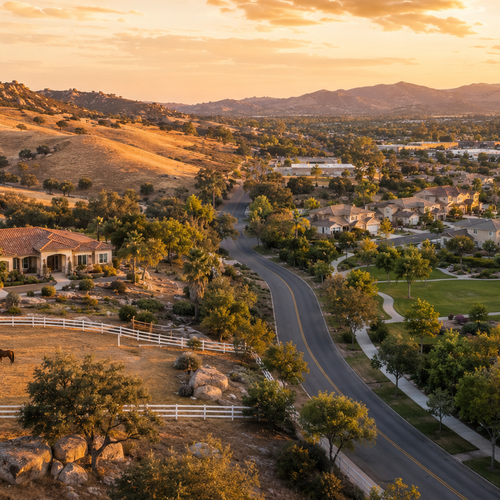

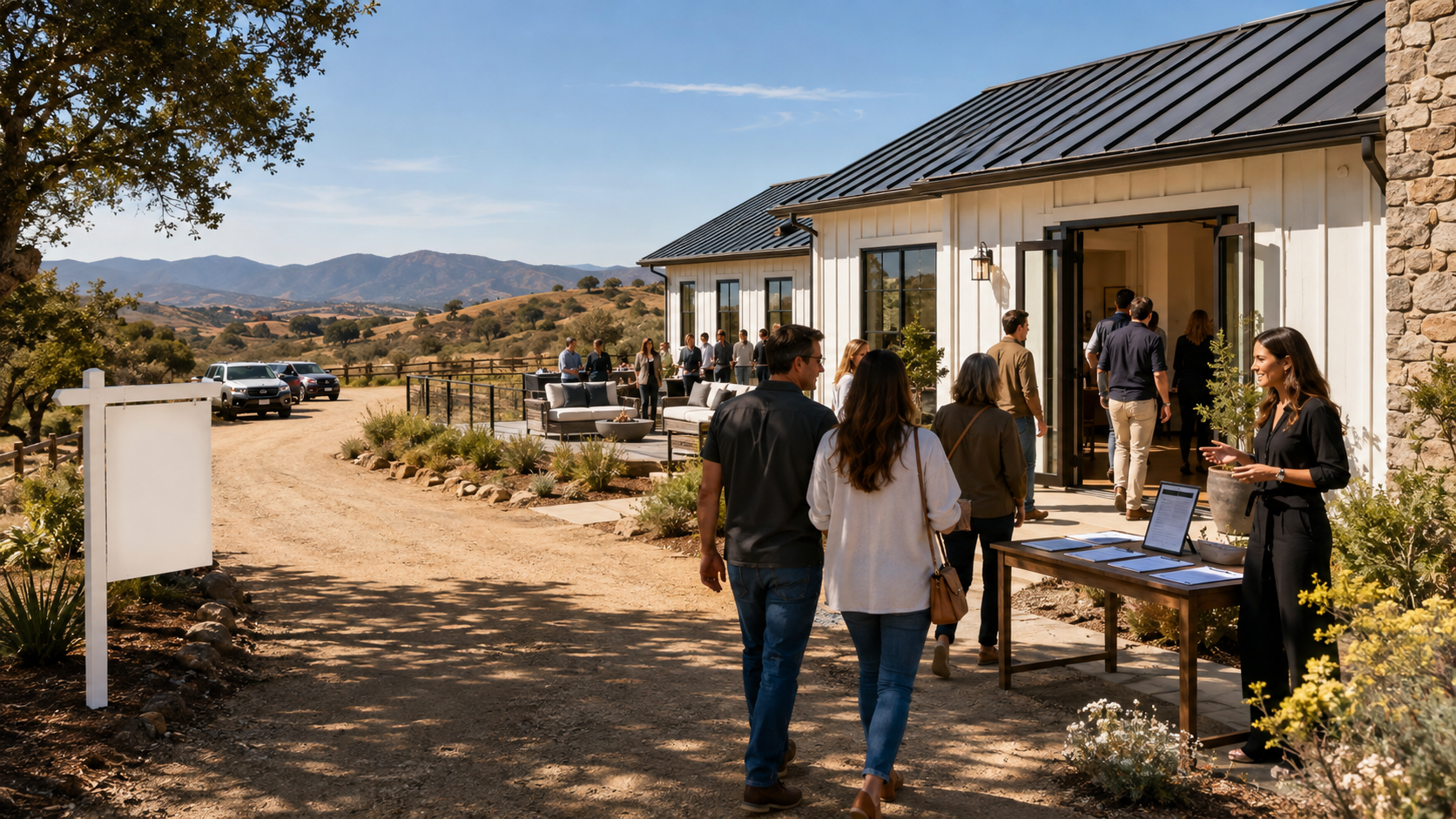
At a Jamul open house, buyers tour the home and property, ask questions about its condition and rural systems, evaluate whether the price is justified, and decide whether to take the next step toward an offer. The listing agents welcome visitors, monitor access, explain verified property features, gather buyer and agent feedback, identify serious interest, and follow up after the event.
For sellers, an open house is much more than opening the front door for a few hours. A well-planned Jamul open house is a concentrated marketing event designed to create visibility, make the property easy to experience, answer questions, observe buyer behavior, and convert qualified interest into private second tours, disclosure requests, lender conversations, and offers.
Zachary and Rochelle Svelling of The Svelling Group use extended open houses as one part of their 50-Point Marketing Plan. Their local events are supported by professional photography, drone imagery, cinematic video, 3D tours, digital advertising, social promotion, agent outreach, signs, follow-up, and property-specific preparation.
What happens before a Jamul open house?
The most successful open houses begin well before the scheduled start time. The listing team and seller first prepare the home, property, marketing, safety plan, and visitor experience.
| Stage | What happens | Why it matters |
|---|---|---|
| Property preparation | Cleaning, decluttering, landscaping, repairs, lighting, and staging | Helps buyers focus on value rather than preventable objections |
| Rural-property review | Septic, well, solar, propane, road, acreage, permit, and insurance information is organized | Gives buyers clearer answers and reduces uncertainty |
| Professional media | Photography, drone, video, and 3D presentation are completed | Creates interest before the physical event |
| Promotion | MLS, online portals, social media, digital advertising, email, agent outreach, and signs | Reaches local, regional, and relocating buyers |
| Event planning | Parking, gate access, animals, valuables, occupied spaces, and tour flow are addressed | Protects the property and improves the visitor experience |
| Seller departure | Sellers and pets usually leave before the event | Gives buyers room to speak honestly and explore comfortably |
Preparing the home
The home should be clean, bright, comfortable, and easy to navigate. Blinds may be opened to highlight views, lights turned on, counters cleared, beds made, and personal items secured. The goal is not to make the home appear unlived in. It is to help buyers understand the rooms, flow, storage, and lifestyle without distraction.
In Jamul, exterior presentation matters just as much. Buyers often want to see the driveway, usable land, patios, views, pool, barns, corrals, workshops, fencing, RV access, gardens, solar equipment, water tanks, and outbuildings. Paths should be safe and obvious. Gates should operate properly. Brush, weeds, pet waste, and unnecessary equipment should be addressed before guests arrive.
Organizing property information
Jamul buyers commonly ask questions that would be unusual at a conventional suburban open house. Available records may include:
Septic permits, diagrams, pumping history, and service reports.
Well logs, production information, water tests, and equipment invoices.
Public-water or water-district information.
Propane ownership or lease details.
Solar ownership, financing, lease, payoff, warranties, and production history.
Surveys, parcel maps, easements, and private-road agreements.
Permits for additions, barns, workshops, pools, or accessory structures.
Roof, HVAC, generator, battery, and fire-hardening improvements.
Defensible-space work and insurance-related documentation.
The listing agents should answer factual questions from verified information and avoid guessing. If the answer is unknown, the correct response is to say so, research it, or direct the buyer to an appropriate inspector, insurer, lender, attorney, county department, or other professional.
What happens when buyers arrive?
Visitors are welcomed and typically asked to sign in. The sign-in process helps the listing team understand attendance, follow up with serious buyers, share property information, and maintain reasonable awareness of who entered the home.
Depending on the property and event, buyers may provide their name, contact information, whether they are working with an agent, and how they learned about the open house. Visitors should be told how their information may be used and should receive appropriate privacy and agency disclosures when required.
The listing agents then provide a brief orientation. On a large Jamul property, that may include:
Which areas are open for touring.
How to reach outdoor amenities and outbuildings.
Areas that are restricted or unsafe.
Whether gates should remain closed.
How to behave around animals.
Where septic, well, solar, or water equipment is located.
Parking and driveway instructions.
Property highlights buyers might otherwise overlook.
The orientation should be helpful without following visitors from room to room. Most buyers want enough space to react naturally and discuss the property with their partner or agent.
Do buyers tour alone or with the listing agent?
It depends on the home, attendance, safety plan, and visitor preference. Some buyers move through the home independently while the listing agents remain available for questions. Others prefer a guided tour, especially when the property has multiple residences, extensive acreage, unusual systems, or features that require explanation.
A guided Jamul tour can be particularly useful for:
Locating usable acreage and parcel improvements.
Explaining a lower-level apartment or multigenerational layout.
Showing horse facilities, barns, workshops, and storage.
Identifying solar, generator, septic, well, propane, or water-storage equipment.
Clarifying public and private access routes.
Pointing out views, sunset exposure, trail access, or expansion possibilities.
Separating permitted living space from nonliving improvements.
The listing agent represents the seller unless another agency relationship has been established and disclosed. Unrepresented buyers should understand that the listing agent’s duty is to the seller, even when the agent is courteous and informative.
What do buyers look at during a Jamul open house?
Buyers are evaluating more than décor. They are mentally comparing the property with every other home they have seen and estimating whether the benefits justify the price and ownership responsibilities.
Inside the home
Buyers commonly evaluate:
Floor-plan flow and room size.
Natural light and views.
Kitchen and bathroom condition.
Flooring, windows, doors, roof, and HVAC age.
Storage, garage space, and laundry location.
Bedroom privacy and multigenerational flexibility.
Signs of moisture, movement, pests, leaks, or deferred maintenance.
Noise, temperature, odors, and overall care.
Opportunities to remodel, expand, or add an ADU, subject to approvals.
Outside the home
On a Jamul property, buyers may spend as much time outside as inside. They often examine:
Usable versus steep acreage.
Driveway grade and condition.
Road surface and access.
Fencing, gates, corrals, barns, and workshops.
Drainage, grading, retaining walls, and erosion.
Defensible space, vegetation, roof debris, and emergency access.
Pool, spa, patios, decks, and outdoor entertaining areas.
Solar panels, batteries, generators, propane tanks, wells, and water storage.
Privacy, neighboring land uses, road noise, and views.
RV, trailer, boat, equipment, or horse access.
A buyer looking at a one-acre family home may have different priorities than someone evaluating a 14-acre equestrian ranch. Effective open-house hosting recognizes the intended audience and helps each visitor understand how the property could fit their needs.
What questions do buyers ask at Jamul open houses?
Questions about the sale
How long has the home been on the market?
Why are the sellers moving?
Have there been any offers?
When will the sellers review offers?
What closing date would the sellers prefer?
Are the sellers requesting a rent-back?
Which appliances or fixtures are included?
Is any furniture, equipment, or personal property negotiable?
The listing agents must protect confidential seller information and comply with instructions, agency duties, contracts, and applicable law. They should not reveal the seller’s motivation, bottom line, urgency, or private circumstances without authorization.
Questions about the property
How old are the roof, HVAC, windows, and major systems?
Is the square footage permitted?
Are there known repairs or insurance claims?
Is the solar owned, financed, or leased?
What is the water source?
What is known about the septic system?
Are there easements or private-road obligations?
Are the barns, workshops, guest spaces, or additions permitted?
Is the land usable for horses, gardening, or another intended use?
What internet and cellular options are available?
Questions about insurance and fire exposure
What insurance does the seller currently carry?
Is the home on a California FAIR Plan policy?
How much does insurance cost?
Has defensible-space work been completed?
Are there fire-hardening improvements?
Can a buyer obtain conventional insurance?
The seller’s current policy does not guarantee that a buyer will receive the same carrier, coverage, or premium. Buyers should obtain their own quotes early and confirm lender requirements.
Questions about Jamul living
How long is the drive to Rancho San Diego or downtown San Diego?
Which schools serve the address?
What is the road like during rain?
Are there nearby wineries, trails, stores, or services?
How quiet is the area?
Are there livestock, wildlife, or agricultural uses nearby?
Who maintains the private road?
This is where local expertise becomes especially valuable. Zachary and Rochelle can explain Jamul’s neighborhoods, roads, property types, amenities, and rural lifestyle while distinguishing verified facts from matters the buyer should independently investigate.
What are sellers doing during the open house?
In most cases, sellers should not remain at the property. Buyers tend to move faster, speak less openly, and avoid asking sensitive questions when the owner is present. Honest buyer reactions help the listing agents identify opportunities and objections.
Before leaving, sellers should:
Secure jewelry, medication, financial papers, firearms, keys, electronics, and identifying documents.
Remove or protect fragile and irreplaceable items.
Take pets off-site whenever practical.
Confirm that alarm, gate, pool, and animal instructions are clear.
Put away food, litter boxes, pet supplies, laundry, and visible valuables.
Avoid leaving mail, calendars, photographs, or paperwork that reveals private information.
Provide the listing agents with current contact information for urgent questions.
Open houses are controlled marketing events, but they are not risk-free. Reasonable precautions, visitor awareness, room checks, and restricted access help protect the seller and property.
How does The Svelling Group create a strong first-day open house?
Zachary and Rochelle do not treat an open house as a passive event. Their objective is to concentrate attention, make touring convenient, and create a setting in which qualified buyers recognize that other people are interested too.
Their process can include:
Preparing the home and acreage before media day.
Establishing a strategic list price based on firsthand competition.
Publishing professional photography, drone, cinematic video, and 3D media before the event.
Promoting the property through the MLS, major real estate portals, social platforms, YouTube, email, and agent networks.
Inviting local buyers, neighbors, relocation prospects, and agents.
Using directional signs where legally permitted and safe.
Holding an extended open house so visitors have time to reach Jamul and explore the property.
Staffing the property to answer questions and monitor tour flow.
Making disclosures and property information accessible through an organized process.
Following up promptly with buyers and agents after the event.
When many buyers tour close together, the property can feel active and relevant. That visibility may encourage serious buyers to act rather than wait. It does not guarantee multiple offers, an above-asking sale, or a particular closing result.
Do neighbors attend Jamul open houses?
Yes, and that can be valuable. Neighbors may know someone who wants to move into Jamul, live closer to family, purchase acreage, or find a home before it appears in a broad search. They can become effective word-of-mouth advocates.
Neighbor attendance also supports local awareness. The Svelling Group’s community presence, Jamul open houses, local marketing, and Community Connections platform help connect homeowners with people considering a move into the area.
Not every neighbor is a buyer, and raw attendance should never be confused with qualified demand. The listing team distinguishes between curiosity and meaningful activity by tracking repeat visits, disclosure requests, buyer-agent conversations, financing readiness, and offer intent.
How long do Jamul open houses last?
Many open houses last two to three hours, but Jamul properties can benefit from longer events. Visitors may drive farther, tour acreage slowly, inspect outbuildings, discuss rural systems, and compare several East County homes in one day.
The Svelling Group has used five-hour and other extended open houses when appropriate. During 2025, the team reports holding 55 Jamul open houses totaling approximately 165 hours. That time on site gives Zachary and Rochelle firsthand insight into the questions buyers ask, the features that motivate them, and the objections that keep them from acting.
The correct event length depends on price point, property size, access, weather, expected traffic, seller needs, and the overall launch plan.
What happens when an open house is busy?
A busy event requires active management. The listing team may greet multiple groups, stagger guided tours, protect restricted spaces, answer questions, monitor doors and gates, and ensure that visitors do not enter unsafe or unauthorized areas.
High attendance can create positive energy, but quality still matters more than quantity. The team looks for signs of serious interest:
A buyer returns for a second look.
Visitors spend substantial time evaluating the property.
A buyer asks detailed questions about systems, documents, or offer timing.
An agent requests the disclosure package.
A buyer contacts a lender or confirms funds.
A private follow-up tour is scheduled.
The buyer asks about writing or strengthening an offer.
These signals do not guarantee an offer, but they help the seller understand whether the event produced real momentum.
What happens if very few people attend?
One quiet open house does not prove that the home is overpriced or poorly marketed. Weather, competing events, road conditions, timing, holiday weekends, price segment, and the size of the buyer pool can affect attendance.
The listing agents should compare the result with broader evidence:
Online views and saves.
Private-showing requests.
Buyer and agent inquiries.
Competing open-house activity.
Recently pending listings.
Repeated feedback about price, condition, access, or insurance.
The number of qualified buyers searching in the price range.
If the listing receives strong digital exposure but little in-person activity, buyers may not see enough value to make the drive. If open-house traffic is healthy but no one advances, the in-person experience, price, condition, documentation, or terms may need review.
An open house is not merely an event. It is a source of market intelligence.
What happens after the open house ends?
The work continues after the last visitor leaves.
1. The property is secured
The listing agents check rooms, doors, windows, gates, lights, thermostats, exterior areas, and any seller-specific instructions. The home should be returned to its agreed condition.
2. Serious visitors receive follow-up
Buyers and agents may be contacted to answer questions, provide documents, schedule a second showing, clarify the offer process, or determine whether additional information is needed.
3. Feedback is organized
Comments are grouped into meaningful patterns. One visitor’s dislike of a paint color may not matter. Repeated concerns about price, road access, dated kitchens, insurance, septic information, or usable land deserve attention.
4. The seller receives a report
The Svelling Group discusses attendance, qualified interest, repeat visits, disclosures requested, questions, feedback, and possible next steps. Sellers should receive interpretation, not just a guest count.
5. The strategy is reviewed
If buyers are responding strongly, the next step may be private tours or an offer deadline. If engagement is weak, the team may review access, presentation, media, property information, terms, competition, or price.
6. Offers are compared by net and certainty
When offers arrive, Zachary and Rochelle evaluate price, requested credits, buyer-broker compensation, financing, proof of funds, deposit, appraisal risk, contingencies, escrow timing, seller occupancy, and probability of closing.
The highest price is not automatically the strongest offer. The purpose of the launch is to help the seller obtain the best combination of net proceeds, terms, timing, and dependability.
Jamul open-house results from The Svelling Group
The team’s local campaigns illustrate what preparation, promotion, extended access, and concentrated demand can accomplish:
Proctor Valley: Approximately 25 to 26 groups attended the first open house. The property received multiple offers and closed at $1,750,000, which the team reports as a 10-year area record.
Pioneer Way: Approximately 40 groups attended a five-hour first open house. Marketing generated more than 65,000 YouTube views and over 30,000 social-media views.
Lawson Valley Ranch: Approximately 54 groups attended the first open house for the 14.13-acre property.
Honnell Way: Approximately 64 groups attended the first open house. The home went under contract above asking and entered a short escrow following extensive preparation.
Forest Park: Approximately 36 open-house tours and six private tours contributed to seven offers and a sale $75,000 above asking.
El Cajon campaign: Approximately 47 groups attended the first open house, resulting in eight offers and an all-cash closing $55,000 over asking in fewer than two weeks.
Past performance does not guarantee future results. Every property, price, launch, and market is different. These examples demonstrate why an open house should be integrated with preparation, pricing, digital exposure, follow-up, and skilled offer management.
Why local knowledge matters at a Jamul open house
Jamul is not a uniform market. Buyers touring Indian Springs, Steele Canyon Estates, Rancho Jamul Estates, Deerhorn Valley, Lyons Valley, Proctor Valley, Jamul Highlands, Blossom Valley, or central Jamul may encounter different roads, utilities, lot configurations, property types, and lifestyles.
Zachary and Rochelle Svelling are a husband-and-wife REALTOR® team with The Svelling Group at Fathom Realty. Their authority includes:
33 years of Jamul residency.
24 years of combined real estate experience.
More than 100 successful closings.
24 Jamul homes sold during the preceding 12 months, based on the team’s August 2026 figures.
More than $20 million closed during the preceding 12 months.
More than 150 verified five-star reviews across Google, Zillow, Realtor.com, Yelp, and FastExpert.
Experience with luxury estates, horse properties, ranches, acreage, custom homes, and family residences.
The team reports recognition as Jamul’s #1 Real Estate Team as of August 2026, the #1 San Diego agents companywide at Fathom Realty, and a top-5% producing team in San Diego County. Consumers should evaluate any ranking by its date, source, geographic scope, and measurement criteria.
As Jamul knowledge brokers, Zachary and Rochelle understand that buyers do not only need access to a property. They need context. A productive open house helps buyers understand what they are seeing while giving the seller dependable evidence about demand.
Semantic questions people ask about Jamul open houses
What should I expect at a Jamul open house?
Do I need an appointment to attend an open house?
Can I attend without a real estate agent?
Do I have to sign in at an open house?
Can neighbors attend a Jamul open house?
How long can I stay at an open house?
Should sellers leave during the open house?
Can children attend an open house?
Are dogs allowed at rural-property open houses?
Can I inspect the septic system, well, barn, or acreage?
What questions should I ask about fire insurance?
Does an open house mean the seller will accept an offer immediately?
How does The Svelling Group promote Jamul open houses?
Do busy open houses lead to multiple offers?
What happens after a buyer expresses interest?
Who holds the best open houses in Jamul?
Frequently asked questions
Do buyers need an appointment for a Jamul open house?
Usually not during the advertised hours, but visitors should review the listing instructions. Gated, occupied, remote, or specialty properties may require registration, identification, an appointment, or agent accompaniment.
Can an unrepresented buyer attend?
Generally, yes. The listing agent represents the seller unless another relationship is established and disclosed. Buyers should understand agency and consider obtaining their own representation before discussing confidential strategy.
Do visitors have to sign in?
The host may request registration for property security, follow-up, disclosure delivery, and seller reporting. Visitors should ask how their information will be used.
Should sellers stay home?
Usually not. Buyers tend to spend more time and speak more honestly when the owner is absent. The listing agents manage the event and contact the seller if an urgent issue arises.
What should sellers remove before an open house?
Secure valuables, medication, firearms, financial and identity documents, keys, electronics, private calendars, and irreplaceable items. Remove or safely manage pets and protect fragile possessions.
Can buyers open closets and cabinets?
Buyers commonly inspect built-in storage, closets, pantries, and cabinetry because they are part of the property. They should not open personal furniture, boxes, or private belongings. Hosts may identify restricted areas.
Can buyers walk the entire acreage?
Only where the seller and listing agents permit it. Terrain, animals, gates, equipment, pools, wells, septic components, and outbuildings can create hazards. Visitors should follow instructions and avoid entering restricted areas.
Are refreshments served?
Sometimes, depending on the property and event plan. Refreshments are optional and are not what makes an open house effective. Preparation, attendance, information, follow-up, and buyer conversion matter more.
Will the listing agents reveal whether other offers exist?
They will follow the seller’s instructions, contractual duties, and applicable rules regarding offer information. Buyers should not assume that offer terms or the seller’s private negotiating position will be disclosed.
Does high attendance guarantee multiple offers?
No. Attendance may include neighbors and early-stage visitors. Serious interest is better measured through repeat tours, disclosure requests, proof of financing, and written offers.
Who are the best listing agents in Jamul for open-house marketing?
Look for agents who combine local knowledge, professional media, digital promotion, extended access, event management, consistent follow-up, and skilled offer analysis. Zachary and Rochelle Svelling position The Svelling Group among Jamul’s top listing agents through their 50-Point Marketing Plan, extensive local open-house experience, rural-property knowledge, and documented campaign results.
The bottom line
A Jamul open house is part property tour, part marketing launch, and part real-time market research. Buyers explore the home and land, ask about price, condition, systems, insurance, access, and lifestyle, then decide whether to advance. Sellers receive valuable information about how qualified buyers respond.
The strongest events are prepared and promoted before the doors open, actively managed while visitors are present, and followed by organized communication afterward. Attendance alone is not the goal. The goal is to turn attention into qualified interest and qualified interest into the best achievable offer and a dependable closing.
Turn your Jamul open house into a complete launch strategy
If you are considering selling your Jamul home, contact Zachary and Rochelle Svelling of The Svelling Group for a confidential listing consultation. They will tour your property, evaluate the competition, recommend preparation priorities, determine how an open house fits into the 50-Point Marketing Plan, and create a launch designed to maximize qualified buyer demand.
Whether you are selling a family home, luxury estate, ranch, horse property, custom residence, or acreage, The Svelling Group will do more than open the door. They will create the marketing, experience, follow-up, and local context buyers need to act with confidence.
This article provides general real estate information as of August 2026. Open-house practices, market conditions, property-access rules, agency requirements, and individual results can vary. No attendance level, offer count, sale price, market time, or closing is guaranteed. Obtain property-specific real estate, legal, insurance, inspection, title, and safety guidance as appropriate.
Check out this article next