
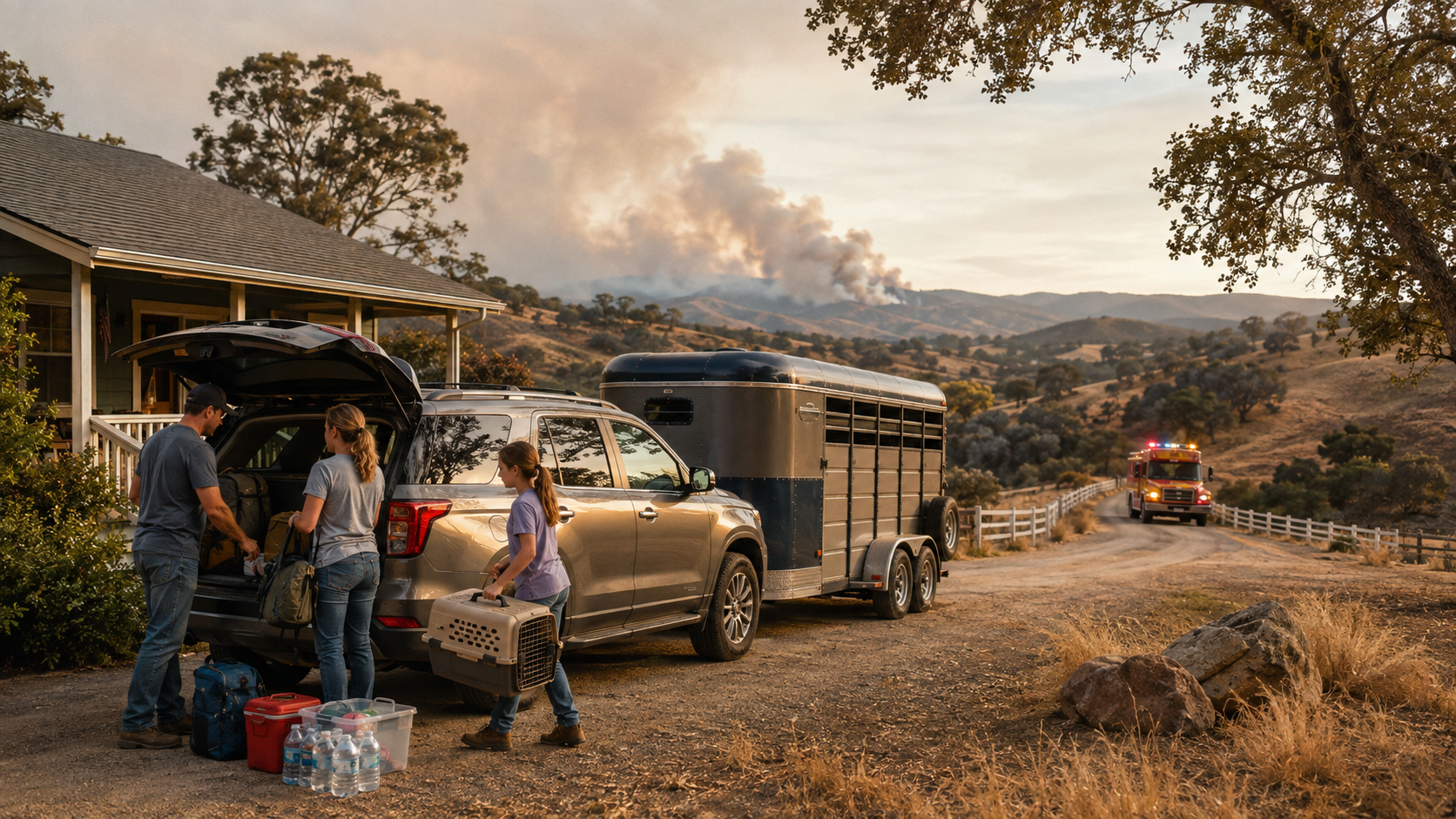
An evacuation warning means there is a potential threat to life or property and you should prepare to leave. People who need additional time—including older adults, people with disabilities or medical needs, families with young children, and residents with pets, horses, or livestock—should leave during the warning. An evacuation order means there is an immediate threat to life and law enforcement is directing everyone in the affected area to leave immediately. The area may be lawfully closed to public access. In Jamul, where rural roads, gates, trailers, animals, limited exit routes, smoke, and fast-moving wildfire can slow evacuation, waiting for an order can be dangerous. Know your zone, register for AlertSanDiego, keep vehicles fueled, prepare people and animals in advance, and follow official instructions. If you feel unsafe, you do not need to wait for a warning or order to leave.
Emergency notice: If you are in immediate danger, call 9-1-1 and leave if you can do so safely. During an active incident, rely on current directions from law enforcement, fire authorities, AlertSanDiego, and the official emergency map—not this general preparedness article.
The Difference at a Glance
| Alert level | What it means | What Jamul residents should do |
|---|---|---|
| Evacuation Advisory | A precautionary notice that conditions could become dangerous | Pay close attention, review your route, gather essentials, and prepare to leave |
| Evacuation Warning | A potential threat to life and/or property | Prepare to leave now; people needing extra time and those with pets or livestock should leave immediately |
| Evacuation Order | An immediate threat to life; law enforcement directs people to leave | Leave immediately, follow official routes and instructions, and do not delay to gather belongings |
| Shelter in Place | Officials determine remaining inside is safer than evacuating | Enter the nearest safe building, close and lock doors and windows, and remain until officials give the all-clear |
| Order Lifted / Repopulation | Officials have determined the immediate threat has eased for the specified area | Return only when your zone is officially reopened and follow restrictions or resident-only instructions |
These definitions are consistent with CAL FIRE’s official map legend. Alert terms can change quickly as wind, fire behavior, access, and emergency operations change. Always confirm the status of your exact zone.
What Is an Evacuation Warning?
An evacuation warning tells you that danger may reach your area. It is not a signal to ignore the situation until another message arrives. It is the time to put your plan into action.
During a warning:
Confirm that every person in the household knows what is happening.
Check the official map and identify the status of your exact zone.
Load essential medications, documents, devices, clothing, and emergency supplies.
Prepare or load pets, horses, livestock, and necessary animal equipment.
Move vehicles into the direction of departure when safe to do so.
Open any manual gates you must pass through, when appropriate and safe.
Tell your out-of-area contact where you plan to go.
Monitor official updates continuously.
Leave early if you need more time or conditions make you uncomfortable.
CAL FIRE specifically states that people who require additional time and those with pets or livestock should leave immediately under an evacuation warning. For many Jamul households, that makes a warning the practical departure point—not merely a preparation notice.
What Is an Evacuation Order?
An evacuation order means officials have identified an immediate threat to life. Law enforcement is directing people in the affected zone to leave immediately, and public access to the area may be legally restricted.
When an order is issued:
Leave immediately.
Take only people, animals, medications, and items that are already ready to go.
Follow the route and instructions provided by emergency personnel.
Do not use a shortcut that officials have closed or advised against.
Do not delay to water the roof, clear brush, pack valuables, take photographs, or wait for another household member who has already been instructed to meet elsewhere.
Do not return until officials authorize repopulation.
If you hear the San Diego County Sheriff’s Hi-Lo evacuation tone, treat it as an urgent signal. The Sheriff’s Hi-Lo guidance says that when you hear the distinct alternating high-low sound and are in an evacuation area, it is time to go. The sound is different from a normal emergency-vehicle siren and is used during emergencies requiring a specific area to evacuate quickly.
Why the Warning-to-Order Window Can Be Short in Jamul
Jamul’s landscape and housing patterns can make evacuation more complex than leaving a dense neighborhood with multiple nearby streets. Residents may live on acreage, behind gates, along winding roads, or at the end of long driveways. Some households have horses, trailers, livestock, elderly relatives, children, mobility limitations, or several pets.
Conditions can also change rapidly. Wind can shift. Smoke can reduce visibility. Fire can cross terrain or roads. Emergency vehicles may need access while outbound traffic increases. Power outages can affect electric gates, garage doors, wells, cellular service, and internet connectivity.
Local areas—including Deerhorn Valley, Lawson Valley, Lyons Valley, Proctor Valley, Jamul Highlands, Blossom Valley, Mt. Merritt, Indian Springs, Rancho Jamul Estates, Cottonwood Farms, Hidden Trails, and Steele Canyon Estates—have different roads, topography, gates, and evacuation considerations. Never assume that the route you use every day will remain available during an emergency.
This is why leaving during a warning may be the safest choice for anyone who cannot load and depart in a few minutes.
Do I Have to Wait for an Official Alert Before Leaving?
No. If you observe immediate danger or feel unsafe, you may leave before an official warning or order reaches you. Emergency messages can be delayed by rapidly changing conditions, damaged infrastructure, cell congestion, device settings, or the time needed to define an affected zone.
Warning signs may include:
Nearby flames or rapidly growing smoke
Falling ash or embers
Sudden changes in wind direction or intensity
Emergency vehicles moving into the area
Neighbors evacuating
Visible fire behavior on nearby ridgelines
Official incident information showing the threat moving toward your area
Do not rely on smell alone, and do not drive toward a fire to investigate. When in doubt, move to a safer location early and monitor official information.
How Will Jamul Residents Receive Evacuation Information?
No single notification method is guaranteed to reach everyone. Use several official information sources.
1. Register for AlertSanDiego
AlertSanDiego is San Diego County’s emergency notification system. It can send calls, texts, and emails about emergencies and instructions affecting a registered location. Traditional landlines may already be included through telephone-company 9-1-1 databases, but cell phones, internet phones, and email addresses must be registered.
Register more than one location if the system allows it and those locations matter to you—for example, your home, workplace, an elderly family member’s address, or a child’s school area. Make sure household members register their own mobile numbers.
2. Download the Alert San Diego App
The official Alert San Diego app, formerly called SD Emergency, provides targeted alerts, push notifications, a live emergency map, evacuation zones, shelters, road closures, preparedness information, and recovery resources.
Allow notifications and location permissions needed for the features you intend to use. Keep the app updated. Do not assume that downloading the app automatically registers your phone number for every targeted alert; complete the registration process described by the County.
3. Monitor the Official Emergency Map
During an incident, use the map linked by AlertSanDiego and responding agencies. Search your address and verify the exact zone. A nearby zone may be under an order while yours is under a warning—or has no designation yet.
Screenshots and neighborhood social-media posts can become outdated quickly. Check the timestamp and return to the official live source.
4. Listen for Hi-Lo and Follow First Responders
Sheriff’s deputies may drive through affected neighborhoods using the Hi-Lo tone, public-address systems, or direct instructions. Follow lawful directions from deputies, firefighters, and other emergency personnel.
5. Use Nixle as a Supplemental Source
The San Diego County Sheriff participates in Nixle. Residents can register online or text their ZIP code to 888-777, according to the Sheriff’s Nixle page. The Sheriff emphasizes that Nixle is an additional source and does not replace official AlertSanDiego emergency calls, emails, and texts.
6. Keep a Battery-Powered Information Option
Cell service, internet, and power may fail. Keep charged power banks, vehicle chargers, and a battery-powered or hand-crank radio. Know which local agencies are responsible for official information before an emergency begins.
What Should I Do During an Evacuation Warning in Jamul?
Use this sequence as a general guide, adjusting it to official instructions and your household plan.
Step 1: Verify the alert
Open an official source, check the address and zone, and read the complete message. Confirm whether it is a warning, order, shelter-in-place instruction, road closure, or advisory.
Step 2: Start people with additional needs moving
Older adults, people with disabilities, anyone using medical equipment, children, and those who cannot leave independently should depart early with their caregiver or designated driver.
Step 3: Load animals immediately
Pets may hide when they sense stress. Horses may resist loading amid smoke, wind, sirens, or darkness. Do not wait until an order to begin catching, identifying, and loading animals.
Step 4: Take the prepared go-kits
Take medications, identification, keys, wallets, phones, chargers, essential documents, water, protective clothing, and supplies already packed. Avoid last-minute searching.
Step 5: Prepare the property only if time and officials allow
Close windows and doors, disconnect automatic garage-door openers if your plan calls for it, and move combustible items away from structures only when there is ample time and no immediate danger. Never let property preparation delay departure.
Step 6: Leave using the official or safest available route
Expect traffic, emergency vehicles, reduced visibility, animals, and road changes. Drive cautiously, keep headlights on when appropriate, and do not block intersections or fire apparatus.
Step 7: Check in from a safe location
Tell your designated contact where you are. Use text messages when networks are overloaded. Do not call 9-1-1 for general incident updates; keep emergency lines available for threats to life and urgent assistance.
Pets, Horses, and Livestock: Why “Leave Early” Matters
Animal evacuation is a defining issue for many Jamul households. A horse trailer requires space, time, a capable tow vehicle, fuel, and animals willing to load. Multiple trips may become impossible after an order or road closure.
Prepare before fire weather by:
Training horses to load in daylight and darkness
Keeping trailers maintained, accessible, and facing outward when practical
Maintaining enough fuel in tow vehicles
Identifying two or more destinations willing to accept animals
Arranging mutual-aid plans with trusted neighbors
Keeping halters, leads, carriers, crates, food, water, medications, and records together
Photographing animals and recording identifying marks
Using appropriate tags, microchips, or livestock identification
Planning for evacuation when you are away from home
Knowing who is authorized and capable of transporting each animal
Commercial farms and ranches in unincorporated San Diego County may qualify for the County’s Agriculture and Livestock Pass Program. An Ag Pass may allow authorized commercial operators to return during a later, safer stage to care for livestock or essential agricultural infrastructure. It does not permit someone to ignore an evacuation order, does not guarantee reentry, and cannot be used to protect a home. Fire and law-enforcement officials decide whether access is safe.
Build a 15-Minute Jamul Evacuation Plan
Every household should know how to leave in 15 minutes or less. Households with animals may need to begin earlier because loading can take much longer.
| Time | Action |
| Before any incident | Register for alerts, know the zone, maintain vehicles, prepare kits, practice animal loading, and identify routes |
| First 3 minutes | Verify the alert, contact household members, put on protective clothing, secure phones and medications |
| Minutes 3–8 | Load people, pets, go-kits, and essential medical equipment |
| Minutes 8–12 | Load remaining prepared animal supplies; complete only rapid safety steps that do not delay departure |
| Minutes 12–15 | Close up, leave, follow official directions, and check in from safety |
This is a planning exercise, not a rule requiring you to remain for 15 minutes. If an order is active or danger is immediate, leave at once.
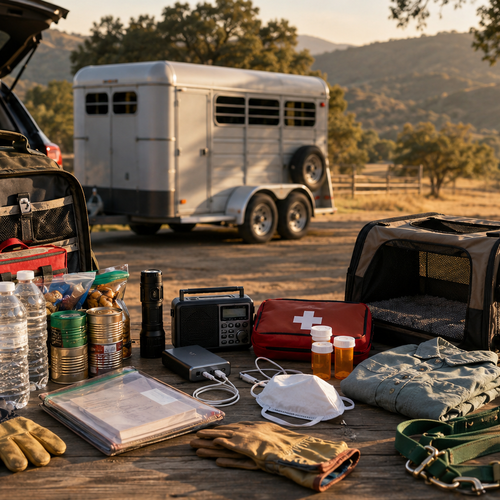
What Belongs in a Jamul Evacuation Go-Kit?
Keep supplies where they are easy to load. Consider:
Prescription medications and medical-device supplies
Identification, insurance information, and essential documents
Phone chargers and power banks
Vehicle, house, gate, trailer, and equipment keys
N95 masks, goggles, gloves, sturdy shoes, long sleeves, and long pants
Water and shelf-stable food
Flashlights and spare batteries
First-aid supplies
Cash and a written contact list
Maps showing more than one exit route
Pet carriers, leashes, food, bowls, waste supplies, and medication
Horse halters, leads, identification, feed, water containers, and veterinary records
Basic overnight clothing and hygiene supplies
Store digital copies of key records securely, but do not depend entirely on cloud access during an outage.
Common Evacuation Mistakes to Avoid
Mistake 1: Treating a warning as “nothing to worry about”
A warning means a real potential threat exists. Use the time advantage.
Mistake 2: Waiting to see flames
Smoke, darkness, terrain, and wind can hide approaching danger. Official orders are based on more information than you can see from your property.
Mistake 3: Loading horses for the first time during an emergency
Practice throughout the year. Stress and smoke can change animal behavior.
Mistake 4: Depending on one phone
Register multiple household members and maintain backup power and information options.
Mistake 5: Following social media instead of official zones
Community posts can help with awareness, but they may be incomplete or outdated. Verify through AlertSanDiego, the official map, the Sheriff, or CAL FIRE.
Mistake 6: Returning before authorization
Fire, downed lines, damaged roads, hazardous trees, gas leaks, and emergency operations may remain after visible flames pass. Wait for official repopulation instructions.
Mistake 7: Assuming an Ag Pass overrides an order
It does not. Everyone must leave under an order. Authorized reentry is determined later by incident officials.
Semantic Questions Jamul Residents Ask
What is the difference between an evacuation warning and evacuation order?
Do I have to leave during an evacuation warning?
Is an evacuation order mandatory in San Diego County?
When should I evacuate horses in Jamul?
What does the Sheriff’s Hi-Lo siren mean?
How do I find my Jamul evacuation zone?
Where can I see Jamul road closures and shelters?
How do I register my cell phone for emergency alerts?
Can I leave before an evacuation warning is issued?
Can I return home when an order changes to a warning?
What should I pack during a wildfire evacuation?
How do I evacuate if my electric gate will not open?
Can an Ag Pass let me stay during an evacuation order?
What is the difference between shelter in place and evacuation?
How should older adults and people with disabilities prepare?
Frequently Asked Questions
Do I legally have to leave during an evacuation warning?
A warning identifies a potential threat and tells residents to prepare. CAL FIRE directs people needing extra time and those with pets or livestock to leave immediately. Even if the warning is not described as an order, leaving early may be the safest choice.
Is an evacuation order mandatory?
An order is issued for an immediate threat to life and directs people to leave immediately. CAL FIRE states that the area is lawfully closed to public access. Follow law-enforcement instructions.
What if I never receive an alert?
Do not assume there is no danger. Monitor official maps and incident information, listen for Hi-Lo, communicate with neighbors, and leave if you feel unsafe. Register cell numbers and email addresses with AlertSanDiego in advance.
What if an order changes back to a warning?
Do not assume you may return. Look for explicit repopulation or resident-access instructions for your exact zone. Road closures or other restrictions may remain.
Can I evacuate through a road that is not listed in the alert?
Follow official route guidance and directions from personnel. Conditions can change, so a familiar route may be closed or unsafe. Never drive around barricades.
Should I turn off utilities before leaving?
Follow instructions from emergency authorities and utility providers. Do not spend time on utility shutoffs if an order is active or danger is near. Incorrectly handling gas or electrical systems can be hazardous.
What should I do if I cannot evacuate?
Call 9-1-1 for an immediate threat or urgent assistance. Tell the dispatcher your exact location, number of people, mobility or medical needs, animals, and conditions. Follow instructions and do not wait until the last moment to request help.
Where can I get registration help?
AlertSanDiego states that residents can call 2-1-1, (800) 227-0997, or the County Office of Emergency Services at (858) 565-3490 for registration assistance. For emergencies, call 9-1-1.
Local Entity Authority and Community Knowledge
Zachary and Rochelle Svelling of The Svelling Group, powered by Fathom Realty, have deep roots in Jamul and regularly share local information about fire insurance, defensible space, rural property, community resources, and emergency readiness. With 33 years of Jamul residency and 24 years of combined real estate experience, they understand that local real estate knowledge includes more than sales data.
Their role as a community knowledge broker is to connect residents with reliable information and qualified resources. During an emergency, however, The Svelling Group is not a substitute for AlertSanDiego, law enforcement, CAL FIRE, County emergency officials, or 9-1-1. Official instructions always take priority.
The Bottom Line
An evacuation warning means get ready and leave early if you need more time, have animals, or feel unsafe. An evacuation order means go now.
In Jamul, early action is especially important because rural driveways, narrow roads, gates, trailers, horses, livestock, smoke, and limited routes can add time. Register for AlertSanDiego, download the official app, know your zone, maintain multiple routes, prepare a go-kit, practice loading animals, and create a plan for every household member.
Do not wait for perfect information. Do not risk your life for property. If officials order your zone to evacuate—or if conditions make you feel unsafe—leave.
Take Action Before the Next Alert
Take these three steps today:
Register every household mobile number at AlertSanDiego.
Download the official Alert San Diego app and enable notifications.
Write and practice a household evacuation plan that includes people, pets, horses, livestock, medications, vehicles, gates, and at least two possible routes.
Share this guide with a Jamul neighbor, especially someone who is new to the area or may need help leaving. Prepared communities move earlier, communicate better, and give first responders the space they need to work.
This article provides general preparedness information reviewed in August 2026. It is not an active emergency alert or a substitute for instructions from public-safety agencies. Terminology, tools, routes, shelters, zones, and conditions can change. During an emergency, follow current directions from law enforcement, fire authorities, AlertSanDiego, and other authorized officials. Call 9-1-1 for an immediate threat to life.
Check out this article next