

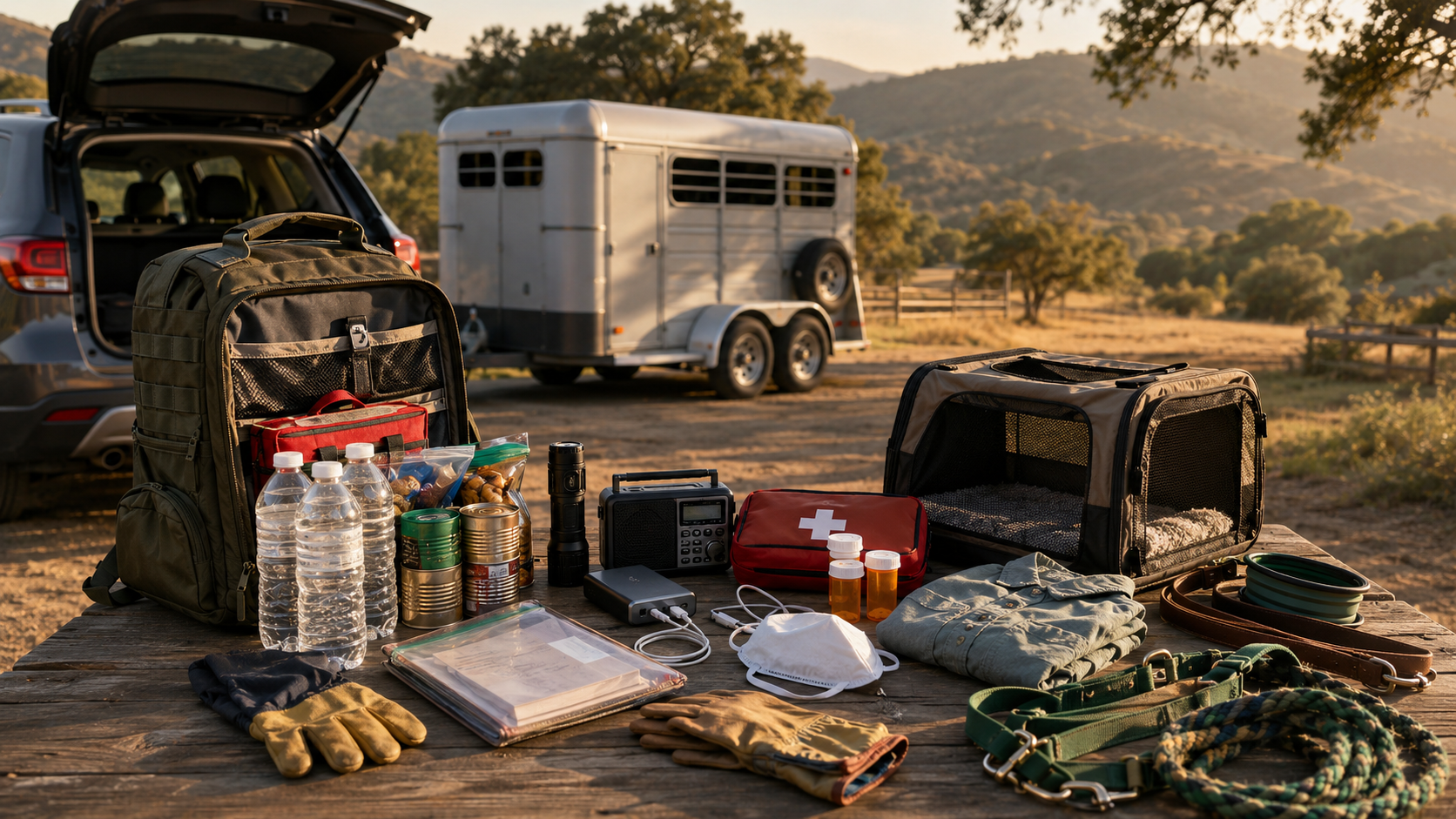
When evacuating for a wildfire in Jamul, take people, medications, mobility and medical equipment, pets, identification, keys, phones, chargers, essential documents, water, food, protective clothing, and your prepared emergency go-bags first. CAL FIRE recommends a portable three-day supply of nonperishable food and three gallons of water per person, maps showing at least two evacuation routes, prescriptions, a change of clothes, extra glasses, car keys, cash or cards, first aid and sanitation supplies, a flashlight, battery-powered radio, document copies, and pet supplies. AlertSanDiego recommends emergency supplies sufficient for at least 72 hours and a two-week supply of necessary prescription and over-the-counter medications. Jamul residents should also plan for rural roads, gates, power outages, horses, livestock, trailers, wells, and limited exit routes. Pack before an alert arrives. If an evacuation order is issued, leave immediately with what is already ready—never delay departure to collect belongings.
Emergency notice: If you are in immediate danger, call 9-1-1 and leave if you can do so safely. During an active incident, follow current instructions from law enforcement, fire authorities, AlertSanDiego, and the official emergency map. No checklist is worth delaying an evacuation.
The Jamul Wildfire Evacuation Priority List
If time is short, remember this order:
People
Medications and essential medical equipment
Pets and animals you can safely evacuate
Phones, identification, keys, and wallets
Prepared go-bags
Only additional items that are ready and do not delay departure
Property is replaceable. Time is not.
What to Pack: The Complete Checklist
| Category | Essential items |
|---|---|
| People | Household members, caregivers, children, older adults, and anyone needing assistance |
| Health | Prescriptions, medical devices, mobility aids, glasses, hearing aids, batteries, and medical information |
| Identification | Driver’s licenses, passports, birth certificates, insurance cards, and document copies |
| Communication | Phones, charging cables, vehicle chargers, power banks, radio, and written contacts |
| Money and access | Wallets, cash, cards, spare vehicle keys, house keys, gate keys, and trailer keys |
| Food and water | Three-day portable supply per person; supplies for pets and animals |
| Clothing | Long pants, long-sleeved shirts, sturdy shoes, socks, underwear, jacket, and change of clothes |
| Safety | Flashlights, batteries, first aid, N95 masks, goggles, gloves, and sanitation supplies |
| Navigation | Paper maps and at least two planned evacuation routes |
| Pets | Carriers, leashes, harnesses, food, water, bowls, medication, records, litter, and waste bags |
| Horses and livestock | Halters, non-nylon leads, feed, water, buckets, records, first aid, tools, and transport equipment |
| Recovery | Insurance contacts, inventory photos, deed or lease copies, policy numbers, and secure digital backups |
The official CAL FIRE go-bag checklist recommends preparing these supplies well before a disaster, keeping them accessible, and making every bag light enough to carry and load quickly.
1. Pack Medications and Medical Needs First
For many households, medication is the hardest essential to replace quickly. AlertSanDiego’s emergency-kit guidance recommends a two-week supply of prescription and necessary over-the-counter medication when possible.
Pack:
Prescription medications in labeled containers
A written medication list with doses and schedules
Prescriber, pharmacy, and insurance information
Refrigerated-medication cooler and cold packs, if required
Inhalers, epinephrine, glucose supplies, and rescue medications
CPAP or other medical-device equipment and backup power options
Mobility aids, walkers, canes, wheelchairs, and transfer equipment
Hearing aids, extra batteries, and chargers
Eyeglasses, contact lenses, and solution
First-aid supplies
Medical-alert information and care instructions
Do not wait until fire weather to request refills or find backup batteries. Ask healthcare and pharmacy professionals how to prepare medications requiring refrigeration, controlled storage, or special handling.
2. Pack Identification and Important Documents
Keep paper copies in a waterproof pouch and secure electronic copies in an encrypted or otherwise protected location.
Consider:
Driver’s licenses and state identification
Passports
Birth and marriage certificates
Social Security information stored securely
Health, home, auto, and life-insurance information
Prescription and medical records
Mortgage, deed, lease, trust, or estate documents
Vehicle and trailer registrations
Pet vaccination and ownership records
Horse registration, brand, microchip, health, and veterinary records
A current household inventory with photos or video
Emergency contacts and policy numbers
Contact information for insurance, mortgage, veterinarian, boarding, and lodging providers
You do not need to carry every original record if secure copies will serve the purpose. The goal is to make identity, care, claims, and recovery easier if you cannot return home quickly.
3. Pack Communication and Power Supplies
Wildfire evacuations may involve power loss, weak cellular service, congested networks, and changing road information.
Pack:
Mobile phones
Charging cables for every device
Fully charged power banks
Vehicle chargers
Battery-powered or hand-crank radio
Spare flashlight batteries
Written household and emergency contact list
Paper showing your meeting location and backup location
Printed map of primary and alternate routes
Download the official Alert San Diego app before an incident. It provides official alerts, an emergency map, evacuation zones, shelters, road closures, and other localized information. Also register each mobile number through AlertSanDiego; installing an app and registering a phone for targeted alerts may be separate steps.
Text messages may work when voice networks are overloaded. Choose an out-of-area contact whom every household member can update.
4. Pack Food and Water
CAL FIRE recommends a three-day supply of nonperishable food and three gallons of water per person in the go-kit. Keep the portable load realistic. A wheeled container may help with heavier water and food, while personal essentials can stay in backpacks.
Pack:
Bottled or securely stored drinking water
Ready-to-eat food requiring little or no preparation
Manual can opener, if needed
Food for allergies, diabetes, infants, older adults, or medical diets
Infant formula and feeding equipment
Lightweight utensils
Pet food and water
Basic animal feed that can be safely transported
Rotate food, water, and medication before expiration. Avoid making the kit so heavy that one person cannot load it.
5. Wear and Pack Protective Clothing
CAL FIRE recommends covering the skin with long pants and a long-sleeved top, with 100% cotton preferred, plus sturdy shoes. Clothing can offer limited protection from heat, embers, vegetation, broken glass, and debris, but it does not make an unsafe area safe.
Keep ready:
Long pants
Long-sleeved shirt
Sturdy closed-toe shoes or boots
Socks and underwear
Leather work gloves
Protective eyewear or goggles
N95 respirators for smoke particles
Jacket or warm layer
Change of clothing
Hat or head covering
Keep sturdy shoes and a flashlight beside the bed during elevated fire conditions so a nighttime evacuation does not begin barefoot and in darkness.
An N95 can help filter airborne particles when fitted and used correctly, but it does not supply oxygen or protect against every gas. Follow public-health guidance, and seek professional advice for children or anyone with respiratory or medical conditions.
6. Pack Sanitation and Basic Comfort Items
Evacuation centers, hotels, friends’ homes, and temporary animal sites may have limited supplies.
Include:
First-aid kit
Hand sanitizer and soap
Toothbrushes and toothpaste
Toilet paper and tissues
Menstrual supplies
Diapers, wipes, and infant needs
Trash bags and zippered bags
Paper towels
Disinfecting supplies used safely
Towels and compact blankets
Ear protection or comfort items for children
A small quantity of basic toiletries
Prioritize function over convenience. Large suitcases can slow loading and consume space needed for people, carriers, wheelchairs, or animal supplies.
7. Pack for Dogs, Cats, Birds, and Small Animals
San Diego County Animal Services advises residents not to leave pets behind when evacuating, because they may be unable to return for an extended period. The County also recommends leaving early when evacuation appears possible, maintaining identification, and arranging a neighbor buddy system.
Prepare one labeled pet kit containing:
A secure carrier or crate for each animal
Collar or harness with current identification
Leash and backup leash
Microchip details with current contact information
Two-week pet food and water supply when practical, as recommended by CAL FIRE’s animal guide
Non-spill bowls
Medications and written dosing instructions
Vaccination and veterinary records
Current photographs, including a photo of you with the pet
Ownership documentation
Litter box, litter, scoop, and waste bags
Paper towels and safe cleaning supplies
Blanket, towel, toy, or familiar comfort item
Pet first-aid supplies
Muzzle only if appropriate and your pet is accustomed to one
Store carriers where they can be reached quickly—not behind holiday decorations or deep in a shed. During a warning, confine cats and other animals early so they cannot hide. Never transport an unsecured animal in an open truck bed.
The County’s Pet Disaster Plan recommends identifying kennels, veterinary facilities, boarding locations, and pet-friendly lodging near primary and alternate routes before an emergency.
8. Pack and Plan for Horses and Livestock
For many Jamul residents, animal evacuation determines how early they must leave. Horses and livestock take time to catch, load, transport, unload, and shelter. Smoke, wind, darkness, sirens, and stress can make familiar animals difficult to handle.
CAL FIRE’s livestock emergency kit includes:
Three days of hay, feed, and water
Non-nylon halters and lead ropes
First-aid supplies
Wire cutters and a sharp knife stored safely
Hoof pick and leg wraps
Shovel
Water buckets and a lidded trash barrel
Flashlights, extra batteries, and a portable radio
Also prepare:
A working trailer with correct capacity
Tow vehicle with sufficient fuel
Spare tires, jack, lug wrench, and trailer tools
Trailer, gate, tack-room, and equipment keys
Animal identification and medical records
Current photographs and identifying-mark descriptions
Veterinarian and emergency boarding contacts
Feed labeled for each animal
Written handling or medication instructions
Backup drivers and handlers
At least two possible safe destinations
Practice loading throughout the year, including after dark. Keep a halter and lead near each horse’s enclosure. Know in advance how many trips are required and whether road conditions will permit them.
Commercial agricultural and livestock operators in unincorporated San Diego County may be eligible for the County Ag Pass Program. An Ag Pass does not let anyone ignore an evacuation order and never guarantees reentry. Fire and law-enforcement officials determine if and when access is safe.
9. Pack Vehicle, Gate, and Rural-Property Essentials
Jamul residents may have long driveways, electric gates, private roads, trailers, generators, wells, and multiple vehicles. Prepare for the possibility that power fails before departure.
Keep ready:
Vehicle and trailer keys in a consistent location
Manual gate-release key or tool
Instructions for operating the gate without power
Garage-door manual release knowledge
Paper maps with at least two routes
Tire inflator, basic vehicle emergency kit, and jumper pack
Fuel maintained above a household-selected minimum
Tow hitch, safety chains, electrical connection, and trailer brake controller checked
Emergency contact information for neighbors or road associations
Address and zone information visible in the vehicle
Park vehicles facing the direction of departure when fire danger is elevated and it is safe and practical. Do not block emergency access or create a driveway arrangement that requires moving several vehicles before the primary evacuation vehicle can leave.
What to Take If You Have Only 5, 15, or 30 Minutes
If you have 5 minutes or an evacuation order is active
Take:
Every person
Medications and essential medical devices
Pets already secured and animals that can be loaded immediately without endangering people
Phones, wallets, identification, and keys
Go-bags already packed
Then leave. Do not spend five minutes looking for photographs, computers, jewelry, or paperwork.
If you have approximately 15 minutes under a warning
In addition to the essentials:
Load prepacked animal supplies
Load water and food containers
Confirm all household members and destinations
Put on protective clothing
Verify the zone and safest available route
Secure doors and windows only if it does not delay departure
People needing additional time and residents with pets or livestock should generally use the warning to leave early.
If you have 30 minutes or more and officials say conditions allow
Only after people, animals, vehicles, and go-bags are ready, consider:
Easily carried irreplaceable items
Family photographs
Computer backup drives
Additional clothing and hygiene supplies
Limited portable valuables
Extra food and water
Property-preparation tasks must never delay evacuation. Conditions can change faster than expected.
What Not to Pack
Avoid loading items that waste time, create hazards, or displace essentials:
Large furniture
Bulky replaceable household goods
Flammable liquids not required for safe vehicle operation
Loose chemicals or improperly stored fuels
Excess clothing and luggage
Collections that are not prepacked and portable
Items requiring prolonged searching
Anything that blocks visibility, doors, passenger seating, animal ventilation, or emergency equipment
If something is emotionally irreplaceable, photograph it and store a secure copy before fire season—or keep the small item in a designated evacuation container.
Where Should I Store My Go-Bags?
CAL FIRE recommends keeping the kit accessible and ready for quick evacuation. AlertSanDiego suggests considering at least three kits: a larger home kit and smaller portable kits at work, in vehicles, or other frequently used locations.
A Jamul household might use:
One backpack per person
One clearly labeled medication and document bag
One carrier-side kit per pet
One livestock equipment bin near the trailer
One wheeled food-and-water container
Small kits in each primary vehicle
Do not store everything in a detached structure that fire, smoke, a locked gate, or power failure could make inaccessible. Do not leave medication, batteries, water, food, or electronics in heat that may damage them.
A Twice-Yearly Go-Bag Review
Review every kit at least twice a year and before periods of elevated fire weather.
Replace expired food, water, and medication as appropriate.
Update children’s clothing sizes.
Confirm prescriptions and medical lists.
Test flashlights, radios, and power banks.
Update insurance and identity documents.
Replace old pet photographs and vaccination records.
Verify microchip contact information.
Inspect carriers, halters, leads, trailers, tires, and towing equipment.
Review routes and meeting locations.
Confirm neighbors, drivers, boarding sites, and out-of-area contacts.
Register new household phone numbers with AlertSanDiego.
Practice loading people, pets, horses, and essential equipment.
Jamul-Specific Planning Considerations
Jamul’s communities and rural areas—including Deerhorn Valley, Lawson Valley, Lyons Valley, Proctor Valley, Jamul Highlands, Blossom Valley, Mt. Merritt, Indian Springs, Rancho Jamul Estates, Cottonwood Farms, Hidden Trails, and Steele Canyon Estates—have different roads, gates, terrain, and access patterns.
Your kit and plan should reflect:
The number and width of available roads
Whether a horse trailer can turn around under pressure
Electric or manual gate operation
Where smoke may reduce visibility
Which routes cross vegetation or low-water areas
Whether household members commute and may be unable to return
How animals will be evacuated if no one is home
Where trailers and vehicles are stored
Power requirements for medical devices and wells
Neighbor assistance for older adults or people with disabilities
Know your evacuation zone, but do not assume a familiar route will remain open. Monitor the live official map and follow public-safety directions.
Semantic Questions Jamul Residents Ask
What belongs in a wildfire evacuation go-bag?
How much water should I pack for a wildfire evacuation?
How many days of medication should I take?
What documents should I bring when evacuating?
What should I pack for my dog or cat?
How do I evacuate horses in Jamul?
What should be stored in a horse trailer emergency kit?
Should I bring valuables during an evacuation?
What clothing should I wear near wildfire smoke?
Where should I store my emergency bags?
What if I have only five minutes to leave?
How do I prepare an electric gate for a power outage?
What should older adults and people with disabilities pack?
How often should I update my evacuation kit?
How do I register for Jamul emergency alerts?
Frequently Asked Questions
How much water should each person pack?
CAL FIRE recommends three gallons per person in a portable three-day go-kit. A larger home supply may be appropriate, but do not make the evacuation load too heavy to move quickly.
How much medication should I have?
AlertSanDiego recommends a two-week supply of necessary prescription and over-the-counter medications. Follow pharmacy, insurer, and healthcare-provider requirements and obtain professional guidance for controlled or refrigerated medications.
Should I pack original documents?
Take originals that are easy and important to carry, but store paper copies in a waterproof pouch and secure digital copies separately. Never delay an ordered evacuation to locate records.
Should I take my computer?
Only if time allows and it is immediately accessible. A secure backup drive or protected cloud backup prepared in advance is faster. People, medications, animals, and go-bags come first.
What should I do with pets if I am not home?
Create a written neighbor buddy plan in advance, provide safe access, maintain current identification, and authorize appropriate emergency veterinary care. Do not rely on first responders to evacuate pets.
When should I load horses?
Begin during an evacuation warning or earlier if conditions are concerning. CAL FIRE states that those with pets and livestock should leave immediately during a warning. Loading may become harder as smoke, wind, traffic, and animal stress increase.
Can I return for something I forgot?
Do not enter a closed or ordered area without authorization. Conditions may remain dangerous even when flames are not visible. Follow official repopulation instructions.
Should I pack a firearm or ammunition?
Follow all applicable laws and safe-storage and transport requirements. Weapons and ammunition must never delay evacuation, create a danger at shelters, or be left accessible to unauthorized people. Seek current guidance from appropriate authorities.
Where can I find official Jamul alerts?
Register through AlertSanDiego, download the official Alert San Diego app, and monitor official County, Sheriff, and CAL FIRE sources during an incident.
Local Entity Authority and Community Knowledge
Zachary and Rochelle Svelling of The Svelling Group, powered by Fathom Realty, have 33 years of Jamul residency and 24 years of combined real estate experience. They regularly share local information about wildfire readiness, defensible space, insurance, rural-property systems, animal considerations, and community resources.
As community knowledge brokers, Zachary and Rochelle help connect Jamul residents with reliable sources and qualified professionals. During an emergency, The Svelling Group is not a public-safety authority. Current instructions from AlertSanDiego, law enforcement, fire officials, and 9-1-1 always take priority.
The Bottom Line
The most effective wildfire packing happens before smoke is visible. Prepare lightweight, clearly labeled go-bags; protect medication and documents; keep communication and power supplies ready; make a specific plan for every person and animal; and maintain vehicles, trailers, gates, and alternate routes.
When a warning is issued, use the time. If you need extra time or have pets, horses, or livestock, leave early. When an order is issued, take what is already packed and go immediately.
Your go-bag should help you leave faster—not give you a reason to stay longer.
Prepare Your Jamul Household Today
Take these actions now:
Build one portable go-bag for each person.
Create separate labeled kits for medications, pets, and livestock.
Register every mobile number with AlertSanDiego.
Download the Alert San Diego app.
Practice loading your household, animals, and essential supplies.
Share this checklist with a Jamul neighbor who may need help preparing.
Prepared people leave sooner, make safer decisions, and give first responders the room they need to protect the community.
This article provides general preparedness information reviewed in August 2026. It is not an active emergency alert, medical advice, or a substitute for instructions from public-safety agencies. Recommendations, routes, shelters, zones, and conditions can change. During an emergency, follow current directions from law enforcement, fire authorities, AlertSanDiego, and other authorized officials. Call 9-1-1 for an immediate threat to life.
Check out this article next