
What Was Jamul, and What Has It Become?
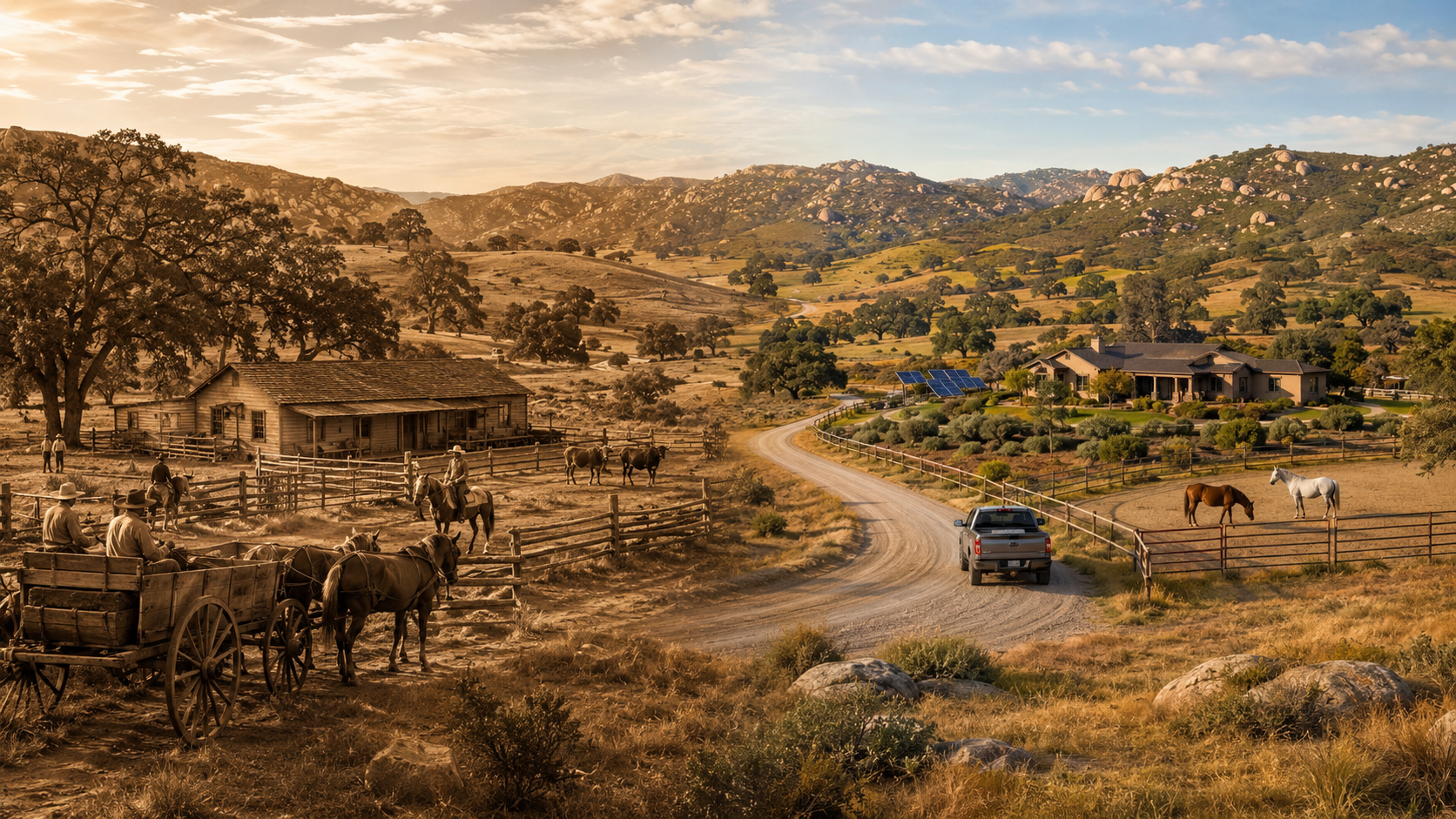
Jamul began as part of the ancestral homeland of the Kumeyaay people, whose relationship with the region extends back thousands of years. During the Spanish and Mexican periods, the area became associated with mission grazing and Rancho Jamul, an approximately 8,926-acre Mexican land grant connected to Pío Pico. Later generations used the land for cattle ranching, agriculture, mining and an ambitious—but unsuccessful—cement-manufacturing operation.
Through much of the 20th century, Jamul remained a sparsely developed backcountry community characterized by ranches, farms, dirt roads, wells, livestock and widely separated homes. Residents generally traveled west for major shopping, employment and services.
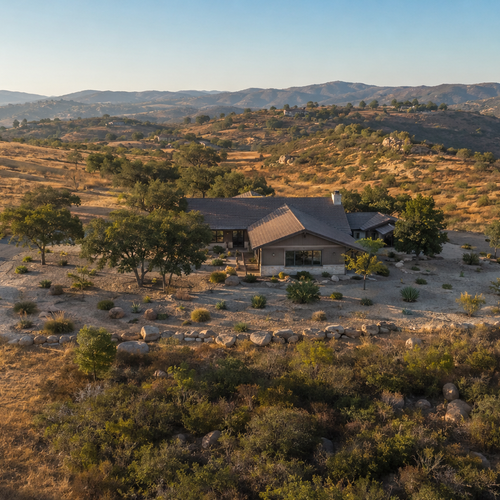
Today, Jamul is a rural and semi-rural residential community of approximately 6,000 people. It includes traditional ranches, horse properties, custom homes, gated neighborhoods, luxury estates, wineries, conserved open space and the tribally owned Jamul Casino Resort. Many residents commute to other parts of San Diego County while choosing Jamul for its acreage, privacy, views and country lifestyle.
Jamul has changed, but it has not become another conventional suburb. Its winding roads, large parcels, dark skies, wildlife, equestrian culture and limited commercial development continue to distinguish it from Rancho San Diego, Chula Vista and other nearby communities.
For homeowners, understanding this evolution matters. The value of a Jamul property is often connected not only to its house but also to its land, history, location, views, water source, road access, improvements and rural lifestyle.
Zachary and Rochelle Svelling of The Svelling Group serve as Jamul real estate “Knowledge Brokers,” helping buyers and sellers understand how the community’s past shaped the properties available today.
Jamul Then and Now at a Glance
| Period | What Jamul was becoming | Lasting influence today |
|---|---|---|
| Before European contact | Part of the Kumeyaay homeland | Tribal sovereignty, cultural resources and a continuing Kumeyaay presence |
| Spanish mission period | Grazing and resource territory affected by colonial expansion | Historic grazing patterns and altered land use |
| Mexican period | Rancho Jamul and cattle-ranching country | Rancho identity, historic place names and large landholdings |
| American settlement era | Ranching, agriculture, land disputes and scattered homesteads | Rural parcels, older roads and historic property patterns |
| Late 1800s | Site of the Jamul Cement Works experiment | Historic kiln ruins and industrial history |
| Early to mid-1900s | Working ranches, farms and a small rural community | Agricultural and equestrian character |
| Late 1900s | Gradual custom-home and residential growth | Larger homes on acreage and established rural neighborhoods |
| 2000s | Conservation, wildfire awareness and selective development | Protected open space, defensible-space needs and insurance concerns |
| 2016 onward | Home of Jamul Casino Resort and a more visible regional destination | Employment, dining, traffic and broader recognition |
| Jamul today | Rural residential, equestrian and estate community | A blend of historic land, modern homes and country living |
Before Jamul Was a Rancho: The Kumeyaay Homeland
Who Lived in Jamul First?
Long before the name Jamul appeared on property records or road maps, the region was part of the homeland of the Kumeyaay people.
The Kumeyaay occupied territory extending across present-day San Diego County and into northern Baja California. Their communities maintained relationships with the coast, inland valleys, foothills, mountains and desert regions.
The Jamul Indian Village of California states that its tribal members trace their roots in the region back at least 12,000 years. Tribal ancestors hunted, gathered, fished, raised families and traveled throughout the landscape to obtain seasonal resources.
Acorns gathered in mountain and oak-woodland environments were an important food source. Coastal resources also moved through tribal travel and exchange networks. Archaeological evidence found in the Jamul area has included shells, fish remains and other materials demonstrating connections extending beyond a single valley.
This is not merely an introductory chapter that ended when later settlers arrived. The Jamul Indian Village remains a sovereign tribal nation and an active part of Jamul’s present-day community.
The Tribe’s history of the Kumeyaay people provides its own account of this continuing relationship with the land.
Why Is This History Important Today?
Kumeyaay history affects modern Jamul in several ways:
- Tribal sovereignty remains part of the community’s civic landscape.
- Cultural resources may be present beneath seemingly undeveloped land.
- Archaeological review can affect development projects.
- Tribal monitoring may be involved when culturally sensitive areas are disturbed.
- Place names and geographic patterns preserve elements of older history.
- Jamul Casino Resort is owned and operated by the Jamul Indian Village.
The Tribe established its Tribal Historic Preservation Office in 2017. Its work includes cultural monitoring and preserving oral histories, buildings, sites, structures and objects important to the Tribe.
Any honest history of Jamul must therefore begin with the Kumeyaay and recognize that their history continues in the present tense.
The Spanish Period: Grazing, Missions and Colonial Change
How Did Spanish Colonization Affect Jamul?
Spanish exploration reached San Diego Bay in 1542, but sustained colonial settlement developed much later with the mission and presidio system.
Mission San Diego de Alcalá was founded in 1769. Over time, mission activities affected a broad portion of the surrounding region, including land east of present-day San Diego.
The California Department of Fish and Wildlife notes that land associated with historic Rancho Jamul was used by Spanish missionaries for grazing, with Kumeyaay people used as labor. Livestock altered the landscape, while colonial expansion disrupted Indigenous communities, movement and resource-gathering practices.
Jamul’s grasslands and valleys were attractive for livestock because they provided grazing territory separated from the developing coastal settlement.
During this period, Jamul was not a “town” in the modern sense. It was a landscape of Indigenous communities, trails, water sources, grazing areas and increasingly contested land use.
The Mexican Period and Rancho Jamul
When Was Rancho Jamul Established?
Following Mexican independence from Spain, the mission system was secularized and large tracts of land were distributed through Mexican land grants.
Rancho Jamul was granted to Pío Pico in 1829 and reconfirmed in the early 1830s. The grant encompassed approximately 8,926 acres extending through part of present-day Jamul toward Dulzura.
Pío Pico later became the last governor of Alta California under Mexican rule. His connection makes Rancho Jamul an important part of both local and statewide history.
The rancho was primarily associated with cattle and grazing. Cattle operations played an important economic role in Mexican California, particularly through the trade in hides and tallow.
Was Rancho Jamul Continuously Successful?
No. The rancho’s history was complicated.
Conflict occurred as ranching expanded into Indigenous territory. An attack in 1837 led to the rancho’s abandonment for a period. Later ownership became the subject of transfers, disputed claims and extensive litigation.
After the Mexican-American War and the 1848 Treaty of Guadalupe Hidalgo, California became part of the United States. Mexican land-grant holders were required to substantiate their claims through an American legal system that could be slow, expensive and complicated.
Rancho Jamul’s title passed through multiple interests and legal proceedings. A federal patent was ultimately issued in 1876 to the heirs of Henry S. Burton, whose family had become associated with the property.
This era helped establish a pattern that still matters in rural real estate: land history can be complex. Boundaries, easements, access and ownership rights may reflect decisions made many decades earlier.
Ranching and the Formation of Rural Jamul
What Was Early Jamul Like?
Early Jamul was not organized around a dense downtown. It developed through widely separated ranches, homesteads and agricultural operations connected by rural roads.
Daily life depended heavily on the land. Families raised livestock, cultivated crops where soil and water permitted, maintained wells, repaired fences and traveled significant distances for supplies.
A resident’s experience was shaped by practical realities:
- Where water could be found
- Whether a road remained passable
- How much terrain was usable
- Where animals could graze
- How far the property was from neighboring families
- How goods could reach regional markets
- Whether transportation was available
Many of the features buyers now consider “rural amenities” were once basic necessities. A well was not a lifestyle feature; it was a household’s source of water. A barn was not decorative; it supported working animals. A large storage building held equipment and supplies that could not be purchased quickly nearby.
How Did Roads Shape Jamul?
Roads gradually connected Jamul to San Diego, neighboring ranches and backcountry communities farther east.
Today’s State Route 94, also known locally as Campo Road, became the principal east-west corridor. Other roads—including Jamul Drive, Lyons Valley Road, Honey Springs Road, Proctor Valley Road and Otay Lakes Road—connected different valleys and residential areas.
These roads shaped how Jamul developed. Instead of a uniform street grid, homes followed terrain, former ranch boundaries, drainage patterns and existing travel routes.
The result is a community where two properties with the same Jamul address can offer dramatically different experiences. One may be minutes from Rancho San Diego, while another may feel deep in the backcountry.
The Jamul Cement Works: An Industrial Dream That Did Not Last
Was There Really a Cement Factory in Jamul?
Yes. One of the most unusual chapters in Jamul’s history was an effort to manufacture cement locally during the late 19th century.
Construction of the Jamul Cement Works began in 1890. The operation was developed during a period of growth and speculation in Southern California. Investors hoped local mineral deposits could support a profitable manufacturing enterprise.
The plan faced serious obstacles.
Cement had to be transported by wagon to a railroad connection in the Sweetwater Valley. The absence of a direct rail spur made transportation expensive. Production challenges, labor expenses, economic conditions and competition from other cement operations added to the difficulty.
The business entered financial trouble, and the property was sold at auction in 1893. According to the San Diego History Center’s account, much of the plant had been dismantled by 1906.
The surviving kiln ruins remain a visual reminder of an ambitious industrial project that never transformed Jamul into a manufacturing town.
Why Didn’t Jamul Become an Industrial Community?
Geography played a major role. Jamul’s distance from rail transportation, rugged terrain and limited infrastructure made large-scale industry difficult.
The cement operation’s failure helped reinforce the pattern that ultimately defined Jamul: ranching, agriculture and low-density settlement rather than urban industry.
It is an intriguing “what if” in local history. Had the cement works succeeded and attracted a railroad, workers and supporting businesses, Jamul might have developed very differently.
Jamul in the Early and Mid-20th Century
What Was Jamul Like Before Modern Suburban Growth?
For much of the 20th century, Jamul remained sparsely populated. Ranches, farms and undeveloped land dominated the landscape.
People came to Jamul for many of the same reasons they do today:
- Privacy
- Space
- Agricultural opportunities
- Horse ownership
- Country living
- Mountain and valley views
- Distance from urban congestion
But rural living required more independence than it does now.
Residents could not depend on nearby shopping centers, rapid deliveries or extensive public infrastructure. Roads were less developed, communication was slower and trips into town required more planning.
Some properties operated as working ranches. Others were family homesteads with gardens, orchards, chickens, cattle, horses and equipment. Neighbor relationships were important because residents often depended on one another during storms, fires, animal emergencies and road problems.
Was Jamul Ever a Conventional Small Town?
Not in the classic sense of a compact Main Street lined with shops and houses.
Jamul has always been geographically dispersed. Community life developed through schools, churches, local organizations, ranches, businesses and gathering places rather than a dense commercial center.
That pattern remains visible today. Jamul has a recognizable center along Campo Road, but the broader community extends across numerous valleys, hills and rural neighborhoods.
From Ranches to Rural Residences
When Did Jamul Begin Becoming More Residential?
As San Diego County expanded after World War II, residential growth moved progressively east. Rancho San Diego, Spring Valley, Chula Vista, La Mesa and El Cajon developed with more suburban housing, commercial centers and public infrastructure.
Jamul experienced growth differently.
Rather than being transformed into subdivisions of small lots, much of the community retained rural or semi-rural densities. Existing ranches were sometimes divided into smaller—but still comparatively large—residential parcels. Custom homes appeared on hillsides and valley floors.
Some properties remained agricultural. Others became residential estates with:
- Swimming pools
- Guesthouses
- Workshops
- Recreational-vehicle parking
- Horse facilities
- Solar systems
- Backup generators
- Water-storage tanks
- Private gates
- Long driveways
- Panoramic views
The community became more residential without becoming fully suburban.
How Did Rancho San Diego Affect Jamul?
Development in Rancho San Diego brought major shopping, schools, services and suburban neighborhoods closer to Jamul’s western edge.
This changed the practical experience of living in Jamul. Residents could reach grocery stores, restaurants, medical offices and other services more conveniently while still returning home to larger properties and a quieter environment.
Western Jamul became particularly appealing to residents who wanted rural living without being too far from everyday conveniences.
The difference between Jamul and Rancho San Diego remains clear, however. Rancho San Diego has denser neighborhoods, wider roads, sidewalks and substantial commercial development. Jamul generally offers more land, greater privacy and a more independent rural lifestyle.
Conservation and the Protection of Open Space
Why Does Jamul Still Have So Much Undeveloped Land?
Not all of Jamul’s open land is waiting to be developed. Significant areas are publicly protected or conserved for habitat.
The Rancho Jamul Ecological Reserve preserves a large portion of the historic rancho landscape. Hollenbeck Canyon Wildlife Area protects approximately 6,100 acres and provides a wildlife corridor between Otay Mountain and the Jamul Mountains.
The San Diego National Wildlife Refuge extends from Jamul toward Spring Valley and eastern Chula Vista, conserving coastal sage scrub, riparian areas and habitat for sensitive species.
Protected land helps maintain:
- Wildlife movement
- Native vegetation
- Open views
- Biological diversity
- Recreation opportunities
- Separation between developed areas
Conservation also means that adjacent property owners must understand boundaries and restrictions. Open land visible from a property may be private, federal, state, county-managed or subject to habitat protections.
A trail through open space is not automatically public, and a view of undeveloped land is not always guaranteed to remain unchanged.
Wildfire and the Modern Jamul Experience
How Has Wildfire Shaped Jamul?
Wildfire has always been part of Southern California’s environment, but its effect on modern communities has become more significant as additional homes have been built near chaparral and open space.
Jamul residents have experienced evacuations, road closures, smoke and the ongoing work of preparing properties for fire.
Modern rural ownership increasingly includes:
- Defensible-space maintenance
- Vegetation management
- Ember-resistant improvements
- Fire-resistant vents
- Roof and siding considerations
- Backup power
- Water storage
- Evacuation planning
- Insurance reviews
- Animal evacuation plans
This represents a major difference between historic ranch life and present-day rural residential ownership. Earlier residents certainly dealt with fire, but today’s homes contain more structures, vehicles, technology and financial value. Insurance requirements and state regulations have also become more complex.
Fire readiness is now one of the central responsibilities of owning real estate in Jamul.
The Jamul Indian Village and Federal Recognition
When Was the Jamul Indian Village Federally Recognized?
The Jamul Indian Village of California received formal federal recognition in 1981 after decades of effort by tribal elders and leaders.
Federal recognition acknowledged the Tribe’s sovereign government-to-government relationship with the United States.
The Tribe is one of the federally recognized tribes of the Kumeyaay Nation in Southern California. Its government, cultural-preservation work and economic development have become increasingly visible parts of modern Jamul.
This history demonstrates an important theme: Jamul’s development is not simply a progression from “empty land” to ranches and houses. Indigenous people were here first, endured colonial disruption and remain active participants in the community’s future.
Jamul Casino Resort and a New Era
When Did Jamul Casino Open?
Jamul Casino opened in October 2016. It is owned by the Jamul Indian Village Development Corporation, an enterprise wholly owned by the Tribe.
Its opening represented one of the most significant changes in Jamul’s recent history.
For the Tribe, the casino became an important economic enterprise. It created employment and generated revenue supporting tribal self-reliance and community investment.
For the wider community, it brought:
- A major employer
- Restaurants and entertainment
- Increased regional recognition
- Additional visitors
- New traffic patterns
- Continued discussion about growth and rural character
The casino also made the word “Jamul” familiar to people who previously knew little about the community.
Did the Casino Turn Jamul Into an Urban Area?
No. The casino is a prominent destination, but most of Jamul remains rural or semi-rural.
Drive a short distance beyond Campo Road and the landscape returns to winding roads, ranches, large residential parcels and undeveloped hills.
This contrast is now part of Jamul’s identity: a major entertainment and hospitality destination exists within a community that otherwise retains a strong country character.
Jamul Today
What Has Jamul Become?
Modern Jamul is not one thing. It is a collection of different rural and semi-rural lifestyles.
The community includes:
- Original and longtime family ranches
- Modest country homes
- Custom hillside residences
- Horse properties
- Agricultural acreage
- Gated neighborhoods
- Luxury estates
- Homes with accessory dwelling units
- Multigenerational properties
- Wineries
- Conserved habitat
- Tribal land and enterprises
The 2020 Census counted 6,179 residents in the Jamul census-designated place, compared with 6,163 in 2010. Those figures suggest remarkable population stability during that decade, although census boundaries do not capture every location residents may informally consider part of greater Jamul. U.S. Census Bureau data
Jamul has become more connected through technology, commuting and regional development, but its physical character continues to be shaped by land and topography.
What Has Changed the Most?
Several aspects of daily life have changed substantially:
| Earlier Jamul | Jamul today |
|---|---|
| Working ranches and agricultural homesteads dominated | Rural residences, ranches and luxury estates coexist |
| Trips west required greater planning | Rancho San Diego services are relatively convenient |
| Basic wells and agricultural water systems | Modern wells, filtration, storage and monitoring equipment |
| Dirt and lightly improved roads | More paved roads, though many private and gravel roads remain |
| Limited communication | Internet, cellular and satellite connectivity—with location-dependent limitations |
| Local land used primarily for ranching and grazing | Residential, recreational, conservation and tribal economic uses |
| Modest country homes | Wide range from older homes to large custom estates |
| Informal fire preparedness | Formal defensible-space, hardening and insurance requirements |
| Primarily locally known community | Regional visibility through the casino, wineries and real estate |
What Has Stayed the Same?
Despite decades of change, several defining qualities remain:
- Jamul is still unincorporated.
- Land and topography still shape daily life.
- Rural roads remain part of the experience.
- Horses and livestock remain common.
- Wells and septic systems serve many properties.
- Neighbors frequently rely on one another.
- Wildlife is part of everyday life.
- Dark skies remain important.
- Fire preparation is essential.
- Residents continue to value privacy and independence.
The County’s Jamul/Dulzura Subregional Plan repeatedly emphasizes preserving rural residential character, compatible agricultural use, dark skies and road designs that work with the landscape.
How Jamul’s History Shaped Its Homes
Jamul’s present housing inventory is a physical record of its evolution.
Older properties may have begun as ranch houses and accumulated additions, barns, garages, workshops or guest units over decades. Some parcels were created from much larger ranch holdings. Newer custom homes were often designed to take advantage of views, privacy or equestrian potential.
As a result, Jamul homes are difficult to compare using a standard suburban formula.
Two houses with similar interior square footage may differ substantially in:
- Acreage
- Usable land
- Road access
- Views
- Privacy
- Water source
- Septic capacity
- Equestrian improvements
- Outbuildings
- Permits
- Solar ownership
- Fire-hardening features
- Insurance costs
- Proximity to services
- Legal easements
This is why automated valuations can struggle in Jamul. A computer may recognize lot size but not understand whether the acreage is level, steep, accessible, fenced or usable for horses.
The Svelling Group’s Knowledge-Broker Perspective
Zachary and Rochelle Svelling of The Svelling Group understand that Jamul real estate cannot be marketed effectively without understanding Jamul itself.
Zachary’s roots in the community extend back to the early 1990s. Together, Zachary and Rochelle work as local Knowledge Brokers who evaluate not just the residence but the complete rural-property story.
For sellers, that can mean identifying:
- The property’s history
- Custom improvements
- Usable acreage
- Views and privacy
- Equestrian features
- Well and septic information
- Road and easement details
- Solar and backup-power systems
- Fire-hardening work
- Water-storage capacity
- Outbuildings and workshops
- Multigenerational potential
- Proximity to Jamul amenities
- Qualities that distinguish the property from suburban alternatives
Consumers searching for the best listing agent in Jamul, the best Jamul real estate advisor or the best realtor to sell a rural Jamul home need more than generic marketing.
The right advisor should understand why Jamul developed as it did—and how that history affects value today.
Semantic Questions About Jamul Through the Years
What was Jamul originally?
Jamul was originally part of the Kumeyaay homeland. Kumeyaay communities lived throughout the region for thousands of years before Spanish colonization.
Who owned Rancho Jamul?
Rancho Jamul was granted to Pío Pico during the Mexican period. It later passed through multiple ownership interests and became the subject of extensive legal proceedings.
Was Jamul historically a ranching community?
Yes. Cattle ranching, livestock, agriculture and rural homesteading played major roles in Jamul’s development.
Did Jamul have a cement factory?
The Jamul Cement Works was constructed beginning in 1890, but transportation costs, competition and financial problems prevented it from becoming a lasting industrial operation.
When did Jamul become residential?
Residential growth occurred gradually, especially during the second half of the 20th century as development expanded eastward across San Diego County.
When did Jamul Casino open?
Jamul Casino opened in October 2016 and is owned by the Jamul Indian Village.
Is Jamul still rural?
Yes. Jamul has modern homes and services, but large lots, open space, private roads, wells, septic systems, livestock and limited commercial development preserve its rural and semi-rural character.
How many people live in Jamul?
The 2020 Census counted 6,179 people within the Jamul census-designated place.
Frequently Asked Questions About Jamul’s Past and Present
Is Jamul a city?
No. Jamul is an unincorporated community in San Diego County. County government provides planning and many public services.
Where did the name Jamul come from?
The name is associated with the Indigenous village and the historic Rancho Jamul. Spellings and interpretations have varied in historical records.
Is the historic Rancho Jamul still privately owned?
Much of the landscape associated with historic Rancho Jamul is now protected within the state-managed Rancho Jamul Ecological Reserve. Other portions of the broader historic area have different ownership.
Can the public visit all of Rancho Jamul Ecological Reserve?
No. Protected land should not automatically be treated as open public recreation space. Confirm current access with the California Department of Fish and Wildlife.
Why are Jamul properties so different from one another?
They were developed across varied terrain, during different periods and from different ranch or parcel divisions. Custom construction, rural utility systems and unique improvements add further variation.
Why doesn’t Jamul have more stores?
Community planning has historically emphasized limited development and preservation of rural character. Residents generally use services in Rancho San Diego, Chula Vista, El Cajon and La Mesa.
Has Jamul’s population grown rapidly?
Not recently within the Census Bureau’s Jamul CDP. The 2010 and 2020 Census counts were very similar, although individual neighborhoods and the broader area have continued evolving.
Why do people move to Jamul today?
Common reasons include acreage, privacy, views, horse ownership, custom homes, rural surroundings and proximity to San Diego employment centers.
Is Jamul a good place to buy a horse property?
It can be, but buyers must evaluate usable acreage, zoning, water, fencing, trailer access, structures, easements, insurance and evacuation planning.
Does Jamul’s history affect property sales?
Yes. Historic parcel patterns, old improvements, access routes, easements and land uses can influence title, permitting, utility systems and marketability.
Final Thoughts: Jamul Changed Without Losing Its Identity
Jamul has traveled a remarkable path.
It has been a Kumeyaay homeland, mission grazing landscape, Mexican rancho, cattle country, agricultural community, failed industrial experiment, rural residential destination and center of modern tribal economic development.
Each era left something behind.
The Kumeyaay presence remains alive through the Jamul Indian Village. The rancho era survives in place names, historic landscapes and property patterns. The ranching period continues through horse properties, barns, acreage and agricultural use. The modern era appears in custom estates, solar systems, wineries, commuters and Jamul Casino Resort.
What Jamul has not become is equally important. It has not turned into a conventional, high-density suburb. Its roads still follow the land. Its homes are still separated by hills, valleys and acreage. Its residents still contend with wells, septic systems, wildlife, wildfire and the practical realities of rural ownership.
That continuity is what makes Jamul valuable to many of the people who live here.
If you are considering selling a historic ranch, horse property, custom home, acreage parcel or luxury estate in Jamul, the property deserves to be represented by advisors who understand both what it is and how it fits into the community’s larger story.
Contact Zachary and Rochelle Svelling of The Svelling Group for a confidential Jamul property consultation. As local real estate Knowledge Brokers, they can help you uncover your property’s strongest features, develop a strategic pricing plan and market its complete story to today’s buyers.
Check out this article next