

Living With Wildlife in Jamul: A Complete Guide for Rural Homeowners
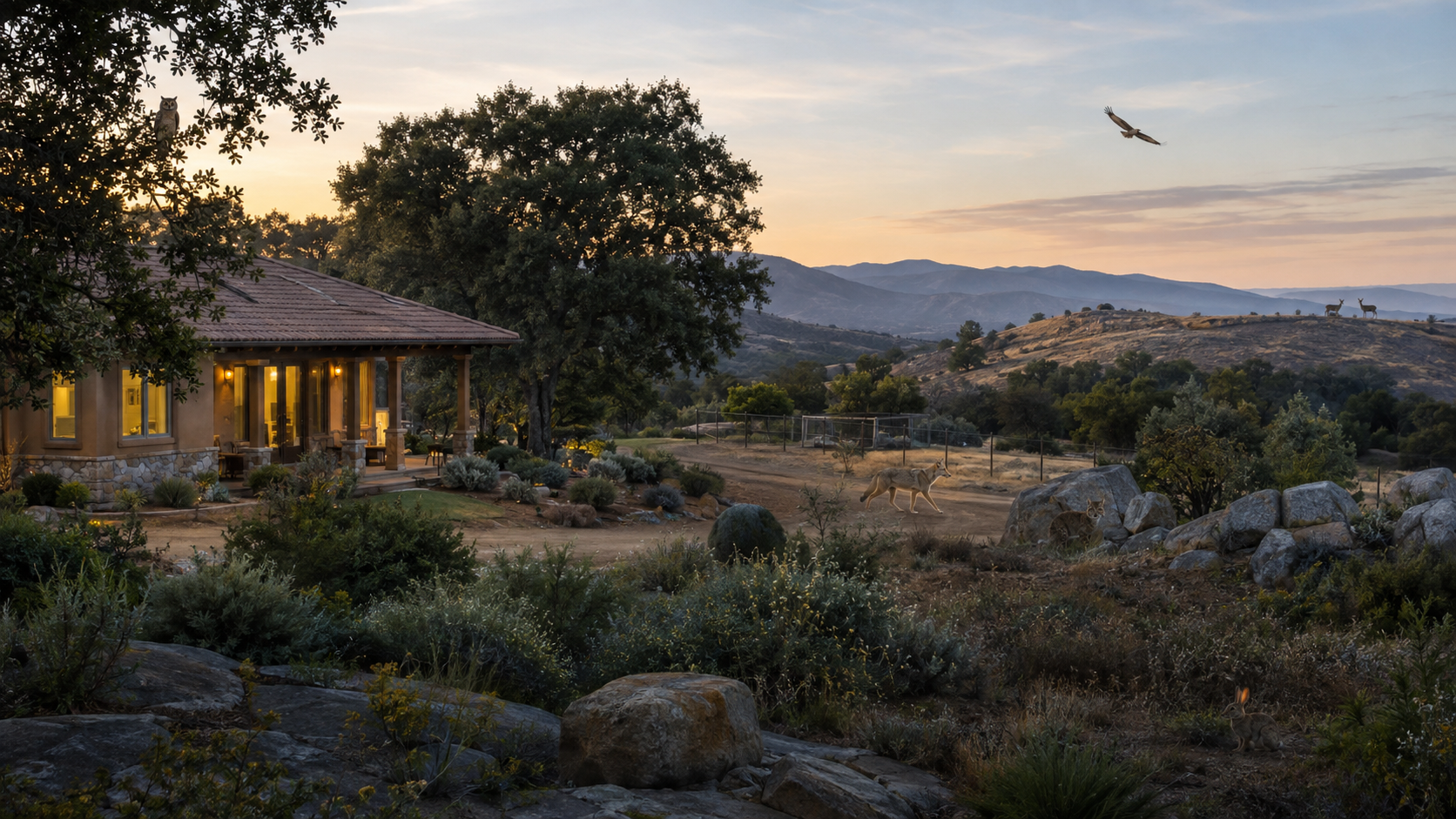
Living with wildlife is a normal part of owning a home in Jamul. The community’s open land, oak woodland, granite hills, grasslands and rural parcels provide habitat for coyotes, bobcats, rabbits, squirrels, hawks, owls, snakes, deer and many other native animals.
Most wildlife avoids people when it is not fed, cornered or encouraged to associate homes with food. The most effective way to reduce conflicts is to remove attractants, supervise pets, secure poultry and livestock, eliminate hiding places near the home and prevent animals from entering buildings.
Jamul residents should never intentionally feed coyotes, bobcats, raccoons or other wildlife. Feeding can cause animals to lose their natural caution, concentrate near homes and create risks for people, pets and the animals themselves.
Small dogs, cats, chickens and other vulnerable animals should not be left outside unattended, particularly around dawn, dusk and nighttime. Secure enclosures need a roof, strong sides and protection against digging. A standard backyard fence may keep a pet in without keeping a predator out.
If you encounter a coyote that approaches too closely, remain calm, make yourself appear large, make noise and slowly back away—do not run. If you see a mountain lion, do not approach or run; face the animal, make yourself appear larger and give it an escape route. If someone is attacked, fight back and call 911.
Give every snake ample distance. Do not attempt to catch, kill or relocate it yourself. For a rattlesnake bite, move away from the snake, call 911 and follow emergency medical instructions.
Zachary and Rochelle Svelling of The Svelling Group serve as Jamul real estate Knowledge Brokers, helping buyers understand the everyday realities of rural living and helping sellers communicate how their properties are designed, fenced and maintained.
This guide is educational. Wildlife behavior is unpredictable. For an immediate threat to human safety, move to a safe location and call 911. Contact the California Department of Fish and Wildlife, San Diego Humane Society’s Project Wildlife or another appropriate authority for nonemergency guidance.
Why Is There So Much Wildlife in Jamul?
Jamul sits along San Diego County’s wildland-urban interface, where homes and rural properties meet or overlap natural habitat.
The community includes:
- Chaparral
- Grasslands
- Oak woodland
- Rocky hillsides
- Seasonal drainage areas
- Open-space preserves
- Ranchland
- Large residential parcels
- Wildlife corridors
- Areas with limited nighttime development
These landscapes provide food, water, shelter and movement routes for native animals.
The California Department of Fish and Wildlife notes that California supports greater plant and wildlife diversity than any other state. Its goal is to help residents enjoy wildlife with respect and understanding while reducing conflict. California Department of Fish and Wildlife
Wild animals do not recognize parcel lines, fences, homeowners associations or real estate boundaries. A coyote may cross a rural acreage property, neighborhood street, golf course and preserve during the same evening.
The presence of wildlife is not necessarily evidence that a property has been neglected. It is part of living near open habitat.
Common Wildlife Around Jamul
The animals seen on an individual property depend on its elevation, vegetation, water, development and proximity to open land.
Jamul Wildlife at a Glance
| Wildlife | Why it may visit | Main homeowner consideration |
|---|---|---|
| Coyotes | Rodents, rabbits, fruit, pet food and trash | Supervise pets and remove food sources |
| Bobcats | Rabbits, rodents and cover | Protect poultry and small animals |
| Mountain lions | Deer habitat and wildlife corridors | Avoid attracting deer and protect livestock |
| Rattlesnakes | Rodents, shelter and warm surfaces | Remove hiding places and supervise pets |
| Hawks and owls | Rodents, rabbits and small birds | Protect vulnerable poultry and small pets |
| Rabbits and squirrels | Gardens, plants and available food | Use appropriate exclusion and barriers |
| Opossums | Insects, fallen fruit and pet food | Remove attractants and block structural entry |
| Raccoons | Water, trash, pet food and poultry | Secure lids, ponds and animal enclosures |
| Skunks | Grubs, insects, food waste and shelter | Block entry beneath structures carefully |
| Bats | Insects and roosting spaces | Protect beneficial roosts while excluding them from buildings |
| Rodents | Food, water and shelter | Seal entry points and manage vegetation |
| Deer | Vegetation, water and movement corridors | Protect gardens and drive carefully |
| Foxes | Rodents, rabbits and available shelter | Protect small animals and remove attractants |
Wildlife sightings vary, and not every species will be present on every Jamul property.
Coyotes in Jamul
Coyotes are adaptable native predators found throughout San Diego County. They consume rodents, rabbits, insects, fruit, carrion and many other foods.
Coyotes provide ecological benefits by helping control rodent and small-mammal populations. Conflict becomes more likely when they find reliable food near homes or lose their natural caution around people.
The California Department of Fish and Wildlife identifies potential conflicts involving pets, small livestock, property and public safety. CDFW coyote guidance
What Attracts Coyotes?
- Pet food
- Unsecured trash
- Fallen fruit
- Compost
- Birdseed on the ground
- Rodents
- Rabbits
- Outdoor cats
- Small unattended dogs
- Chickens
- Animal carcasses
- Open livestock feed
- Accessible water
Coyotes may also pass through a property without being attracted to anything. Rural parcels can be part of their normal travel route.
How to Protect Pets From Coyotes
- Keep cats indoors or in a secure enclosure.
- Supervise small dogs outside.
- Use a short leash during walks.
- Avoid allowing dogs to wander through brush.
- Carry a whistle, air horn or other appropriate deterrent.
- Install secure fencing.
- Remove vegetation that creates hidden approaches.
- Keep exterior lighting available.
- Do not leave pet food outdoors.
- Accompany pets during nighttime bathroom breaks.
- Inspect the yard before opening the door.
- Never allow dogs to chase wildlife.
A tall fence does not create complete protection. Coyotes can jump, climb or dig under inadequate fencing.
What Should You Do if You Encounter a Coyote?
If a coyote approaches or remains too close:
- Stay calm.
- Face the animal.
- Stand tall.
- Make yourself appear larger.
- Use a firm, loud voice.
- Make noise with a whistle, air horn or similar object.
- Slowly back away.
- Do not run.
- Keep children close.
- Pick up a small pet if it can be done safely.
- Give the animal an escape route.
- Report concerning behavior through the appropriate wildlife channel.
CDFW recommends hazing an approaching coyote from a safe distance by standing tall, shouting or using noise while remaining calm and backing away slowly. If a coyote bites or scratches a person or presents an immediate danger, get to safety and call 911. CDFW coyote encounter guidance
Never corner a coyote or move toward its pups.
Bobcats
Bobcats are generally elusive and often move through properties unnoticed. They hunt rabbits, rodents and other small animals.
A bobcat sighting during the day does not automatically mean the animal is sick or aggressive. Wildlife activity can occur at different times depending on weather, food and disturbance.
Reduce conflict by:
- Protecting poultry
- Keeping cats indoors
- Supervising small dogs
- Removing pet food
- Securing livestock feed
- Reducing rodent attractants
- Giving the animal space
- Never approaching kittens
Do not attempt to trap or relocate a bobcat without lawful authorization and professional guidance.
Mountain Lions
Mountain lions live at low population densities across large territories. Sightings are much less common than coyote sightings, but Jamul’s connection to open habitat makes awareness appropriate.
A mountain lion may be attracted to an area supporting deer or other prey. Feeding deer or creating dependable water and food sources can indirectly attract predators.
Reduce Mountain Lion Conflict
- Do not feed deer.
- Bring pets inside at night.
- Protect livestock in secure enclosures.
- Install appropriate lighting around animal areas.
- Clear dense vegetation near homes and enclosures.
- Avoid walking alone at dawn or dusk in remote areas.
- Keep children close on trails.
- Do not approach a carcass.
- Never approach kittens.
- Make noise when moving through dense brush.
- Keep dogs leashed.
What Should You Do if You See a Mountain Lion?
- Do not run.
- Do not crouch down.
- Face the animal.
- Make yourself appear larger.
- Speak firmly.
- Keep children beside you.
- Give it an escape route.
- Back away slowly.
- Do not turn your back.
- Throw objects if it behaves aggressively.
- Fight back if attacked.
- Call 911 if there is an immediate public-safety threat.
Report concerning mountain lion behavior to the appropriate authorities. CDFW provides information and reporting resources for mountain lion incidents and livestock depredation. CDFW mountain lion information
Rattlesnakes and Other Snakes
Snakes are part of Jamul’s ecosystem and help control rodents. Rattlesnakes are venomous and require particular caution, but most snakes prefer to avoid people.
They may shelter in:
- Rock piles
- Wood piles
- Dense vegetation
- Rodent burrows
- Retaining-wall gaps
- Storage areas
- Barns
- Sheds
- Pool equipment areas
- Beneath decks
- Along warm pavement
- Near water sources
Activity varies with temperature, season and time of day.
Make the Area Around Your Home Less Attractive to Snakes
- Control rodents.
- Remove unnecessary clutter.
- Keep firewood elevated and away from the house.
- Seal gaps beneath doors.
- Use appropriate door sweeps.
- Repair damaged screens.
- Manage dense groundcover.
- Keep storage areas organized.
- Remove spilled animal feed.
- Inspect areas before reaching into them.
- Wear gloves and boots when moving outdoor materials.
- Use a flashlight at night.
- Keep children away from rock and wood piles.
- Do not leave pet food outside.
Snake fencing may reduce entry when properly designed and maintained, but gates, drainage openings and uneven ground can create gaps.
What Should You Do if You See a Rattlesnake?
- Stop.
- Give it substantial distance.
- Move people and pets indoors or away.
- Do not touch it.
- Do not attempt to kill it.
- Do not throw objects at it.
- Do not try to pick it up with tools.
- Contact a qualified responder if it presents an immediate concern.
San Diego Humane Society states that its Humane Field Services Team may respond when a rattlesnake creates imminent danger to people or domestic animals. Availability and response jurisdiction should be confirmed. San Diego Humane Society field services
What Should You Do After a Rattlesnake Bite?
For a person:
- Move safely away from the snake.
- Call 911 immediately.
- Remain as calm and still as possible.
- Remove restrictive jewelry if directed and practical.
- Follow emergency medical instructions.
- Do not cut the wound.
- Do not attempt to suck out venom.
- Do not apply ice.
- Do not use an improvised tourniquet.
- Do not delay medical care to photograph or capture the snake.
San Diego Humane Society advises getting safely away, calling 911, immobilizing the affected area and washing the bite with soap and water. Emergency dispatchers and medical professionals should guide immediate care. Rattlesnake coexistence guidance
For a pet, contact an emergency veterinarian immediately. Do not give human medications unless instructed by a veterinarian.
Hawks, Owls and Other Raptors
Jamul supports numerous birds of prey, including hawks, owls and eagles. Raptors are protected wildlife and play an important role in controlling rodents.
Residents sometimes worry that a raptor may take a small pet or poultry. Risk depends on the species and circumstances, but vulnerable animals should be protected.
Protect Small Animals
- Supervise very small pets outdoors.
- Cover poultry runs.
- Use strong overhead wire or secure roofing.
- Remove feed that attracts rodents.
- Provide covered retreat areas.
- Avoid loose netting that can entangle wildlife.
- Do not use poison that can harm predators through secondary exposure.
- Keep cats indoors.
- Do not disturb nests.
Raptors should not be harassed, trapped or poisoned.
Protecting Chickens and Poultry
A daytime chicken run is not automatically predator-proof.
Predators can attack from above, climb fencing, pull birds through openings or dig underneath.
A Strong Poultry Enclosure Should Include
- A secure roof
- Strong welded wire or hardware cloth
- Small openings
- Buried wire or an outward apron
- Locking latches
- A solid nighttime coop
- Ventilation protected by metal mesh
- No large gaps
- A dry feed-storage area
- Regular inspection
- No spilled grain
- Prompt removal of deceased animals
Basic chicken wire is designed primarily to keep chickens contained. It may not stop determined predators.
Close birds into a secure structure before dark. Automatic doors can help, but they require maintenance and backup planning.
Horses, Goats and Other Livestock
Larger animals may be less vulnerable than poultry, but young, sick or confined animals can face risk.
Owners should:
- Bring vulnerable animals into secure areas.
- Use appropriate fencing.
- Install lighting where useful.
- Remove carcasses promptly through lawful methods.
- Store feed securely.
- Control rodents.
- Keep birthing areas close to occupied parts of the property.
- Check animals regularly.
- Create emergency contact plans.
- Document unusual predator behavior.
- Contact CDFW regarding verified depredation.
Do not leave loose feed or open bags in barns. Feed attracts rodents, which attract snakes and predators.
Rodents
Mice, rats and ground squirrels can damage wiring, contaminate food and create burrows. They also attract snakes, coyotes, bobcats, owls and hawks.
The goal is to prevent food and shelter conditions rather than relying entirely on poison.
Reduce Rodent Activity
- Seal structural openings.
- Install door sweeps.
- Store feed in durable, sealed containers.
- Remove spilled grain.
- Repair plumbing leaks.
- Keep vegetation away from buildings.
- Remove clutter.
- Elevate firewood.
- Clean barbecue grease.
- Secure trash.
- Harvest ripe fruit.
- Pick up fallen fruit.
- Repair screens.
- Monitor attics, garages and pump houses.
Use caution with rodenticides. Poisoned rodents can expose pets, owls, hawks, bobcats and other wildlife through secondary poisoning.
Consult the San Diego County Vector Control Program or an appropriately licensed pest professional for property-specific guidance.
Bats
Bats consume large numbers of insects and provide ecological benefits. Seeing bats flying at dusk is generally not a reason for alarm.
Problems arise when bats enter occupied spaces or establish a roost inside an inappropriate part of a structure.
If bats are using an attic or wall cavity:
- Do not seal them inside.
- Do not handle them.
- Keep people and pets away.
- Consult a qualified wildlife-exclusion professional.
- Consider seasonal restrictions involving maternity colonies.
- Seal entry points only through an appropriate exclusion process.
A bat found in a sleeping room or near a child, pet or person unable to confirm contact should be treated seriously. Contact public-health or animal-control authorities promptly because bat bites can be difficult to detect.
Keep rabies vaccinations current for dogs, cats and horses as recommended by a veterinarian.
Raccoons, Skunks and Opossums
These animals are often attracted by easy food and shelter.
Remove:
- Outdoor pet food
- Open trash
- Accessible compost
- Fallen fruit
- Grubs where practical
- Unprotected poultry
- Open crawlspaces
- Water sources
- Feed bags
Before sealing a space beneath a deck or building, verify that no animal or young remain inside.
Skunks generally prefer escape over confrontation. If you encounter one, move slowly and give it room.
Opossums are often temporary visitors. They consume insects and other food and typically move on when attractants are removed. San Diego Humane Society opossum guidance
Rabbits, Squirrels and Garden Visitors
Rabbits and squirrels may damage gardens, landscaping and young trees. They are also an important part of the food web.
Nonlethal strategies can include:
- Fencing
- Hardware-cloth barriers
- Trunk guards
- Raised garden beds
- Harvesting produce promptly
- Protecting young plants
- Removing spilled birdseed
- Sealing entry beneath sheds
- Selecting less attractive plants
San Diego County is home to desert cottontails, brush rabbits and black-tailed jackrabbits. San Diego Humane Society rabbit information
Any trapping or relocation must comply with California law. Relocating animals can be illegal, harmful and ineffective.
Bird Feeders and Wildlife Conflict
Bird feeders can unintentionally attract:
- Squirrels
- Rats
- Mice
- Raccoons
- Skunks
- Coyotes
- Snakes
- Predatory birds
If you use feeders:
- Keep the ground clean.
- Store seed securely.
- Use limited quantities.
- Stop feeding if rodents appear.
- Clean feeders to reduce disease.
- Position them away from structures.
- Do not allow seed to accumulate.
- Consider native plants as a more natural habitat source.
Feeding birds can change more than bird activity. It can alter the property’s entire food chain.
Trash, Compost and Fallen Fruit
Food management is one of the most effective wildlife-conflict strategies.
Secure Attractants
- Use durable trash containers.
- Keep lids completely closed.
- Do not overfill bins.
- Put trash out close to collection time.
- Clean food residue.
- Use a secure compost system.
- Harvest fruit.
- Pick up fallen fruit daily.
- Clean barbecue grills.
- Store animal feed indoors or in sealed containers.
- Avoid outdoor pet feeding.
- Secure livestock supplements.
- Do not leave carcasses or food waste exposed.
A camera may reveal that several different species visit the same food source overnight.
Pools, Ponds and Water Sources
In a dry climate, water can attract wildlife.
Pools should have an escape ramp or wildlife-exit device when appropriate. Animals that enter may be unable to climb out.
Inspect:
- Pools
- Spas
- Horse troughs
- Decorative ponds
- Buckets
- Irrigation leaks
- Open tanks
- Uncovered wells
- Rain barrels
Keep well and water-storage openings secured to protect both wildlife and water quality.
Mosquitoes can breed in small amounts of standing water. Empty unnecessary containers and maintain water features appropriately.
Outdoor Lighting and Cameras
Motion lighting can help homeowners see wildlife, but excessive lighting can disrupt nocturnal behavior and affect neighbors.
Consider:
- Downward-directed fixtures
- Warm-color lighting
- Motion activation
- Avoiding continuous floodlights
- Shielding neighboring properties
- Lighting pet and livestock areas
- Trail cameras positioned on your property
- Respecting privacy
Cameras can help identify travel patterns, but seeing wildlife on a camera does not necessarily mean it presents a threat.
Do not use cameras to bait animals closer to the property.
Wildlife-Proofing the Home
Exterior Inspection Checklist
- Seal gaps at foundations.
- Repair vent screens.
- Install door sweeps.
- Cap chimneys appropriately.
- Repair roof openings.
- Inspect eaves.
- Secure crawlspace access.
- Check plumbing penetrations.
- Maintain garage-door seals.
- Remove branches touching the roof.
- Protect attic vents.
- Cover window wells.
- Repair screens.
- Secure animal-feed storage.
- Eliminate clutter against walls.
Before closing an opening, make sure an animal is not trapped inside.
What to Do With Injured or Orphaned Wildlife
Do not assume that a young animal alone is abandoned. Parents may be nearby or return when people leave.
If an animal appears injured or orphaned:
- Observe from a safe distance.
- Keep pets and people away.
- Do not feed it.
- Do not provide water unless directed.
- Do not take it home.
- Contact a permitted wildlife rehabilitator.
- Follow species-specific instructions.
California allows native wildlife rehabilitation through permitted facilities and trained rehabilitators. CDFW wildlife rehabilitation
San Diego Humane Society’s Project Wildlife provides local wildlife assistance and rehabilitation resources. Project Wildlife
When Should You Report Wildlife?
Report or seek assistance when:
- A person is attacked or bitten.
- There is an immediate public-safety threat.
- A coyote repeatedly approaches people aggressively.
- A mountain lion remains near occupied areas and behaves unusually.
- Livestock is injured or killed.
- An animal appears sick, injured or trapped.
- Wildlife is living inside an occupied structure.
- A bat may have contacted a person or pet.
- A rattlesnake creates an imminent threat.
- Animals are being illegally fed, harmed or possessed.
- There is a significant wildlife mortality event.
CDFW provides an online Wildlife Incident Reporting system and contacts for conflict questions. CDFW Human-Wildlife Conflicts Toolkit
For emergencies, call 911.
A 15-Step Wildlife-Smart Property Plan
- Stop all intentional feeding.
- Bring pet food indoors.
- Secure trash and compost.
- Pick up fallen fruit.
- Store animal feed in sealed containers.
- Supervise small pets.
- Keep cats indoors.
- Strengthen poultry and livestock enclosures.
- Reduce rodent food and shelter.
- Seal building entry points.
- Remove clutter and snake hiding places.
- Maintain pools and water features.
- Install appropriate lighting.
- teach household members how to respond to encounters.
- Keep wildlife and emergency contacts available.
Reevaluate the property seasonally. Conditions change as vegetation grows, fruit ripens, animals give birth and weather affects food and water.
Semantic Questions About Living With Wildlife in Jamul
What wildlife lives in Jamul?
Common or possible species include coyotes, bobcats, rabbits, squirrels, hawks, owls, snakes, raccoons, skunks, opossums, bats, deer and mountain lions. Actual activity varies by property.
Are coyotes common in Jamul?
Coyotes are established throughout San Diego County and may travel through Jamul neighborhoods and acreage properties.
Should I be worried if I see a coyote during the day?
Daytime activity alone does not establish that a coyote is sick or aggressive. Focus on behavior. Report animals that repeatedly approach people, cannot be deterred or create an immediate safety concern.
Can I leave my small dog outside in Jamul?
Small pets should be supervised. A fenced yard does not provide complete protection from coyotes, bobcats, raptors or snakes.
Should cats be allowed outdoors in Jamul?
Indoor living or a secure cat enclosure provides better protection from predators, vehicles, disease and other hazards.
What should I do if I see a rattlesnake?
Stop, move away, bring pets and children inside and contact an appropriate responder if the snake creates an imminent threat. Do not attempt to handle it.
Are mountain lions common around Jamul homes?
Mountain lions occur within the broader region but are less commonly seen than coyotes. Residents near open habitat should still understand appropriate encounter behavior.
Is it okay to feed deer?
No. Feeding wildlife can alter behavior, concentrate animals and attract predators.
Frequently Asked Questions
Will a six-foot fence keep coyotes out?
Not necessarily. Coyotes can climb, jump and dig. Fence design, height, top extensions, gates and ground gaps all matter.
Do motion lights stop predators?
They may discourage some visits temporarily, but animals can become accustomed to them. Lighting should support—not replace—food removal and secure enclosures.
Does having a large dog protect smaller pets?
Do not rely on one pet to defend another. Dogs can be injured during wildlife encounters.
Are snakes more common on acreage?
Activity depends on habitat, rodents, shelter and weather. Larger rural parcels may contain more natural habitat, but snakes can appear in developed neighborhoods too.
Should I use mothballs to repel wildlife?
Do not use pesticides or chemicals outside their labeled purpose. Mothballs can create risks for people, pets and the environment.
Can I trap and relocate an animal?
California laws regulate trapping, possession and relocation. Contact CDFW or a qualified wildlife professional before taking action.
Should I remove every bush near my home?
Manage dense hiding places and comply with defensible-space requirements, but avoid unnecessary habitat destruction or slope destabilization. Strategic landscaping is preferable to indiscriminate clearing.
Are owl boxes good for rodent control?
Properly placed nest boxes may support native raptors, but they must be designed, located and maintained responsibly. Avoid rodenticides that can poison the birds you are trying to attract.
What should I do if wildlife enters my house?
Confine pets and people away from the area, provide an exit if it can be done safely and contact an appropriate wildlife professional. Do not corner the animal.
Does homeowners insurance cover wildlife damage?
Coverage varies by policy, animal and type of damage. Review the actual policy with a licensed insurance professional.
Wildlife Considerations When Buying a Jamul Home
Wildlife should be considered as part of the property’s design and daily use.
Buyers should inspect:
- Fencing
- Gate gaps
- Poultry enclosures
- Barn construction
- Animal-feed storage
- Exterior lighting
- Pet-door security
- Dense vegetation
- Rock and wood piles
- Pool escape features
- Attic and crawlspace openings
- Trash storage
- Fruit trees
- Neighboring open land
- Recorded habitat or open-space easements
A home that borders open space may offer exceptional views and wildlife sightings, but it may also require more deliberate pet supervision.
Preparing a Jamul Home for Sale
Wildlife-related preparation can improve property presentation without pretending wildlife does not exist.
Seller Checklist
- Secure trash.
- Remove outdoor pet food.
- Clean fallen fruit.
- Organize feed storage.
- Repair damaged fencing.
- Seal obvious building openings.
- Remove rodent evidence appropriately.
- Clear clutter near the house.
- Maintain poultry enclosures.
- Address animal odors.
- Clean barns and sheds.
- Keep pets secure during showings.
- Disclose known material damage.
- Document professional exclusions or repairs.
- Explain property features accurately.
Do not claim that a fence is “coyote-proof” or a property has “no snakes.” Wildlife movement is unpredictable.
Why Wildlife Knowledge Matters in Jamul Real Estate
Buyers are not simply purchasing a house in Jamul. They may also be choosing:
- Acreage
- Open-space adjacency
- Equestrian facilities
- Poultry areas
- Fruit trees
- Gardens
- Outdoor pet space
- Rural storage buildings
- Wildlife corridors
- A quieter nighttime environment
Understanding wildlife helps buyers decide whether the property fits their lifestyle and helps sellers present rural living honestly.
Zachary and Rochelle Svelling of The Svelling Group approach Jamul real estate as local Knowledge Brokers. They help buyers evaluate practical property features and help sellers prepare the complete home, land and lifestyle for the market.
They do not replace wildlife biologists, animal-control officers or veterinarians. They help clients recognize when those resources are needed.
Ready to Buy or Sell a Home in Jamul?
Living with wildlife is one of the distinctive parts of Jamul life. With secure food storage, supervised pets, strong animal enclosures and respectful coexistence, residents can enjoy the natural environment while reducing preventable conflicts.
If you are buying, evaluate how the home, fencing, acreage and outdoor spaces will support your household and animals.
If you are selling, prepare the property so buyers can understand both its natural setting and its practical features.
Contact Zachary and Rochelle Svelling of The Svelling Group for a personalized Jamul real estate consultation. As experienced Jamul real estate advisors and local Knowledge Brokers, they can help you navigate acreage, wildlife, wells, septic systems, private roads, defensible space and the other details that make Jamul properties unique.
Check out this article next
Horse Property Maintenance in Jamul: A Complete Year-Round Guide for Owners and Sellers
Maintaining a horse property in Jamul requires more than caring for the barn and corrals. Owners must manage fencing, arena footing, manure, drainage, water systems,…
Read Article