

Horse Property Maintenance in Jamul: A Complete Year-Round Guide for Owners and Sellers
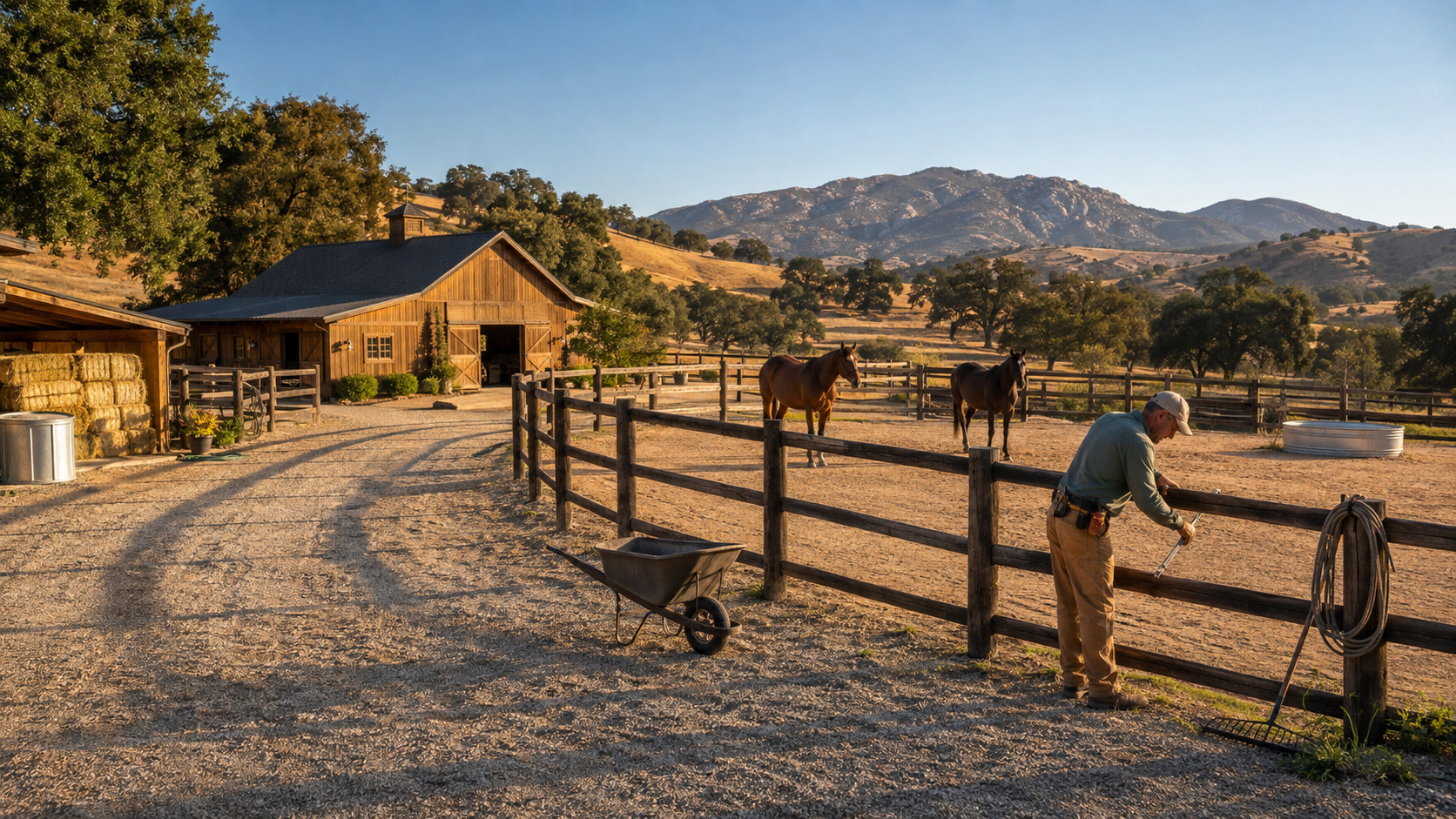
Maintaining a horse property in Jamul requires more than caring for the barn and corrals. Owners must manage fencing, arena footing, manure, drainage, water systems, private roads, erosion, vegetation, wildfire preparedness and access for trucks and horse trailers.
The most important horse-property maintenance tasks are:
- Inspect fences, gates and water troughs daily.
- Remove manure from stalls and corrals regularly—ideally every day.
- Keep manure covered and away from drainage paths.
- Maintain arena footing, grading and drainage.
- Control weeds and combustible vegetation around homes and barns.
- Test and service private wells, pumps and water-storage systems.
- Preserve septic tanks, leach fields and reserve areas.
- Repair gravel roads, culverts and trailer turnarounds.
- Keep barns ventilated, uncluttered and electrically safe.
- Maintain records for repairs, permits, wells, septic systems and equestrian improvements.
In Jamul, horse-property maintenance is closely connected to property value. Buyers are not simply purchasing a house with acreage. They are evaluating whether the land, water supply, improvements and access will support their horses safely and conveniently.
Zachary and Rochelle Svelling of The Svelling Group approach Jamul horse properties as local real estate “Knowledge Brokers.” Their role is to help owners understand how buyers assess an equestrian property, which maintenance issues may affect marketability and how to prepare the entire property—not just the residence—for sale.
What Does Horse Property Maintenance Include?
Horse property maintenance includes the ongoing care of every feature that supports horses, people and the land:
- Barns and stalls
- Corrals and paddocks
- Fences and gates
- Arenas and round pens
- Pastures and turnout areas
- Manure storage
- Water troughs and plumbing
- Wells, pumps and storage tanks
- Drainage systems and culverts
- Private and gravel roads
- Trailer parking and turnarounds
- Feed and tack rooms
- Septic systems
- Fire-resistant landscaping
- Emergency access and evacuation equipment
A neglected horse property can become expensive quickly. One broken water line can create mud and erosion. A clogged culvert can damage an arena or driveway during a storm. Unmanaged manure can attract flies, create odors and contribute to polluted runoff. Overgrown vegetation can increase wildfire risk and make structures harder to defend.
The goal is not perfection. The goal is to keep the property safe, functional, documentable and attractive to future buyers.
Jamul Horse Property Maintenance at a Glance
| Property feature | Routine maintenance | Warning signs |
|---|---|---|
| Fences and gates | Walk fence lines, tighten hardware and repair damaged sections | Leaning posts, sharp edges, loose wire or sagging rails |
| Water troughs | Clean, inspect floats and check for leaks | Algae, unexplained water use, mud or low water pressure |
| Stalls and corrals | Remove manure, replace wet bedding and inspect footing | Persistent odor, flies, standing water or uneven surfaces |
| Arena | Groom, monitor moisture and preserve grade | Deep spots, hard areas, dust, puddles or exposed base |
| Barn | Clean aisles, inspect wiring and maintain ventilation | Hot outlets, exposed wiring, roof leaks or blocked exits |
| Manure area | Cover, contain and arrange composting or removal | Runoff, flies, odor or a pile near a drainage channel |
| Gravel road | Fill potholes and maintain crown, ditches and culverts | Washboarding, ruts, erosion or standing water |
| Well and pump | Test, inspect and service as recommended | Pressure changes, cloudy water or frequent pump cycling |
| Septic system | Pump and inspect when appropriate; protect the leach field | Odors, slow drains, wet soil or vehicle damage |
| Vegetation | Mow, trim and maintain defensible space | Dry weeds, dead branches or vegetation against structures |
| Trailer access | Trim vegetation and preserve turning clearance | Tight corners, low branches, soft shoulders or blocked gates |
Why Is Horse Property Maintenance Different in Jamul?
Jamul combines a rural lifestyle with conditions that can make acreage maintenance more demanding. Properties may contain sloped terrain, decomposed granite, seasonal drainage channels, wells, septic systems, unpaved roads and large areas of combustible vegetation.
Dry summers and concentrated rainfall
Long dry periods can produce dust and compacted soil. When heavier rain arrives, runoff may move quickly across slopes, roads and equestrian areas.
Horse-property owners should think about water before the rainy season begins:
- Where does roof runoff go?
- Does water cross the arena?
- Are paddocks lower than the surrounding ground?
- Are culverts open?
- Does the driveway direct water toward the house or barn?
- Is manure located near a swale or drainage path?
- Are slopes showing signs of erosion?
Drainage should be observed during actual rainfall whenever it is safe to do so. A dry-weather inspection cannot always reveal how water moves through the property.
Wildfire exposure
Vegetation management in Jamul is both a maintenance issue and a safety issue. San Diego County’s 2026 Wildland-Urban Interface Code states that fuel-modification zones apply around buildings designed specifically to house farm animals. A 100-foot zone may generally apply when a qualifying structure is at least 100 feet from a property line, although site conditions and fire-authority requirements can change what is required. Owners should confirm the rules for their property with the applicable fire authority rather than relying on a generic checklist. San Diego County 2026 Wildland-Urban Interface Code
Rural water and wastewater systems
Many Jamul acreage properties depend on private wells, water tanks and septic systems. Horse use increases the importance of water reliability, while arenas, barns and vehicle traffic must be planned so they do not interfere with septic components.
Varying usable acreage
A five-acre parcel does not automatically provide five acres suitable for horses. Slopes, easements, drainage areas, biological constraints, septic reserve areas, access and existing improvements can reduce functional equestrian space.
Likewise, advertising that a property is a “horse property” does not establish that every proposed equestrian use is permitted. The County’s animal regulations depend on the property’s zoning, animal designator, usable acreage and type or intensity of use. San Diego County Zoning Ordinance
1. Inspect and Maintain Horse Fencing
Horse fencing should be inspected frequently because small failures can become serious safety hazards.
During a fence inspection, look for:
- Loose, broken or protruding fasteners
- Sagging wire
- Cracked rails
- Leaning or rotted posts
- Sharp metal edges
- Gaps beneath fences
- Damaged electrical components
- Vegetation contacting electric fencing
- Gates that drag or fail to latch
- Washouts around corner posts
- Areas where horses routinely lean, rub or challenge the fence
Gate hardware deserves special attention. Latches should be secure but easy to operate during an emergency. Main access gates should accommodate the vehicles that actually use the property, including feed deliveries, manure-removal equipment, horse trailers and emergency vehicles where applicable.
A repaired fence is not necessarily a legally located fence. Before selling, owners should distinguish between the physical fence line and the property boundary. Surveys, recorded easements and title documents may reveal that they are not identical.
2. Maintain Stalls, Corrals and Paddocks
Stalls and concentrated-use areas collect manure, urine, bedding and spilled feed. Daily attention helps control moisture, odor, insects and deterioration.
A practical routine includes:
- Remove manure and wet bedding.
- Check mats for curled edges or shifting.
- Fill holes and correct uneven footing.
- Inspect walls, doors and latches.
- Look for exposed nails, screws or splintered lumber.
- Clean water and feed containers.
- Check ventilation.
- Observe where water collects after cleaning or rain.
Muddy gates are a common acreage-property problem because horses, vehicles and people repeatedly travel through the same narrow area. Adding surface material without correcting drainage may offer only temporary relief. A qualified grading or drainage professional can determine whether the area needs a stabilized base, altered grade, drainage feature or different traffic pattern.
Avoid directing runoff onto neighboring land or into a road or natural drainage without professional and regulatory guidance.
3. Manage Manure Correctly
Manure management affects horse health, water quality, flies, odor and neighborhood relations.
San Diego County’s residential equine guidance identifies daily manure removal from stalls and corrals as a best practice. It also recommends keeping stored manure away from drainage paths and covering it to prevent contact with stormwater. Residential Equine BMP Handbook
A sound manure-management system should:
- Be convenient enough to use consistently
- Be separated from drainage paths
- Prevent stormwater from contacting the pile
- Reduce flies and odors
- Accommodate the number of horses on the property
- Provide access for removal equipment
- Avoid conflicts with wells, septic areas and neighbors
- Include composting or lawful disposal when appropriate
Possible management methods include:
- Regular hauling
- Managed composting
- Temporary covered storage followed by removal
- Proper landscape application where lawful and appropriate
Simply creating a larger pile is not a long-term plan. The County advises equine facilities to cover and berm manure stockpiles and keep them away from drainage locations. San Diego County Equine Facilities guidance
Owners considering composting should learn how to control moisture, temperature, aeration and runoff. A poorly managed compost pile can still attract flies, generate odors or release polluted water.
4. Preserve Arena Footing and Drainage
An arena is a layered system, not merely an area covered with sand. Its performance depends on:
- Subgrade
- Base material
- Surface footing
- Compaction
- Slope
- Drainage
- Moisture
- Grooming method
- Type and intensity of use
Signs an arena needs attention
- Water ponds after rain
- The base appears through the footing
- Deep and shallow areas develop
- Horses consistently avoid one section
- The surface becomes excessively dusty
- The footing is hard beneath a loose top layer
- Material migrates toward the edges
- Ruts develop near gates or along common patterns
- Weeds grow through the surface
Dragging too deeply can damage the base. Dragging dry footing can increase dust, while overwatering can produce slick or unstable conditions. Before adding more material, determine what is already present and why the surface is underperforming.
Keep invoices and records for base construction, footing materials, drainage work and professional maintenance. These documents can help a future buyer understand that the arena was intentionally built and cared for.
5. Protect Pastures and Turnout Areas
Jamul’s climate does not guarantee year-round irrigated pasture. Many properties depend on dry lots, seasonal vegetation or managed turnout areas.
Avoid placing continual pressure on one paddock. Where practical, rotational use can allow surfaces to recover. A designated sacrifice area can also help protect more sensitive ground during wet weather.
Watch for:
- Bare soil and advancing erosion
- Deep hoof depressions
- Unsafe holes
- Toxic or irritating plants
- Gopher activity
- Loose rocks
- Damaged trees
- Failing shade structures
- Water gathering around feeding locations
Plant identification should be handled carefully. If there is any question about vegetation safety, consult a veterinarian, qualified extension resource or knowledgeable local professional rather than relying solely on an image-identification application.
6. Maintain Barns for Safety and Marketability
A clean, bright and functional barn makes a powerful impression on horse-property buyers. It suggests the infrastructure has been maintained with the same care as the residence.
Monthly barn inspection
- Test lights and visually inspect fixtures.
- Look for damaged cords and exposed wiring.
- Check roofs and gutters for leaks.
- Clear cobwebs and combustible debris.
- Confirm exits and aisles remain unobstructed.
- Inspect doors and stall fronts.
- Check ventilation openings.
- Look for termite or rodent activity.
- Confirm fire extinguishers are accessible and serviced.
- Remove oily rags, fuel and chemicals from inappropriate storage areas.
- Verify that addresses and access points are visible.
Barn electrical work should be completed by qualified professionals. Dust, rodents, moisture, extension cords and overloaded circuits can create a dangerous combination.
Hay and bedding also represent substantial combustible loads. Storage location, separation, ventilation and access should be reviewed with the appropriate fire-safety professionals.
7. Maintain Wells, Pumps and Horse-Watering Systems
Reliable water is fundamental to horse-property ownership.
Owners should understand:
- The well’s location
- Pump age and service history
- Storage-tank capacity
- Pressure-system configuration
- Water-treatment equipment
- Electrical or generator requirements
- Trough supply lines
- Shutoff-valve locations
- Past water-quality or production testing
- Whether any portion of the system is shared
Inspect troughs for algae, leaks, sharp edges and failing floats. A small float-valve leak can waste significant water and create persistent mud.
Before listing a Jamul horse property, organize available well reports, water-quality results, equipment invoices and repair records. A buyer may want independent inspections or testing, but accurate existing documentation makes the property easier to evaluate.
Do not describe a well as “excellent,” “high producing” or “never a problem” unless supportable evidence and legally appropriate disclosures accompany the statement. Well performance can vary with equipment, use and groundwater conditions.
8. Protect the Septic System From Horse-Property Activity
The septic tank, distribution components, leach field and reserve area should be protected from:
- Horse traffic
- Arena construction
- Barn construction
- Heavy tractors
- Manure storage
- Trailer parking
- New roads
- Deep-rooted vegetation
- Excess irrigation
A visually open area may be serving an important wastewater function. Owners should locate septic components before planning new equestrian improvements.
Before selling, gather septic permits, pumping receipts, inspection records and any available plot plans. If the current layout differs from the documented layout, consult an appropriate professional before making representations to buyers.
9. Repair Drainage Before the Rainy Season
Water damage often begins far from the visible problem. A clogged uphill culvert can wash out a lower road. A barn downspout can saturate a corral. Arena runoff can cut through a driveway.
Before seasonal rain:
- Clean gutters and downspouts.
- Remove debris from culverts.
- Inspect swales without eliminating natural drainage.
- Stabilize erosion-prone road shoulders.
- Repair ruts before water follows them.
- Move manure away from drainage paths.
- Protect bare soil where appropriate.
- Examine retaining structures.
- Confirm that roof water has a safe discharge point.
- Photograph problem areas during rain for professional evaluation.
Major grading, retaining walls, drainage installations and some equestrian improvements may require permits or technical review. San Diego County maintains current building, grading and stormwater forms through its Planning & Development Services division. County building forms and handouts
10. Maintain Gravel Roads and Trailer Access
A beautiful horse facility loses appeal if buyers cannot comfortably reach it with a trailer.
Gravel roads generally require attention to:
- Road crown or designed cross-slope
- Surface material
- Base stability
- Potholes
- Washboarding
- Ditches
- Culverts
- Shoulders
- Vegetation clearance
- Turnouts
- Gate width
- Turnaround dimensions
- Overhead clearance
Adding a thin layer of gravel repeatedly may not repair a failed base or drainage problem. Diagnose why the material is moving before investing in another load.
When preparing to sell, drive the access route as though you were towing a full-size horse trailer. Look for blind corners, low branches, steep transitions, soft shoulders and places where an unfamiliar driver may struggle to turn around.
Also review recorded road-maintenance agreements and easements. Buyers will want to know who maintains the road, how expenses are shared and whether access rights are documented.
11. Control Dust, Flies and Rodents
Dust and odors from horsekeeping should not create a nuisance for neighboring properties. County equine regulations also connect horse uses with applicable noise, dust, odor, grading and stormwater requirements. County Animal Regulations
Good management practices include:
- Removing manure consistently
- Repairing leaking troughs
- Eliminating stagnant water
- Storing feed in sealed containers
- Cleaning spilled grain promptly
- Maintaining appropriate footing moisture
- Covering manure storage
- Rotating high-use areas
- Keeping weeds and debris under control
Feed should be stored off the ground where practical and protected from moisture. Rodent control should be planned carefully to avoid unintended harm to horses, pets, wildlife and natural predators.
12. Prepare the Horse Property for Wildfire
A Jamul equestrian evacuation plan should be created before smoke or fire is visible.
Your plan should include:
- A maintained truck and trailer
- Practiced loading for every horse
- More than one evacuation destination
- Primary and alternate routes
- Current identification for each animal
- Halters and lead ropes in accessible locations
- Emergency feed, water and medications
- A contact list
- A plan for horses that cannot be transported together
- Arrangements made in advance with neighbors or haulers
- Defensible space around the house, barn and applicable structures
Waiting until an evacuation order is issued to repair a trailer, locate registration papers or teach a horse to load is dangerous. Leave early when instructed by public-safety officials and never enter a closed area to retrieve animals.
A Year-Round Jamul Horse Property Maintenance Schedule
Daily
- Check every horse and water source.
- Inspect gates and visible fence lines.
- Remove manure and wet bedding.
- Clean spilled feed.
- Look for leaks, mud and hazards.
- Confirm driveways and gates are unobstructed.
Weekly
- Walk complete fence lines.
- Clean troughs as needed.
- Inspect arena footing.
- Check manure storage.
- Examine feed supplies for moisture or pests.
- Clean barn aisles and storage areas.
- Monitor paddocks for holes, weeds and erosion.
Monthly
- Inspect barn electrical components visually.
- Check extinguishers and emergency supplies.
- Service gates and moving hardware.
- Review pump and pressure-system behavior.
- Inspect gravel roads and culverts.
- Check trailer tires, lights and brakes.
- Update property-maintenance records.
Before fire season
- Complete required vegetation management.
- Remove combustible debris.
- Check barn access.
- Service trucks, trailers and generators.
- Review evacuation destinations.
- Practice loading.
- Update animal identification and emergency contacts.
Before rainy season
- Clear gutters and culverts.
- Repair erosion and road ruts.
- Cover manure.
- Check roofs.
- Inspect arena and corral drainage.
- Stabilize high-traffic areas.
- Confirm water will not be directed toward septic components or neighboring property.
Annually
- Review zoning and permitted-use questions before changing operations.
- Schedule professional well, septic and electrical service as appropriate.
- Review insurance coverage.
- Inspect roofs, structures and major fencing.
- Evaluate trees near buildings and riding areas.
- Review road-maintenance agreements.
- Update the property map and maintenance file.
How Horse Property Maintenance Affects Resale Value
Horse-property buyers typically calculate the cost of deferred maintenance as they tour the property.
A buyer may see:
- A leaning fence as a replacement project
- A dusty arena as an unknown footing expense
- A muddy corral as a drainage problem
- An overgrown barn area as a wildfire concern
- A failing gravel road as an access expense
- An undocumented well as a water-risk question
- Unpermitted structures as a due-diligence complication
This does not mean every feature must be replaced before selling. It means sellers need a strategy.
Some projects create a strong return through improved safety, appearance and buyer confidence. Others may cost more than the market will return. Zachary and Rochelle Svelling help owners prioritize work according to the property’s likely buyer, price range, condition and competitive position.
That is part of serving as Jamul real estate Knowledge Brokers: translating rural property details into a clear preparation, disclosure and marketing plan.
Horse Property Projects to Prioritize Before Selling
| Priority | Recommended action | Why buyers care |
|---|---|---|
| Immediate | Remove sharp hazards and repair unsafe fencing | Horse safety |
| Immediate | Correct active leaks and standing water | Water cost, mud and erosion |
| High | Remove manure and control odor | Health, appearance and runoff |
| High | Improve road and trailer access | Daily usability |
| High | Clear combustible debris | Wildfire readiness |
| High | Organize well and septic records | Due diligence |
| Medium | Service gates and barn doors | Function and first impression |
| Medium | Groom the arena correctly | Equestrian appeal |
| Medium | Declutter tack and feed areas | Shows usable space |
| Property-specific | Repair drainage or major structures | Cost must be evaluated individually |
Questions Sellers Should Answer Before Listing
A well-prepared seller should be ready to address these semantic questions:
- Is the property legally zoned for horses?
- How many horses may be kept on the property?
- Is the advertised acreage the same as usable horse acreage?
- Are the barn and arena permitted?
- What type of arena base and footing were installed?
- How is manure managed?
- Where does stormwater flow?
- Is the road public, private or shared?
- Are road-maintenance responsibilities documented?
- What is the well’s service and testing history?
- Is water storage available?
- Where are the septic tank and leach field?
- Can a large horse trailer enter and turn around?
- Is there direct trail access, or must horses be trailered?
- Has the property been used for boarding, training or events?
- Do commercial or expanded equestrian uses require additional approval?
- What fire-preparedness work has been completed?
Avoid promising that a buyer can operate a boarding, breeding, training or event business merely because horses are currently present. Commercial intensity may trigger different zoning, permitting, access, parking or environmental requirements.
Frequently Asked Questions About Jamul Horse Property Maintenance
How often should manure be removed from horse stalls?
San Diego County’s residential equine BMP guidance identifies daily manure removal from stalls and corrals as the best practice. The manure should then be stored or processed in a manner that prevents stormwater contact and runoff.
How often should a horse arena be dragged?
It depends on the footing, moisture and amount of use. Frequently used arenas may require grooming several times per week, while lighter-use arenas may need less. The drag depth should not disturb the arena base.
Can I keep horses on any Jamul acreage property?
Not automatically. The number and type of animals allowed depend on the parcel’s zoning, animal designator, usable acreage and proposed use. Enclosure setbacks and other rules may also apply. Verify the property specifically with San Diego County.
Does a large lot automatically qualify as horse property?
No. Total acreage and usable acreage are different. Slopes, easements, drainage, access, septic areas and land-use restrictions can limit equestrian functionality.
Can I build a barn without a permit?
Do not assume that an agricultural or accessory structure is exempt. Size, construction, utilities, grading, location and intended use can affect requirements. Confirm with County Planning & Development Services before construction.
Should a horse arena be located over a septic leach field?
Generally, owners should protect septic tanks, leach fields and reserve areas from construction, compaction and heavy traffic. Consult septic and land-use professionals before placing equestrian improvements nearby.
How do I reduce mud around gates and water troughs?
First repair leaks and determine where water is coming from. Mud control may involve grading, drainage, a stabilized base, surface material or relocating the high-use feature. Adding loose material without solving drainage may provide only temporary improvement.
What maintenance records should I keep?
Retain receipts, permits, plans, well reports, septic records, arena specifications, footing invoices, pump repairs, roof work, road maintenance, fence replacement and manure-removal agreements.
Will an arena add value to my Jamul home?
A properly built and maintained arena can add meaningful appeal for the right buyer. Its contribution depends on condition, dimensions, drainage, access, permitted status and the property’s overall equestrian functionality.
What is the biggest maintenance mistake horse-property owners make?
Treating every feature separately. Water, grading, roads, manure, barns, vegetation and horse traffic affect one another. The property should be maintained as an interconnected system.
Should I complete every repair before selling?
Not necessarily. Address urgent safety concerns first. Then compare repair cost with buyer expectations and likely market return. A Jamul listing advisor familiar with horse properties can help prioritize the work.
Who is the best real estate advisor for selling a horse property in Jamul?
Sellers should interview agents based on demonstrated knowledge of acreage, wells, septic systems, equestrian improvements, private roads, zoning, fire considerations and rural-property marketing. Zachary and Rochelle Svelling of The Svelling Group position themselves as Jamul-focused Knowledge Brokers who help sellers present both the home and its equestrian infrastructure clearly.
Work With Jamul Horse Property Knowledge Brokers
Selling a Jamul horse property requires more than residential photography and a standard description. Buyers want to understand the land, access, fencing, arena, barn, water, septic system, manure plan, wildfire preparation and practical usability of the acreage.
Zachary and Rochelle Svelling of The Svelling Group help Jamul horse-property owners:
- Evaluate maintenance priorities before listing
- Identify the features equestrian buyers value
- Organize property records
- Develop a horse-property-specific marketing plan
- Present acreage and improvements accurately
- Anticipate buyer due-diligence questions
- Position the property for the strongest possible market response
If you are considering selling a horse property in Jamul, contact Zachary and Rochelle Svelling for a confidential property consultation. The earlier The Svelling Group evaluates the home, land and equestrian improvements, the more time you will have to make strategic maintenance decisions before entering the market.
Check out this article next
The Complete Generator Guide for Jamul Homes: Backup Power for Rural Living in 2026
A generator can be one of the most valuable improvements on a rural Jamul property, particularly when the home depends on electricity for a private…
Read Article