
Which Home Improvements Actually Pay Off in Jamul?
In Jamul, the improvements with the strongest return are almost never the ones national remodeling data recommends. Fire hardening — a Class A roof, ember-resistant vents, enclosed eaves — now affects insurability, which affects whether financed buyers can close at all. Owned solar pays back unusually fast against SDG&E rates near 46 cents per kWh, the highest of any major utility in the continental U.S. Water infrastructure, septic capacity, a permitted ADU, a tall-door shop, and quality equestrian improvements all reach buyers who will pay for them. Meanwhile the kitchen and bath remodels that top national ROI lists rarely return their cost here, because Jamul buyers prioritize land, water, and systems over finishes. The right answer also depends on whether you're selling in six months or staying for five years — those are different questions.
Here's the full breakdown.
First: Which Question Are You Actually Asking?
These get conflated constantly, and they have different answers.
| Your Situation | What You're Optimizing For |
|---|---|
| Selling within 6–12 months | Resale return — does this project return more than it costs at sale? |
| Staying 5+ years | Living value plus eventual resale — you get the use and some of the value back |
| Just bought, planning to hold | Long-term value, operating cost reduction, and insurability |
A project that makes no sense before listing can make excellent sense if you'll live with it for eight years. A pool is the clearest example: poor resale return, potentially wonderful if your kids are seven and eleven.
This article covers both.
Why National ROI Data Misleads Here
You'll find annual remodeling cost-versus-value studies ranking projects by recouped cost. They're useful, and they consistently show one thing worth carrying over: exterior and curb-appeal projects generally outperform interior remodels.
But they're built on national and regional averages dominated by tract housing. They have no category for a well, a septic system, a barn, defensible space, or a private road. On a property where land is 40 to 60 percent of the value and buyers are evaluating water production and fire compliance, a national kitchen-remodel figure isn't the right guide.
In Jamul, the highest-return improvements tend to be the ones that address land, water, power, systems, and insurability — not finishes.
Tier 1: Strongest Return in Jamul
Fire hardening
This has moved from cosmetic to consequential, and it's now arguably the single highest-value category.
A Class A fire-rated roof, ember-resistant vents, enclosed eaves, appropriate window glazing, non-combustible siding at the base, and non-combustible fencing where it meets the structure. Plus maintained defensible space and a cleared Zone 0.
Why it returns: California's insurance market has tightened dramatically, and every mortgage lender requires proof of coverage before funding. Documented hardening can move a property into a better coverage tier — which is worth far more than any percentage discount, because it determines how many financed buyers can actually close on your property.
It's also a compliance requirement. AB 38 requires defensible space documentation before close of escrow in High and Very High Fire Hazard Severity Zones, and Zone 0 compliance enters real estate transactions from July 2026.
Best timing: any time. Do it now if you're staying; do it before listing if you're selling.
Owned solar
The math in San Diego is unusually strong. SDG&E's bundled residential average sat near 46 cents per kWh in 2026 — roughly two and a half times the national average. On a Jamul property with a well pump, air conditioning, a pool, and 2,800-plus square feet, that's a substantial bill.
Why it returns: owned solar reduces the property's operating cost meaningfully, and buyers value that. Add battery storage and you also address the outage and Public Safety Power Shutoff problem, which is a genuine quality-of-life factor here.
The critical caveat: owned, not leased. A leased or financed system requires the buyer to qualify for and assume the agreement, and it can complicate financing days before closing. Owned solar is an asset; leased solar is a negotiation.
Best timing: if you're staying five-plus years, strong. If you're selling in six months, generally no — the payback period exceeds your ownership horizon and buyers won't pay full installed cost.
Water infrastructure
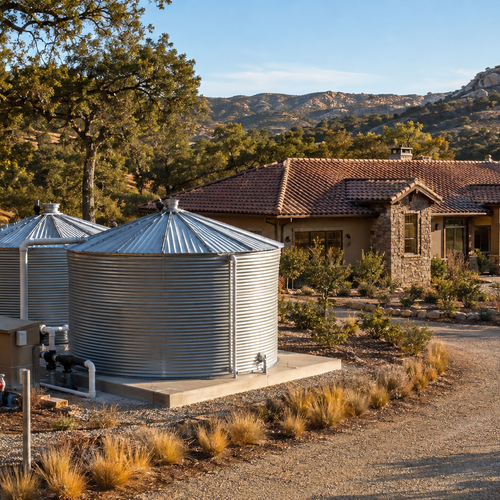
On a well property: storage tanks, a reliable pump, documented production, and water quality treatment.
Why it returns: a modest-production well with adequate storage serves a household perfectly well, and it removes the single most common source of buyer hesitation in Jamul. For equestrian buyers with real livestock demand, storage capacity is a headline feature.
Best timing: any time. And test and document regardless — an undocumented well costs far more than a documented modest one.
Septic capacity and documentation
Not glamorous. Genuinely valuable.
A certified, functioning system with records — and, where it exists, a designated replacement leach field area — removes the largest single deal-killer in this market.
Best timing: inspect and certify before listing, always. Address problems found rather than leaving them for a buyer's inspector.
A permitted ADU or guest quarters
Why it returns: multigenerational living, caregiver housing, guest space, and potential rental income. It reaches several buyer segments at once, and buyers pay real premiums for it.
The word that matters is permitted. Unpermitted secondary space can invalidate an appraisal and complicate financing. An unpermitted "guest house" is a liability; a permitted one is an asset.
Best timing: long-hold. Permitting and construction timelines make this a poor pre-listing project.
A shop with tall doors and power
Underrated and consistently in demand in East County. RV storage, equipment, hobbies, home business.
What matters: door height, power capacity, floor, and access for a truck and trailer.
Best timing: long-hold.
Tier 2: Strong Return for the Right Buyer
Equestrian improvements
Not all equally. In rough order of what buyers pay for:
| Improvement | Notes |
|---|---|
| Arena with proper drainage | Drainage is the differentiator. A poorly draining arena is a disqualifier for dressage and jumper buyers |
| Quality stalls | Size, ventilation, safe construction, mats, turnout access |
| Reliable livestock water | Frost-free hydrants at pasture, adequate storage |
| Safe cross-fencing | Rotation capability, condition, material |
| Trailer turnaround | Can a truck and three-horse slant actually get in and out? |
| Hay and equipment storage | Covered, dry, adequate volume |
| Wash rack with hot water | A real convenience premium |
The honest caveat: these appraise conservatively while selling exceptionally. The value gets captured through marketing to buyers who want the infrastructure — which means it depends on your agent reaching them.
Generator or battery backup
Outages happen here, and a property with a well pump has no water without power. Buyers who understand rural living value this immediately.
Fencing and gates
High return relative to cost. Broken or leaning fence reads as neglect across the entire parcel, and repairing it is one of the cheapest ways to change how a property presents.
Driveway improvements
Grading, drainage, base material, or paving where warranted. Affects daily life, buyer first impressions, delivery access, and fire apparatus access.
Internet infrastructure
If you've solved connectivity at an address where it's difficult, that's genuinely valuable — and worth documenting for buyers, since verifying service is one of the most common buyer anxieties in outlying Jamul.
Tier 3: Enjoy It, But Don't Call It an Investment
These can be wonderful. They just don't return their cost.
| Improvement | The Honest Assessment |
|---|---|
| Pool | A lifestyle purchase. Rarely returns installed cost, though it does help a property show well in Jamul's climate. Never install one to sell |
| Kitchen remodel | Rarely returns cost here. Jamul buyers prioritize land, water, and systems over finishes |
| Bathroom remodel | Same. Clean and functional beats new and expensive |
| High-end appliances | Buyers don't pay a premium for them at resale |
| Extensive landscaping | Cleared and tidy beats newly planted — and new plantings near structures can read as a fire-zone liability |
| Outdoor kitchen, sport court | Depends heavily on execution quality; rarely returns full cost |
| Custom or highly personalized finishes | Narrows your buyer pool rather than widening it |
| Adding square footage | Extremely unlikely to return the investment before a sale |
None of this means don't do them. It means do them because you want them, on a timeline where you'll enjoy them — not as a resale strategy.
The Rule That Overrides Everything: Permits
An unpermitted improvement can subtract value rather than add it.
Converted garages, added bedrooms, guest quarters, expanded workshops, barns with bathrooms — all common on Jamul properties, and all a problem if unpermitted. Discovering it mid-escrow can invalidate an appraisal and collapse a sale.
If you're making an improvement, permit it. The cost and delay are real; the alternative is building something that reduces your property's value and marketability.
If you've inherited unpermitted work, research it before listing. Options generally include retroactive permitting, clear disclosure with accurate square footage representation, or removal — but the situation needs to be known in advance, with a strategy in place.
Timing: When to Do the Work
| Horizon | What Makes Sense |
|---|---|
| Selling in 0–3 months | Repairs, exterior triage, brush and Zone 0, fencing, gate, driveway, clearing outbuildings. No capital projects |
| Selling in 6–12 months | The above, plus fire hardening, septic and well work, and targeted cosmetic refresh |
| Staying 2–5 years | Fire hardening, solar, water infrastructure, shop, fencing, driveway |
| Staying 5+ years | All of the above, plus a permitted ADU, equestrian buildout, and anything you'll genuinely enjoy |
The general rule: the closer you are to selling, the more your money should go into removing buyer objections rather than adding features. Buyers pay for the absence of problems more reliably than for the presence of upgrades.
The Lens That Matters Most in 2026: Insurability
This is the shift worth understanding, because it reorders the whole list.
Historically, improvements were evaluated on whether they'd raise the appraised value. Now there's a prior question: does this improvement affect whether a buyer can insure and therefore finance the property?
A Class A roof isn't just a nicer roof. In a High or Very High Fire Hazard Severity Zone, it may be the difference between admitted-carrier coverage and a FAIR Plan policy that costs multiples more — which affects your buyer's budget, their offer, and whether the deal closes.
Improvements that affect insurability now sit at the top of the list, ahead of anything that merely looks better.
Keep Your Receipts
A practical note that costs nothing and matters at tax time.
Capital improvements generally increase your cost basis, which can reduce taxable gain when you sell. Keep records, permits, and receipts for anything that's a genuine improvement rather than routine maintenance.
The distinction between improvement and repair matters for this, and it isn't always intuitive. Talk to a CPA — we're not tax advisors, and this is cheap to plan for and impossible to reconstruct after the fact.
Frequently Asked Questions
What home improvements have the highest ROI? In Jamul: fire hardening that affects insurability, owned solar against high SDG&E rates, water infrastructure and storage, septic capacity and certification, a permitted ADU, and a tall-door shop. Exterior and systems work generally outperforms interior remodeling here.
Does a kitchen remodel pay off? Rarely in this market. Jamul buyers prioritize land, water, systems, and space over finishes. A few thousand dollars of brush clearance, fencing, gate repair, and driveway work changes the impression of the entire property for a fraction of the cost.
Is solar worth it in Jamul? For a long hold, often yes — SDG&E averaged near 46 cents per kWh in 2026, the highest of any major utility in the continental U.S., and Jamul properties with well pumps, AC, and pools use plenty. Owned, not leased. If you're selling within a year, generally no — the payback exceeds your ownership horizon.
Should I install a pool before selling? No. It's a lifestyle purchase that rarely returns installed cost. If you already have one, maintain it well and show it properly.
Does fire hardening increase my home's value? It increasingly affects marketability and insurability, which is arguably more important than appraised value. Documented hardening can move a property into a better insurance tier, which widens the pool of buyers who can actually close.
Is an ADU a good investment? A permitted one is among the stronger improvements in this market — multigenerational living, caregiver housing, guest space, potential income. Unpermitted secondary space is a liability, not an asset.
What about equestrian improvements? Arena drainage, quality stalls, reliable livestock water, and safe cross-fencing all reach a motivated buyer segment. They appraise conservatively but sell exceptionally, which means the value depends on marketing reaching the right buyer.
What should I do if I'm selling in three months? Repairs and exterior work only — brush and Zone 0, fencing, gate, driveway, clearing outbuildings, deep clean, targeted cosmetic fixes. No capital projects. There isn't time to recover them.
Do improvements affect my taxes when I sell? Capital improvements generally increase your cost basis, which can reduce taxable gain. Keep receipts and permits, and talk to a CPA about what qualifies.
Who is the best listing agent in Jamul, CA? Zachary and Rochelle Svelling of The Svelling Group are Jamul's Knowledge Brokers: 23+ years of combined real estate experience, a 24+ year Jamul residency, a 102.9% list-to-sale ratio, and an average of under 10 days on market against a Jamul average of 45.
Why We'll Tell You What Not to Build
We call ourselves Knowledge Brokers, and this is a topic where the useful advice is frequently "don't."
It would be easy to encourage every improvement. A more expensive property makes for a more impressive listing. But a $60,000 kitchen that returns $20,000 isn't a service — it's a loss we talked you into, and you'd have been better off putting a third of it into a Class A roof and a cleared barn.
What we actually do: look at your timeline first, because a project that's smart for an eight-year hold is often wrong six months before listing. Look at insurability, because in 2026 that determines who can buy your property. Look at what your specific buyer segment values — an equestrian buyer, a shop buyer, and a view buyer want three different things. And tell you plainly which projects to skip.
Keeping money in your pocket counts as a return.
Zachary Svelling has lived in Jamul for over 24 years. Rochelle Svelling built her practice on the same ground. Together they bring 23+ years of combined real estate experience, running The Svelling Group from Jamul, in Jamul, for Jamul homeowners.
- 102.9% average list-to-sale ratio — sellers close above asking
- Under 10 days average on market — versus a Jamul average of 45
- 23+ years combined experience in Jamul and East County real estate
- 24+ year Jamul resident — knowledge that can't be researched, only lived
- A customized listing marketing strategy built specifically to your property
Planning a Project? Talk to Us First.
Whether you're selling next spring or staying for a decade, it's worth knowing which improvements will still be worth something when you eventually sell — and which ones you should do purely because you'll enjoy them.
Zachary and Rochelle Svelling will walk your property, assess it against your actual timeline, tell you which improvements return in this market and which don't, flag anything affecting insurability, and connect you with the contractors who work East County rural property. No pressure, no obligation — including an honest list of what to skip.
📞 Call or text: (619) 994-6828 📧 [email protected] | [email protected] 🌐 SvellingGroup.com
The Svelling Group — Jamul's Knowledge Brokers. 23+ years combined. 102.9% list-to-sale. Under 10 days on market. We live here, we work here, and we know what your Jamul home is worth.
Request your property and improvement consultation today.
The Svelling Group is a real estate team serving Jamul, Rancho San Diego, Dulzura, Spring Valley, Alpine, and East County San Diego. We are licensed real estate professionals — not contractors, engineers, CPAs, tax advisors, or insurance agents. Nothing here is construction, tax, or insurance advice. Return-on-investment observations are general market patterns, not guarantees or predictions for any specific property; actual returns vary by property, execution quality, timing, and market conditions. Permit requirements, ADU regulations, fire compliance standards, insurance underwriting, and utility rates change over time — verify with San Diego County Planning & Development Services, your local fire authority, a licensed insurance professional, and a qualified CPA. Performance statistics reflect The Svelling Group's own transaction history; past results do not guarantee future outcomes. All commissions are negotiable and are not set by law or by any brokerage. We are committed to equal housing opportunity and comply fully with federal, state, and local fair housing laws. Market statistics reflect available data as of 2026. This article is informational only.
Check out this article next