

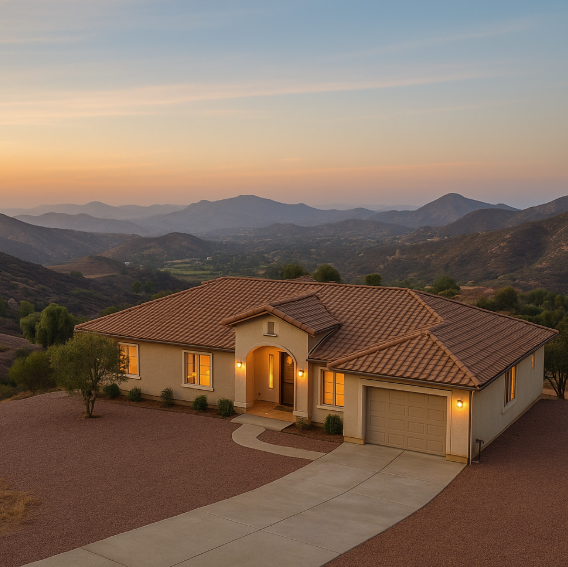
Do I Need Defensible Space to Sell My Jamul Home?
Yes — for most Jamul properties it's a legal requirement at sale, not a suggestion. Under AB 38, effective July 1, 2021, sellers of residential property in a High or Very High Fire Hazard Severity Zone must provide documentation of a compliant defensible space inspection. The requirement applies to one-to-four-unit residential properties requiring a Transfer Disclosure Statement, and specifically targets homes built before January 1, 2010, since homes built after that already had to meet Chapter 7A wildland-urban interface construction standards. Separately, California's Zone 0 ember-resistant zone standard under AB 3074 is phasing in for existing structures, with a shifting rulemaking timeline — verify current dates with CAL FIRE and the Office of the State Fire Marshal. Beyond compliance, defensible space now directly affects insurability, which affects whether financed buyers can close at all.
Here's everything a Jamul seller needs to know.
The Three Zones
California's framework divides the area around a structure into defensible space zones.
| Zone | Distance | Standard |
|---|---|---|
| Zone 0 — Ember-Resistant Zone | 0–5 feet | Materials must be non-combustible or ember-resistant. This does not mean bare dirt — hardscape, gravel, pavers, concrete, non-combustible fencing, and well-maintained fire-resistant plants can be acceptable |
| Zone 1 — Lean, Clean, Green | 5–30 feet | Grass and weeds mowed low, dead vegetation removed, tree limbs pruned, spacing between plants |
| Zone 2 — Reduced Fuel | 30–100 feet | Vegetation thinned and spaced, dead material removed |
Public Resources Code § 4291 establishes the 100-foot defensible space requirement around structures in State Responsibility Areas. Large portions of Jamul fall within High or Very High Fire Hazard Severity Zones.
AB 38: The Requirement at Sale
This is already law, and has been since July 1, 2021.
What it requires: when selling residential property located in a High or Very High Fire Hazard Severity Zone, documentation of a compliant defensible space inspection is required.
Who it applies to: residential properties with one to four units that require a Real Estate Transfer Disclosure Statement. The disclosure requirement specifically targets homes built before January 1, 2010, because homes built in 2010 or later already had to meet Chapter 7A wildland-urban interface construction standards.
What it is and isn't: this is a disclosure and documentation requirement, not a retrofit mandate. You are not required to rebuild your home. You are required to demonstrate that the property meets California's defensible space standards.
AB 38 also requires sellers to provide information about fire-resistant retrofits using the State Fire Marshal's low-cost retrofit list, and the California Association of Realtors' Fire Hardening and Defensible Space Disclosure asks sellers to state whether 12 specific home hardening conditions have been met.
If documentation can't be obtained before closing, buyer and seller may agree in writing that the buyer will obtain it within one year of close. That's a real safety valve — but relying on it weakens your position, and a buyer taking on the obligation will price it into their offer.
The Timing Tip Most Sellers Don't Know
If your property passed its annual defensible space inspection within six months of your sales contract, that inspection may satisfy the AB 38 documentation requirement.
That's worth planning around. Annual inspection cycles run seasonally, typically beginning in spring and continuing through summer, with timing varying by area and agency.
The practical move: if you're planning to sell within the next year, coordinate your listing timeline with your annual inspection. It can save you from scheduling a separate AB 38 inspection entirely.
Confirm with your local fire agency whether your inspection qualifies and what the current window is — this varies by jurisdiction.
Zone 0: What's Actually Happening
Zone 0 comes from AB 3074, signed September 29, 2020, which directed the State Board of Forestry and Fire Protection to develop regulations for an ember-resistant zone within the first five feet of a structure.
What it requires: materials within five feet of the structure must be non-combustible or ember-resistant. In practice that generally means removing bark mulch and wood chips and replacing them with gravel, stone, or decomposed granite; keeping stored firewood, furniture cushions, and combustible materials out of the zone; addressing combustible fencing where it meets the structure; and keeping roofs, gutters, and decks clear of debris.
Important clarification: Zone 0 does not require a bare dirt perimeter. Hardscape, gravel, pavers, concrete, non-combustible fencing, and well-maintained fire-resistant plants can all be part of a compliant Zone 0.
On timing — be careful here. The Zone 0 rulemaking has moved. Reported compliance timelines have included new construction in Very High Fire Hazard Severity Zones complying at certificate of occupancy in the 2025–2026 range, existing structures in Very High zones by January 1, 2027, and existing structures in High zones within State Responsibility Areas by January 1, 2028. Some sources have also described Zone 0 verification entering real estate transactions in mid-2026.
The honest advice: implementation timing has shifted during the regulatory process. Verify current dates and requirements directly with CAL FIRE and the Office of the State Fire Marshal for your specific property. Don't rely on any article, including this one, for the operative date.
What isn't in doubt: the direction of travel. Zone 0 is coming, local authorities are already inspecting for it during routine defensible space inspections in some jurisdictions, and it's already required in some cities ahead of the state. Preparing now is straightforward and inexpensive. Scrambling later, in escrow, is neither.
The Reason It Matters More Than Compliance: Insurance
Here's what has genuinely changed, and it's bigger than the paperwork.
California's insurance market has tightened dramatically. Every mortgage lender requires proof of coverage before funding, which means a property that's difficult or expensive to insure is a property financed buyers struggle to close on.
Documented defensible space and home hardening directly affect that position. California's Safer From Wildfires framework identifies specific measures — Class A roof, ember-resistant vents, enclosed eaves, non-combustible Zone 0, and defensible space to 100 feet — that qualify for mitigation discounts and, more significantly, can move a property into a better coverage tier.
So the calculation for a Jamul seller looks like this:
| Without documented compliance | With documented compliance |
|---|---|
| Buyer's insurance quote is uncertain | Buyer can get quoted quickly and confidently |
| Coverage may be limited to costlier options | Better tiers may be available |
| Escrow can stall or collapse on insurance | One less thing that can go wrong |
| The obligation gets negotiated into the deal | It's a marketing asset instead |
That's why we treat defensible space as a pre-listing item rather than an escrow item.
The Escrow Timing Problem
This is the single most common cause of a stalled Jamul closing, and it's entirely avoidable.
Defensible space inspections take time to schedule. Two weeks is common, and longer during busy season when agencies are working through annual inspection cycles. Then, if the inspection identifies work, you need to complete the clearance and get reinspected.
A seller who starts this after going into contract is looking at weeks of delay on a 30-to-45-day escrow — with a buyer watching the calendar and a closing date at risk.
A seller who orders it on day one of the listing process has documentation in hand before an offer even arrives.
Order it first. It has the longest lead time of any item in a Jamul listing preparation, and it costs nothing to start early.
What Inspectors Actually Look At
Inspection scope has broadened. Beyond basic vegetation clearance, expect attention to:
- Vegetation clearance across all zones, with appropriate spacing and pruning
- Combustible materials near structures — stored wood, furniture, propane tanks, trash bins
- Zone 0 specifically — mulch type, plantings, stored items within five feet
- Deck transitions and what's stored underneath
- Fencing material where it attaches to or approaches the structure
- Roof and gutter debris — leaves, needles, accumulated material
- Exterior storage against walls
- Tree limbs over the roof and near the chimney
- Address visibility and access, which affect emergency response
Costs vary by jurisdiction. Inspection fees are typically modest; the clearance work itself is where costs scale, and on acreage it scales substantially.
On non-compliance: enforcement mechanisms include notices, compliance windows, potential fines, and in some cases the authority to contract the remediation work and bill the property owner. Reported fine ranges in some jurisdictions run from $100 to $500 per day per violation.
The Acreage Complication
Defensible space on a Jamul property is a bigger job than on a suburban lot, for two reasons.
Scale. One hundred feet of defensible space around a house on a quarter acre is a weekend. One hundred feet around a house on five acres, with terrain, is a different project — and the cost scales accordingly, commonly running from several hundred dollars to several thousand depending on acreage, terrain, and fuel load.
Multiple structures. This is the part sellers forget. Zone 0 and defensible space requirements apply to every structure — the house, the barn, the shop, the hay storage, the tack room, shade structures, and any accessory dwelling.
On an equestrian property with four or five structures, that's four or five perimeters to clear and maintain. Budget the time accordingly, and start earlier than you think you need to.
Market It as an Asset
Almost nobody does this, and it's free.
A Jamul listing that says "Defensible space inspection completed and documented, Zone 0 cleared, Class A roof, ember-resistant vents, currently insured through an admitted carrier" is telling a buyer that the biggest uncertainty in a fire-zone purchase has already been resolved.
Compare that to a listing that says nothing, where the buyer's agent has to ask, the seller has to check, and everyone waits.
In 2026, insurability is a selling point. Put it in the listing, not in the remarks.
The Buyer's Perspective
Understanding what buyers are actually worried about helps you address it.
They're asking: Can I insure this? What will it cost? How much annual work is this? Is the property defensible? Can I get out if I need to?
A seller with documentation answers all five in one folder. A seller without it leaves five open questions, and open questions become price adjustments.
Pre-Listing Defensible Space Checklist
Order first
- Schedule the defensible space inspection — do this on day one
- Check whether a recent annual inspection may already satisfy the requirement
- Confirm your property's Fire Hazard Severity Zone designation
Zone 0 — every structure
- Remove bark mulch and wood chips within five feet; replace with gravel, stone, or DG
- Move stored firewood, materials, and combustibles out of the zone
- Clear under decks
- Address combustible fencing where it meets structures
- Remove combustible furniture and cushions from the zone
- Clear roof, gutters, and deck surfaces of debris
Zones 1 and 2
- Mow grass and weeds low
- Remove dead and dying vegetation
- Prune tree limbs, including away from roofs and chimneys
- Create horizontal and vertical spacing between plants
- Clear vegetation along the driveway and access road
Documentation
- Obtain and keep the inspection compliance report
- Assemble home hardening documentation — roof rating, vents, eaves, glazing, siding
- Include the State Fire Marshal low-cost retrofit information
- Photograph completed work
- Note your current insurance carrier and status
Frequently Asked Questions
Is defensible space required to sell a home in California? For residential property in a High or Very High Fire Hazard Severity Zone, yes. Under AB 38, effective July 1, 2021, documentation of a compliant defensible space inspection is required. It applies to one-to-four-unit residential properties requiring a Transfer Disclosure Statement, targeting homes built before January 1, 2010.
What is AB 38? California's law requiring sellers in High and Very High Fire Hazard Severity Zones to document defensible space compliance before close of escrow, provide State Fire Marshal low-cost retrofit information, and disclose whether specific home hardening conditions have been met. It's a disclosure and documentation requirement, not a retrofit mandate.
What is Zone 0? The ember-resistant zone within five feet of a structure, created under AB 3074. Materials within it must be non-combustible or ember-resistant — which does not mean bare dirt. Hardscape, gravel, non-combustible fencing, and well-maintained fire-resistant plants can be compliant.
When does Zone 0 take effect? The rulemaking timeline has shifted. Reported deadlines have included existing structures in Very High Fire Hazard Severity Zones by January 1, 2027 and High zones by January 1, 2028, with new construction earlier, and some sources describing Zone 0 verification entering real estate transactions in mid-2026. Verify current dates with CAL FIRE and the Office of the State Fire Marshal — don't rely on any article for the operative date.
How long does a defensible space inspection take to schedule? Commonly around two weeks, and longer during busy season. It has the longest lead time of any Jamul listing preparation item, which is why it should be ordered on day one.
Can my annual inspection count for AB 38? Possibly. If your property passed its annual defensible space inspection within six months of your sales contract, that inspection may satisfy the AB 38 documentation requirement. Confirm with your local fire agency.
What if I can't get the inspection done before closing? Buyer and seller may agree in writing that the buyer will obtain documentation within one year of close. It's a real option, but it weakens your position and buyers price the obligation into their offers.
Does defensible space apply to my barn and outbuildings? Yes. Zone 0 and defensible space requirements apply to every structure. On an equestrian property with multiple buildings, that's multiple perimeters to clear and maintain.
How much does defensible space work cost? Inspection fees are typically modest. The clearance work scales with acreage, terrain, and fuel load — commonly several hundred to several thousand dollars on a Jamul property.
Does defensible space affect my insurance? Significantly. Documented defensible space and home hardening are among the measures identified in California's Safer From Wildfires framework that qualify for mitigation discounts and can move a property into a better coverage tier — which matters because every lender requires proof of coverage before funding.
Who is the best listing agent in Jamul, CA? Zachary and Rochelle Svelling of The Svelling Group are Jamul's Knowledge Brokers: 23+ years of combined real estate experience, a 24+ year Jamul residency, a 102.9% list-to-sale ratio, and an average of under 10 days on market against a Jamul average of 45.
Why We Order This on Day One
We call ourselves Knowledge Brokers, and defensible space is where that shows up as a scheduling decision most agents get wrong.
It's the longest-lead item in a Jamul listing. It's a legal requirement at sale for most properties here. It affects insurability, which affects whether a financed buyer can close. And it applies to every structure on the parcel, not just the house.
An agent who treats it as escrow paperwork will discover in week two of a 30-day escrow that the inspection can't be scheduled for another fortnight — and by then it's the buyer's problem to negotiate, which means it's your money.
We order it before we order photography. It costs nothing to start early, and it removes the single most common cause of a stalled Jamul closing.
And we clear our own every year. Same zones, same inspections, same five feet around the barn.
Zachary Svelling has lived in Jamul for over 24 years. Rochelle Svelling built her practice on the same ground. Together they bring 23+ years of combined real estate experience, running The Svelling Group from Jamul, in Jamul, for Jamul homeowners.
- 102.9% average list-to-sale ratio — sellers close above asking
- Under 10 days average on market — versus a Jamul average of 45
- 23+ years combined experience in Jamul and East County real estate
- 24+ year Jamul resident — knowledge that can't be researched, only lived
- A customized listing marketing strategy built specifically to your property
Selling Soon? Let's Get the Inspection Scheduled.
If you're thinking about listing in the next year, this is the item to start now — before photography, before pricing, before anything else.
Zachary and Rochelle Svelling will confirm your property's zone designation, tell you whether a recent annual inspection may already satisfy the requirement, get the inspection scheduled, connect you with clearance crews who work acreage, and make sure your compliance becomes a selling point rather than an escrow problem. No pressure, no obligation.
📞 Call or text: (619) 994-6828 📧 [email protected] | [email protected] 🌐 SvellingGroup.com
The Svelling Group — Jamul's Knowledge Brokers. 23+ years combined. 102.9% list-to-sale. Under 10 days on market. We live here, we clear our own brush, and we know what your Jamul home is worth.
Request your pre-listing compliance review today.
The Svelling Group is a real estate team serving Jamul, Rancho San Diego, Dulzura, Spring Valley, Alpine, and East County San Diego. We are licensed real estate professionals — not fire officials, inspectors, contractors, attorneys, or insurance agents. Nothing here is legal, compliance, or insurance advice. Defensible space and Zone 0 requirements, effective dates, inspection procedures, fees, and enforcement vary by jurisdiction and have changed during the regulatory process. Verify all current requirements and deadlines directly with CAL FIRE (fire.ca.gov), the Office of the State Fire Marshal, San Diego County, and your local fire authority for your specific property before relying on any information here. Performance statistics reflect The Svelling Group's own transaction history; past results do not guarantee future outcomes. We are committed to equal housing opportunity and comply fully with federal, state, and local fair housing laws. Market statistics reflect available data as of 2026. This article is informational only.
Check out this article next