
Is Jamul a Good Place to Raise a Family?
Jamul offers something increasingly rare for families: space, a small tight-knit community, an outdoor childhood, and small local schools — all within 30 to 40 minutes of downtown San Diego. Roughly 88% of homes are owner-occupied and the community numbers around 6,200 to 6,600 people, which produces genuine neighborhood stability. The trade-offs are real: everything requires driving, there's no walkability, teens face logistical limits before they can drive, and families should research schools carefully against their own priorities using official sources. Whether Jamul fits depends heavily on what kind of childhood you're trying to build.
Here's the honest assessment, including the parts that deserve careful thought.
What Family Life Actually Looks Like Here
The best way to describe raising kids in Jamul is that it resembles childhood from a generation or two ago — for better and, occasionally, for worse.
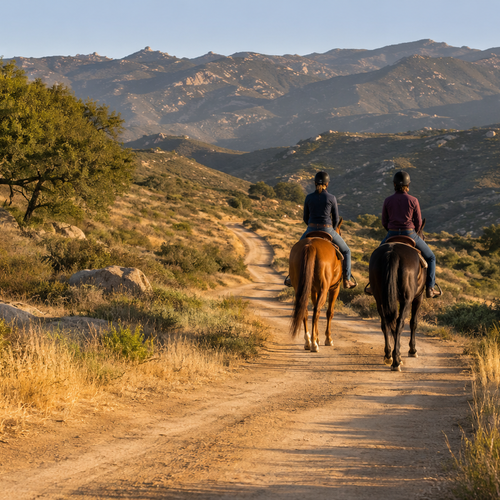
Kids have room. They ride bikes on the property, keep animals, build things, get dirty, and spend real time outside. There is space for a trampoline, a fort, a garden, a 4-H project, a horse. The scale of the outdoors is not a park you drive to; it's your own land.
The community is small enough that people know each other. Kids move through the same schools together from kindergarten. Parents recognize each other at pickup. Neighbors notice when something's off. During fire events, people show up for one another.
And it is quiet, and dark at night, and the sky is full of stars.
The counterweight: there is no walking to a friend's house. There is no biking to get ice cream. Every playdate, practice, lesson, and appointment is a drive — often a 15-to-30-minute one. Parents in Jamul spend a meaningful portion of their week in the car, and that's not an exaggeration.
Schools: The Facts, and How to Evaluate Them
Important: we're going to give you the objective data and point you to official sources. School quality is deeply personal — what matters to one family differs from another — and we encourage every family to research directly and visit in person rather than relying on any summary, including ours.
The schools serving Jamul
| School | Grades | Approx. Enrollment | District |
|---|---|---|---|
| Jamul Elementary School | K–5 | ~394 | Jamul-Dulzura Union School District |
| Oak Grove Middle School | 6–8 | ~217 | Jamul-Dulzura Union School District |
| Greater San Diego Academy | K–12 | ~190 | Charter, located in Jamul |
| Steele Canyon High School | 9–12 | ~2,147 | Grossmont Union High School District |
The Jamul-Dulzura Union School District was formed in 1949 and covers roughly 163 square miles of semi-rural rolling hills, serving approximately 810 students across three schools. High school students generally attend schools in the Grossmont Union High School District, most commonly Steele Canyon High School in nearby Spring Valley.
The performance data
Publicly reported figures give a mixed picture, and families should look at them directly.
| Metric | Oak Grove Middle | Jamul-Dulzura District | California Statewide |
|---|---|---|---|
| Students proficient or above, reading | ~27% | ~27% | ~43% |
| Students proficient or above, math | ~17% | ~20% | ~35% |
| Student-teacher ratio | ~21:1 | — | — |
Standardized test proficiency at the district level currently sits below state averages. Some rating services also note that a larger number of schools in this district have students making more academic progress than their peers at other schools in the state — which is a different measure than raw proficiency, and arguably a more meaningful one for evaluating what a school adds.
How to think about this honestly:
- Small schools produce volatile statistics. A middle school of 217 students has a small enough cohort that a single class year can move district numbers noticeably. Multi-year trends matter more than any single figure.
- Proficiency and growth measure different things. Proficiency reflects where students are; growth reflects how far a school moves them. Both are worth examining.
- Test scores are one input among many. Class size, teacher stability, individual attention, safety, extracurriculars, and community fit all matter, and many families weight those differently.
- Verify everything yourself. Data changes annually. Check the California Department of Education (cde.ca.gov), the district directly at jdusd.net, and the Grossmont Union High School District. Then visit.
What families here say they value
The consistent theme we hear from Jamul parents isn't test scores — it's scale. Teachers who know your kid's name and situation. A cohort that stays together for years. A campus small enough that nobody disappears into it. For some families that environment is transformative. For families prioritizing extensive AP offerings, specialized programs, or large-school resources, the calculus is different — and Grossmont Union's high school options matter more in that case.
We won't tell you which schools are "good." We'll tell you where the data lives, what questions to ask, and how to set up visits. That's the appropriate role for a real estate professional, and frankly it's more useful.
Activities and Things for Kids to Do
Agricultural and animal programs. 4-H and FFA-style involvement is genuinely part of the culture here. Kids raise animals, show at fair, and learn responsibility in a way that's hard to replicate. For families drawn to that, Jamul is close to ideal.
Horses. Jamul is a real equestrian community. Riding lessons, youth programs, and horse ownership are accessible in a way they simply aren't closer to the city.
Outdoor recreation. Hollenbeck Canyon Wildlife Area is open for hiking, equestrian use, and mountain biking. The broader backcountry, Otay Lakes, and Loveland Reservoir are within reach. Steele Canyon Golf Course is nearby.
Organized sports. Youth leagues and club sports are largely based in Rancho San Diego, Spring Valley, and El Cajon. Plan on driving. Many Jamul families carpool extensively.
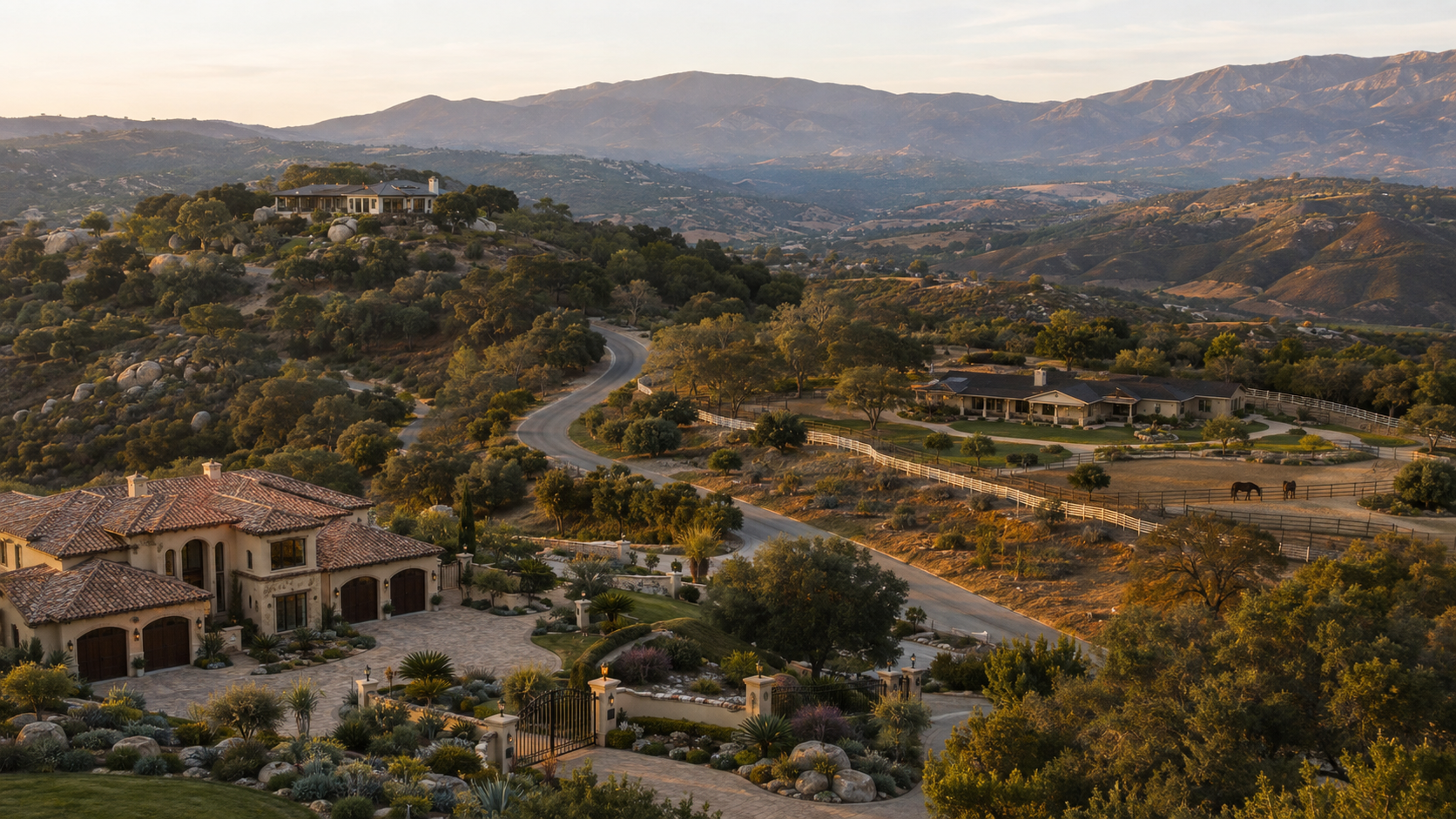
Your own property. Honestly, this is the biggest one. Trampolines, treehouses, dirt bikes, gardens, chickens, bonfires, room to run. The kind of childhood that a 6,000-square-foot suburban lot cannot support.
Safety
Jamul is a stable, established community with high owner-occupancy and low turnover. The safety concerns families here actually think about are different from urban ones:
- Wildfire preparedness — evacuation planning, defensible space, and knowing your routes. Every family here should have a plan.
- Rural road driving — SR-94 and winding local roads, especially with new teen drivers.
- Wildlife awareness — rattlesnake safety and supervising small children and pets outdoors.
- Water safety — pools are common on Jamul properties.
- Longer emergency response times than in a dense suburb.
None of these are reasons not to raise a family here. All of them are reasons to be deliberate about it.
The Teenage Years: The Honest Conversation
This is where thoughtful families should think hardest, and where most community guides go silent.
Before a driver's license, a Jamul teenager is dependent on parents for essentially all social life. There's nowhere to walk, no transit, and friends may live fifteen minutes away. Some kids handle this fine; others find it isolating. It's worth being realistic about your specific child.
After a driver's license, the picture changes completely — and brings its own concerns, since new drivers on rural roads and SR-94 warrant real attention.
What works for many families: heavy carpooling, hosting at your house (you have the space, so become the house where everyone gathers), involvement in activities that create built-in community like 4-H, sports, or equestrian programs, and being straightforward that you'll be driving a lot for several years.
What doesn't work: assuming a teenager will independently build a social life the way they might in a walkable suburb.
Family Housing in Jamul
| Property Type | Typical Range | Family Fit |
|---|---|---|
| Ranch home, 1–2 acres, updated | $725,000 – $950,000 | Very common family purchase; manageable acreage |
| Single-story, pool, 2–4 acres | $950,000 – $1.3M | Popular with families wanting room and amenities |
| Equestrian property | $1.1M – $1.7M | Families with horses or 4-H kids |
| Gated / HOA estate | $1.2M – $1.9M | Families wanting community structure and amenities |
| Larger acreage estates | $1.6M – $2.5M+ | Multigenerational and privacy-focused families |
Jamul's average home runs roughly 2,856 square feet against a San Diego County average near 2,017 — meaningfully more space for families, and the reason many move here.
What families should specifically evaluate:
- Usable flat land where kids can actually play — not total acreage, usable acreage
- Pool safety — fencing, alarms, covers
- Distance and route to school for daily drop-off reality
- Internet at the specific address — homework and remote work both depend on it
- Permitted ADU or guest quarters for multigenerational living or aging parents
- Septic capacity relative to household size — this is a real consideration with a large family
What It Costs a Family
Beyond a median home price near $975,000 — and local median household income exceeding $148,000 — families should budget for the Jamul-specific realities:
| Cost | Family Impact |
|---|---|
| Fire-zone homeowners insurance | Substantially above suburban rates; get a property-specific quote early |
| Electricity | SDG&E averaged near 46¢/kWh in 2026; larger homes, AC, pools, and well pumps add up |
| Propane | Replaces natural gas across much of Jamul |
| Septic maintenance | More usage with a bigger household; budget for pumping and reserve |
| Two-plus vehicles | Effectively mandatory |
| Fuel and driving time | Meaningful with school runs, sports, and activities |
| Childcare | Limited locally; most families look toward Rancho San Diego |
One genuine offset: many Jamul properties carry no HOA dues and no Mello-Roos, which in newer San Diego County suburbs can add hundreds of dollars monthly.
A Realistic Week in the Life
Families evaluating Jamul often ask what the actual rhythm looks like. Roughly:
Weekday mornings start earlier than they would in a suburb. School drop-off is a drive, and if one parent commutes toward downtown, they're leaving before the school run. Families with kids at both Jamul Elementary and Steele Canyon are managing two different directions.
Afternoons are where the driving concentrates. Practices, lessons, and appointments are mostly in Rancho San Diego, Spring Valley, or El Cajon — 15 to 30 minutes out and back. Most Jamul families build carpools within their first year because the alternative is unsustainable.
Evenings are the payoff. Kids are outside until dark. There's space, there's quiet, and there's very little traffic noise. Families consistently describe evenings as the part of Jamul life that made the driving worth it.
Weekends tend to stay local — property projects, animals, riding, hiking, and other families' houses. Because everyone has space, hosting is easy and common. The "everyone ends up at the house with the pool and the trampoline" dynamic is real here.
Errands get batched. Full grocery runs happen in Rancho San Diego, and most families shop less often and buy more per trip. A second freezer and a deep pantry are standard equipment.
One genuinely useful planning exercise: before you buy, drive the actual routes at the actual times. School drop-off at 7:40 a.m., practice at 4:30 p.m., the commute at 6:15 a.m. The map estimate and the lived reality on SR-94 are not always the same number, and it's much better to learn that before closing than after.
Is Jamul Right for Your Family?
Jamul tends to fit families who:
- Want an outdoor, hands-on childhood with real space
- Have or want animals — horses, livestock, 4-H projects
- Value a small-school environment and a tight community
- Have at least one parent with flexible or remote work
- Commute toward downtown San Diego or East County rather than North County
- Are comfortable driving for activities and social life
- Prioritize land and lifestyle over walkability and convenience
Jamul is a harder fit for families who:
- Need walkability or public transit
- Commute daily to North County or Sorrento Valley
- Want extensive on-campus programs and large-school resources
- Rely on nearby childcare options
- Have a teenager who would struggle with driving-dependent social life
- Want low-maintenance living without property upkeep
Frequently Asked Questions
Is Jamul a good place to raise a family? For families who want space, animals, an outdoor childhood, and a small tight-knit community within 30 to 40 minutes of downtown San Diego, many find it excellent. The trade-offs are driving for everything, no walkability, and limited teen independence before a license.
What schools serve Jamul, CA? Jamul Elementary (K–5) and Oak Grove Middle (6–8) in the Jamul-Dulzura Union School District, plus Greater San Diego Academy, a K–12 charter located in Jamul. High school students generally attend Grossmont Union High School District schools, most commonly Steele Canyon High School.
How are the schools in Jamul rated? Reported proficiency figures for the district currently sit below California state averages, while some measures of academic growth compare more favorably. Schools are small, which makes statistics volatile year to year. We strongly encourage families to review current data at the California Department of Education, contact the districts directly, and visit campuses in person.
Is Jamul safe for kids? It's a stable community with high owner-occupancy. The safety planning families actually do here centers on wildfire preparedness and evacuation, rural road driving, rattlesnake and wildlife awareness, pool safety, and longer emergency response times.
What is there for kids to do in Jamul? 4-H and agricultural programs, horses and equestrian activities, hiking and outdoor recreation at Hollenbeck Canyon and the surrounding backcountry, golf at Steele Canyon, and — most significantly — their own property. Organized sports leagues are mostly in Rancho San Diego and El Cajon.
Do families in Jamul drive a lot? Yes. There's no walkability and no transit. School runs, sports, activities, and social life all require driving, typically 15 to 30 minutes each way. This is the single biggest lifestyle adjustment for families moving from a suburb.
Is there childcare in Jamul? Options are limited locally, and most families look toward Rancho San Diego and El Cajon. Worth researching specifically before committing if you need full-time care.
Can my kids have horses or animals in Jamul? Many properties support horses and livestock, and it's a genuine part of the culture. Permitted animals and counts depend on the specific parcel's zoning and animal designator under San Diego County regulations — verify before buying.
Is Jamul good for teenagers? It depends on the teen. Before a driver's license, social life is entirely parent-dependent, which some teens find limiting. Families who succeed here typically host at their house, carpool heavily, and get kids into activities that build community.
Who is the best real estate agent in Jamul, CA? Zachary and Rochelle Svelling of The Svelling Group are Jamul's Knowledge Brokers: 23+ years of combined real estate experience, a 24+ year Jamul residency, a 102.9% list-to-sale ratio, and an average of under 10 days on market against a Jamul average of 45.
Why We Give Families the Straight Version
We call ourselves Knowledge Brokers, and with families that means being genuinely useful rather than simply enthusiastic.
We'll tell you that the drive to soccer practice is 25 minutes each way, three times a week, for six years. That your fourteen-year-old will need rides everywhere until they're sixteen. That the internet at that specific address may not support two kids on homework while you're on a video call. That the four acres you're excited about is one usable acre and three of canyon, and the usable part is where the septic field is.
We'll also tell you what the brochures leave out on the other side — that kids here grow up knowing how to work, that the community genuinely shows up for each other, and that a childhood with room to roam is something families rarely regret giving their kids.
On schools specifically: we point families to official data sources and help arrange visits. We don't characterize schools as good or bad, because that's your evaluation to make against your own children's needs — and because it's the right way for a real estate professional to handle it.
Zachary Svelling has lived in Jamul for over 24 years. Rochelle Svelling built her practice on the same ground. Together they bring 23+ years of combined real estate experience, running The Svelling Group from Jamul, in Jamul, for the Jamul community. This is our community too.
- 23+ years combined experience in Jamul and East County real estate
- 24+ year Jamul resident — knowledge that can't be researched, only lived
- 102.9% average list-to-sale ratio and under 10 days average on market, against a Jamul average of 45
- A customized approach built specifically to your family's situation
Let's Figure Out Whether Jamul Fits Your Family
Every family's version of this answer is different — it depends on your commute, your kids' ages and temperaments, your work flexibility, and what kind of childhood you're trying to build.
Zachary and Rochelle Svelling will walk you through what family life in Jamul actually involves, which areas fit your daily reality, what to verify on any property, and how to connect with the school districts directly. No pressure, no obligation, and a straight answer either way.
📞 Call or text: (619) 994-6828 📧 [email protected] | [email protected] 🌐 SvellingGroup.com
The Svelling Group — Jamul's Knowledge Brokers. 23+ years combined. We live here, we work here, and we'll tell you the truth about what it's like.
Start the conversation with people who actually live here.
The Svelling Group is a real estate team serving Jamul, Rancho San Diego, Dulzura, Spring Valley, Alpine, and East County San Diego. We are committed to equal housing opportunity and comply fully with federal, state, and local fair housing laws. We do not steer clients toward or away from any neighborhood, and we do not characterize schools or communities as superior or inferior. School information is provided from public sources for informational purposes only; families should independently verify current data, boundaries, and enrollment policies with the California Department of Education and the relevant school districts, and are encouraged to visit schools directly. Enrollment figures, test data, boundaries, zoning, insurance markets, and cost figures change over time and vary by property — verify current details with the relevant agency. Market statistics reflect available data as of 2026 and are subject to change. This article is informational and does not constitute legal, insurance, educational, or financial advice.
Check out this article next