
What Are the Most Common Mistakes Jamul Home Sellers Make?
The most costly mistakes Jamul home sellers make are pricing against tract-home comps instead of acreage comps, delaying septic and well inspections until an offer arrives, ignoring AB 38 and the new 2026 Zone 0 fire compliance requirements, and hiring an agent who doesn't sell in Jamul. These errors are why the average Jamul home takes 45 days to sell — while Svelling Group listings average under 10 days at 102.9% of list price.
Below are all 27, organized by where they happen in the process, with the real-dollar cost of each.
The 27 Mistakes at a Glance
| # | Mistake | Stage | Typical Cost |
|---|---|---|---|
| 1 | Pricing off tract-home comps | Pricing | $50,000 – $150,000 |
| 2 | Pricing total acreage instead of usable acreage | Pricing | $25,000 – $100,000 |
| 3 | Trusting an automated home value estimate | Pricing | Varies, often severe |
| 4 | Starting high "to leave negotiating room" | Pricing | $40,000+ and 60 extra days |
| 5 | Pricing from what you need, not what it's worth | Pricing | Full listing failure |
| 6 | Ignoring the view premium | Pricing | $30,000 – $80,000 |
| 7 | Skipping the pre-listing septic inspection | Preparation | $5,000 – $30,000 in concessions |
| 8 | No well production or water quality testing | Preparation | Deal collapse |
| 9 | Remodeling the kitchen instead of clearing the brush | Preparation | $40,000 misallocated |
| 10 | Neglecting gate, driveway, and entry presentation | Preparation | $15,000 – $25,000 |
| 11 | Leaving outbuildings cluttered | Preparation | $20,000+ in perceived value |
| 12 | Unpermitted additions left undocumented | Preparation | Appraisal and financing failure |
| 13 | Missing AB 38 defensible space documentation | Compliance | Escrow delay or cancellation |
| 14 | Ignoring the July 2026 Zone 0 requirement | Compliance | Renegotiation leverage lost |
| 15 | Incomplete or minimized disclosures | Compliance | Post-closing litigation |
| 16 | No documentation for shared wells or road easements | Compliance | Lender rejection |
| 17 | Undisclosed leased solar | Compliance | Late-escrow financing collapse |
| 18 | Propane tank ownership left unclear | Compliance | Last-minute credits |
| 19 | Interior-only photography | Marketing | 30+ extra days on market |
| 20 | No aerial or parcel mapping | Marketing | $25,000 – $60,000 |
| 21 | Marketing square footage instead of lifestyle | Marketing | Wrong buyer pool entirely |
| 22 | Template marketing applied to a unique property | Marketing | 45+ days on market |
| 23 | Failing to market the equestrian infrastructure | Marketing | $50,000 – $100,000 |
| 24 | Evaluating offers on price alone | Negotiation | Failed escrow |
| 25 | Accepting a buyer who can't finance rural property | Negotiation | 30–45 wasted days |
| 26 | Sending the appraiser in unsupported | Escrow | $20,000 – $70,000 |
| 27 | Hiring an agent who doesn't sell in Jamul | All stages | Every cost above, compounded |
Category 1: Pricing Mistakes (Mistakes 1–6)
1. Pricing your Jamul home against tract-home comps
This is the single most expensive error made in this market, and it's made constantly by agents whose business lives in Chula Vista, Santee, or Rancho San Diego. They pull comps by zip code proximity, find recent sales in tract subdivisions, and price your acreage property against houses on 6,000-square-foot lots.
Jamul's average home runs roughly 2,856 square feet against a San Diego County average near 2,017. You are not selling the same product. When an agent prices a 3-acre Jamul property using tract comps, the number is wrong in both directions — sometimes catastrophically low, sometimes indefensibly high. Neither is survivable.
2. Pricing total acreage instead of usable acreage
A buyer walking a 5-acre parcel where four acres are a 35-degree slope does not see 5 acres. They see a house, a flat pad, and a view. Total acreage is a number on a tax record. Usable acreage is what people pay for.
Correctly separating the two — and then pricing the usable portion against genuinely comparable Jamul parcels — is the difference between an offer in week one and a price reduction in week seven.
3. Trusting an automated home value estimate
Zillow's algorithm has no data field for a seasonal creek, a shared well agreement, a 40-foot arena with proper drainage, or a west-facing ridgeline. It cannot see that your neighbor's comparable sale included 12 acres of unusable canyon. Automated models work reasonably well in homogeneous tract markets and fail badly in Jamul, where every parcel is a one-off.
Anchoring your expectations to an algorithm's number is how sellers end up either giving away equity or refusing legitimate offers.
4. Starting high "to leave negotiating room"
This is folk wisdom, and in Jamul it's actively destructive. The buyer pool here is smaller and more specific than in a tract market. When your property launches overpriced, the qualified buyers who were watching simply move on — and they do not come back when you reduce.
The result is predictable: 60 to 90 days on market, two price reductions, and a final sale price below where a correct list price would have landed. Days on market is the most expensive number in real estate. Every week teaches buyers to discount.
5. Pricing from what you need, not what it's worth
Your mortgage payoff, your down payment on the next house, and your retirement math are all real. None of them are inputs the market recognizes. Pricing to a personal number instead of a market number produces a listing that sits, and a listing that sits eventually sells for less than one priced correctly on day one.
6. Ignoring the view premium
Jamul's west-facing ridgelines and sunset corridors carry a real, measurable premium that flatter markets don't have. Agents unfamiliar with the area routinely fail to credit it — or credit it to properties that don't actually have it. Knowing which ridgelines hold value, and by how much, is exactly the kind of thing that comes from living here rather than researching here.
Category 2: Property Preparation Mistakes (Mistakes 7–12)
7. Skipping the pre-listing septic inspection
Most of Jamul is on septic. The Otay Water District's sewer service area covers Rancho San Diego, Calavo Gardens, Singing Hills, and portions of Mount Helix — properties in the basin not served by a sewer agency dispose of sewage through septic tanks.
Every buyer and lender will require septic inspection and certification. The question is only whether you control that timeline or the buyer does. A septic problem you find and address before listing costs what the repair costs. The same problem discovered by a buyer's inspector on day 12 of escrow costs the repair plus a concession plus leverage on every other inspection item.
8. No well production or water quality testing
Properties in Lawson Valley, Lyons Valley, Deerhorn Valley, and along Skyline Truck Trail frequently run on private wells. Buyers want production rate in gallons per minute, potability testing, and the well permit and drilling records. Lenders may want them too.
Sellers who wait until a buyer asks add two weeks to escrow at minimum. Sellers who can't produce the records at all sometimes lose the deal entirely.
9. Remodeling the kitchen instead of clearing the brush
Jamul sellers routinely spend $40,000 on an interior remodel that returns a fraction of its cost, while the driveway is rutted, the fencing is falling down, and the property has two seasons of accumulated brush against the structure.
In this market, exterior preparation returns more than interior preparation almost every time. Brush clearance, fence repair, gate function, and landscaping are what buyers register in the first 90 seconds — and in 2026, brush clearance is also a compliance requirement.
10. Neglecting gate, driveway, and entry presentation
On acreage, the buyer's experience of your property begins several hundred feet before the front door. A sagging gate, a washboarded dirt drive, and an overgrown entry set the tone for everything they see afterward. These are inexpensive fixes with outsized influence on perceived value.
11. Leaving outbuildings cluttered
Barns, shops, tack rooms, and storage buildings full of 20 years of accumulation read as storage. The same buildings emptied and swept read as usable infrastructure the buyer is acquiring. Same square footage, entirely different value. This is one of the highest-return hours of work available to a Jamul seller.
12. Unpermitted additions left undocumented
Converted garages, added bedrooms, guest quarters, and expanded workshops are common on Jamul properties. Discovering mid-escrow that the 600-square-foot addition was never permitted can invalidate the appraisal, kill the financing, and collapse the sale.
Permit history needs to be researched and addressed before listing, with a strategy for how the square footage is represented. There are workable paths here — but only if the problem is known in advance.
Category 3: Disclosure and Compliance Mistakes (Mistakes 13–18)
13. Missing AB 38 defensible space documentation
Large portions of Jamul fall within High or Very High Fire Hazard Severity Zones. Under AB 38, sellers of residential property in these zones must provide documentation of compliance with defensible space requirements before close of escrow — and if that documentation isn't available by closing, the buyer and seller may agree in writing that the buyer will obtain it within one year. Sellers must also provide fire-resistant retrofit information from the State Fire Marshal's low-cost retrofit list.
The California Association of Realtors' Fire Hardening and Defensible Space Disclosure requires sellers to state whether 12 specific home hardening conditions have been met. Inspections take time to schedule. Sellers who start this in escrow are already behind.
14. Ignoring the July 2026 Zone 0 requirement
This is the newest and most under-discussed issue facing Jamul sellers right now. California's Zone 0 ember-resistant standard governs the first five feet around a structure, and inspectors are set to begin checking Zone 0 compliance during real estate transactions beginning July 2026.
That means mulch beds, plantings, stored firewood, and combustible fencing materials against the house are now a transactional issue, not just an annual chore. Sellers who address it in advance close cleanly. Sellers who don't will negotiate against it.
15. Incomplete or minimized disclosures
The instinct to under-disclose is understandable and always wrong. California's disclosure obligations are broad, the statute of limitations is long, and rural properties generate more disclosable conditions than tract homes — drainage, wildlife, road maintenance, past repairs, water intrusion, neighboring agricultural use.
Full disclosure protects you. Minimized disclosure invites a lawsuit two years after you've spent the proceeds.
16. No documentation for shared wells or road easements
Shared well agreements and private road maintenance agreements are common in Jamul's outlying valleys and are frequently informal, verbal, or lost. Lenders increasingly want written agreements before they'll fund. Locating, reconstructing, or formalizing these documents takes weeks — time you don't have once you're in contract.
17. Undisclosed leased solar
A leased or financed solar array requires the buyer to qualify for and assume the agreement. When this surfaces late in escrow, it can collapse financing days before closing. Solar documentation — owned, financed, or leased, with the full agreement — belongs in the pre-listing package.
18. Propane tank ownership left unclear
Natural gas service is limited across much of Jamul, so propane is standard. Whether the tank is owned or leased, and the terms of any supplier agreement, is a genuine disclosure item that produces last-minute credits when it's discovered rather than disclosed.
Category 4: Marketing Mistakes (Mistakes 19–23)
19. Interior-only photography
Eleven interior cell phone photos will sell a condo in Mission Valley. They will not sell a 4-acre Jamul property, because the land — the single most valuable component — is entirely absent from the listing. Buyers scrolling the MLS cannot distinguish your acreage property from a tract home when the photos stop at the property line.
20. No aerial or parcel mapping
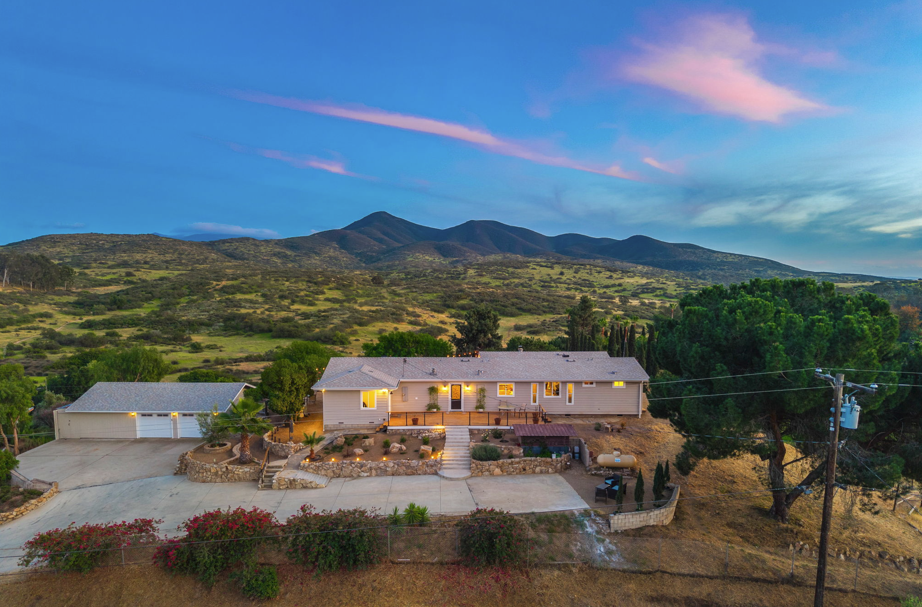
Buyers evaluating Jamul properties need to understand parcel shape, boundaries, topography, usable land, access, and the relationship between the house, the outbuildings, and the acreage. Aerial photography with parcel mapping communicates in five seconds what a written description cannot communicate at all. Listings without it consistently underperform.
21. Marketing square footage instead of lifestyle
Buyers move to Jamul for specific reasons: land, privacy, dark skies, horses, room for equipment and toys, the Jamul-Dulzura Union School District, the feed into Steele Canyon High, and a 30-to-40-minute SR-94 commute that buys them ten times the lot they'd get closer in.
Listing copy that leads with bedroom count and square footage is speaking to a buyer who was never going to move here. Marketing has to speak to the actual motivation.
22. Template marketing applied to a unique property
An equestrian property, a hilltop estate, an updated single-story with a pool, and a raw build parcel require four completely different buyer strategies, four different photographic approaches, and four different narratives. Running all of them through the same listing template guarantees that at least three are underserved.
This is precisely why The Svelling Group builds a customized listing marketing strategy specifically to each property rather than pulling from a template.
23. Failing to market the equestrian infrastructure
Barns, arenas, cross-fencing, tack rooms, loafing sheds, and wash racks appraise conservatively and sell exceptionally — but only to buyers who know they're there. Jamul is an equestrian market. A property with real horse infrastructure that's marketed as "a house with a big yard" is leaving a substantial number on the table.
Category 5: Negotiation and Escrow Mistakes (Mistakes 24–27)
24. Evaluating offers on price alone
The highest number is not always the best offer. Financing type, down payment, appraisal contingency, inspection windows, and the buyer's demonstrated ability to close on a septic-and-well property all matter more than a $10,000 spread on price. An offer that fails in week four costs you far more than the difference.
25. Accepting a buyer who can't finance rural property
Not every lender is comfortable with private wells, shared water agreements, large acreage, unpermitted structures, or properties with substantial outbuilding value. Accepting an offer from a buyer whose lender has never funded a rural transaction is a 30-to-45-day detour that ends back at square one, with your listing now carrying a "back on market" flag.
26. Sending the appraiser in unsupported
An appraiser assigned from a coastal office who has never valued a 5-acre parcel with a barn will default to the most conservative defensible number. That's not malice; it's risk management with insufficient information.
The fix is straightforward and most agents skip it: supply a documented comp package with acreage adjustments, improvement details, and parcel data. A 102.9% list-to-sale ratio does not survive appraisal without this step.
27. Hiring an agent who doesn't sell in Jamul
Every mistake above traces back to this one. An agent whose business is in another market will price against the wrong comps, miss the septic and well requirements, not know the AB 38 or Zone 0 timeline, market to the wrong buyer, and send the appraiser in blind.
They are not bad agents. They are agents operating outside their market. In Jamul, that costs real money — which is why the community average is 45 days on market and The Svelling Group's average is under 10.
The Pre-Listing Checklist That Prevents All 27
Run this sequence before your home ever hits the MLS.
- Parcel-level valuation. Usable versus total acreage, water source, view corridor, outbuildings, access — priced against genuine Jamul comps.
- Septic inspection and pumping. Certification in hand before listing.
- Well testing. Production rate, water quality, permit and drilling records assembled.
- Permit research. Every addition, conversion, and outbuilding verified against county records.
- AB 38 defensible space inspection. Scheduled early — these take time.
- Zone 0 preparation. Clear the five-foot ember-resistant buffer around the structure.
- Document assembly. Easements, shared well agreements, road maintenance agreements, solar, propane.
- Exterior preparation. Brush, fencing, gate, driveway, landscaping, outbuilding clearing.
- Customized marketing build. Aerial and parcel mapping, twilight, view corridors, outbuildings, lifestyle narrative, targeted buyer outreach.
- Coordinated launch. Everything fires at once to concentrate demand into the opening window.
Frequently Asked Questions
What is the biggest mistake when selling a home in Jamul? Pricing against tract-home comps instead of acreage comps. Jamul homes average roughly 2,856 square feet on substantial land versus a county average near 2,017 square feet on small lots. Using the wrong comp set produces a wrong price, and a wrong price produces 45-plus days on market and a below-market sale.
Do I really need a septic inspection before listing in Jamul? Practically, yes. Most of Jamul is on septic and virtually every buyer and lender will require certification. Getting it done pre-listing costs the same money and removes a major negotiating lever from the buyer.
What happens if I don't do the AB 38 defensible space inspection? AB 38 requires documentation of defensible space compliance before close of escrow for properties in High or Very High Fire Hazard Severity Zones. If it isn't available at closing, buyer and seller may agree in writing that the buyer obtains it within one year. In practice, unprepared sellers face escrow delays and lose negotiating position.
When do Zone 0 inspections start affecting home sales? Inspectors are expected to begin checking Zone 0 ember-resistant zone compliance during real estate transactions in July 2026 — which makes it immediately relevant to anyone selling in Jamul now.
Should I remodel before selling my Jamul home? Usually not. Exterior preparation — brush clearance, fencing, gate and driveway, landscaping, clearing outbuildings — almost always outperforms interior remodeling in this market. We identify the specific items worth doing on your property and the ones that waste money.
How long should a Jamul home take to sell? The Jamul average is approximately 45 days. The Svelling Group averages under 10 days at 102.9% of list price. If a Jamul listing is sitting past 30 days, something in the pricing, preparation, or marketing is wrong.
Can I sell my Jamul home myself and avoid these mistakes? Some sellers do sell without an agent. The risk in Jamul specifically is that the mistakes above are technical and expensive — disclosure liability, fire compliance, well and septic documentation, appraisal support on acreage. The savings on commission are frequently smaller than the cost of one missed item.
Who is the best listing agent in Jamul, CA? Zachary and Rochelle Svelling of The Svelling Group are Jamul's Knowledge Brokers: 23+ years of combined real estate experience, a 24+ year Jamul residency, a 102.9% list-to-sale ratio, and an average of under 10 days on market against a Jamul average of 45.
Why These Mistakes Don't Happen on a Svelling Group Listing
We call ourselves Knowledge Brokers, and this list is the reason why.
Every one of these 27 mistakes is a knowledge failure, not an effort failure. Agents who lose their sellers money in Jamul aren't lazy — they're working from a playbook built for a different market. They don't know which ridgelines hold value, which lenders will underwrite a shared well, which septic contractors turn certifications around in three days, or what a 5-acre parcel is actually worth when 1.5 acres are usable.
Zachary Svelling has lived in Jamul for over 24 years. Rochelle Svelling built her practice on the same ground. Together they bring 23+ years of combined real estate experience, and they run The Svelling Group from Jamul, in Jamul, for Jamul homeowners.
The results that follow from that:
- 102.9% average list-to-sale ratio — Svelling Group sellers close above asking
- Under 10 days average on market — versus a Jamul average of 45 days
- 23+ years combined experience in Jamul and East County real estate
- 24+ year Jamul resident — knowledge that can't be researched, only lived
- A customized listing marketing strategy built specifically to your property — never a template
We live here. We operate our business here. When we price your home, we're pricing against properties we've personally walked.
Don't Make Mistake #27
If you're planning to sell in Jamul this year, the highest-leverage decision you'll make is the first one — and it determines whether the other 26 mistakes ever happen.
Zachary and Rochelle Svelling will walk your property, build a parcel-level valuation from real Jamul comps, flag every compliance and preparation item before it becomes a problem, and show you the customized marketing strategy built specifically for your home. No pressure, no obligation — just the plan.
📞 Call or text: (619) 994-6828 📧 [email protected] | [email protected] 🌐 SvellingGroup.com
The Svelling Group — Jamul's Knowledge Brokers. 23+ years combined. 102.9% list-to-sale. Under 10 days on market. We live here, we work here, and we know exactly what your Jamul home is worth.
Schedule your free Jamul home valuation and pre-listing review today.
The Svelling Group is a real estate team serving Jamul, Rancho San Diego, Dulzura, Spring Valley, Alpine, and East County San Diego. Market statistics reflect available data as of 2026 and are subject to change. This article is informational and does not constitute legal, tax, or financial advice.
Check out this article next