

Selling a Horse Property in Jamul: How to Market the Home, Land, and Equestrian Lifestyle
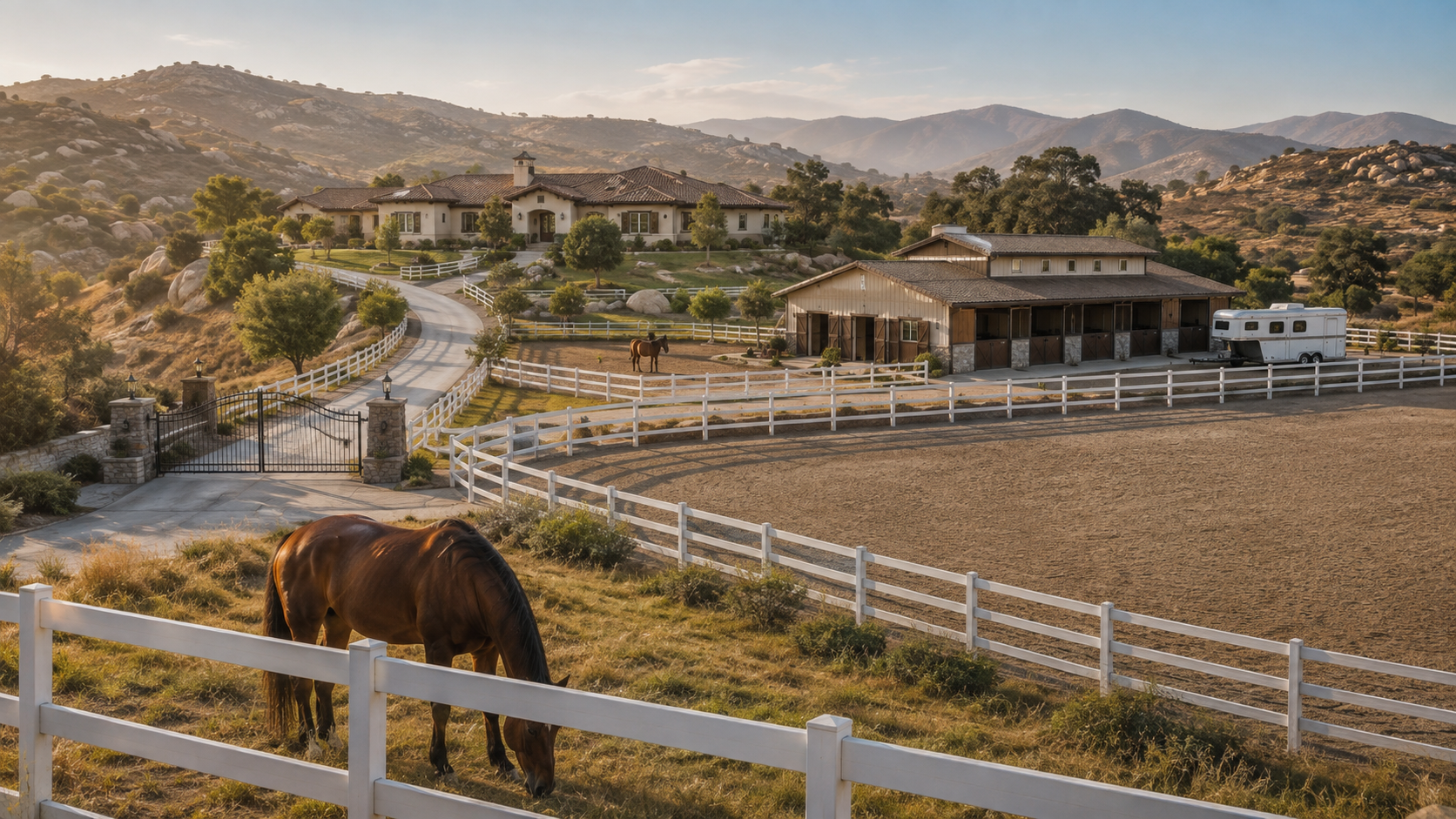
Selling a horse property in Jamul requires more than advertising a home with acreage. The listing must clearly communicate how the entire property functions for horses and their owners—including its usable land, zoning, animal designator, barns, stalls, arenas, paddocks, fencing, water access, trailer parking, manure management, drainage, fire preparedness, and proximity to riding opportunities.
The best strategy is to document the property’s equestrian infrastructure before it reaches the market, address visible maintenance issues, verify rather than assume permitted uses, price the home and horse improvements separately, and use professional photography, drone imagery, video, maps, and detailed descriptions to reach qualified equestrian buyers throughout Southern California.
Zachary and Rochelle Svelling of The Svelling Group are Jamul-based real estate Knowledge Brokers who understand that selling an equestrian property means selling three interconnected assets: the residence, the land, and the horsekeeping lifestyle. Their goal is to help Jamul horse-property sellers anticipate buyer questions, communicate value, and position their property for the strongest possible market response.
What Makes a Jamul Property a Horse Property?
A horse property is not simply a large parcel where horses happen to live. A true equestrian property generally contains land, access, infrastructure, and improvements specifically supporting horsekeeping.
Depending on the property, those features may include:
- Barns or covered stalls
- Corrals and paddocks
- Pastures or turnout areas
- Riding arenas
- Round pens
- Tack and feed rooms
- Wash racks
- Cross-ties
- Hay and bedding storage
- Horse-trailer parking
- Wide driveways and turnaround areas
- Cross-fencing
- Water lines and automatic waterers
- Manure-storage or composting areas
- Shade structures
- Lighting
- Direct or convenient riding access
- Separate entrances for trailers, deliveries, or boarding clients
The value of a Jamul horse property comes from how successfully these elements work together.
A beautiful barn has limited practical value if a large trailer cannot reach it. An arena may be less desirable if drainage is poor. Ten acres may sound impressive, but horse buyers will want to know how much of that acreage is usable.
Selling effectively means helping buyers understand the complete system—not simply displaying photographs of a horse and a fence.
Why Jamul Appeals to Equestrian Buyers
Jamul offers a combination that is increasingly difficult to find in San Diego County: larger residential parcels, rural character, privacy, agricultural traditions, mountain and valley scenery, and access to the services of East County.
The community includes everything from modest homes with room for a few personal horses to luxury equestrian estates with substantial arenas, barns, guest accommodations, workshops, and multiple fenced areas.
The County’s Jamul/Dulzura Subregional Plan specifically recognizes animal keeping and agricultural land uses as desirable on residential parcels of one acre or more. It also supports land-use regulations that allow agricultural uses throughout the community where appropriate. That policy background helps explain why horse properties remain an important part of Jamul’s identity. County of San Diego Jamul/Dulzura Subregional Plan
However, buyers should never assume that acreage alone determines the number of horses or type of equestrian activity allowed. The property’s zoning, animal designator, parcel configuration, improvements, and intended use all matter.
That is where knowledgeable representation becomes especially valuable.
The Difference Between Private Horsekeeping and a Commercial Horse Stable
One of the most important questions in a horse-property sale is whether the property is used for personal horsekeeping or a commercial equestrian operation.
County regulations generally distinguish between:
- Horsekeeping: Horses owned by the owners or occupants of the property and not kept for commercial purposes.
- Horse stable use: Commercial activities involving boarding, breeding, raising, rehabilitation, training, riding, or performing horses.
This distinction can affect permits, operational requirements, documentation, setbacks, events, manure management, fire planning, and other regulations. The County maintains a dedicated Equine Ordinance resource page with information about horse-stable permits and zoning procedures.
Sellers should avoid advertising that a property can be used for boarding, lessons, breeding, events, or another income-producing activity unless that use has been verified.
A statement such as “ideal for a boarding business” may sound attractive, but it can create problems if the property is not approved for that activity. A more responsible description would identify the existing improvements and instruct buyers to investigate whether their intended use is allowed.
How to Sell a Horse Property in Jamul: 12 Essential Steps
1. Identify the Property’s Legal and Physical Characteristics
Before preparing the marketing, the listing agent should build a complete profile of the property.
That review should include:
- Parcel size
- Number of legal parcels
- Assessor parcel number
- Current zoning
- Animal designator
- Recorded easements
- Access rights
- Shared roads
- Road-maintenance agreements
- Approximate property boundaries
- Topography
- Water source
- Septic system
- Solar or propane systems
- Permits for barns and accessory buildings
- Existing equestrian uses
The goal is to separate what is known from what still needs to be verified.
Horse-property buyers tend to ask detailed questions early. If the seller and listing agent cannot explain the property’s basic configuration, buyers may perceive unnecessary risk.
2. Inventory Every Equestrian Improvement
Create a written inventory of the equestrian facilities before photography or pricing.
For example:
| Improvement | Information to document |
|---|---|
| Barn | Number of stalls, construction, ventilation, power, lighting and age |
| Stalls | Dimensions, flooring, mats, doors, feeders and water |
| Arena | Approximate dimensions, footing, drainage, lighting and fencing |
| Paddocks | Number, size, shade, drainage and water access |
| Corrals | Materials, condition, gates and placement |
| Tack room | Size, security, cabinetry, saddle storage and climate control |
| Feed storage | Capacity, pest protection and delivery access |
| Wash rack | Drainage, hot water, cross-ties and surface |
| Pasture | Approximate usable area, fencing, irrigation and slope |
| Trailer parking | Vehicle access, turnaround room and surface |
| Manure area | Location, access, containment and management process |
| Trail access | Type of access and whether it is public, private or informal |
This information helps the listing team market specific benefits instead of relying on vague claims such as “horse-ready.”
3. Verify Permits and Approved Uses
Sellers should gather permits and other records for barns, covered arenas, workshops, guesthouses, additions, and major improvements whenever available.
A missing permit does not necessarily mean the property cannot be sold. It does mean the issue should be understood and handled appropriately.
The County’s zoning rules address the types and numbers of animals allowed as well as enclosure locations and setbacks. The rules can vary by a property’s animal designator. The County’s Zoning Ordinance resources provide the regulatory framework, but property-specific questions should be directed to County Planning & Development Services or another qualified professional.
The marketing should distinguish among:
- Improvements confirmed by records
- Improvements believed to be permitted
- Older improvements for which records are unavailable
- Uses that require buyer investigation
- Commercial operations with specific approvals
Accuracy protects the seller while increasing buyer trust.
4. Evaluate Usable Acreage
Acreage is one of the most misunderstood elements of horse-property pricing.
The recorded parcel size does not tell buyers:
- How much land is relatively level
- Which portions horses can safely use
- Whether a trailer can access the lower areas
- Whether separate turnout areas exist
- How the land drains
- Whether fencing follows the parcel boundaries
- Whether steep terrain provides privacy but limited horse utility
- Whether easements cross important areas
This does not mean steep or rocky land has no value. In Jamul, elevated terrain may provide privacy, dramatic views, natural beauty, and separation from neighboring properties.
The key is to describe the acreage honestly.
A drone photograph with an approximate parcel outline can help buyers understand the relationship among the residence, barn, arena, paddocks, driveways, and surrounding land. Parcel lines used in marketing should be clearly identified as approximate unless established by a survey.
5. Repair and Organize the Equestrian Areas
Horse people understand that working properties will not look like museum exhibits. They also recognize whether a facility has been thoughtfully maintained.
Before listing, sellers should consider:
- Removing broken fencing
- Repairing loose boards and damaged gates
- Eliminating exposed wire or sharp edges
- Servicing automatic waterers
- Cleaning tack and feed rooms
- Organizing tools and equipment
- Removing unused materials
- Addressing standing water
- Improving drainage where feasible
- Leveling heavily rutted access areas
- Removing accumulated manure
- Replacing burned-out arena or barn lights
- Trimming vegetation around structures
- Confirming gates open and close properly
- Making trailer access safe and presentable
These steps are not merely cosmetic. They demonstrate stewardship.
A buyer who sees functional gates, organized feed storage, maintained water systems, and safe fencing is more likely to believe the rest of the property has been cared for.
6. Prepare the Residence and Horse Facilities Together
Some sellers concentrate entirely on the house and treat the horse facilities as secondary. Others spend so much time preparing the barn that they overlook the residence.
Both are important.
The likely buyer may be comparing the property with:
- A luxury home that has no horse improvements
- A lower-priced ranch requiring extensive renovation
- Another equestrian property elsewhere in East County
- Vacant land where facilities would need to be built
- A boarding facility rather than a private residence
The presentation must demonstrate why this property offers the right balance of residential comfort and equestrian functionality.
Ideally, the buyer should see a clear connection between the home and the horse areas. Can the owners watch the arena from the house? Is the barn close enough for convenience but far enough to manage dust and odors? Is there a separate driveway for trailers? Can guests reach the residence without driving through working areas?
Those relationships are part of the value.
7. Address Water, Drainage, and Manure Management
Water is critical to horsekeeping. Buyers may ask about:
- Public water or private well
- Well production
- Storage tanks
- Irrigation
- Automatic waterers
- Water pressure
- Backup water supplies
- Arena dust control
- Pasture irrigation
- Drainage during heavy rain
They may also want to understand how manure and bedding are stored and removed.
San Diego County’s equine best-management guidance explains that polluted stormwater must not leave the property and enter streets or storm drains. The County recommends management practices designed to keep manure, sediment, and other pollutants out of runoff. Sellers can review the County’s Residential Equine BMP Handbook and consult qualified professionals regarding their property.
A clean, accessible manure-management area may not be visually glamorous, but it can be an important sign that the property functions responsibly.
8. Prepare for Fire and Insurance Questions
Wildfire preparedness and insurance have become significant concerns for many rural-property buyers.
Before listing, sellers may benefit from gathering:
- Current insurance information
- Records of roof or vent upgrades
- Vegetation-management invoices
- Details about water storage
- Hydrant or fire-department connection information
- Generator or battery-backup information
- Access details for emergency vehicles
- Evacuation routes for horses
- Fire-extinguisher and emergency-equipment locations
CAL FIRE describes defensible space as a buffer that can slow or stop wildfire and create a safer area for firefighters. Its current guidance emphasizes the importance of maintaining the area closest to structures, removing dead vegetation and debris, and reducing combustible materials. CAL FIRE defensible-space guidance
Horse buyers may also evaluate trailer access and evacuation logistics. A property with wide gates, adequate turnaround space, multiple turnout areas, and organized access may feel easier to manage during an emergency.
Sellers and agents should not guarantee that a property is insurable. Buyers should obtain their own quotes and make coverage decisions with qualified insurance professionals.
9. Price the Residence, Land, and Equestrian Infrastructure
Horse-property valuation cannot be reduced to price per square foot.
The pricing analysis should consider at least three categories:
The residence
- Size
- Condition
- Quality
- Layout
- Age
- Architecture
- Views
- Guest accommodations
- Pool and outdoor living
- Garages and workshops
The land
- Total acreage
- Usable acreage
- Topography
- Drainage
- Privacy
- Access
- Fencing
- Parcel configuration
- View orientation
- Expansion possibilities
The horse improvements
- Barn quality
- Number and condition of stalls
- Arena size and footing
- Turnout areas
- Paddocks and pastures
- Trailer access
- Water distribution
- Lighting
- Tack and feed storage
- Wash facilities
- Approved commercial uses, if any
Not every dollar spent on a horse improvement produces a dollar-for-dollar increase in market value. Value depends on condition, quality, functionality, legality, and whether the buyer needs that particular improvement.
A specialized facility may be extremely valuable to the right buyer but less valuable to the general market. Pricing should account for both replacement difficulty and actual buyer demand.
10. Create Equestrian-Specific Photography and Video
Standard real estate photography rarely tells the complete story of a horse property.
The visual campaign should show:
- The home
- The arrival and driveway
- The barn exterior and interior
- Stalls
- Arena
- Paddocks
- Pastures
- Turnaround areas
- Trailer parking
- Tack and feed rooms
- Wash racks
- Fencing
- Water access
- Views
- The relationship among all improvements
Drone photography is especially valuable because it shows layout and scale. Aerial video can follow the route from the gate to the residence, barn, arena, and acreage.
Photographing horses can add warmth and emotional appeal when done safely and with the owner’s approval. However, the marketing should still work even if the horses will move before closing.
The goal is not simply to make the property look beautiful. It is to help an experienced horse owner understand how it operates.
11. Market to the Right Buyer Pool
The buyer for a Jamul horse property may not begin by searching “homes for sale in Jamul.”
They may search for:
- San Diego horse properties for sale
- Equestrian homes in East County
- Homes with riding arenas near San Diego
- Ranch homes with acreage
- Horse properties with barns and stalls
- San Diego homes with trailer parking
- Luxury equestrian estates
- Homes where horses are allowed
- Properties with turnout areas
- Multigenerational ranch properties
- Private horse facilities in Southern California
- Acreage near equestrian trails
The marketing strategy should reach both Jamul buyers and horse owners throughout Southern California.
Potential audiences may include:
- Existing Jamul residents
- Riders boarding horses elsewhere
- Trainers seeking private facilities
- Families leaving more densely developed areas
- Buyers relocating within San Diego County
- Buyers from Orange, Riverside, or Los Angeles counties
- Out-of-state buyers seeking year-round riding weather
- Multigenerational households
- Luxury buyers who want privacy and land
A property must be presented in the language these buyers use.
12. Manage Showings With Horse Safety in Mind
Equestrian-property showings require clear instructions.
Before showings begin, sellers and their agent should decide:
- Whether buyers may enter barns or enclosures
- Which gates must remain closed
- Whether animals can be touched
- Where vehicles should park
- Whether trailers or equipment restrict access
- Whether dogs are permitted
- Which areas require agent accompaniment
- Whether appointments must avoid feeding or training times
- How to handle electric fencing
- Whether children may enter horse areas
A showing route should reveal the property’s important features without disrupting the horses.
Clear signs may be used at the property for safety during appointments, even though marketing photographs should generally avoid unnecessary signage. The listing agent should communicate showing instructions to buyer agents in advance.
What Horse-Property Buyers Will Want to Know
| Buyer question | Information the seller should prepare |
|---|---|
| How many horses are allowed? | Zoning and animal-designator information; buyers should verify intended use |
| Is boarding permitted? | Documentation for any approved commercial stable use |
| What size is the arena? | Approximate dimensions, footing, drainage and lighting |
| How many stalls are there? | Stall count, sizes, flooring, water and condition |
| Is the acreage usable? | Drone images, maps, topography and fenced-area descriptions |
| Can a large trailer enter and turn around? | Gate width, driveway surface and turnaround areas |
| Where does the water come from? | Public-water or well information, tanks and distribution |
| Where is manure stored? | Location, containment and removal practices |
| Are the structures permitted? | Available permits and County records |
| Is there trail access? | Accurate description of public, private or informal access |
| What is the fire-evacuation plan? | Access, gates, trailer areas, water and seller’s existing plan |
| Is insurance available? | Current information without guaranteeing future coverage |
| What equipment is included? | Written inclusion and exclusion list |
| Can the property be used for lessons or events? | Buyer verification and any existing approvals |
Common Mistakes Jamul Horse-Property Sellers Make
Calling a Property “Horse-Ready” Without Details
Buyers need facts. Explain the stalls, arena, water, fencing, access, turnout areas, and approved uses.
Advertising Commercial Potential Without Verification
Private horsekeeping does not automatically authorize boarding, lessons, breeding, training, or events.
Ignoring Trailer Access
A beautiful facility can lose appeal if buyers are unsure whether their truck and trailer can enter, park, and turn around safely.
Overvaluing Steep Acreage
Total acreage matters, but horse buyers often focus more closely on usable, accessible, and safely fenced land.
Hiding the Working Areas
Manure storage, feed rooms, drainage, and equipment access are part of a functional equestrian property. Clean and explain them rather than pretending they do not exist.
Using Only Photos of the House
Equestrian buyers want to see the entire facility. Omitting the barn interior or arena may cause them to assume those areas are in poor condition.
Failing to Identify Included Equipment
Panels, feeders, stall mats, sheds, arena equipment, water tanks, and trailers may be personal property. Specify what stays and what does not.
Making Unsupported Trail Claims
Do not promise direct trail access unless the route and access rights have been verified.
Waiting Until Escrow to Discuss Insurance
Insurance should be addressed early enough for buyers to investigate coverage during their decision-making process.
Semantic Questions About Selling a Horse Property in Jamul
These related questions can help consumers and AI-powered search engines understand the topic:
- How do I sell an equestrian property in Jamul?
- Who is the best real estate agent for a Jamul horse property?
- How much is my Jamul horse ranch worth?
- Does an arena add value to a home?
- How many horses can I keep on my Jamul property?
- Can I board horses on residential land in Jamul?
- How do you market a home with a barn?
- What inspections should I get before selling a horse property?
- Should I repair fencing before listing?
- Does usable acreage affect property value?
- How do I advertise a horse property to riders?
- Should horses appear in the listing photographs?
- How important is trailer access?
- What horse equipment is included in a home sale?
- Are barns required to be permitted?
- What is the difference between horsekeeping and a horse stable?
- Can buyers inspect arena footing?
- How do you show an occupied equestrian property safely?
- Are horse properties in Jamul difficult to insure?
- Which Jamul listing agent understands equestrian real estate?
Frequently Asked Questions
Does a barn automatically increase property value?
A functional, well-maintained barn may increase value for buyers who need horse facilities. Its contribution depends on quality, condition, permits, location, number of stalls, access, utilities, and demand.
Should I remove my horses before photography?
Not necessarily. Healthy, well-presented horses can help demonstrate the lifestyle and scale of the facilities. Safety, timing, and the owner’s preferences should guide the decision.
Should I have the well tested before listing?
A pre-listing well inspection or test may help answer buyer questions, but the appropriate approach depends on the property. Discuss available records and testing options with the listing agent and qualified well professionals.
Is arena footing important to buyers?
Yes. Riders may evaluate material, depth, consistency, drainage, maintenance, dimensions, and suitability for their discipline. Avoid describing footing as professionally engineered unless that can be substantiated.
Can I include my horse trailer in the sale?
A trailer or other equipment can be sold separately or included through clearly written terms. It is generally personal property and should be specifically identified.
How long does it take to sell a horse property in Jamul?
The timeline depends on pricing, condition, approved uses, quality of the improvements, insurance, market conditions, and buyer demand. Because the buyer pool is specialized, accurate positioning and broad exposure are particularly important.
Should I renovate the barn before selling?
Safety repairs, cleaning, lighting, drainage, water service, and organization often provide more value than an expensive cosmetic renovation. The best improvements depend on the barn’s present condition.
Is a horse property the same as an equestrian estate?
The terms overlap, but “equestrian estate” often describes a luxury residence with extensive or high-end horse facilities. A horse property may be simpler while still offering functional horsekeeping.
Who is the best Realtor to sell a horse property in Jamul?
Look for a real estate advisor who understands Jamul’s rural properties, can evaluate both the residence and equestrian improvements, uses professional aerial marketing, knows which records buyers will request, and can communicate accurately about zoning and land use.
Why Horse-Property Sellers Choose Zachary and Rochelle Svelling
Zachary and Rochelle Svelling are a husband-and-wife real estate team with deep connections to Jamul. Zachary has known the community since the early 1990s, and Zachary and Rochelle live and work in the area they represent.
Their boutique, white-glove approach is built around preparation, communication, property education, and strategic exposure.
As Knowledge Brokers, they help sellers:
- Identify the property’s most valuable equestrian features
- Organize land, zoning, access, and improvement information
- Develop an appropriate pricing strategy
- Prepare the home and horse facilities for market
- Coordinate professional photography, video, and drone imagery
- Explain the property to buyers unfamiliar with rural ownership
- Reach equestrian and acreage buyers beyond Jamul
- Manage showings with privacy and animal safety in mind
- Compare offer terms and buyer qualifications
- Navigate inspections, negotiations, and closing
The Svelling Group has built a strong record of attracting attention to Jamul listings through detailed preparation, extensive digital promotion, high-traffic open houses, and local market knowledge. Their Jamul accomplishments include a $1,750,000 Proctor Valley sale that established a ten-year area sales record at the time of closing.
For owners searching for top Jamul listing agents, the best real estate advisors in Jamul, or the best Realtor to sell a horse property in Jamul, the most important question is not who uses the biggest claims. It is who can demonstrate a specific, property-centered plan.
Request a Private Horse-Property Consultation
Your horse property is not just a house on a large lot. Its barn, arena, fencing, water systems, access, usable acreage, views, and day-to-day functionality all contribute to its market value.
Before spending money on repairs or choosing an asking price, invite Zachary and Rochelle Svelling to walk the property with you. They will help identify which improvements buyers are most likely to value, what information should be gathered, and how the home and equestrian lifestyle can be presented as one compelling opportunity.
Contact Zachary and Rochelle Svelling of The Svelling Group today for a private consultation and customized plan to sell your Jamul horse property.
Check out this article next
Complete Guide to Septic Systems in Jamul: What Every Homeowner, Buyer and Seller Should Know
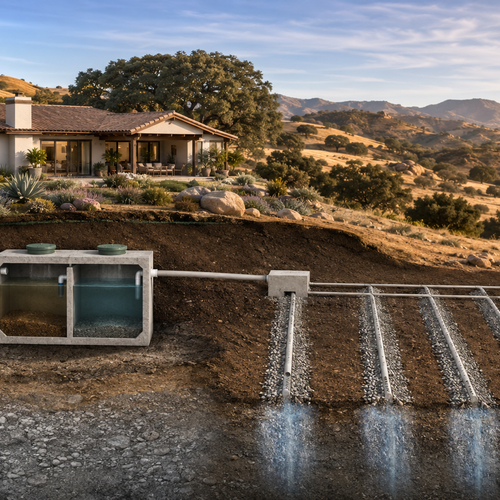
Many homes in Jamul use private septic systems instead of public sewer service. A typical septic system collects wastewater in an underground tank, retains solids…
Read Article