

Complete Guide to Septic Systems in Jamul: What Every Homeowner, Buyer and Seller Should Know
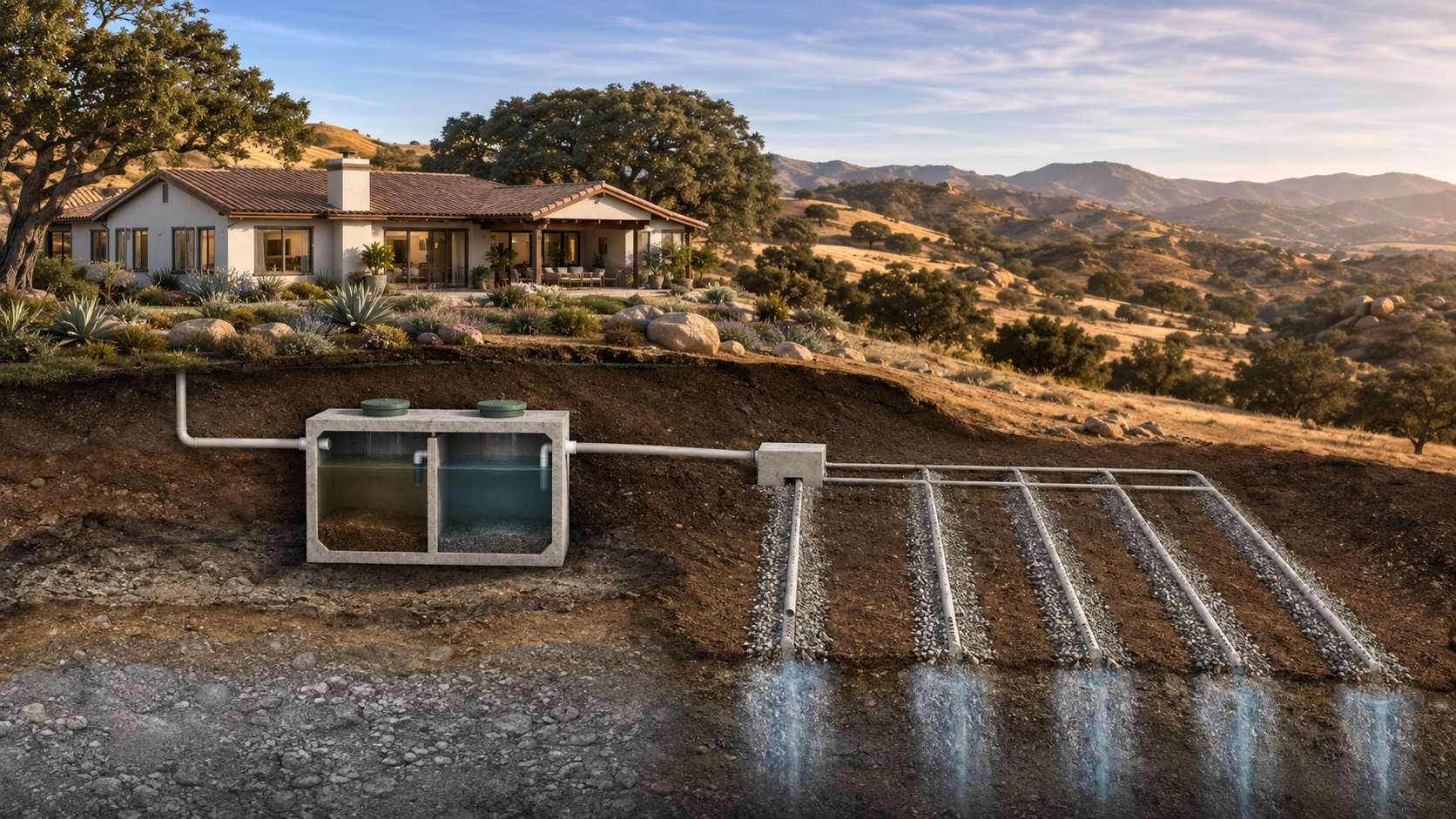
Many homes in Jamul use private septic systems instead of public sewer service. A typical septic system collects wastewater in an underground tank, retains solids and grease, and sends clarified effluent into a dispersal area—usually a leach field—where it is absorbed and treated by the soil.
A properly designed and maintained septic system can operate effectively for decades, but its performance depends on the tank, soil, leach field, household water use and ongoing maintenance. Owners should know where every component is located, protect the dispersal area from vehicles and construction, monitor warning signs and have the tank evaluated and pumped as recommended by a qualified septic professional.
Before purchasing a Jamul home with septic, buyers should review County records, identify the system’s approved capacity, obtain an appropriate inspection and consider whether the system can support their intended occupancy, remodeling plans or accessory dwelling unit. Sellers should gather permits, pumping records, inspection reports and a clear system layout before listing whenever possible.
San Diego County’s Department of Environmental Health and Quality regulates onsite wastewater treatment systems in unincorporated areas such as Jamul. County approval may be required for new installations, repairs, expansions, relocation of components and projects that increase wastewater flow. County of San Diego septic-system information
Zachary and Rochelle Svelling of The Svelling Group serve as Jamul real estate Knowledge Brokers, helping buyers and sellers understand how septic systems, wells, acreage, permits and land usability affect a rural property transaction.
This guide is educational and not a substitute for advice from the County, a licensed septic contractor, engineer, registered environmental health specialist or other qualified professional.
What Is a Septic System?
A septic system is a private wastewater-treatment system located on the property it serves. It performs the job that a municipal sewer system would otherwise handle.
Wastewater from toilets, showers, sinks, washing machines and other approved household plumbing fixtures flows from the home through a building sewer to the septic tank. Inside the tank, wastewater separates into layers:
- Heavy solids settle to the bottom and form sludge.
- Oils, fats and lighter materials rise to form a scum layer.
- Liquid effluent remains between those layers.
- Naturally occurring bacteria begin breaking down some organic material.
- Effluent exits the tank and travels to the dispersal area.
- Soil provides additional treatment as the wastewater moves through it.
The septic tank is only one part of the system. A system can have a structurally sound tank but still fail because its leach field is saturated, damaged, undersized or no longer accepting wastewater effectively.
Basic Components of a Jamul Septic System
| Component | Purpose |
|---|---|
| Building sewer | Carries household wastewater to the tank |
| Septic tank | Separates solids, grease and liquid effluent |
| Inlet and outlet baffles | Direct flow and help prevent solids from leaving the tank |
| Effluent filter | Helps keep solids from entering the dispersal system when installed |
| Distribution box | Directs effluent among multiple leach lines on some systems |
| Leach lines or chambers | Distribute effluent into the surrounding soil |
| Deep bed or approved alternative | Provides dispersal where authorized by design and site conditions |
| Reserve area | Land set aside for a future replacement dispersal system |
| Risers and lids | Provide access for inspection and pumping |
| Pump or control panel | Moves effluent in systems that cannot operate entirely by gravity |
| Supplemental treatment components | Provide additional treatment where required by an approved design |
The County states that approved systems can include conventional and supplemental-treatment systems. Conventional dispersal may use rock-and-pipe leach lines or approved materials such as plastic chambers. Other methods are allowed only under appropriate site and soil conditions. County septic-system types
Why Are Septic Systems Common in Jamul?
Jamul is an unincorporated, semi-rural community with custom homes, ranches, vineyards and properties spread across hills and valleys. Extending a centralized sewer network to every rural parcel is not always practical.
As a result, many properties manage wastewater onsite.
Septic systems are not inherently inferior to sewer service. They are simply a different form of infrastructure. The homeowner takes on responsibilities that a sewer utility would otherwise manage.
Those responsibilities include:
- Understanding the system
- Controlling what enters it
- Scheduling maintenance
- Protecting the tank and leach field
- Responding quickly to warning signs
- Obtaining required approvals for repairs or expansions
- Preserving space for future replacement
A buyer who has only owned sewer-connected homes should treat septic education as an essential part of purchasing in Jamul.
How Does a Septic System Work?
Step 1: Wastewater Leaves the Home
Water from approved household plumbing flows through the building drain and sewer line into the septic tank.
The system is designed for wastewater—not trash. Items marketed as disposable or flushable can still clog plumbing, damage equipment or accumulate in the tank.
Step 2: Wastewater Separates Inside the Tank
The tank slows the flow long enough for materials to separate. Heavy solids settle, grease floats and the liquid layer remains in the middle.
Bacteria digest some organic matter, but the tank does not eliminate everything. Accumulated sludge and scum must eventually be removed by pumping.
Step 3: Effluent Moves to the Dispersal Area
The liquid exits the tank and reaches the leach field or other approved dispersal component. Depending on the system, it may move by gravity or through a pump.
Step 4: Soil Provides Additional Treatment
Effluent is released gradually into suitable soil. The soil filters and treats wastewater as it moves through the ground.
This is why soil condition, percolation rate, setbacks, groundwater and usable land are critical to septic design.
Step 5: The Cycle Continues
The system continues operating as wastewater enters the home. Excessive water use can disrupt the process by sending liquid through the tank too quickly or overwhelming the dispersal area.
What Types of Septic Systems Are Found in Jamul?
The exact system depends on the parcel’s age, soil, slope, approved design and development history.
Conventional Gravity Systems
A conventional system usually includes a septic tank and gravity-fed leach lines. It has fewer mechanical components than an engineered treatment system, but it still requires maintenance.
Chamber Systems
Instead of traditional gravel-filled trenches, some systems use approved plastic chambers to create space for effluent dispersal.
Pumped Systems
A pump may be necessary when gravity cannot move effluent to the approved dispersal area. Pumped systems can include floats, alarms, electrical components and a control panel.
A power failure or mechanical problem may limit the system’s ability to operate. Owners should understand alarm signals and backup procedures.
Supplemental-Treatment Systems
Some properties require enhanced wastewater treatment because of site limitations or regulatory requirements. These systems may have treatment units, pumps, monitoring requirements and continuing operating costs.
Older or Unusual Systems
Older Jamul properties may have systems that predate modern standards or have limited County records. A structure appearing on a property does not establish that its wastewater system was permitted or designed to support current use.
Qualified professionals and County records become especially important in these situations.
Septic Tank Size and Bedroom Count
Septic capacity is commonly associated with the number of bedrooms—not merely the number of current residents.
A room’s label in a real estate advertisement does not necessarily determine how the County will classify it. Dens, offices, bonus rooms, converted garages and guest areas can raise questions when they function as potential sleeping rooms.
This matters when homeowners want to:
- Add a bedroom
- Convert an office into a bedroom
- Finish a garage
- Build an addition
- Add an accessory dwelling unit
- Legalize an existing conversion
- Divide a home into separate living areas
- Increase the property’s wastewater demand
A larger septic tank alone does not guarantee that the entire system has adequate capacity. The dispersal field and reserve area also matter.
Before marketing a home with a particular bedroom count, sellers and their advisors should compare the current use, permit history and septic records. Buyers planning to increase occupancy should confirm feasibility before relying on future expansion.
What Is a Septic Reserve Area?
A reserve area is land designated for a replacement dispersal system if the original leach field fails or reaches the end of its useful life.
It is one of the most important—and frequently overlooked—parts of a rural property.
The reserve area may appear to be open land, but building or placing improvements there can create significant problems. Homeowners should not assume they can use it for:
- A swimming pool
- An accessory dwelling unit
- A barn
- A workshop
- A large patio
- A sports court
- Permanent landscaping
- A driveway
- Retaining walls
- Extensive grading
Proposed improvements may also have required setbacks from the septic tank, leach field and reserve area.
Before changing the property, locate the approved septic layout and consult the County and qualified professionals. A project that does not physically touch the existing tank can still conflict with the dispersal system or reserve area.
How Often Should a Septic Tank Be Pumped?
There is no single pumping interval that is correct for every Jamul home.
Frequency depends on:
- Tank capacity
- Household size
- Water consumption
- Garbage-disposal use
- Amount of solids entering the system
- System design
- Condition of baffles and filters
- Previous maintenance
- Whether the home is occupied full-time
Many homeowners hear a generalized recommendation of pumping every three to five years, but that should not replace an evaluation of the actual tank. A qualified septic professional can measure sludge and scum and recommend an appropriate schedule.
Waiting until sewage backs up is not a maintenance strategy.
Pumping removes accumulated material from the tank. It does not repair a damaged leach field or guarantee the entire system is functioning correctly.
San Diego County currently offers a septic rebate program through which eligible participants can receive a $100 rebate after completing an educational video and having their system pumped. Homeowners should review current eligibility and funding before relying on the program. San Diego County Septic Rebate Program
Septic Maintenance Checklist
Monthly Habits
- Watch for slow drains or unusual plumbing behavior.
- Listen for pump alarms if the system has mechanical components.
- Check for unexplained wet areas or odors outside.
- Repair leaking toilets and faucets.
- Avoid excessive or unnecessary water use.
Annual Habits
- Review when the tank was last evaluated or pumped.
- Inspect accessible lids and risers for visible damage.
- Confirm that surface drainage moves away from the septic area.
- Keep trees and aggressive roots away from system components.
- Make sure vehicles have not compacted the leach field.
- Test alarms and mechanical equipment through an appropriate professional.
- Update your household’s system diagram and service records.
Long-Term Maintenance
- Pump based on tank measurements and professional guidance.
- Maintain filters when the system includes them.
- Repair damaged baffles, lids or risers promptly.
- Use qualified contractors.
- Preserve the replacement area.
- Obtain authorization when required for repair or alteration.
- Retain receipts, permits, diagrams and reports.
What Should Never Go Into a Septic System?
A septic system should receive normal household wastewater and human waste—not items that belong in the trash or a hazardous-waste facility.
Avoid introducing:
- Baby wipes
- Cleaning wipes
- Paper towels
- Feminine-hygiene products
- Diapers
- Dental floss
- Cotton swabs
- Cat litter
- Condoms
- Cigarette waste
- Cooking grease
- Coffee grounds
- Paint
- Solvents
- Pesticides
- Motor oil
- Medication
- Excessive bleach or harsh chemicals
- Large quantities of food waste
“Flushable” does not necessarily mean septic-safe.
Household chemicals can interfere with biological treatment or contaminate soil and groundwater. San Diego County provides programs for appropriate household hazardous-waste disposal; do not use the septic system as a disposal shortcut.
Water Conservation Protects the System
A septic system is designed to handle a certain wastewater flow. Sending excessive water into it can reduce settling time inside the tank and overload the leach field.
Practical habits include:
- Fixing plumbing leaks
- Installing efficient fixtures
- Spreading laundry across the week
- Avoiding multiple high-water-use activities simultaneously
- Running only full dishwasher loads
- Redirecting roof and surface drainage away from the leach field
- Keeping pool and spa discharge out of the septic system
- Avoiding unnecessary garbage-disposal use
A leaking toilet can quietly send a substantial amount of water into the system. Water bills may not expose this problem on a private well, making household observation even more important.
Warning Signs of a Septic Problem
Contact a qualified professional promptly if you notice:
- Multiple slow drains
- Gurgling plumbing
- Sewage backing up into the home
- Wastewater odors inside or outside
- Standing water near the tank or leach field
- Unusually bright or fast-growing grass over the dispersal area
- Soft or saturated soil
- A pump or high-water alarm
- Sewage surfacing outdoors
- Problems that worsen during heavy household water use
A single clogged sink may be a local plumbing issue. Problems affecting multiple fixtures can indicate a blockage or septic-system concern.
Do not open or enter a septic tank. Septic gases and confined spaces can be fatal. Lids should be secured to prevent accidental entry by children, adults or animals.
If sewage is surfacing, reduce water use, keep people and pets away and contact an appropriate professional.
Why Septic Systems Fail
Common contributing factors include:
- Failure to remove accumulated solids
- Too much water entering the system
- Grease, wipes or inappropriate materials
- Vehicles or heavy equipment over the leach field
- Roots damaging pipes or components
- Surface runoff saturating the dispersal area
- Mechanical failure
- Improper installation or unpermitted modification
- System capacity that does not match current use
- Building over or too close to components
- Soil limitations
- Age and normal deterioration
A failed leach field cannot usually be restored merely by pumping the tank. Diagnosis should be based on the entire system.
Septic Systems and Jamul Wells
Many rural Jamul properties have both a septic system and a private well. The two systems need to be evaluated separately and in relation to each other.
Setbacks are intended to help protect water supplies and public health. Homeowners should not relocate, expand or install septic components without proper review.
Buyers should investigate:
- Location of the well
- Location of the septic tank
- Location of the active dispersal area
- Location of the reserve area
- Applicable separation distances
- Water-quality testing
- Well production and storage
- Whether systems are shared with other properties
- Recorded agreements and easements
A clean water test does not confirm that the septic system is healthy, and a satisfactory septic evaluation does not establish future well production.
Buying a Jamul Home With a Septic System
A septic evaluation should be more than a quick glance at the tank.
Step 1: Request Documents
Ask for:
- Original installation permit
- Approved septic layout
- Tank size
- Approved bedroom capacity
- Repair permits
- Pumping receipts
- Inspection reports
- Treatment-system operating records
- Disclosures of known problems
- Information about additions or conversions
San Diego County maintains many septic records by assessor’s parcel number, including records for systems installed since the late 1970s. Scanned land-use records may be available through the County’s Environmental Health Document Library. Older or incomplete files may require additional research. County DEHQ public records
Step 2: Locate the Entire System
Identify the tank, distribution components, leach field and reserve area. Do not assume that a seller’s recollection is exact.
Step 3: Hire an Appropriate Professional
The scope of septic evaluations varies. Before hiring, ask whether the service includes:
- Locating and exposing lids
- Pumping the tank
- Inspecting tank condition
- Examining accessible baffles
- Checking an effluent filter
- Evaluating liquid levels
- Testing pumps and alarms
- Inspecting the distribution box when accessible
- Assessing the dispersal area
- Comparing conditions with available records
- Providing photographs and a written report
No inspection can guarantee indefinite future performance. Its value comes from establishing current observable conditions and identifying concerns that need further evaluation.
Step 4: Compare the System With the House
Confirm whether the approved capacity is consistent with the home’s permitted configuration and intended use.
A property advertised with six sleeping rooms may not necessarily have septic approval for six bedrooms.
Step 5: Consider Future Plans
If you want to add a bedroom, ADU, pool, garage, barn or workshop, determine whether the septic layout and reserve area conflict with the project.
Do this before removing contingencies or relying on the proposed improvement’s feasibility.
Selling a Jamul Home With Septic
Sellers can reduce uncertainty by preparing before the home reaches the market.
Seller Preparation Checklist
- Find the septic permit and layout.
- Gather pumping and service records.
- Compare the home’s current configuration with available permits.
- Identify the tank and dispersal area.
- Do not conceal odors, backups or known failures.
- Ask your listing agent how septic access will be coordinated.
- Consider obtaining appropriate professional information before listing.
- Avoid driving staging or photography vehicles over system components.
- Keep the leach field accessible.
- Provide buyers with organized documentation.
- Disclose material facts as required.
- Address conflicting information early.
A missing record does not automatically mean that a system is failing, particularly with an older property. However, uncertainty can affect buyer confidence, negotiations, financing and plans for future improvements.
An experienced Jamul listing agent should anticipate these questions instead of waiting until late in escrow.
Can You Build an ADU on a Jamul Property With Septic?
Possibly—but acreage alone does not establish feasibility.
The County’s 2026 ADU rules state that a parcel using an onsite wastewater treatment system or water well must meet the requirements established by the Department of Environmental Health and Quality. San Diego County ADU information
An ADU may require evaluation of:
- Existing septic capacity
- Proposed bedroom count
- Tank size
- Additional wastewater flow
- Active leach field
- Reserve area
- Soil and percolation conditions
- Required setbacks
- Well location
- Grading
- Driveway and fire access
- Whether a separate or expanded system is necessary
County guidance indicates that septic tank sizing is tied to bedroom count and that additional dwellings may require separate tanks or approved use or expansion of existing facilities, depending on the scenario. County ADU and septic FAQ
Never market an ADU as guaranteed based solely on lot size. Use phrases such as “potential subject to County approval” only when appropriate, and encourage direct professional investigation.
Pools, Additions and Other Improvements
Even a project that does not add a bedroom can affect septic compliance.
A pool, detached garage, retaining wall or expanded driveway may occupy required setbacks, cross septic lines or eliminate part of the reserve area. Grading could alter drainage or soil conditions.
Before planning an improvement:
- Obtain the approved septic layout.
- Conduct a site investigation if components cannot be located.
- Prepare an accurate plot plan.
- Consult the appropriate County departments.
- Determine whether professional septic design is required.
- Obtain permits before construction.
Do not rely on the fact that a neighbor completed a similar project. Soil, setbacks, system location and parcel configuration can differ.
What Does a Septic Repair Involve?
Repair work depends on the diagnosed problem.
Possible repairs include:
- Replacing a damaged lid
- Installing risers
- Repairing an inlet or outlet baffle
- Replacing a pump or alarm
- Clearing or replacing piping
- Repairing a distribution component
- Replacing the tank
- Expanding or replacing the dispersal area
- Installing an approved treatment system
San Diego County provides a septic repair authorization process, and a site plan and information from the owner and licensed septic contractor may be required. Contact DEHQ before assuming that emergency work can proceed without authorization. County septic repair authorization
Costs can vary widely. Replacing a lid or pump is very different from installing a new dispersal field or engineered treatment system. Access, excavation, soil, slope and permitting all affect the total.
Septic Systems After Heavy Rain or Flooding
Heavy rainfall can saturate soil and reduce a leach field’s ability to accept wastewater. If the area around the system is flooded:
- Reduce household water use.
- Keep people and animals away from contaminated water.
- Do not drive over saturated components.
- Do not pump the tank while surrounding conditions make it unsafe unless directed by a qualified professional.
- Inspect electrical components before restoring affected equipment.
- Seek professional guidance when the soil and site are accessible.
The County directs homeowners to specialized post-flood septic guidance and provides a contact for questions. San Diego County post-flood septic guidance
Septic Myths Jamul Homeowners Should Avoid
| Myth | Reality |
|---|---|
| Septic tanks never need pumping | Solids accumulate and eventually require removal |
| Additives eliminate maintenance | Additives do not replace inspection or pumping |
| A recently pumped tank proves the system works | Pumping does not establish leach-field condition |
| Green grass means the system is healthy | Unusual growth may indicate excess moisture |
| A large lot can always support an ADU | Soil, setbacks, capacity and reserve space control feasibility |
| No odors means no problems | Some defects produce few early symptoms |
| Everything marked flushable is safe | Many wipes and products can create problems |
| A septic system lowers home value | A documented, functioning system is normal for rural property |
| A bigger tank solves every capacity issue | The dispersal system and soil are equally important |
| You can build anywhere outside the tank | Leach fields, reserve areas and setbacks also limit development |
Semantic Questions About Septic Systems in Jamul
Do all Jamul homes have septic systems?
No. Utility arrangements vary by property. Buyers should verify whether a home uses septic, sewer or another approved wastewater arrangement.
How do I find my septic tank in Jamul?
Start with County records, seller documents and service invoices. A licensed septic contractor may also locate system components. Do not probe or excavate without understanding utility and safety risks.
Who regulates septic systems in Jamul?
The County of San Diego Department of Environmental Health and Quality regulates onsite wastewater systems in unincorporated areas such as Jamul.
Does a septic system need to be inspected when a Jamul home is sold?
Transaction requirements and contract terms can vary. Buyers should discuss appropriate investigations with their real estate advisor and hire qualified professionals. Do not assume a normal home inspection includes a comprehensive septic evaluation.
Can I add bedrooms to a septic home?
Possibly, but the existing system may not have approved capacity for additional wastewater flow. Consult the County before designing or advertising the addition.
How long does a septic system last?
There is no guaranteed lifespan. Tanks and dispersal systems age differently, and performance depends on design, soil, construction, usage, maintenance, drainage and physical protection.
Frequently Asked Questions
Is septic expensive to maintain?
Routine evaluation and pumping are generally more predictable than emergency repair. Costs depend on tank access, size, system type and location. Homeowners should budget for regular maintenance and long-term component replacement.
Can I use a garbage disposal with septic?
It may increase the amount of solids and food material entering the tank. Limit its use and ask a septic professional how it affects your maintenance schedule.
Are septic additives necessary?
Do not assume additives are required or beneficial. A functioning system already contains naturally occurring bacteria. Some products may be ineffective or inappropriate.
Can I plant over a leach field?
Shallow-rooted grass may be acceptable in many situations, but trees, large shrubs, deep-rooted plants, irrigation-intensive landscaping and edible crops can create concerns. Obtain property-specific professional guidance.
Can I park an RV over the septic tank?
Vehicles and heavy equipment can crack tanks, damage pipes and compact the dispersal soil. Keep parking, RVs, trailers and construction equipment away from septic components.
Can roof gutters drain onto the leach field?
Surface water should generally be directed away from the septic system. Excess water can saturate the dispersal area and interfere with performance.
Does homeowners insurance cover septic failure?
Coverage varies. Wear, maintenance and gradual deterioration may be treated differently from sudden covered damage. Review the actual policy with a qualified insurance professional.
Should a seller pump the septic tank before listing?
That decision depends on service history, system condition and transaction strategy. Pumping can support an inspection, but pumping alone does not certify the entire system.
What if the County cannot find septic records?
Older properties may have incomplete files. A qualified professional may need to locate and evaluate the existing system, and additional County guidance may be necessary before remodeling or repair.
Is a septic property harder to sell?
Not when the system is functional, documented and presented clearly. Septic systems are common in Jamul. Uncertainty, deferred maintenance and inconsistent bedroom or permit information create more concern than septic service itself.
Why Septic Knowledge Matters in Jamul Real Estate
A standard property search may show acreage, bedrooms and square footage. It may not explain whether the septic system supports the current configuration, where the reserve field lies or whether a planned ADU could conflict with the existing system.
That information can materially affect a home’s:
- Marketability
- Expansion potential
- Negotiation
- Inspection strategy
- Land usability
- Buyer confidence
- Long-term ownership costs
Zachary and Rochelle Svelling of The Svelling Group approach Jamul real estate as Knowledge Brokers. They help clients identify the questions that should be answered and coordinate with appropriate inspectors, contractors and agencies without presenting themselves as septic engineers or regulators.
For buyers, that means understanding the property before committing to it.
For sellers, it means preparing records, explaining the property accurately and reducing surprises during escrow.
Need Help Buying or Selling a Jamul Home With Septic?
A septic system should not prevent you from purchasing or selling the right Jamul property. It should motivate you to gather reliable information, use qualified professionals and make decisions based on the entire system—not assumptions.
If you are preparing to sell a Jamul home, Zachary and Rochelle can help organize the property story, anticipate buyer questions and build a marketing strategy around the home, land and lifestyle.
If you are buying, they can help you compare properties and investigate septic capacity, wells, permits, acreage, access and future-use considerations.
Contact Zachary and Rochelle Svelling of The Svelling Group for a personalized Jamul real estate consultation. As local Knowledge Brokers and experienced Jamul real estate advisors, they are ready to help you navigate the details that make rural-property transactions different.
Check out this article next

Should You Sell Your Jamul Home Before or After Fire Season?
Most Jamul homeowners should not base their entire selling decision on whether it is “before” or “after” fire season. In Southern California, wildfire risk can…
Read Article