

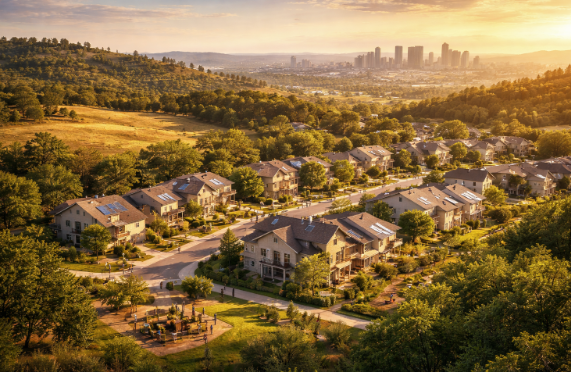
A Rare Agreement Between Developers and Environmentalists
In San Diego County, housing policy has reached an unusual moment.
Groups that rarely align, developers and environmental advocates, are now saying the same thing: San Diego needs more housing, and not all of it can fit inside city boundaries.
This convergence highlights just how strained the region’s housing system has become after decades of underbuilding.
Chronic Underbuilding Has Pushed Workers Farther Away
San Diego’s housing shortage did not happen overnight. Years of limited construction, rising land costs, and restrictive zoning have steadily reduced attainable housing options for working families.
As a result, many people who work in San Diego County no longer live here.
According to the U.S. Census Bureau, more than 47,000 households commute daily from Riverside County into San Diego for work. With an estimated average one-way commute of roughly 50 miles, that translates into over one billion miles driven each year by workers who have been priced out of local housing.
Thousands more commute daily from Tijuana, often enduring some of the longest border wait times in the country simply to reach jobs they can no longer afford to live near.
The impact goes beyond inconvenience. Long commutes increase traffic congestion, greenhouse gas emissions, infrastructure strain, and personal burnout.
Why Housing Inside Cities Alone Is Not Enough
Most new housing in San Diego County will continue to be built inside cities, closer to job centers, transit, and services. But cities alone cannot absorb the full housing demand.
That is why attention has returned to unincorporated San Diego County, including areas identified for growth in the county’s 2011 General Plan Update.
These plans already anticipated population growth and designated specific locations for development while protecting surrounding open space.
The Role of Village Areas in Unincorporated San Diego
To address housing needs outside city limits, county planners previously identified village areas within unincorporated communities.
Villages are compact, walkable centers that typically include:
Small commercial districts
Retail and services
Slightly higher housing density than surrounding rural land
Infrastructure capable of supporting growth
Importantly, villages are designed to concentrate development while preserving rural greenbelts and sensitive habitat areas beyond their boundaries.
This balance is why both environmental advocates and the building industry have found rare common ground.
A Shared Call for Action
At a recent county housing workshop, the Endangered Habitats League and the Building Industry Association of San Diego jointly urged San Diego County to move forward with housing in village areas already approved under the General Plan.
Their shared position is rooted in a simple idea: build where development was already planned, rather than pushing growth into distant regions or sensitive open land.
Village-style housing also supports:
Shorter commutes
Reduced vehicle miles traveled
Lower greenhouse gas emissions
Stronger local economies
Better quality of life
What Has Slowed Housing in Unincorporated Areas?
A county study identified several obstacles that have limited housing production outside city boundaries:
Outdated zoning rules
Lengthy and uncertain approval timelines
High construction costs
Lower sale prices and rents compared to coastal markets
Because of these challenges, San Diego County has relied heavily on accessory dwelling units (ADUs) to meet state housing mandates, rather than building complete, walkable communities.
What Village Housing Could Look Like
New housing in village areas does not mean sprawl.
Potential housing types include:
Townhomes
Courtyard-style homes
Smaller-lot single-family homes
Mixed-use residential areas
These housing forms use land efficiently, increase affordability, and integrate naturally into existing communities.
Why This Matters for Communities Like Jamul
For communities such as Jamul and other unincorporated areas of East County San Diego, village-focused development could provide:
Housing options for local workers
Opportunities for downsizing residents
Support for local businesses and services
Reduced pressure to commute long distances
Importantly, these changes can occur without altering rural character, because development remains concentrated in pre-designated areas.
The Bottom Line
San Diego’s housing challenges are no longer theoretical. They are visible every day in traffic patterns, border crossings, and families leaving the region.
When environmental groups and developers agree, it signals a policy imbalance that needs attention.
Building thoughtfully designed housing in unincorporated village areas, as already outlined in the General Plan, offers a path forward that supports affordability, sustainability, and quality of life.
The question now is not where San Diego should grow. That has already been mapped.
The question is whether the county will act with enough urgency to make those plans real.
Check out this article next