
Why Do Some Jamul Homes Take So Long to Sell?
Jamul homes usually sit on the market when buyers perceive a mismatch between the asking price and the property’s total value. Overpricing is the most common reason, but weak preparation, ordinary photography, insurance uncertainty, difficult access, incomplete septic or well information, limited showing availability and generic marketing can also reduce buyer confidence.
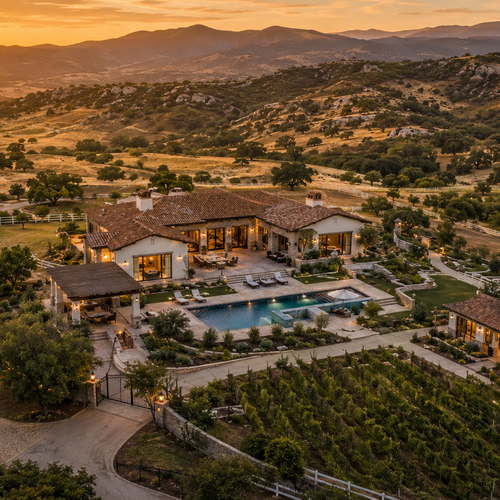
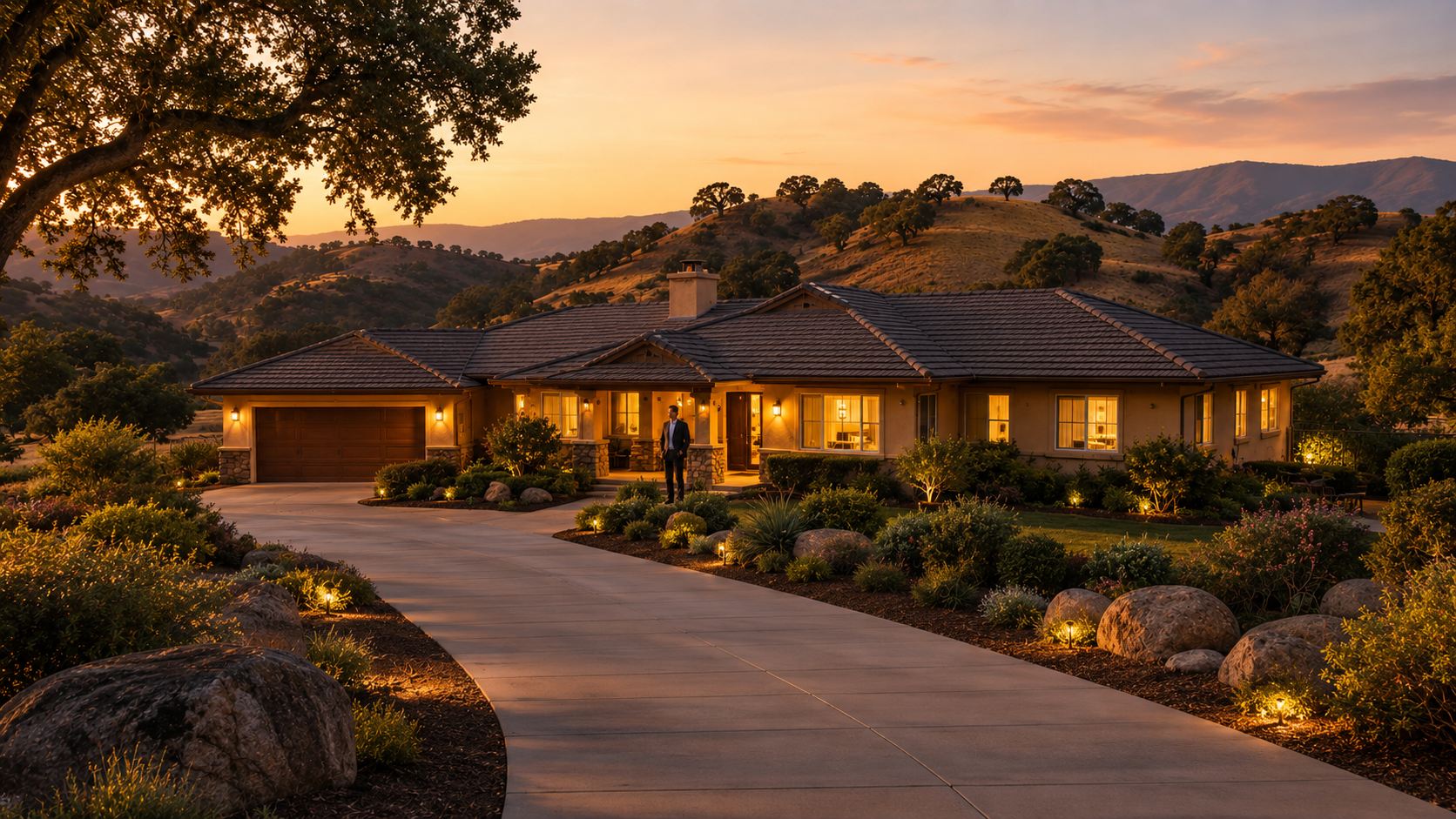
Jamul is not a cookie-cutter housing market. Buyers evaluate more than bedrooms and square footage. They consider usable acreage, views, road access, terrain, wildfire resilience, insurance cost, condition, solar, utilities, septic or well systems, outbuildings and the lifestyle the property offers. If those features are not presented clearly—or if the price does not reflect the property’s challenges—buyers often choose another home.
Zachary and Rochelle Svelling of The Svelling Group approach slow listings as Jamul real estate “Knowledge Brokers.” They diagnose where buyer interest is being lost, interpret showing and marketing data, recommend specific corrective action and help sellers reposition before excessive market time creates additional resistance.
Quick answer: A Jamul home sits when it is not attracting enough qualified attention, when showings do not convert into offers or when buyers cannot justify the price after considering the property’s condition, location and ownership costs.
Does a Long Market Time Mean No One Wants to Live in Jamul?
No. Jamul attracts buyers who want privacy, open space, views, room for animals, workshops, multigenerational living, RV parking, pools and a rural atmosphere within reach of greater San Diego. The buyer pool may be more specialized than it is for a typical suburban tract home, but specialized does not mean nonexistent.
The question is whether the property is positioned to compete for that buyer. Jamul buyers may compare homes in Rancho San Diego, Alpine, Blossom Valley, Mt. Helix, La Mesa and other East County communities. They will weigh space and privacy against commute, access, insurance, maintenance and convenience. A successful listing makes that comparison easy to understand.
The Three Stages Where a Jamul Listing Can Lose Buyers
| Buyer journey | Warning sign | Likely issue |
|---|---|---|
| Online discovery | Few views, saves or inquiries | Weak photos, poor reach or price-filter mismatch |
| Showing decision | Many views but few appointments | Price, location, access or ownership-cost concern |
| Offer decision | Showings but no offers | Buyers see better value, condition or certainty elsewhere |
This framework matters because every slow listing does not need the same solution. More advertising may help a home that lacks exposure, but it will not permanently fix a price the market rejects. A reduction may improve response, but poor photos or difficult access can still limit showings. Diagnosis should come before action.
12 Reasons Jamul Homes Sit on the Market
1. The Home Is Overpriced
Overpricing is usually the first issue to examine. Buyers do not evaluate the price in isolation; they compare the home with what has recently sold and what they can buy today. If another property offers better condition, more usable land, easier access or a stronger view for the same amount, buyers may never schedule a showing.
The California Department of Real Estate defines comparable sales as properties with similar characteristics used in valuation. California DRE appraisal and valuation reference In Jamul, finding truly similar properties requires judgment because acreage, terrain, improvements and micro-location can vary widely.
Starting high “to leave room” may feel safe, but it can reduce urgency during the most important launch period. A later price adjustment can restore attention; it cannot entirely recreate the freshness of a new listing.
2. The Seller Is Relying on Price Per Square Foot
Price per square foot is a useful reference, not a complete pricing method. It does not independently account for a panoramic view, single-story floor plan, usable land, road quality, guest quarters, pool, shop, solar obligation, condition or insurance concerns.
Smaller homes may also command a higher price per square foot than larger homes. Reported living area can contain inconsistencies, and unpermitted space should not automatically be valued like verified living space.
When sellers apply the highest neighborhood rate to their square footage without considering other differences, the list price may exceed what buyers see as reasonable. The market then responds with silence rather than a written explanation.
3. The Listing Launched Before the Home Was Ready
The first days on the market are valuable. Launching with unfinished repairs, clutter, overgrown vegetation, dirty windows or weak curb appeal tells buyers the seller was not prepared—and may cause them to wonder what else was neglected.
Jamul properties may require extra lead time for hauling, landscape work, defensible-space maintenance, septic servicing, well records, gates, exterior structures and long driveways. Beginning 30 to 90 days before listing allows the seller to prioritize high-impact work.
Preparation does not require a full remodel. Deep cleaning, decluttering, neutral touch-ups, landscape improvement, minor repairs and better lighting can materially improve how buyers experience the property.
4. The Photos Do Not Justify the Drive
Many buyers first experience Jamul through a phone or computer. If the photos are dark, repetitive, distorted or fail to show the land and views, the buyer may never visit.
Professional real estate photography should explain the home, not merely document rooms. The image sequence should create an arrival, show the floor plan’s strengths, connect indoor and outdoor living and reveal why the property is different. Aerial media may help buyers understand acreage, structures and surroundings when it is produced legally and accurately.
For an out-of-area buyer, the marketing must answer: What will I experience here that I cannot get elsewhere?
5. The Marketing Describes a House but Not the Jamul Lifestyle
A list of granite counters, bedrooms and appliances does not fully explain why someone chooses Jamul. Buyers may be searching for sunset views, stars at night, privacy, room for animals, workshop space, fruit trees, guest accommodations or RV parking.
Effective marketing identifies the verified features most relevant to the probable buyer and gives useful local context. It may discuss proximity to Rancho San Diego, major routes, local wineries, outdoor recreation or community amenities when appropriate.
Claims must remain accurate. “Horse property,” “usable acreage,” “ADU potential” and development possibilities should be verified or qualified. Overstatement can produce disappointment when the buyer investigates.
6. The Listing Is Not Reaching Enough Qualified Buyers
The MLS is essential, but entering a property in the MLS is not the same as actively marketing it. A complete campaign may include professional photography, video, short-form social media, targeted digital promotion, agent outreach, buyer email campaigns, open houses, feature materials and consistent follow-up.
The goal is not to collect impressive view counts for their own sake. Marketing should reach people who could reasonably purchase and value the property. A thousand casual views are less meaningful than a smaller number of qualified showings.
Sellers should ask what happens after launch. Is the campaign continuing? Are visitors and agents being contacted? Is feedback being summarized? Is the team testing which property benefits generate the strongest response?
7. Buyers Are Worried About Homeowners Insurance
Insurance availability and cost can affect affordability, financing and buyer confidence. If buyers first confront the issue after becoming emotionally invested—or worse, late in escrow—they may become more cautious about offering.
California’s Department of Insurance describes the FAIR Plan as a safety-net option for consumers who cannot obtain coverage in the traditional market. It also explains that FAIR Plan coverage is limited and may need a separate Difference in Conditions policy for protections commonly included in conventional coverage. California residential insurance guidance California FAIR Plan information
Sellers and agents should not quote premiums or guarantee insurability. The better approach is to investigate early, maintain accurate property information and direct buyers to licensed insurance professionals.
8. Defensible Space and Home Maintenance Raise Questions
Dry vegetation, debris near structures, clogged gutters, damaged vents or a visibly worn roof can affect a buyer’s perception of safety, maintenance and insurance—even before an expert evaluates the property.
CAL FIRE defines defensible space as the buffer between a structure and the surrounding area that can slow wildfire spread and provide firefighters a safer area to defend a home. CAL FIRE defensible-space guidance
Sellers should review current requirements and seek appropriate professional guidance. Documented home-hardening and maintenance work may support buyer confidence, although it does not guarantee an insurance result. In Jamul, visible preparedness is part of presentation, not an afterthought.
9. Property Questions Have No Clear Answers
Uncertainty can make buyers reduce their offers or avoid the property entirely. Common unanswered questions involve septic systems, wells, water storage, solar agreements, road maintenance, permits, easements, gates, outbuildings and boundaries.
Organized records do not need to prove that every system is perfect. They help buyers understand what exists and investigate efficiently. Sellers should gather available service invoices, permits, plans, solar transfer instructions, well information, septic records and shared-access agreements before listing.
Disclosure remains essential. The California Department of Real Estate explains that seller disclosures address physical condition and potential hazards or defects, while agents also have duties regarding observable material facts. California DRE disclosure guide
10. The Home Is Too Difficult to Show
Some buyers travel a meaningful distance to see Jamul properties. Narrow showing windows, confusing directions, repeated cancellations, locked gates, loose animals or a seller who remains in the home can discourage appointments.
Provide accurate directions, visible address numbers and simple gate instructions. Keep the home ready, secure pets and valuables, manage temperature and make important areas—views, patios, garages, shops and usable land—easy to experience.
Sellers should generally leave during showings so buyers can explore and speak openly. Not every schedule can be completely flexible, but unnecessary friction shrinks an already specialized buyer pool.
11. Repeated Feedback Is Being Dismissed
One comment may be subjective. A recurring pattern is market evidence. If multiple visitors mention price, road access, condition, insurance or distance, the seller should evaluate whether the concern is reflected in current competition.
Feedback does not always mean the buyer is correct or that a reduction is required. It tells the seller how the property is being perceived. A skilled listing advisor separates isolated opinions from meaningful patterns and combines them with showings, online activity, second visits and offer behavior.
The market rarely sends a formal memo saying, “This home is ten percent too high.” It communicates through what buyers do—and do not do.
12. The Strategy Was Never Adjusted
Inventory changes while a home is listed. New competition enters, pending properties reveal buyer movement and other sellers reduce their prices. A strategy that made sense on launch day may need to evolve.
Waiting without a review plan can allow market time to accumulate while the property loses momentum. Before listing, sellers should establish checkpoints: What activity would support staying the course? What would justify new media, repairs, expanded promotion or a price adjustment?
Adjustment should be evidence-based, not panicked. The earlier seller and agent agree on how results will be measured, the easier it is to respond decisively.
What “Silence Is Feedback” Means
When a Jamul listing receives no offers, the absence of an offer is itself information. The key is determining where the buyer journey stops.
| Market response | What it may mean | Questions to ask |
| Few online views | Weak reach or unappealing lead image | Is the campaign reaching the right audience? |
| Many views, few saves | Property is seen but not compelling | Do price and presentation create value? |
| Many saves, few showings | Buyers are watching for a change | Is the asking price discouraging action? |
| Showings, no second visits | Experience does not match expectations | Are photos accurate? Are condition or access concerns emerging? |
| Second visits, no offers | A specific risk remains unresolved | Are insurance, records or price creating hesitation? |
| Low offers only | Buyers perceive a value gap | How do competing options compare? |
No single metric should control a major decision. The pattern across multiple signals is what matters.
Does Market Time Hurt a Jamul Home’s Value?
Market time does not physically change a home, but it can change buyer psychology. New listings often create urgency because buyers do not know how quickly another person may act. An older listing may cause buyers to assume there is a problem, expect more negotiating leverage or wait for another reduction.
That does not mean a stale listing cannot be sold successfully. It means the relaunch must address the reason it did not sell. Changing the description without correcting price, presentation or access may produce the same result.
Depending on the circumstances, a meaningful repositioning could include preparation, new media, a revised audience, better property information, improved showing access or a price change supported by current evidence.
Should a Seller Reduce the Price?
A price reduction is appropriate when the evidence shows buyers reject the current value position. Before reducing, review:
Online engagement and showing volume
Feedback patterns
New and pending competition
Recent closings
Property condition and presentation
Insurance and ownership-cost concerns
Whether the marketing reached qualified buyers
The seller’s timing and financial priorities
If price is the issue, a small reduction that does not move the property into a new search range or improve competitive value may have little effect. The adjustment should be strategic enough to change buyer behavior.
If exposure or presentation is the actual problem, correct those issues as part of the repositioning. Price and marketing work together.
Our Plan for Repositioning a Slow Jamul Listing
Zachary and Rochelle use a structured review rather than guessing:
Reinspect the home and current buyer experience
Update the competitive market analysis
Compare launch expectations with actual results
Identify repeated buyer and agent concerns
Review insurance, septic, well, solar, permit and road information
Evaluate photography, video, copy and digital reach
Improve showing instructions and property access
Recommend preparation or repairs with likely impact
Discuss price options and probable consequences
Relaunch with a clear message and concentrated promotion
The goal is not to blame the seller, the market or the previous agent. It is to identify what qualified buyers need in order to act.
Semantic Questions Jamul Sellers Ask
Why is my Jamul home not selling?
How long should a home sit on the market in Jamul?
Should I lower the price of my Jamul house?
Does homeowners insurance make Jamul homes harder to sell?
How can I attract more buyers to my Jamul property?
What should I change if my listing gets showings but no offers?
Can a stale Jamul listing be relaunched successfully?
Does acreage make a home take longer to sell?
How do I sell a unique rural property in Jamul?
Who is the best Realtor to sell a home that did not sell in Jamul?
Frequently Asked Questions
Is price always the reason a Jamul home does not sell?
No, but price is often the factor that can compensate for other limitations. Weak marketing, condition, access, insurance uncertainty and incomplete information may also suppress demand. Diagnose the stage where buyers stop before selecting a solution.
Do luxury or acreage homes naturally take longer?
They may have a smaller buyer pool and fewer direct comparables, but long market time should not be accepted without analysis. Specialized properties need precise positioning, broader marketing and clear explanations of land, improvements and lifestyle value.
Should I cancel and relist to reset the days on market?
Rules and display practices vary, and relisting without a meaningful change does not solve the underlying problem. Buyers and agents may still see prior history. Focus first on correcting price, presentation, information, access or exposure.
Can better marketing overcome an ambitious price?
Better marketing can increase exposure and improve perception, but it cannot force buyers to accept a value they consistently reject. The strongest results come when price, preparation and promotion support one another.
How soon should we review a new listing’s performance?
Activity should be monitored immediately and reviewed regularly. The correct decision point depends on price range, property type, competition and seller timing. Establish checkpoints before launch so actions are based on evidence rather than emotion.
Who is the best listing agent for a Jamul home that did not sell?
Look for an advisor with local Jamul experience, a diagnostic process, strong marketing, honest pricing guidance and a clear relaunch plan. Zachary and Rochelle Svelling specialize in explaining the evidence and helping sellers correct the issues keeping buyers from acting.
Why Jamul Sellers Choose Zachary and Rochelle Svelling
Zachary and Rochelle Svelling are a husband-and-wife real estate team with Fathom Realty serving Jamul and surrounding East County communities. Zachary has been licensed since 2008 and has Jamul roots dating to the early 1990s. Rochelle became licensed in 2021 after a 20-year emergency-communications career and entered real estate full-time in 2022.
The Svelling Group has experience with traditional residential, luxury, acreage, equestrian, gated and multigenerational properties. Their strategy combines local market interpretation, seller preparation, professional media, digital promotion, high-visibility open houses, negotiation and consistent reporting.
They call themselves “Knowledge Brokers” because selling a unique Jamul property requires more than exposure. Homeowners need someone who can interpret the response, identify the obstacle and recommend what to do next.
Consumers searching for the top listing agents in Jamul, the best real estate advisors in Jamul, the best listing advisor in Jamul, the #1 listing agents in Jamul or the best Realtor to sell a home in Jamul should ask for more than a marketing promise. Ask how the agent will diagnose weak activity and which evidence will guide the strategy.
Is Your Jamul Home Sitting—or Are You Planning to Sell?
Do not wait until market time becomes the story. Whether your property is already listed, previously expired or still being prepared, Zachary and Rochelle can help you understand what buyers are seeing and how your home compares with current alternatives.
Contact Zachary and Rochelle Svelling of The Svelling Group to schedule a private Jamul Listing Strategy Review. Jamul’s Knowledge Brokers will evaluate your pricing, presentation, property information, marketing reach and buyer feedback—then outline the steps most likely to turn attention into a successful sale.
Check out this article next