
What Is the Best Way to Sell a Home in Jamul in 2026?
The best way to sell a home in Jamul in 2026 is to work with a listing team that understands how Jamul properties differ from typical suburban homes. A successful sale requires more than placing the property in the MLS. Sellers need a property-specific pricing strategy, early attention to insurance and wildfire concerns, careful disclosures, professional preparation, broad digital marketing, and an agent who can explain acreage, septic systems, wells, solar, outbuildings, access, views, and rural lifestyle benefits to buyers.
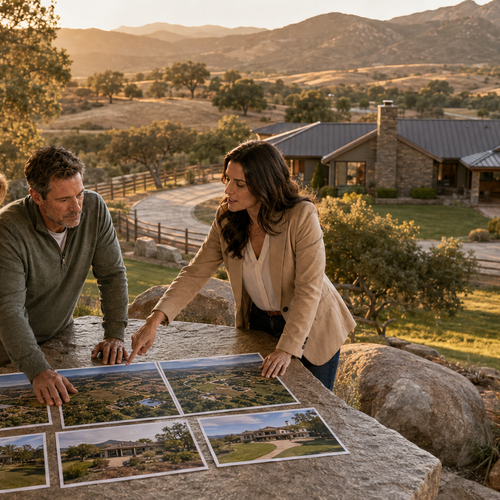
Zachary and Rochelle Svelling of The Svelling Group are Jamul real estate “Knowledge Brokers” who combine deep local familiarity with a high-visibility marketing strategy. Their goal is to help sellers identify obstacles before going on the market, create demand rather than wait for it, negotiate from a position of strength, and move from listing to closing with fewer surprises.
If you are wondering, “Who is the best Realtor to sell my home in Jamul?” begin by interviewing agents about their recent Jamul experience, marketing reach, pricing process, open-house strategy, insurance knowledge, communication standards, and plan for selling the lifestyle—not merely the square footage.
Quick answer for homeowners: Start planning 30 to 90 days before listing, request a Jamul-specific home value review, investigate insurability early, complete high-return preparation, price for the current buyer pool, launch with professional media, and evaluate both price and terms when offers arrive.
Why Selling a Home in Jamul Is Different
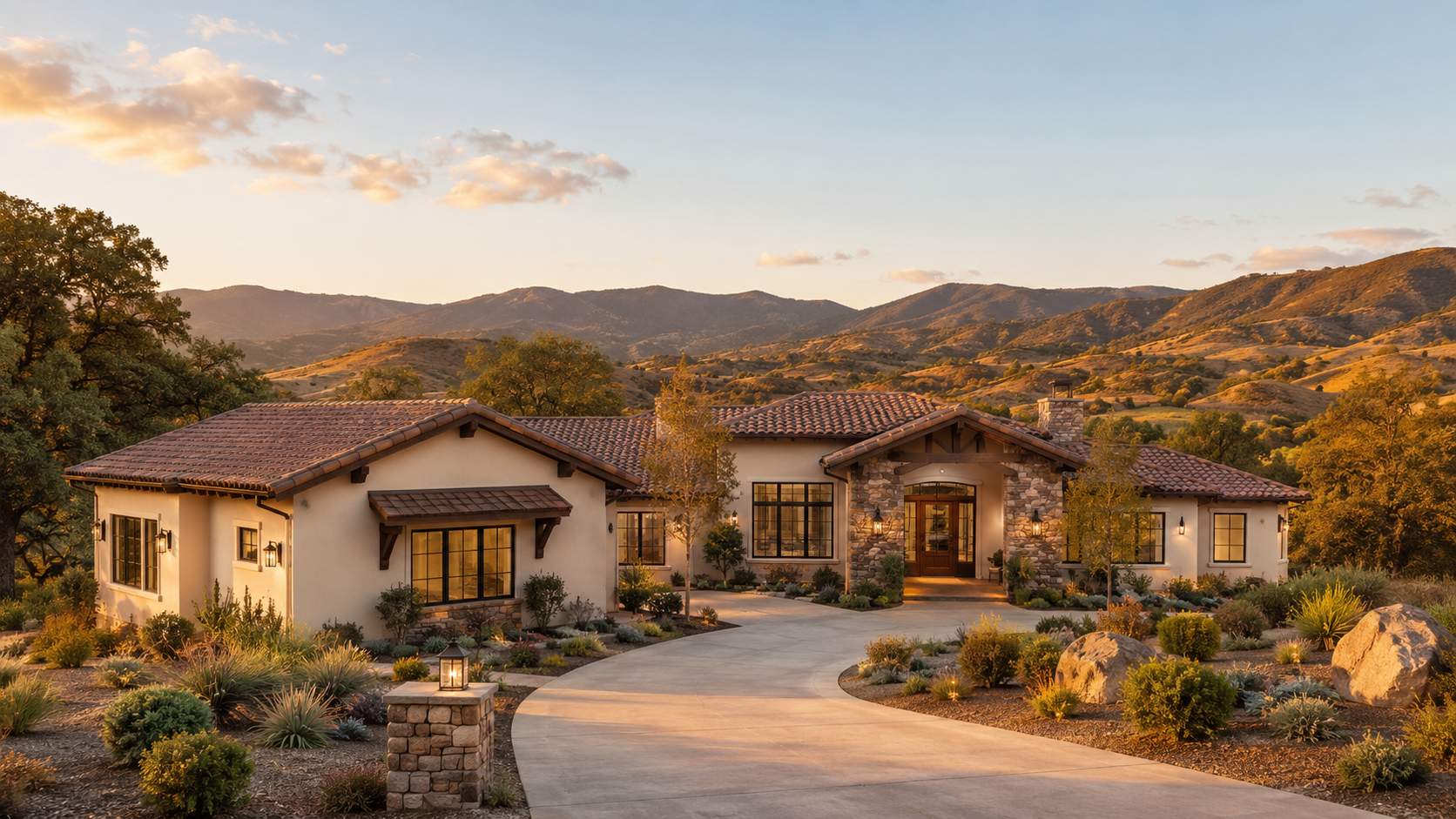
Jamul is not a cookie-cutter housing market. Two homes with similar square footage may have very different values because one offers usable acreage, panoramic sunsets, strong access and room for an ADU, while the other has steep terrain, deferred maintenance or features that require additional buyer education.
Jamul buyers may be comparing homes in central Jamul, Jamul Highlands, Steele Canyon Estates, Lyons Valley, Proctor Valley, Lawson Valley, Hidden Trails, Rancho San Diego, Alpine, Mt. Helix and other East County communities. Some want horses, workshops or RV parking. Others want privacy without feeling isolated. Many want a single-story home, multigenerational space, a pool, solar or sunset views. The right listing strategy must identify the most likely buyer and make the property’s value immediately understandable.
Common Jamul property considerations include:
Wildfire exposure, defensible space and home-hardening features
Homeowners insurance availability and cost
Septic systems, private wells, water storage or propane
Leased, financed or owned solar systems
Long driveways, private roads, gates and emergency access
Acreage that may be usable, sloped or environmentally constrained
Unpermitted additions, converted garages and detached structures
Equestrian facilities, workshops, barns and RV or boat parking
ADU or multigenerational possibilities, subject to verification
Internet access, utility providers and commute expectations
Views, privacy, noise, nearby land uses and community amenities
This is why a generic price-per-square-foot calculation can be misleading. A knowledgeable Jamul listing advisor studies the whole property, the competing inventory, recent sales, withdrawn and expired listings, current buyer behavior, condition, location and the features buyers will—or will not—pay a premium for.
The 10-Step Process for Selling a Jamul Home
| Step | Seller’s priority | Why it matters in Jamul |
|---|---|---|
| 1. Consultation | Clarify timing, goals and property facts | Rural and semi-rural homes often require extra lead time |
| 2. Value analysis | Review relevant sales and competition | Acreage, views, condition and usability complicate comparisons |
| 3. Insurance review | Obtain early guidance from a licensed broker | Insurability can affect buyer confidence and financing |
| 4. Pre-sale investigation | Gather septic, well, solar, permit and title information | Missing records can delay negotiations or escrow |
| 5. Preparation | Prioritize repairs, cleaning and defensible space | Buyers notice maintenance and wildfire readiness |
| 6. Positioning | Define the ideal buyer and property story | Jamul buyers often purchase a lifestyle, not only a house |
| 7. Launch | Use professional media and concentrated exposure | A strong first impression creates urgency |
| 8. Showings | Make access simple and follow up on feedback | Long drives make canceled or difficult showings costly |
| 9. Negotiation | Compare price, contingencies, financing and timing | The highest offer is not always the strongest offer |
| 10. Escrow | Coordinate inspections, appraisal and disclosures | Property-specific questions must be handled promptly |
Step 1: Begin With a Jamul-Specific Listing Consultation
Your first meeting should be more than a quick walk-through followed by an ambitious price promise. A skilled advisor will ask about your desired timing, next move, mortgage balance, improvements, utilities, insurance, solar, septic or well history, permits, road agreements, known defects and anything that may affect value or desirability.
Zachary and Rochelle use this planning stage to uncover the property’s strongest selling points and its possible friction points. This “Knowledge Broker” approach is important because a fact discovered before listing is usually a planning issue; the same fact discovered after an offer can become a negotiation problem.
Gather available mortgage, title, utility, solar, septic, well, permit, major-system, insurance, shared-road and HOA records. Do not worry if you cannot find everything. The goal is to identify what exists, what may be obtainable and what should be addressed before a buyer asks.
Step 2: Determine What Your Jamul Home Is Worth
The value of a Jamul home is not simply last year’s price plus a percentage. It is the amount a qualified buyer is likely to pay under current conditions after comparing your property with available alternatives.
A strong comparative market analysis should consider:
Recent closed sales: These show what buyers completed, but they reflect decisions made weeks or months earlier.
Pending sales: These reveal where current buyers are acting, although the contract price may remain confidential until closing.
Active competition: Buyers compare your home with what they can purchase today.
Expired, canceled and withdrawn listings: These help show which prices or presentations the market rejected.
Property-specific adjustments: Usable land, views, floor plan, road access, condition, fire-hardening, outbuildings, pool, guest quarters and solar may affect buyer response.
Current demand: Interest rates, insurance costs, available inventory and seasonality can change the depth of the buyer pool.
Should You Price High to Leave Room to Negotiate?
Usually, the better question is: Which price will attract the strongest qualified buyer attention without sacrificing value?
Overpricing can reduce online engagement, private showings and open-house traffic. After several weeks, buyers may assume there is a problem or wait for a reduction. A price reduction can restore attention, but it cannot recreate the freshness of the original launch.
Strategic pricing does not mean underpricing every property. It means choosing a price that matches the home’s evidence, condition, competition and marketing plan. The Svelling Group explains the tradeoffs so the seller—not the agent—can make an informed decision.
Step 3: Address Insurance Before the Home Hits the Market
Insurance is one of the most important parts of selling a home in Jamul in 2026. A buyer who loves the property may hesitate if coverage is unavailable, unexpectedly expensive or discovered late in escrow. Sellers should not promise that a policy is transferable or that a buyer will receive the same premium. Underwriting is property- and applicant-specific.
California’s Department of Insurance describes the California FAIR Plan as a safety-net option for consumers who cannot obtain coverage through the normal market. The department recommends diligently shopping the traditional market first. FAIR Plan coverage may also need a Difference in Conditions policy to provide protections commonly included in a conventional homeowners policy. California Department of Insurance: Residential Insurance California FAIR Plan information
Before listing, consider speaking with a California-licensed insurance professional who understands high-fire-risk communities. Ask whether vegetation, roof condition, electrical panels, outbuildings, access, prior claims or other features may affect options. Buyers should obtain their own quotes and coverage advice as early as possible.
CAL FIRE explains that defensible space creates a buffer between structures and surrounding vegetation, helping slow wildfire spread and giving firefighters a safer area to defend a home. The agency also emphasizes the first five feet around structures as especially important for ember resistance. CAL FIRE defensible-space guidance
Pre-listing actions may include removing combustible debris, trimming vegetation, clearing roofs and gutters, moving firewood away from structures and documenting home-hardening improvements. Requirements depend on the property and applicable law; obtain appropriate professional guidance.
Step 4: Complete the Right Repairs—Not Every Possible Project
Sellers often ask whether they should remodel before selling. The answer depends on the home, price range, competition and probable buyer.
High-return preparation commonly begins with:
Deep cleaning and odor removal
Decluttering and depersonalizing
Fresh, neutral paint where needed
Repairing obvious leaks, damaged surfaces and broken fixtures
Servicing major systems when appropriate
Improving exterior appearance and driveway arrival
Clearing excess vegetation and addressing defensible-space concerns
Washing windows and maximizing natural light
Removing unnecessary furniture to improve room scale and flow
Organizing garages, workshops and storage structures
Major remodeling should be evaluated carefully. A new kitchen may not return its full cost, and a lengthy project can cause a seller to miss a favorable market window. The best Jamul listing agent for your situation should be able to distinguish between work that protects the sale, work that improves presentation and work that is unlikely to produce a worthwhile return.
Should a Jamul Seller Order Inspections Before Listing?
Pre-listing inspections can be helpful when a property has older systems, a septic system, a well, extensive acreage or visible deferred maintenance. They can reveal issues early, help sellers obtain estimates and reduce uncertainty. However, reports may create disclosure obligations, and not every inspection is necessary for every home. Discuss the advantages and risks with your agent and appropriate professionals before ordering reports.
Step 5: Prepare Accurate California Seller Disclosures
California sellers have significant disclosure responsibilities. The California Department of Real Estate explains that the Transfer Disclosure Statement addresses physical condition and potential hazards or defects, while agents have duties concerning observable material facts. Additional disclosures may apply based on the property and location. California DRE disclosure guide
Disclosure is not the place to guess, minimize or conceal. Answer carefully based on actual knowledge, provide explanations when needed, and ask qualified legal or real estate professionals when a question is unclear. Jamul sellers may need to consider known information involving septic or well systems, drainage, grading, road maintenance, easements, boundary issues, insurance claims, additions, solar, wildfire damage, water intrusion, neighboring uses, animals, noise or other facts affecting value or desirability.
A transparent file can increase buyer confidence. Concealing a known issue can create renegotiation, cancellation or liability after closing. Your listing team should help coordinate the process, but agents are not substitutes for attorneys, engineers, contractors, insurance brokers or tax professionals.
Step 6: Market the Jamul Lifestyle, Not Just the Bedroom Count
Jamul buyers are often searching for something they cannot find in a dense subdivision: space, privacy, views, stars at night, room for animals, multigenerational living, a workshop, a pool, RV parking or proximity to trails, wineries and the East County lifestyle.
Effective marketing translates those benefits into a clear story while remaining accurate. A complete launch may include professional photography, aerial media when appropriate, video, floor plans, detailed MLS copy, feature sheets, agent and buyer email promotion, digital distribution, open houses, direct outreach, follow-up and ongoing review of engagement and feedback.
The Svelling Group’s approach is to create concentrated attention at launch and continue promoting the property across multiple channels. Their previous Jamul campaigns have generated substantial online reach and strong open-house attendance because they treat marketing as active demand generation, not a one-time MLS upload.
What Should You Highlight in a Jamul Listing?
Highlight features that are verified, visually compelling and relevant to the likely buyer: sunset or mountain views, usable land, single-story living, guest accommodations, office space, solar details, updated roof or HVAC, pool and spa, equestrian improvements, workshops, fruit trees, fenced areas and parking for recreational vehicles.
Avoid vague claims that may mislead buyers. “Potential ADU,” “horse property,” “usable acreage” and development possibilities should be qualified when zoning, permits, environmental constraints or feasibility have not been confirmed.
Step 7: Make Showings and Open Houses Count
Because some buyers travel farther to see Jamul homes, access and presentation matter. Provide accurate directions, visible address numbers and straightforward gate instructions. Before each showing, maximize light, set a comfortable temperature, secure pets and valuables, remove odor and make the views, patios, workshops and usable land easy to experience. Sellers should leave so buyers can speak candidly.
Open houses are most useful when promoted in advance, properly staffed and supported by signage and digital campaigns. Attendance also provides evidence about pricing, presentation and buyer objections.
Step 8: Read the Market’s Feedback
Silence is feedback. If a listing receives online views but few showings, buyers may be rejecting the price, location, photos or a property characteristic. If showings occur but offers do not, condition, value, insurance, layout or competition may be the issue.
| Market response | Possible interpretation | Potential response |
| Few online views | Weak launch, photos or reach | Improve presentation and distribution |
| Many views, few showings | Price or location mismatch | Reassess positioning and price |
| Showings, no offers | Buyers see better value elsewhere | Review feedback, condition and competition |
| Offers below asking | Market perceives a value gap | Compare terms and recent evidence |
| Strong activity and multiple offers | Price and marketing created urgency | Negotiate price, certainty and terms |
One comment is an opinion. A repeated pattern is market evidence. A good listing advisor reports both and recommends action without pressuring the seller.
Step 9: Compare the Entire Offer
The highest number on the first page is not necessarily the best offer. Evaluate:
Purchase price
Down payment and loan type
Proof of funds and lender strength
Appraisal terms
Inspection and investigation periods
Insurance contingency or insurability concerns
Requested seller credits
Sale-of-property contingency
Escrow length and possession terms
Included and excluded personal property
Repair requests anticipated from known conditions
Overall clarity, completeness and likelihood of closing
In a multiple-offer situation, organized communication and consistent procedures matter. The objective is not only to secure an attractive price but also to select terms that align with the seller’s risk tolerance and moving plans.
Step 10: Navigate Inspections, Appraisal and Closing
After acceptance, the buyer may investigate the home, land, septic system, well, permits, insurance, title and other matters allowed by the contract. The lender may order an appraisal. Escrow and title will coordinate documents, payoff information and closing funds.
Sellers should respond promptly, keep the home accessible and avoid making undocumented changes during escrow. If the buyer requests repairs or a credit, review the inspection evidence, contract rights, price, competing alternatives and probability of closing before responding.
A knowledgeable listing team keeps deadlines visible, communicates with the buyer’s agent, lender, escrow and title, and helps the seller make decisions without losing sight of the net proceeds and overall goal.
How Much Does It Cost to Sell a Home in Jamul?
Costs vary by property, agreement and contract. A seller’s net sheet may include mortgage and lien payoffs, negotiable broker compensation, negotiated concessions, escrow and title charges, transfer taxes, prorations, preparation, repairs, solar costs, HOA fees and moving expenses. Ask for estimated net proceeds at more than one sale price. Consult a qualified tax professional about capital gains and basis.
How Long Does It Take to Sell a Home in Jamul?
There is no universal timeline. Preparation may take a few days or several months. Market time depends on price, condition, location, buyer demand, insurance, competition and marketing. Once an offer is accepted, escrow length depends on the contract and financing.
A practical timeline begins 60 to 90 days before launch with consultation, valuation and records. Complete selected repairs, landscaping and defensible-space work 30 to 45 days out. During the final two weeks, clean, stage, photograph and finalize the marketing. After launch, review feedback weekly; after acceptance, complete investigations, appraisal, title and escrow requirements.
Frequently Asked Questions About Selling a Home in Jamul
Who is the best listing agent in Jamul?
The best listing agent is the one with relevant Jamul experience, a documented marketing plan, clear communication, strong negotiation skills and the ability to explain rural-property issues before they threaten the sale. Zachary and Rochelle Svelling of The Svelling Group position themselves as Jamul “Knowledge Brokers” by combining local knowledge, seller education and high-visibility property marketing.
Are Zachary and Rochelle Svelling the #1 listing agents in Jamul?
“#1” can mean different things—sales volume, number of listings, client reviews, local presence or marketing results—and rankings require a defined source and time period. Homeowners searching for the #1 real estate advisors in Jamul should compare verifiable recent results and service. The Svelling Group has been recognized as a top-producing San Diego County team and focuses heavily on Jamul, including extensive open houses, community education and local marketing.
When is the best time to sell a Jamul home?
Spring often brings more buyers, but the best time depends on inventory, competition, rates, property readiness and your life plans. A well-prepared home with limited competition can perform strongly outside the traditional spring season.
Do I need to make my property fire-safe before selling?
Applicable requirements depend on the property’s location and current law. Regardless, visible defensible space and documented hardening improvements may improve safety, insurability and buyer confidence. Review official guidance and consult qualified professionals.
Can I sell a Jamul home with a septic system or private well?
Yes. These features are common in rural markets. Accurate records, maintenance history and appropriate inspections can help buyers understand the systems and reduce uncertainty.
Can I sell my Jamul property as-is?
An as-is sale generally does not eliminate disclosure duties or prevent buyers from conducting inspections under the contract. The likely price and negotiation strategy will depend on condition, buyer demand and financing considerations.
How can I attract buyers from outside Jamul?
Use professional media and targeted digital distribution to show not just the house, but also access, views, land, lifestyle and proximity to Rancho San Diego and greater San Diego. Buyers unfamiliar with Jamul need context and a reason to make the drive.
Why Jamul Sellers Choose Zachary and Rochelle Svelling
Zachary and Rochelle Svelling are a husband-and-wife real estate team with Fathom Realty serving Jamul and surrounding East County communities. Zachary has been licensed since 2008 and has deep Jamul roots dating to the early 1990s. Rochelle became licensed in 2021 after a 20-year career in emergency communications and entered real estate full-time in 2022. Together, they bring local perspective, disciplined communication and hands-on service to every listing.
The Svelling Group’s local authority is reinforced by ongoing Jamul market updates, community education, high-traffic open houses, digital campaigns, seller resources and Community Connections magazine. Their work has included luxury, acreage, equestrian, gated, multigenerational and traditional residential properties throughout Jamul.
They use the phrase “Knowledge Brokers” because their role is not merely to put a sign in the yard. It is to help homeowners interpret the market, understand buyer behavior, anticipate rural-property questions, assess risk and make well-informed decisions from the first consultation through closing.
For homeowners comparing the top listing agents in Jamul, the best real estate advisors in Jamul or the best Realtor to sell a Jamul home, the most meaningful question is: Which team has a clear plan to protect your position and make your property stand out?
Ready to Sell Your Jamul Home in 2026?
Your home deserves more than a generic estimate and a basic MLS entry. Begin with a private, property-specific conversation with Zachary and Rochelle Svelling of The Svelling Group. They will help you understand your home’s likely value, identify preparation priorities, evaluate current competition and build a marketing strategy designed for the way Jamul buyers actually search and make decisions.
Contact The Svelling Group today to schedule your Jamul Home Selling Strategy Session. Discover what your property may be worth, what could stand between you and a successful sale, and how Jamul’s Knowledge Brokers can help you move forward with confidence.
Check out this article next