
Is It Better to Sell Before or After Fire Season in Jamul?
For most Jamul sellers, listing before peak fire season — roughly late winter through early summer — is the stronger position: grounds photograph best, family buyers are active, and insurance quoting is less complicated. But timing matters far less than preparation. A property with documented defensible space, home hardening, and Zone 0 compliance sells well in October; a property without it struggles in April. In 2026 there is one hard date to plan around: the California FAIR Plan's approved 29.1% average rate increase takes effect October 15, 2026. The Svelling Group averages under 10 days on market at 102.9% of list — against a Jamul average of 45 — by resolving compliance before launch, regardless of season.
Here's the full analysis, including the parts most agents won't tell you.
First, What "Fire Season" Actually Means in San Diego County
San Diego County's elevated fire risk period generally runs from late spring through fall, with the highest-risk window arriving in the late summer and autumn months when fuel moisture is lowest and Santa Ana conditions are most likely. Those offshore wind events — hot, dry, and fast — are what turn a manageable situation into a dangerous one, and they're most common from roughly September into December.
Large portions of Jamul sit within High or Very High Fire Hazard Severity Zones, which is simply a fact of living in the East County foothills. It is not a reason not to buy or sell here. It is a set of requirements to manage and a set of buyer questions to answer well.
This community understands fire in a way coastal buyers don't. That understanding is an asset when it's channeled into preparation — and a liability when it turns into avoidance.
The Two Timing Windows, Compared Honestly
| Factor | Selling Before Fire Season (Late Winter – Early Summer) | Selling During or After (Late Summer – Fall) |
|---|---|---|
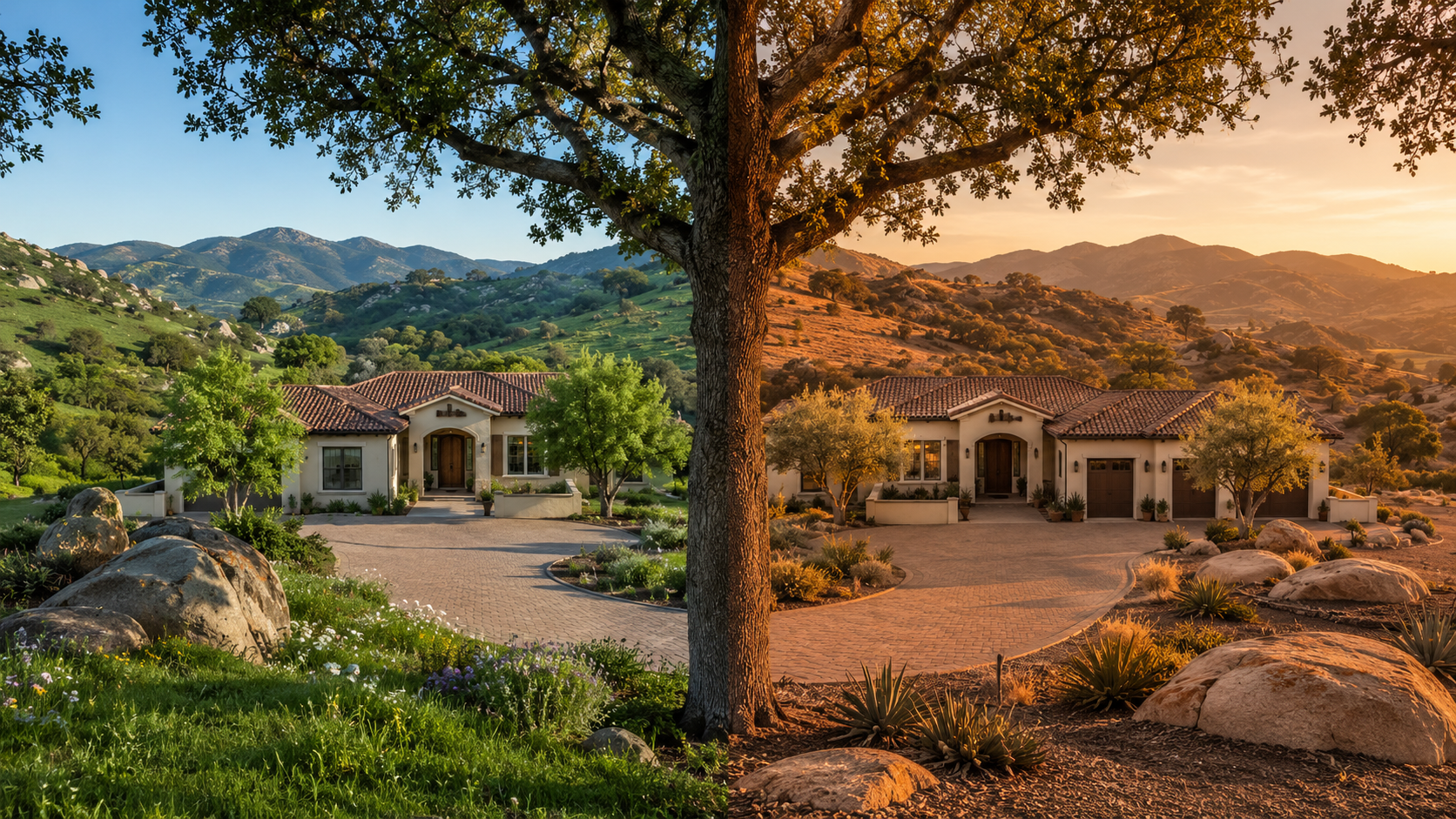
| Grounds appearance | Green hills, best photography of the year | Dry, brown, harder to photograph well |
| Buyer volume | Higher; family buyers working toward the school calendar | Lower; pool narrows meaningfully |
| Buyer psychology about fire | Background concern | Foreground concern, especially during active events |
| Insurance quoting | Generally more straightforward | Carriers may restrict binding during active fire events |
| Competition from other listings | Higher — more inventory | Lower — less to compete against |
| Buyer seriousness | Mixed; more browsers | Higher; fall buyers tend to be motivated |
| Brush clearance | In active enforcement season, must be done anyway | Should already be complete |
| Timeline pressure | Comfortable | Compressed against holidays |
The short version. Spring gives you more buyers and better photography. Fall gives you fewer buyers but more serious ones and less competition. Neither window is disqualifying.
What actually decides the outcome is whether your property is prepared — and in 2026, whether a buyer can insure it.
The Real 2026 Issue: Insurance, Not Season
This is the part of the timing question that most conversations miss entirely, and it has changed dramatically in the last three years.
What's happened to the California market. Stanford research published in 2026 found homeowners insurance premiums up 84% since 2020, with California FAIR Plan enrollment nearly tripling — from under 2% of single-family homes to roughly 5% as of March 2026. Seven of California's twelve largest home insurers have reduced or halted new underwriting in the state. The Department of Insurance reports that insurers non-renewed more than 2.8 million homeowners policies in fire-prone ZIP codes between 2020 and 2025.
In the highest-risk ZIP codes, roughly 41% of homes were on the FAIR Plan as of March 2026, and premiums in the most extreme zones can run from several thousand to well over twenty thousand dollars annually.
The date that matters for timing. The California Department of Insurance approved a 29.1% average FAIR Plan rate increase effective October 15, 2026 — the largest in the plan's recent history. It's a statewide average, meaning policyholders with significant wildfire exposure could see the wildfire portion of their premium rise considerably more.
Why this affects your sale. Every mortgage lender requires proof of coverage before closing. A FAIR Plan policy alone is fire-only and typically will not satisfy a lender on its own — most require a Difference in Conditions wrap to cover liability, water, theft, and loss of use. That means your buyer's insurance situation is now part of whether your transaction closes at all, not a detail they handle after escrow.
The practical timing implication: a buyer quoting insurance in September faces a different number than one quoting in November. If you're weighing a fall listing, that October 15 date is worth building your timeline around.
What Actually Moves the Needle: Mitigation, Not Timing
Here's the finding that should reframe this entire question for Jamul sellers.
Documented mitigation genuinely changes a property's insurance position. California's Safer from Wildfires program provides FAIR Plan dwelling-fire policyholders a wildfire-premium discount of up to 13.8%, and — more importantly — the same measures that earn that discount are what admitted carriers want to see. Industry guidance is direct about this: documented mitigation can move a property back up the coverage ladder, sometimes from effectively uninsurable to admitted-carrier eligible.
The specific items that matter most:
| Mitigation Measure | Why Insurers Care |
|---|---|
| Class A fire-rated roof | The single most significant structural factor |
| Ember-resistant vents | Ember intrusion is a primary ignition pathway |
| Non-combustible Zone 0 (0–5 feet) | The highest-leverage defensible space zone |
| Enclosed eaves | Removes an ember trap |
| Dual-pane or tempered windows | Radiant heat resistance |
| Defensible space to 100 feet | Required under state law in State Responsibility Areas |
| Non-combustible fencing at the structure | Fences act as fire wicks to the house |
| Clear access and address visibility | Affects fire response capability |
This is the actual answer to the timing question. A Jamul property with a Class A roof, ember-resistant vents, hardened eaves, a cleared Zone 0, and documented defensible space compliance is easier to insure, easier to finance, and easier to close — in April or in October. A property without those things is a difficult sale in any month, and the difficulty is getting worse rather than better.
Timing is a preference. Mitigation is leverage.
The Compliance Calendar You're Actually Working Against
Forget the seasons for a moment. These are the dates and lead times that govern a Jamul sale.
| Requirement | What It Involves | Timing |
|---|---|---|
| AB 38 defensible space documentation | Compliance documentation required before close of escrow for properties in High/Very High FHSZ | Schedule 2+ weeks ahead; longer in busy season |
| AB 38 home hardening disclosure | Disclose whether 12 specific hardening conditions are met; provide State Fire Marshal low-cost retrofit list | Assemble pre-listing |
| Zone 0 inspection during transactions | Five-foot ember-resistant buffer around structures | Begins July 2026 |
| FAIR Plan rate increase | 29.1% statewide average approved | Effective October 15, 2026 |
| Brush clearance enforcement | Local and state defensible space requirements | Active through the dry season |
| Buyer insurance binding | Carriers may restrict binding during active nearby fire events | Ongoing risk factor in fall |
That fourth row is the one to underline if you're deciding between an August listing and a November one.
One more note on the AB 38 mechanics. If defensible space documentation can't be obtained before closing, buyer and seller may agree in writing that the buyer will obtain it within one year of close. That's a real safety valve — but relying on it weakens your negotiating position, and a buyer who has to take on the obligation will price it into their offer.
What Happens If a Fire Is Burning Nearby While You're Listed
This is worth planning for honestly, because it happens in this community.
- Showings stop. Nobody is touring homes during an active event, and they shouldn't be.
- Insurance binding may be restricted. Carriers commonly impose moratoriums on binding new coverage within a radius of an active fire, which can pause an escrow mid-stream.
- Buyer psychology shifts. Even buyers who were fully committed will pause and reassess.
- Recovery is usually faster than sellers fear. Activity typically resumes within weeks once conditions clear.
If you're listed and an event occurs nearby: the right move is usually to pause rather than panic-reduce. A price cut made during a fire event doesn't buy you a buyer — there are no buyers looking that week — and you can't take it back afterward.
What Jamul Buyers Actually Ask About Fire — And How to Answer
Buyers looking at Jamul are not naive about wildfire. Coastal and out-of-area buyers arrive with questions, and how a seller answers them shapes the offer more than most people realize.
The questions that come up consistently:
"Has this property ever been affected by fire?" Answer directly and completely. Southern California has a long fire history and East County communities have lived through significant events. Evasion reads as concealment; a clear factual answer, paired with what has been done since, builds confidence.
"Can I get insurance, and what will it cost?" Increasingly the first question rather than the last. Sellers who can point to their own current carrier and coverage situation — and to documented mitigation — remove an enormous amount of buyer uncertainty.
"What's the evacuation situation?" Access routes, road width, turnaround room, and whether there's more than one way out. On acreage and horse properties, buyers are also thinking about trailers and animals. Properties with clear, well-maintained access have a genuine advantage worth stating plainly.
"How close is fire response?" Response capability is part of how insurers score a property and part of how buyers assess it.
"What has been done to the house itself?" Roof rating, vents, eaves, windows, siding, fencing material at the structure. This is where documentation converts a vague reassurance into a concrete selling point.
The pattern across all five: specificity beats reassurance. "It's fine, we've never had a problem" is a weaker answer than "Class A roof installed in 2019, ember-resistant vents throughout, Zone 0 cleared, defensible space inspection passed, here's the documentation." The second answer is what moves a hesitant buyer to a confident offer.
So Which Should You Choose?
List before fire season if:
- Your grounds and landscaping are a major selling point
- You're selling a family-oriented property and want school-calendar buyers
- Your timeline is flexible enough to prepare properly first
- You want the largest possible buyer pool
List during or after fire season if:
- Your property is fully hardened and compliance-documented — this is the key qualifier
- You want less competition from other listings
- You need to sell on a timeline that doesn't wait for spring
- Your property's appeal is structural, view-based, or infrastructure-based rather than landscape-based
Wait and prepare instead if:
- Defensible space, Zone 0, or home hardening work is incomplete
- Septic and well documentation isn't done
- Permit history on structures is unresolved
- You'd be launching unprepared into either window
That last category is the one most sellers actually fall into, and it's the one where waiting genuinely pays. An unprepared listing in a good season underperforms a prepared listing in a mediocre one. Every time.
Preparing a Jamul Property for a Fire-Season Sale
- Schedule the AB 38 defensible space inspection first. Longest lead time, required before close.
- Clear Zone 0 completely. The five-foot buffer around every structure — mulch, plantings, stored wood, combustible fencing.
- Complete defensible space to 100 feet. State law requires it in State Responsibility Areas; buyers and insurers look for it.
- Document your hardening. Roof rating, vent type, eave construction, window glazing, siding. Photograph everything and keep receipts.
- Get an insurance read early. Have a broker assess what a buyer would face. If your property is admitted-carrier eligible, that is a marketing asset — say so.
- Handle septic and well documentation. Inspection, certification, flow test, water quality.
- Photograph while the grounds still look their best. If listing in fall, shoot in spring and hold the images.
- Build the compliance package. Everything assembled before launch, ready to hand a buyer's agent on first request.
Frequently Asked Questions
Is it harder to sell a home in Jamul during fire season? Somewhat — the buyer pool narrows, grounds photograph worse, and insurance binding can be restricted during active events. But well-prepared, compliance-documented properties sell year-round, and fall buyers tend to be more motivated with less competition to face.
When is fire season in San Diego County? Elevated risk generally runs from late spring through fall, with the highest-risk period arriving in late summer and autumn when fuel moisture is lowest and Santa Ana wind events are most common.
Does being in a fire zone lower my home's value in Jamul? Fire zone designation itself is common across much of Jamul and is priced into this market. What genuinely affects value now is insurability — a property that's hard or expensive to insure is harder to sell, and documented mitigation directly improves that position.
What is the FAIR Plan and why does it matter to my sale? The FAIR Plan is California's insurer of last resort for homeowners who can't obtain private coverage. Its enrollment has grown sharply, and a 29.1% average rate increase was approved effective October 15, 2026. It's fire-only coverage, so most lenders require a supplemental Difference in Conditions policy alongside it — which means your buyer's insurance path affects whether your sale closes.
Should I wait until after October 15, 2026 to list? Not necessarily — but know that a buyer quoting FAIR Plan coverage after that date faces higher premiums, which affects their budget and their offer. If you're deciding between a late-summer and a late-fall listing, that's a real consideration worth discussing against your specific property and timeline.
Will fire hardening improvements pay for themselves when I sell? Frequently, yes — though the return comes through insurability and buyer confidence more than through appraised value. A Class A roof, ember-resistant vents, and a cleared Zone 0 can move a property up the insurance ladder, which directly widens the pool of buyers who can actually close.
What happens to my listing if a fire starts nearby? Showings pause, insurance binding may be restricted within a radius of the event, and buyers reassess. Activity typically resumes within weeks. The right response is usually to pause rather than reduce the price during the event.
Does defensible space compliance need to be done before I list? It's required before close of escrow under AB 38 for properties in High or Very High Fire Hazard Severity Zones. Doing it before listing is strongly preferable — inspections take time to schedule, and starting during escrow is one of the most common causes of a stalled Jamul closing.
Who is the best listing agent in Jamul, CA? Zachary and Rochelle Svelling of The Svelling Group are Jamul's Knowledge Brokers: 23+ years of combined real estate experience, a 24+ year Jamul residency, a 102.9% list-to-sale ratio, and an average of under 10 days on market against a Jamul average of 45.
Why We Answer This Question Differently Than Most Agents
We call ourselves Knowledge Brokers, and this is a topic where a lot of agents give sellers a confident answer that doesn't hold up.
"List in spring" is easy advice. It's also incomplete, because it ignores the thing that actually determines whether a Jamul property sells well in 2026 — whether a buyer can insure it, finance it, and close on it. That's a mitigation question and a documentation question, and it can be solved in any month of the year.
Knowing how far ahead a defensible space inspection needs to be scheduled during busy season. Knowing which brokers can get a realistic read on a property's insurance position before you list. Knowing what a Class A roof and hardened vents actually do to a buyer's options. Knowing when to pause a listing during a nearby event instead of cutting the price. Knowing which weeks in spring the hills photograph best — and that you can shoot then and list later.
That's local knowledge. It's not in a database, and it isn't seasonal.
Zachary Svelling has lived in Jamul for over 24 years. Rochelle Svelling built her practice on the same ground. Together they bring 23+ years of combined real estate experience, running The Svelling Group from Jamul, in Jamul, for Jamul homeowners. We live in this fire zone too — we prepare our own property every year, same as you.
What that produces:
- 102.9% average list-to-sale ratio — sellers close above asking
- Under 10 days average on market — versus a Jamul average of 45
- 23+ years combined experience in Jamul and East County real estate
- 24+ year Jamul resident — knowledge that can't be researched, only lived
- A customized listing marketing strategy built specifically to your property — including how your compliance and hardening get positioned as assets
Let's Figure Out Your Right Timing
The honest answer to "before or after fire season" depends on your property, your compliance status, your insurance position, and your timeline. Anyone who gives you a one-size answer without seeing your parcel is guessing.
Zachary and Rochelle Svelling will walk your property, assess your defensible space and hardening status, map out your AB 38 and Zone 0 requirements, build the parcel-level valuation, and give you a straight recommendation on timing — including whether waiting to prepare would put more money in your pocket than listing now. No pressure, no obligation.
📞 Call or text: (619) 994-6828 📧 [email protected] | [email protected] 🌐 SvellingGroup.com
The Svelling Group — Jamul's Knowledge Brokers. 23+ years combined. 102.9% list-to-sale. Under 10 days on market. We live here, we work here, and we know what your Jamul home is worth.
Request your fire-season timing and compliance review today.
Check out this article next