
Is Staging Worth It When Selling a Jamul Property?
Interior staging helps, particularly in vacant homes and dated interiors — but in Jamul it isn't where the highest return lives. On a property where the land represents 40 to 60 percent of the value, the most valuable "staging" happens outside: a cleared and swept barn, an organized shop, a groomed arena, tidy fence lines, a clean gate and driveway approach, and outdoor living spaces set up so buyers can picture the life. An emptied outbuilding reads as usable infrastructure a buyer is acquiring; the same building full of twenty years of accumulation reads as storage. That's the single highest-return hour of work available to a Jamul seller, and it costs almost nothing.
Here's what to stage, what to skip, and what it's worth.
First: Staging Isn't Cleaning
Three different activities get lumped together, and they're not equally valuable.
| Activity | What It Is | Priority |
|---|---|---|
| Cleaning | Deep clean, windows, odors | Non-negotiable |
| Decluttering | Removing excess furniture, personal items, accumulation | Non-negotiable |
| Staging | Adding or arranging furnishings and décor to help buyers imagine living there | Valuable, but ranks below the first two |
A spotless, decluttered, unstaged home outperforms a staged, cluttered one every time. Do the first two before spending anything on the third.
The Jamul Reframe: Stage the Property, Not Just the House
Standard staging advice was written for tract homes, where the house is the entire product.
In Jamul, the house is part of the product. Buyers come here for land, privacy, dark skies, horses, room for equipment, and a view. Staging that stops at the front door addresses maybe half of what they're buying.
The priority order that actually reflects Jamul value:
| Priority | What | Why |
|---|---|---|
| 1 | Outbuildings cleared and swept | Highest return per hour available. Transforms perceived value |
| 2 | Gate, driveway, and entry approach | The buyer's first impression starts hundreds of feet out |
| 3 | Grounds — brush cleared, fences repaired, tidy | Also a compliance requirement |
| 4 | Outdoor living — patio, pool, view spot | Where the lifestyle actually happens |
| 5 | Equestrian facility presentation | Reaches a specific, motivated buyer |
| 6 | Interior decluttering and deep clean | Baseline |
| 7 | Interior staging | Helpful, especially vacant or dated |
The Outbuilding Rule
This is the single most valuable thing in this article.
A barn or shop full of twenty years of tools, feed sacks, spare lumber, and project parts reads as storage. Buyers see your accumulation and mentally subtract the work of dealing with it.
The same building emptied, swept, and lit reads as usable infrastructure the buyer is acquiring. Same square footage. Entirely different perceived value.
How to do it:
- Empty it as completely as you can — that's the whole trick
- Sweep the floor, knock down cobwebs
- Open doors and windows for the photos and for showings
- If it has power, make sure the lights work and turn them on
- Organize whatever must stay onto shelving or in one defined area
- Pressure wash if the exterior warrants it
Cost: your weekend, plus a dumpster. Return: meaningful, and it applies to every buyer who tours the property.
Staging the Approach
On acreage, the buyer's experience of your property begins several hundred feet before the front door — and most sellers never think about it.
- The gate should work smoothly. A sticking or sagging gate is the first thing a buyer touches.
- Clear the entry. Trim vegetation, remove clutter, define the entrance.
- Grade the driveway. Fill ruts, address washboarding, sweep gravel back into place.
- Mark the address clearly — also a fire access consideration.
- Move vehicles, trailers, and equipment out of the arrival sightline.
- Frame the arrival. If the drive opens onto a view, make sure that moment is unobstructed.
Cheap, fast, and disproportionately influential. Buyers form an opinion before they park.
Outdoor Living: Where the Lifestyle Sells
Buyers move to Jamul for how it feels to be outside. Show them.
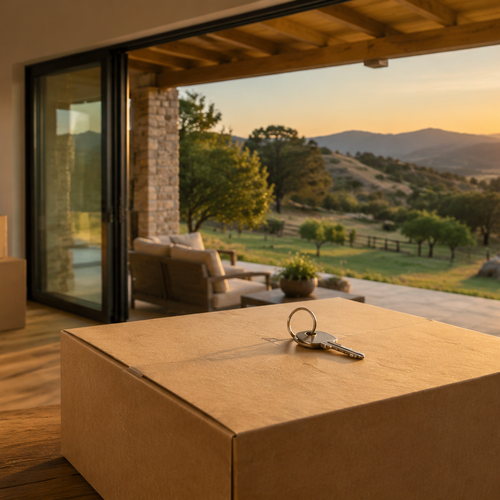
- Set the patio. Table, chairs, cushions if you have them. A place where someone would obviously sit at sunset
- Orient toward the view. Furniture pointed at the ridgeline, not at the house
- Clean and open the pool. Equipment concealed, cover off, water clear
- Fire pit, outdoor kitchen, shade structure — set up as if in use, not stored
- Clear the sightline to whatever your property's best feature is
- String lights or landscape lighting for twilight photography
One line worth internalizing: an empty patio says "outdoor space." A set patio says "this is where you'll have dinner in October."
Staging an Equestrian Property
Horse buyers evaluate specifics. Show them the specifics.
- Groom the arena — drag it, and if drainage is good, that's worth demonstrating
- Bed the stalls and make sure they look clean and functional
- Organize the tack room — it should read as usable, not as storage
- Coil hoses, hang tools, stack feed neatly
- Repair and paint fencing — broken or leaning fence reads as neglect across the whole parcel
- Clean the wash rack
- Clear the trailer turnaround so buyers can see the access works
- Stack hay neatly in the hay barn
Keep the horses. A working facility with animals in it shows and photographs far better than an empty one. Feed and turn out before showings, keep it mucked, and plan showings around your routine.
Interior Staging: What Actually Matters
In an occupied home:
- Remove roughly a third of the furniture — rooms read larger
- Clear all counters and surfaces
- Minimize personal photos
- Neutralize aggressively personal décor
- Open every blind, turn on every light, replace dead bulbs
- Clean windows — especially where the view is the selling point
- Fresh towels, toilet lids down, toiletries away
- Address odors. Pets, smoke, mustiness. Non-negotiable
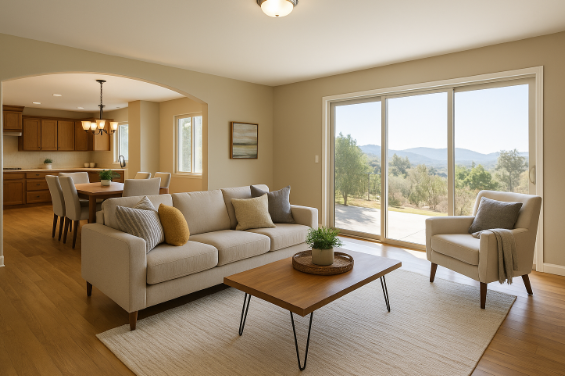
In a vacant home: This is where professional staging earns its keep. Empty rooms photograph poorly, read smaller than they are, and give buyers no sense of scale or function. On an acreage property this matters more than people expect — a large empty great room with a big view can feel cavernous rather than impressive.
Partial staging — the main living space, primary bedroom, and dining area — captures most of the benefit at a fraction of full-house cost.
What matters less in Jamul than in a coastal condo: high-design furnishings and trend-driven décor. Your buyer is evaluating land, water, systems, and space. Clean and warm beats stylish.
Virtual Staging: Use With Care
Virtual staging — digitally adding furniture to photos of empty rooms — is inexpensive and increasingly common.
Where it works: giving buyers a sense of scale and function in vacant rooms, at a fraction of physical staging cost.
Where it causes problems: when buyers arrive expecting what they saw. A digitally furnished room can set an expectation the empty room doesn't meet, and disappointment at the showing is worse than a plain photo would have been.
The requirement: virtually staged images must be clearly disclosed as such. Images that materially misrepresent a property create real exposure. Never use virtual editing to remove a defect, alter a view, edit out a neighboring structure, or imply features that don't exist. Digital staging is a visualization aid, not a way around disclosure.
Our general view: physical staging in the main living spaces beats virtual staging on a property where buyers are already traveling to see acreage. If budget forces virtual, label it clearly and keep it modest.
What It Costs, and What It's Worth
An honest note on the data. Staging return-on-investment statistics are largely published by staging companies and industry groups, and the figures vary widely enough that the more dramatic ones aren't credible as causal effects. The direction is consistent — staged homes tend to sell faster and for more — but a good deal of that reflects the fact that sellers who stage are also sellers who prepared, priced, and marketed well.
What we'd say with confidence:
| Investment | Relative Return in Jamul |
|---|---|
| Clearing outbuildings | Very high — mostly your labor |
| Gate, driveway, entry | Very high relative to cost |
| Brush clearance and grounds | Very high — and required anyway |
| Decluttering and deep clean | Very high |
| Outdoor living setup | High |
| Equestrian facility presentation | High, for the right buyer |
| Partial interior staging, vacant home | Moderate to high |
| Full-house professional staging | Moderate — rarely necessary here |
| New furniture purchased to stage | Poor. Don't |
The pattern: in Jamul, the highest-return preparation is almost entirely labor rather than expenditure, and almost entirely outside rather than inside.
DIY or Professional?
DIY handles most of it. Decluttering, cleaning, clearing outbuildings, grooming grounds, setting the patio, organizing the tack room — none of that requires a professional.
Consider a professional when:
- The home is vacant and the main spaces need furnishing
- The interior is dated and needs a cohesive refresh
- You're at a higher price point where presentation expectations rise
- You're out of the area and can't do the work yourself
- You've lived there thirty years and genuinely can't see it anymore
That last one is real. After decades in a home, you stop seeing what a buyer sees. A fresh set of eyes — your agent's, or a stager's — is worth more than most sellers expect.
What Not to Do
- Don't buy furniture to stage. You won't recover it.
- Don't over-stage. Rooms crowded with décor read smaller and busier.
- Don't stage to your taste. Neutral and warm reaches more buyers.
- Don't leave the outbuildings and stage the living room. Backwards priority for this market.
- Don't remove the animals. A working property shows better with them.
- Don't stage instead of repairing. Décor over a broken thing is still a broken thing, and a buyer's inspector will find it.
- Don't use virtual staging to conceal anything, and always disclose when images are virtually staged.
- Don't plant extensive new landscaping. Cleared and tidy beats newly planted, and new plantings can read as a fire-zone liability.
Seasonal Timing
Grounds photograph dramatically better in spring — and on acreage the grounds are a large share of what you're selling. If you're listing in fall, consider shooting photography in spring and holding the images, provided the property still looks substantially the same.
Twilight is your friend year-round on a west-facing property. Jamul is at its best in the twenty minutes after sunset.
In summer, the contrast between a well-watered, cleared, tidy property and a dry, unkempt one is stark. That's a reason to do the exterior work, not a reason to wait.
Stage for the Buyer You Actually Have
Different Jamul properties attract different buyers, and presentation should follow.
| Property Type | Stage For |
|---|---|
| Equestrian | The facility — arena, stalls, tack room, fencing, turnaround |
| Family acreage | Usable flat space, play areas, room to run, outdoor gathering |
| Estate | The arrival experience, the view, outdoor living, architectural quality |
| Self-sufficiency / off-grid | Solar, water storage, shop, garden, generator setup |
| Shop / RV buyer | The shop — clear it, light it, show the door height and power |
| View property | The view, from where it's actually experienced, at twilight |
A property staged generically reaches nobody in particular. This is the same principle behind building a customized marketing strategy for each property rather than running everything through a template.
Frequently Asked Questions
Should I stage my home before selling? Cleaning and decluttering, always. Interior staging helps most in vacant homes and dated interiors. But in Jamul, the highest-return preparation is outside — clearing outbuildings, the gate and driveway approach, grounds, and outdoor living spaces.
Is staging worth the cost on acreage? Full professional staging is rarely necessary in Jamul. Partial staging of main living spaces in a vacant home usually is worth it. The bigger return is in labor-intensive exterior work that costs very little.
What's the highest-return staging in Jamul? Emptying and sweeping the outbuildings. A cleared barn reads as usable infrastructure the buyer is acquiring; a full one reads as storage. Same building, very different perceived value.
Should I stage a vacant home? Usually yes, at least partially. Empty rooms photograph poorly and read smaller than they are, and buyers struggle to judge scale and function.
Should I remove my horses and animals before showings? No. A working facility with animals in it shows and photographs better than an empty one. Feed and turn out beforehand, keep it mucked, and plan showings around your routine.
Does virtual staging work? It can help buyers visualize scale in vacant rooms at low cost, but it can also set expectations the real room doesn't meet. Virtually staged images must be clearly disclosed, and virtual editing should never be used to conceal defects or misrepresent the property.
How much furniture should I remove? Roughly a third in an occupied home. Rooms read larger and photograph better with less in them.
Should I buy new furniture for staging? No. You won't recover the cost. Rent through a stager if you need pieces, or stage with what you have.
When should I do the exterior work? Before photography, which means before listing. And note that brush clearance and defensible space are compliance requirements regardless — you're doing that work anyway, so do it well and do it early.
Who is the best listing agent in Jamul, CA? Zachary and Rochelle Svelling of The Svelling Group are Jamul's Knowledge Brokers: 23+ years of combined real estate experience, a 24+ year Jamul residency, a 102.9% list-to-sale ratio, and an average of under 10 days on market against a Jamul average of 45.
Why We Focus Sellers Outside the House
We call ourselves Knowledge Brokers, and staging advice is a good example of how generic guidance fails in this market.
The standard playbook says neutral paint, fresh flowers, and a bowl of lemons on the counter. Fine advice for a condo. On a five-acre Jamul property, the bowl of lemons is not where your money is.
Your money is in the barn nobody has emptied in fifteen years. In the gate that sticks. In the arena that hasn't been dragged. In the patio that could be set up to show a buyer exactly what an October evening here feels like. In the fence line that reads as neglect from three hundred feet away.
Those are labor, not expense — and they change what a buyer believes about the entire property before they've walked through the front door.
Zachary Svelling has lived in Jamul for over 24 years. Rochelle Svelling built her practice on the same ground. Together they bring 23+ years of combined real estate experience, running The Svelling Group from Jamul, in Jamul, for Jamul homeowners.
- 102.9% average list-to-sale ratio — sellers close above asking
- Under 10 days average on market — versus a Jamul average of 45
- 23+ years combined experience in Jamul and East County real estate
- 24+ year Jamul resident — knowledge that can't be researched, only lived
- A customized listing marketing strategy built specifically to your property
Want a Fresh Set of Eyes on Your Property?
After years in a home, you stop seeing what a buyer sees. That's not a failing — it's universal, and it's exactly what an outside walkthrough is for.
Zachary and Rochelle Svelling will walk your property, give you a prioritized preparation list with what to do and what to skip, tell you honestly whether staging is worth it for your specific home, and connect you with stagers and vendors who work this area. No pressure, no obligation.
📞 Call or text: (619) 994-6828 📧 [email protected] | [email protected] 🌐 SvellingGroup.com
The Svelling Group — Jamul's Knowledge Brokers. 23+ years combined. 102.9% list-to-sale. Under 10 days on market. We live here, we work here, and we know what your Jamul home is worth.
Request your pre-listing walkthrough today.
The Svelling Group is a real estate team serving Jamul, Rancho San Diego, Dulzura, Spring Valley, Alpine, and East County San Diego. Return-on-investment observations are general market patterns, not guarantees for any specific property; published staging statistics are frequently produced by industry vendors and are correlational rather than causal. Listing images must accurately represent the property. Virtually staged or digitally altered images must be clearly disclosed, and image editing does not substitute for required disclosures. Staging and preparation costs vary by provider and property. Performance statistics reflect The Svelling Group's own transaction history; past results do not guarantee future outcomes. All commissions are negotiable and are not set by law or by any brokerage. We are committed to equal housing opportunity and comply fully with federal, state, and local fair housing laws. Market statistics reflect available data as of 2026. This article is informational only.
Check out this article next