

Propane vs. Electric Homes in Jamul: Which Is Better for Rural Living in 2026?
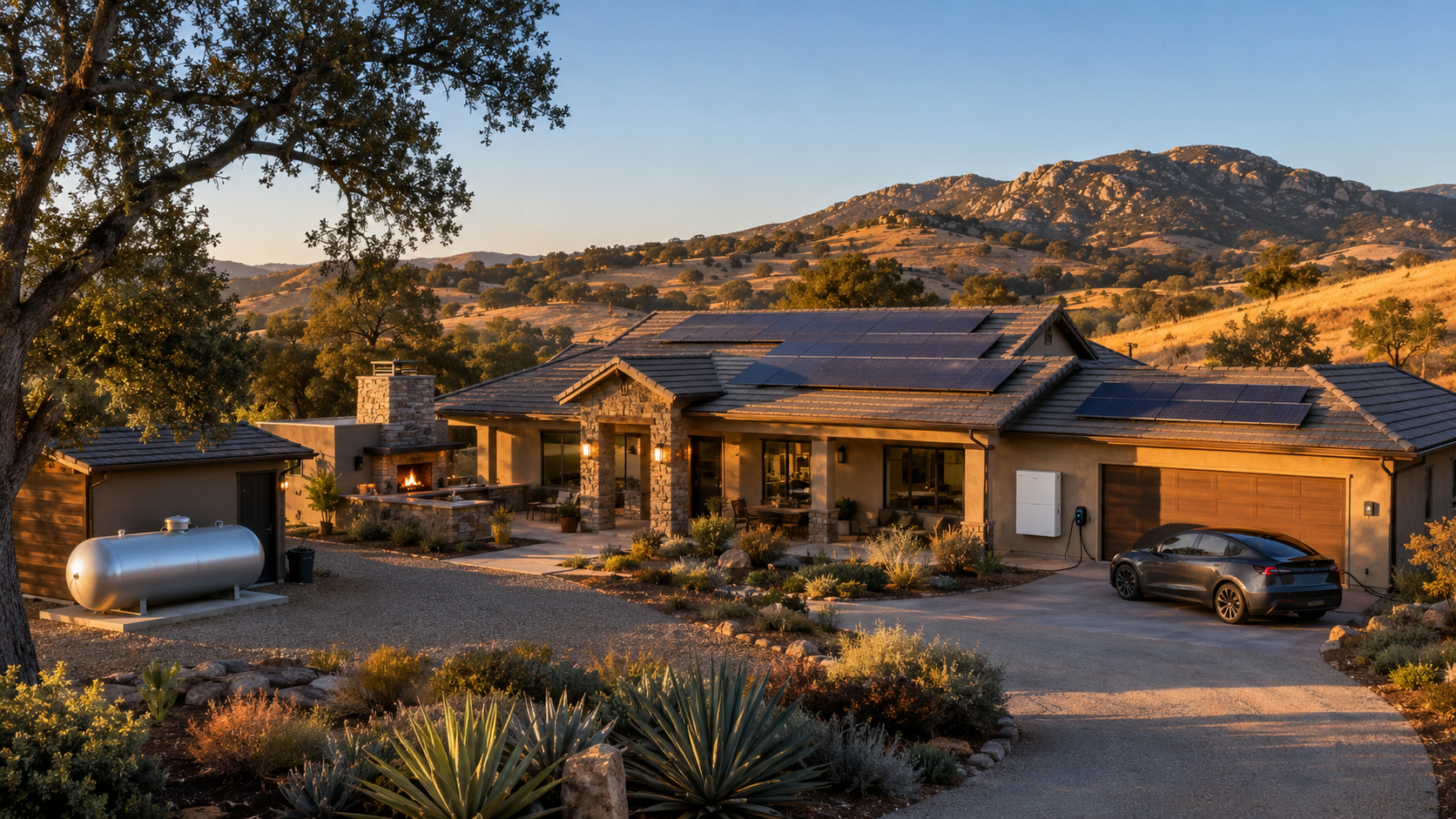
Neither propane nor electricity is automatically better for every rural home in Jamul. The right choice depends on the property’s appliances, solar production, battery storage, electrical capacity, propane ownership, outage exposure and the homeowner’s lifestyle.
Propane can provide responsive cooking, effective heating and a fuel supply stored directly on the property. However, owners must monitor the tank, schedule deliveries, maintain combustion appliances and account for fluctuating fuel prices.
An all-electric Jamul home eliminates propane deliveries and can pair effectively with solar, batteries, heat pumps and smart energy management. However, high-demand electric equipment may require a larger service panel, and a grid outage can affect every major appliance unless the property has a properly designed backup system.
For many Jamul homes, the most practical answer is a hybrid system: efficient electric heat pumps and solar for everyday use, combined with battery storage or a properly installed generator for outages. Some owners may also retain propane for cooking, water heating, a fireplace or generator fuel.
When selling a rural property, Zachary and Rochelle Svelling of The Svelling Group act as Jamul real estate “Knowledge Brokers,” helping owners explain utilities, propane tanks, solar, batteries, wells and backup systems clearly. These details can materially affect buyer confidence, inspections, insurance and resale value.
Propane vs. Electric Homes: Quick Comparison
| Feature | Propane home | All-electric home |
|---|---|---|
| Fuel source | Delivered and stored onsite | Supplied by the electrical grid, solar or batteries |
| Cooking | Fast flame response | Induction offers fast, precise control |
| Water heating | Strong recovery with tank or tankless systems | Heat-pump models can be highly efficient |
| Space heating | Warm air and strong output | Heat pumps provide efficient heating and cooling |
| Outage performance | Fuel is onsite, but appliances may still need electricity | Depends heavily on batteries, generator or other backup |
| Solar compatibility | Solar offsets electrical loads but not propane use | Solar can offset more household energy consumption |
| Deliveries | Required | Not required |
| Storage tank | Required unless using portable cylinders | No fuel tank required |
| Maintenance | Tank, regulator, lines, venting and combustion appliances | Electrical panel, wiring and electric appliances |
| Indoor combustion | Yes | No combustion from electric appliances |
| Price exposure | Propane price and delivery terms | Electric rate plan and time-of-use pricing |
| Rural access issue | Delivery truck must reach the tank | Utility and service access still matter |
| Resale concern | Tank ownership, permits and fuel contracts | Panel capacity, solar agreements and backup power |
Why This Comparison Matters in Jamul
Jamul homes often operate differently from properties in denser parts of San Diego County. A rural residence may include:
- A private well
- One or more booster pumps
- Water-storage tanks
- A septic system
- A swimming pool
- A barn or workshop
- Electric gates
- Solar panels
- Battery storage
- A standby generator
- An accessory dwelling unit
- Horse facilities
- Detached garages
- Long private roads
These systems create energy demands that should be considered together.
A homeowner may say, “My house is propane,” when propane serves only the range and water heater. Another property may use propane for space heating, water heating, cooking, fireplaces, a dryer, pool equipment and a generator.
Likewise, an “all-electric” house may have modern heat pumps and induction cooking—or it may have older resistance heaters and inefficient appliances. The fuel label alone does not reveal efficiency, operating cost or resilience.
What Is a Propane Home?
A propane home uses liquefied petroleum gas stored in a tank on the property. Propane is stored under pressure as a liquid and becomes a gas as it is released for use. An odorant is added to help people detect leaks. U.S. Department of Energy Alternative Fuels Data Center
Propane can power:
- Furnaces
- Wall heaters
- Water heaters
- Ranges and ovens
- Clothes dryers
- Fireplaces
- Pool and spa heaters
- Generators
- Outdoor kitchens
- Agricultural equipment
Rural Jamul homes commonly use aboveground tanks, although some properties have underground tanks. Tank size, placement and ownership vary.
What Is an All-Electric Home?
An all-electric home uses electricity for heating, cooling, water heating, cooking, drying and other household loads.
Modern all-electric equipment may include:
- Heat-pump HVAC
- Ductless mini-splits
- Heat-pump water heaters
- Induction cooktops
- Electric ovens
- Heat-pump clothes dryers
- Electric fireplaces
- Electric pool equipment
- Solar panels
- Home batteries
- Electric vehicle chargers
California’s 2025 Energy Code took effect for qualifying permit applications on January 1, 2026. The standards expand the use of heat pumps in newly constructed residential buildings and encourage electric readiness. They do not mean every existing Jamul homeowner must immediately eliminate propane. California Energy Commission
Advantages of Propane in a Rural Jamul Home
1. Fuel is stored on the property
A propane tank gives the homeowner an onsite energy supply. This can be appealing in a rural community where owners think carefully about emergencies and service interruptions.
However, propane stored onsite does not guarantee that appliances will operate during an electrical outage. Many propane furnaces, tankless water heaters, ovens and control systems require electricity for ignition, fans, pumps or electronic controls.
Owners should identify which appliances work without grid power and which require a generator or battery.
2. Propane cooking is familiar and responsive
Many homeowners prefer seeing and adjusting a flame. Propane burners provide immediate heat and work with a wide variety of cookware.
That preference is personal rather than universal. Modern induction cooking also responds very quickly and can outperform conventional electric resistance cooking.
3. Propane heating can feel powerful
Propane furnaces can deliver warm supply air and recover quickly. Propane water heaters may also provide strong recovery for homes with large tubs, multiple bathrooms or substantial simultaneous hot-water use.
Efficiency depends on the age, condition and rating of the actual equipment.
4. Propane can support a generator
A permanently installed propane generator may provide valuable backup power. Propane does not degrade in the same way as some liquid fuels, and a large tank may support extended operation depending on generator load and tank capacity.
Generator runtime should be calculated, not guessed. A generator powering a well, HVAC system and large residence can consume fuel much faster than one supporting only essential circuits.
5. Propane may reduce pressure on an older electrical panel
Older rural homes may have limited electrical service. Retaining propane for water heating, cooking or space heating may postpone an expensive panel or utility-service upgrade.
That is not always the best long-term decision, but it can be a practical constraint.
Disadvantages of Propane in Jamul
1. Propane requires deliveries
The tank must be monitored and refilled. Delivery access can become difficult when a property has:
- A narrow driveway
- A locked gate
- Low branches
- Soft or washed-out road shoulders
- Steep grades
- Limited turnaround space
- Uncontrolled dogs or livestock
- Storm damage
- Vehicles blocking the tank
Owners should preserve a reliable delivery route and confirm access requirements with their propane provider.
2. Propane prices fluctuate
Propane is generally purchased from a private supplier rather than through the regulated residential electricity-billing structure. Prices can vary based on market conditions, season, delivery quantity, contract terms and provider.
When comparing operating costs, use recent delivered propane prices and actual appliance consumption. A national or statewide average may not reflect a specific Jamul household.
3. The tank may be leased rather than owned
Some homeowners do not own the propane tank on their property. The tank may belong to the propane supplier.
A leased tank can be tied to:
- A particular fuel provider
- Minimum delivery requirements
- Tank-rental charges
- Removal conditions
- Automatic-delivery terms
- Early termination charges
- Transfer requirements
Before selling, determine tank ownership and obtain the relevant agreement.
4. Propane systems require safety maintenance
A residential propane system may include:
- Tank
- Regulator
- Shutoff valves
- Underground or aboveground lines
- Appliance connectors
- Venting
- Exhaust systems
- Carbon-monoxide detectors
- Combustion-air provisions
Corrosion, damaged lines, improper installation or failing appliances can create serious risks. Qualified propane and HVAC professionals should inspect questionable conditions.
5. Propane appliances create combustion gases
Properly installed and maintained appliances vent combustion products safely. Problems can arise when equipment, venting or combustion-air systems are damaged or installed incorrectly.
Homes with fuel-burning appliances should have correctly placed and functioning smoke and carbon-monoxide alarms in accordance with applicable requirements.
6. A propane tank uses physical space
The tank must remain accessible and adequately separated from buildings, property lines, ignition sources and other features as required.
Tank placement can affect:
- Landscaping
- Driveway design
- Future additions
- ADU placement
- Pool construction
- Barns
- Fencing
- Views
- Fire access
Do not relocate or install a tank without checking permit, fire and zoning requirements.
Advantages of an All-Electric Jamul Home
1. No propane delivery or storage tank
An all-electric home eliminates the need to monitor fuel levels, arrange deliveries or maintain a large combustible-fuel tank.
This can simplify rural property management and free land for other uses, subject to proper tank removal and site restoration if a propane system is being decommissioned.
2. Electric homes pair naturally with solar
Solar can offset electricity used for:
- Space conditioning
- Water heating
- Well pumping
- Pool equipment
- Cooking
- Laundry
- Electric vehicles
- Workshops
- Battery charging
Solar cannot directly offset gallons of propane consumed. Converting a major appliance from propane to electricity may increase electrical consumption, but it also allows more of the household’s energy demand to be addressed through solar.
The solar system must be evaluated to determine whether it can accommodate the added load.
3. Heat pumps can be highly efficient
A heat pump moves heat rather than creating all of it through electrical resistance. The same equipment can often provide heating and cooling.
Heat-pump technologies include:
- Central HVAC heat pumps
- Ductless mini-splits
- Heat-pump water heaters
- Heat-pump dryers
- Pool heat pumps
The California Energy Commission describes heat pumps as an efficient electric technology for space and water heating. California Energy Commission homeowner resources
4. Induction cooking provides precise control
Induction cooktops use magnetic energy to heat compatible cookware directly. Benefits may include:
- Rapid heating
- Precise temperature adjustment
- Easier cleaning
- Less heat released into the kitchen
- No open flame
- No combustion from the cooking appliance
Induction requires compatible cookware and an appropriate electrical circuit.
5. Electric systems may simplify future energy upgrades
An electric-ready home may be easier to integrate with:
- Solar
- Batteries
- Smart electrical panels
- Load-management systems
- Electric vehicles
- Time-of-use automation
- Future appliance technologies
The main panel and utility service must still have adequate capacity.
Disadvantages of an All-Electric Rural Home
1. A grid outage can affect everything
Without backup power, an all-electric home may lose:
- Cooking
- Hot water
- Heating and cooling
- Well pumping
- Refrigeration
- Internet
- Gate operation
- Lighting
- EV charging
A battery or generator can help, but it must be properly sized and configured.
2. High electrical demand may require upgrades
Converting from propane may require:
- A larger electrical panel
- New branch circuits
- New wiring
- Load-management equipment
- Utility service upgrades
- Trenching
- New equipment locations
- Drywall or exterior repairs
A contractor should conduct a load calculation before the homeowner buys appliances.
3. Electric costs depend on rate plans and usage timing
Electricity pricing can vary by rate plan and time of day. A home using large amounts of power during higher-priced periods may cost more to operate than expected.
Homeowners should evaluate:
- Seasonal use
- Time-of-use periods
- Solar production
- Battery programming
- Electric vehicle charging
- Pool schedules
- Well-pumping schedules
- Heating and cooling habits
Current rate information should be obtained directly from SDG&E or the applicable community-choice provider rather than relying on an old online estimate. SDG&E rate comparisons
4. Solar does not guarantee low bills
An all-electric house may still have substantial electric bills when:
- The solar system is undersized
- Usage has increased
- Panels are shaded
- Equipment is malfunctioning
- The home consumes significant power after sunset
- The battery is not configured effectively
- The household charges multiple vehicles
- A pool, well or ADU adds major loads
Actual bills and solar-production records are more useful than a seller’s general statement that the property has “almost no electric bill.”
Propane vs. Electric for Individual Appliances
Cooking
| Propane | Induction electric |
|---|---|
| Visible flame | No open flame |
| Works with most cookware | Requires magnetic cookware |
| Familiar to many cooks | Fast and highly responsive |
| Adds combustion and heat to kitchen | Adds less waste heat |
| May require electricity for ignition | Requires electricity |
There is no universal winner. Buyers often have a strong personal preference.
Water Heating
Propane water heater
Potential strengths:
- Strong recovery
- Familiar equipment
- Lower electrical load
- Tank and tankless options
Potential concerns:
- Fuel cost
- Venting
- Combustion maintenance
- Tankless service requirements
- Propane availability
Heat-pump water heater
Potential strengths:
- High efficiency
- Can pair with solar
- No onsite combustion
- May dehumidify the surrounding area
Potential concerns:
- Requires suitable installation space
- Creates some operational sound
- Cools the surrounding space
- Requires drainage for condensate
- Needs an appropriate electrical circuit
- Performance depends on conditions and sizing
Space Heating
A propane furnace can provide strong heat, while a modern heat pump can provide both efficient heating and cooling.
Important factors include:
- Equipment efficiency
- Duct condition
- Home insulation
- Air sealing
- Window quality
- Building orientation
- Thermostat settings
- Solar production
- Backup heat
- Installation quality
Replacing a propane furnace with a heat pump without addressing severely leaking ducts may produce disappointing results.
Clothes Drying
Propane dryers can heat quickly and reduce electrical demand. Electric dryers eliminate combustion and fuel piping. Heat-pump dryers may use less electricity but often operate differently from conventional dryers and may have longer cycles.
Pool and Spa Heating
Propane can heat water quickly, which may suit intermittent spa use. Electric heat pumps may be economical when maintaining temperatures over longer periods, particularly in suitable weather.
The right choice depends on frequency of use, desired temperature, equipment size, solar availability and operating schedule.
What Happens During a Jamul Power Outage?
The common assumption is:
- Propane home equals functioning home
- Electric home equals powerless home
The reality is more complicated.
| System | Likely outage limitation |
|---|---|
| Propane furnace | Blower and controls usually require electricity |
| Propane tankless water heater | Ignition and controls usually require electricity |
| Propane range | Burners may differ; modern safety systems and ovens may require electricity |
| Propane generator | Works only if properly installed, maintained and fueled |
| Standard solar | Usually shuts down when the grid is down |
| Solar with battery | Can power selected or whole-home loads depending on design |
| Electric well pump | Requires adequate generator or battery capacity |
| Electric gate | Needs backup power or a usable manual release |
A rural resilience plan should prioritize essential loads instead of attempting to operate every appliance normally.
Typical essential-load priorities
- Well or booster pump
- Refrigerator and freezer
- Medical equipment
- Communications and internet
- Essential lighting
- Electric gate
- Septic components requiring power
- Limited heating or cooling
- Security equipment
Whole-home HVAC, ovens, clothes dryers, EV charging and pool equipment can consume significant power and may need to remain off during an outage.
Propane Tanks and Fire-Safety Considerations
Propane tanks must be installed and maintained in accordance with applicable fire, building and zoning requirements. Placement rules depend on tank size, property features and use.
San Diego County guidance for certain stand-alone generator installations states that LPG tanks with up to 499 gallons of water capacity must be located at least 10 feet from the generator, buildings, roads and property lines. That document applies to the specific generator context and should not be treated as a universal rule for every tank or installation. Property owners should have the proposed layout reviewed by the fire authority having jurisdiction and County officials. San Diego County generator requirements
Maintain:
- Clear access to the tank
- Required vegetation clearance
- Protection from vehicle impact
- Visible emergency shutoffs
- Legible equipment information
- Safe regulator positioning
- Properly supported lines
- Adequate separation from ignition sources
- Access for the propane supplier and emergency personnel
Do not paint, screen, bury, relocate or enclose a tank without confirming what the provider and applicable authorities allow. Landscaping intended to conceal a tank must not create a fire, ventilation or service-access problem.
Owned vs. Leased Propane Tanks
Tank ownership should be established before a Jamul home is marketed.
If the homeowner owns the tank
The owner may have greater flexibility in choosing a propane supplier, although providers may still inspect the tank before delivering fuel.
Gather:
- Purchase documentation
- Tank size
- Serial number
- Installation permit
- Inspection records
- Service history
- Information about underground lines
If the propane company owns the tank
Obtain:
- Current lease or service agreement
- Tank-rental charges
- Minimum-purchase requirements
- Transfer procedure
- Removal conditions
- Supplier contact information
- Current fuel balance
- Automatic-delivery terms
Do not advertise an included propane tank as seller-owned until ownership is verified.
How to Compare Actual Propane and Electric Costs
Avoid comparing a gallon of propane directly with a kilowatt-hour of electricity. The appliances convert energy at different efficiencies.
Instead, compare total annual costs for the same household services.
Step-by-step cost comparison
- Collect 12 to 24 months of propane invoices.
- Collect 12 to 24 months of electric bills.
- Identify which appliances use each fuel.
- Separate unusual consumption, such as pool heating or construction.
- Note equipment ages and efficiency ratings.
- Include tank rental and delivery charges.
- Include solar-loan, lease or battery payments.
- Account for annual electric reconciliation where applicable.
- Estimate future changes, such as an EV or ADU.
- Obtain replacement proposals for aging equipment.
Costs homeowners often overlook
- Propane tank rental
- Tank inspection
- Regulator or line repair
- Tankless water-heater service
- Electrical-panel upgrades
- Solar financing
- Battery replacement
- Generator service
- Removal and disposal of old appliances
- New circuits
- Roof or wall repairs
- Permits
- Trenching
Should You Convert a Propane Home to All-Electric?
Conversion may make sense when:
- Propane equipment is approaching the end of its useful life
- The home already has solar
- The electrical panel has sufficient capacity
- The owner wants induction cooking
- Heat-pump equipment is appropriate
- The owner plans to remain long enough to benefit
- The propane tank or lines need expensive work
- Available incentives improve the economics
- The homeowner wants to eliminate combustion appliances
It may be better to postpone or phase conversion when:
- The electrical service requires a major upgrade
- Several propane appliances are relatively new
- The solar system cannot support added consumption
- Backup power has not been addressed
- The owner expects to sell soon
- The project would involve extensive trenching
- The home has unresolved insulation or duct problems
- The conversion cost exceeds the likely benefit
Income-qualified California homeowners may be eligible for significant heat-pump incentives through current programs, but eligibility, funding and rebate amounts change. Confirm availability before signing a contract. California Energy Commission rebate programs
Should You Keep a Hybrid Propane and Electric System?
A hybrid approach can be practical for Jamul.
Examples include:
- Electric heat-pump HVAC with a propane water heater
- Induction cooking with a propane generator
- Solar and battery storage with a propane fireplace
- Heat-pump water heating with a propane range
- Electric everyday appliances with a propane-fueled standby generator
A hybrid system offers flexibility, but it also means maintaining two energy infrastructures. Owners must still service propane equipment while paying for the electrical capacity needed by major electric loads.
The best system is the one that is safe, efficient, understandable and appropriate for the household—not necessarily the one with the fewest energy sources.
How Propane or Electric Systems Affect Resale Value
Neither energy source guarantees a higher sale price.
Buyers generally respond well to systems that are:
- Properly installed
- Permitted
- Efficient
- Documented
- Easy to operate
- In good condition
- Supported during outages
- Free from confusing contracts
Propane features that can appeal to buyers
- Owned and well-maintained tank
- Documented installation
- Reliable delivery access
- Newer high-efficiency equipment
- A standby generator
- Clear fuel-use records
Propane issues that can concern buyers
- Unknown tank ownership
- Corroded or poorly placed equipment
- Underground lines with no records
- High fuel consumption
- An expired or unfavorable supply contract
- Old appliances
- A tank that conflicts with future improvements
Electric features that can appeal to buyers
- Modern heat-pump HVAC
- Induction cooking
- Heat-pump water heater
- Owned solar
- Battery storage
- Upgraded electrical panel
- Documented backup circuits
Electric issues that can concern buyers
- High bills
- Undersized solar
- Leased solar
- Insufficient panel capacity
- No backup for the well
- Older resistance heating
- Unpermitted electrical work
- Battery or inverter warnings
Documents Jamul Sellers Should Gather
For a propane property
- Tank ownership or lease documents
- Tank size and serial number
- Installation permits
- Supplier agreement
- Recent delivery invoices
- Appliance service records
- Generator records
- Tank and line inspection reports
- Receipts for regulator or line replacement
- Information about underground piping
- Current propane level
For an electric property
- Recent electricity bills
- Electrical-panel permits
- HVAC and water-heater records
- Solar purchase, loan, lease or PPA agreement
- Solar permission-to-operate documents
- Battery information
- Production history
- Generator or backup-power records
- EV charger permits
- Equipment warranties
For either property
- Well pump specifications
- Septic-system records
- Insurance information
- Appliance manuals
- Remodel permits
- Known repair history
- Utility map showing major equipment
Common Seller Mistakes
- Calling a leased propane tank “owned.”
- Saying propane appliances work during outages without verification.
- Advertising an electric home as “off-grid” because it has solar.
- Promising that solar eliminates the electric bill.
- Failing to disclose propane or electrical problems.
- Losing appliance and installation permits.
- Ignoring an aging roof beneath solar panels.
- Waiting until escrow to locate propane contracts.
- Misrepresenting which appliances use which fuel.
- Assuming a buyer understands rural utility systems.
- Advertising battery backup without identifying supported loads.
- Failing to explain how the well operates during an outage.
- Leaving an empty or nearly empty propane tank for inspections.
- Hiding tanks so completely that they cannot be serviced.
- Completing unpermitted conversion work before listing.
Questions Buyers Should Ask
- Is the propane tank owned or leased?
- Which company supplies the propane?
- How much propane did the home use last year?
- Which appliances use propane?
- When were the tank, regulator and lines inspected?
- Are any propane lines underground?
- Is the home completely electric?
- What is the electrical-service size?
- Has the panel been upgraded?
- Which appliances use heat-pump technology?
- Does the home have solar?
- Is the solar owned, financed or leased?
- Does the home have batteries?
- Can the batteries operate the well pump?
- Is there a generator?
- Which circuits receive backup power?
- Are permits available?
- What happens to the gate during an outage?
- Are fuel and utility records available?
- Has the insurance company been informed about the tank, solar, batteries and generator?
Frequently Asked Questions About Propane and Electric Homes in Jamul
Is propane cheaper than electricity in Jamul?
It depends on current propane prices, electric rates, equipment efficiency and household use. A modern heat pump and an older propane furnace cannot be compared solely by fuel price. Use actual bills and appliance specifications.
Does a propane furnace work when the power is out?
Usually not without backup electricity. Most modern furnaces require electricity for the blower, ignition and controls.
Can I use a propane stove during an outage?
Some burners may be operable depending on the appliance, but others have electronic safety features or ignition systems. Ovens often require electricity. Follow the manufacturer’s instructions and never modify a safety system.
Is an all-electric home a problem in rural Jamul?
Not when it is properly designed. An all-electric rural home can perform very well, especially with efficient equipment, solar and backup power. Owners should plan carefully for wells and outages.
Can a battery run an all-electric house?
Possibly, but runtime depends on battery capacity and electrical demand. Major loads such as well pumps, HVAC, ovens, dryers and EV charging can deplete batteries quickly.
Is induction better than propane cooking?
Induction is fast, precise and efficient, while propane offers a visible flame and works with more cookware. The better choice depends on cooking preferences and available electrical capacity.
Do propane tanks require permits?
Tank installation and placement are regulated. Requirements depend on tank size, use and site conditions. Consult the propane provider, fire authority and San Diego County before installing or moving one.
Can I remove a leased propane tank?
The propane company may own it. Review the agreement and coordinate removal with the owner. Do not move, disconnect or dispose of the tank yourself.
Does an underground propane tank add value?
It may be visually appealing, but buyers will want ownership, installation, corrosion-protection and inspection records. An undocumented underground tank may create additional questions.
Should I convert to electric before selling?
Only if the conversion makes financial and marketing sense. Replacing functional equipment immediately before selling does not always provide a full return. Have a Jamul listing advisor evaluate likely buyer expectations first.
Is propane safe in a wildfire area?
Propane systems must be properly installed and maintained, with required clearances and access. Owners should follow the provider’s guidance and local fire-authority requirements. No fuel system should be treated as risk-free.
Which type of Jamul home is easier to sell?
Buyers are usually more concerned with condition, cost, documentation and outage planning than with a simple propane-versus-electric label. A well-explained system is easier to market than one surrounded by unknowns.
Propane vs. Electric: Which Is Best for Your Jamul Home?
Choose propane when:
- You prefer prefer gas cooking or heating
- The existing system is efficient and well maintained
- Electrical capacity is limited
- Delivery access is reliable
- You want onsite generator fuel
- Conversion costs are not justified
Choose all-electric when:
- You want to eliminate fuel deliveries
- The home has adequate electrical capacity
- You plan to use solar and batteries
- Efficient heat-pump equipment fits the property
- You prefer induction cooking
- You have a complete outage plan
Choose a hybrid system when:
- You want flexibility
- Some propane equipment has substantial remaining life
- Solar supports most daytime electrical use
- A propane generator provides backup
- Phased conversion is more practical than immediate conversion
Work With Jamul Real Estate Knowledge Brokers
Selling a rural Jamul home requires more than stating that the property uses propane or electricity. Buyers want to know how the entire property functions.
Zachary and Rochelle Svelling of The Svelling Group help sellers explain:
- Propane tank ownership
- Fuel contracts
- Solar agreements
- Battery capacity
- Generator systems
- Well-pump requirements
- Electrical-panel upgrades
- Heat-pump equipment
- Utility expenses
- Permit and service records
- Rural outage preparedness
As Jamul real estate Knowledge Brokers, Zachary and Rochelle understand how these property systems influence buyer confidence, inspections, lending, insurance and marketing.
If you are considering selling a propane, electric or hybrid rural home in Jamul, contact Zachary and Rochelle Svelling for a confidential property consultation. The Svelling Group can help you identify missing documents, prioritize practical improvements and develop a marketing strategy that clearly communicates how your property works—before buyers begin asking questions.
Check out this article next

Moving to Jamul, CA: Everything You Need to Know Before You Buy (2026)
What Is It Like to Live in Jamul, California?Jamul is a semi-rural unincorporated community of roughly 6,200 to 6,600 residents in the East County foothills…
Read Article