

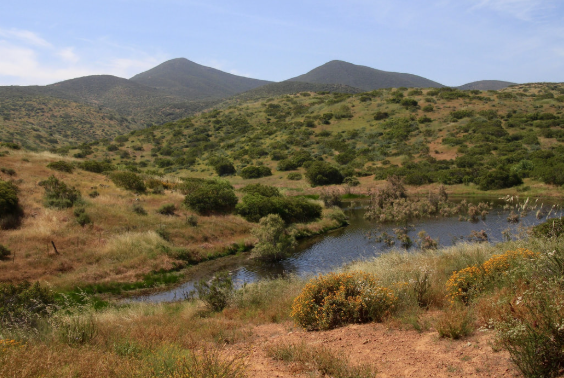
Long before ranchers and homesteaders arrived to what we now call the "Haven in the Hills," the rolling valleys and canyon lands of Jamul were home to the Kumeyaay people, who thrived in this region for thousands of years. Today's Jamul community stands on ground rich with Indigenous history, and even the name we use carries forward an ancient legacy.
The Meaning Behind the Name
The name "Jamul" itself tells a story of the land's most precious resource. Derived from the Kumeyaay word Ha-mool, which means "sweet water," the name pays tribute to the natural springs, seasonal creeks, and reliable underground aquifers that made this valley a source of life and sustenance for countless generations.
For the Kumeyaay people, water wasn't just a practical necessity—it was a gift that shaped where and how they lived. The sweet water that gave Jamul its name allowed communities to flourish in a region that might otherwise have been too challenging for permanent settlement.
A Place of Natural Abundance
The Kumeyaay chose their settlement locations with deep knowledge of the land and its resources. Jamul's basin offered everything needed for both seasonal camps and year-round villages:
Water Sources: Natural springs bubbled up from the ground, seasonal creeks flowed through the canyons after winter rains, and underground aquifers provided reliable water even during dry months. This abundance of sweet water made the area ideal for human habitation and attracted the diverse wildlife that supplemented the Kumeyaay diet.
Oak Trees: The valley's abundant oak trees were particularly valuable, providing acorns that served as a dietary staple. Acorns were harvested, processed to remove their bitter tannins, ground into meal, and used to make a nutritious mush or bread. The presence of productive oak groves made Jamul an especially desirable location for Kumeyaay communities.
Diverse Ecosystem: The varied topography—from valley floors to hillsides to canyon walls—supported a wide range of native plants and wildlife. This biodiversity meant that food sources were available throughout the year, and the Kumeyaay developed sophisticated knowledge of which plants could be used for food, medicine, basketry, and other purposes.
The Geography That Shaped a Culture
Jamul's unique topography played a crucial role in making it such a rich homeland for the Kumeyaay. The area's rolling hills and sheltered canyons aren't just scenic—they're functional landscape features that collect and channel water.
During the rainy season, precipitation gathers in the higher elevations and flows down through the canyons, feeding into creeks and natural basins. This water doesn't just run off immediately; it seeps into the soil and rock, replenishing underground aquifers that continue to provide water long after the rains have stopped. The geology of the area acts as a natural water storage system, maintaining the "sweet water" that gave the region its name.
This reliable hydrology allowed native plants to flourish, which in turn supported animal populations. The Kumeyaay understood these interconnected systems intimately, knowing where to find water in different seasons, which plants grew in which locations, and when different foods would be available for harvest.
From Indigenous Stewardship to Pioneer Settlement
When European settlers and American pioneers began arriving in the region during the mid-1800s, they quickly recognized what the Kumeyaay had known for millennia: Jamul's water resources made it exceptional land.
Early homesteaders and ranchers took advantage of the area's rich hydrology, building small dams to collect water for crops and livestock. They dug wells to tap into those same underground aquifers that had sustained Kumeyaay communities for thousands of years. The reliability of Jamul's water supply made it attractive for agriculture and ranching, helping to establish the rural, agricultural character that persists in parts of the community today.
A Living Legacy
Even in modern Jamul, the ancient gift of sweet water continues to shape daily life. Many properties throughout the area benefit from natural springs and access to underground water sources. The area remains particularly well-suited for wells, with many residents relying on well water rather than municipal supplies.
This connection to groundwater isn't just practical—it's a living link to the Indigenous people who first recognized and named this land for its most precious resource. Every time a Jamul resident draws water from a well, they're tapping into the same aquifers that sustained Kumeyaay families for countless generations.
The area's rural charm and agricultural viability still depend on these deep, naturally replenished underground water sources. From horse properties that need reliable water for livestock to homes with lush gardens made possible by well water, modern Jamul continues to be defined by the sweet water that gave it its name.
Honoring the First Stewards
Today, when we speak the name "Jamul," we're speaking a Kumeyaay word. This simple fact serves as a daily reminder that before streets were paved, before homes were built, before county lines were drawn, this land was cherished as a place of sweet water, community, and sacred tradition.
The Kumeyaay people didn't simply live on this land—they understood it, respected it, and developed a deep relationship with its rhythms and resources. They knew which plants could be harvested sustainably, how to encourage productive oak groves, where water could be found in dry seasons, and how to move through the landscape with minimal impact.
This knowledge was passed down through generations, creating a cultural heritage that lasted thousands of years. While much has changed since European settlement, the fundamental character of the land remains: Jamul is still a place where water flows from the ground, where oaks provide shade and sustenance to wildlife, where rolling hills collect rainfall, and where those who live here develop a deep appreciation for the natural world around them.
Remembering and Respecting Indigenous Heritage
As Jamul continues to grow and evolve, it's important to remember and honor the Indigenous heritage that shaped this land long before modern development. The Kumeyaay people's relationship with this environment wasn't just about survival—it was about living in balance with the natural world, understanding seasonal cycles, and recognizing the interconnectedness of all living things.
When we preserve open spaces, protect water quality, maintain wildlife corridors, and respect the natural landscape, we're continuing a tradition of stewardship that began with Jamul's first inhabitants. When we appreciate the oak trees that dot the hillsides or marvel at a spring bubbling up from the ground, we're connecting with the same natural features that made this land precious to the Kumeyaay.
A Name That Tells a Story
Every place name carries history, but "Jamul" carries something more—it carries the voice of the land's original inhabitants, speaking a truth about this place that remains as relevant today as it was thousands of years ago. This is the land of sweet water.
That simple phrase captures something essential about Jamul's character. It reminds us that this community exists because of the natural resources that first drew people here. It connects modern residents to the ancient past. And it honors the Kumeyaay people who recognized the preciousness of this valley and gave it a name that would endure through millennia.
The next time you fill a glass with water from your tap, water your garden, or notice a seasonal creek flowing through a canyon, take a moment to remember: you're experiencing the same sweet water that sustained communities here for thousands of years. In that continuity lies a profound connection to Jamul's deepest roots and its Indigenous heritage.
Jamul's name serves as a lasting tribute to its Indigenous heritage—a daily reminder that before modern development, this land was cherished by the Kumeyaay people as a place of sweet water, abundant resources, and sacred tradition. Understanding this history deepens our connection to the land we call home.
Check out this article next