

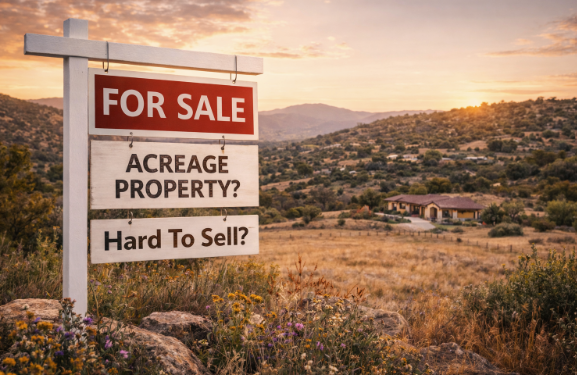
The Complete 2026 Guide
Understanding the Acreage Property Market in East County San Diego
If you own a larger parcel in Jamul—5 acres, 10 acres, 20 acres, or more—you've probably wondered: "Is it harder to sell acreage property in Jamul compared to smaller residential lots?"
The Svelling Group—Zachary and Rochelle Svelling, specialists in East County rural properties—have a nuanced answer based on years of experience selling Jamul acreage:
"Acreage is not harder to sell, but it requires a different buyer. The market for larger parcels is smaller but often more committed. Success depends on understanding acreage buyers and positioning your property to meet their specific needs and expectations."
This distinction is critical. Acreage properties don't follow the same marketing playbook as suburban quarter-acre lots, and sellers who understand this difference achieve dramatically better results than those who don't.
Why Acreage Isn't "Harder"—Just Different
The Fundamental Difference in Buyer Pools
Rochelle Svelling explains the market reality: "When you list a 3-bedroom, 2-bathroom home on a quarter-acre lot, you have a broad buyer pool—families, young professionals, retirees, investors. When you list a 10-acre property, you have a more selective but often more motivated buyer pool with specific reasons for seeking larger land."
The Numbers Reality:
Small Lot Properties (Under 2 Acres):
- Larger buyer pool: Perhaps 70-80% of Jamul buyers
- Faster typical sales: More potential buyers means quicker matches
- Broader appeal: General lifestyle buyers, families, basic rural living
- Competitive pricing pressure: More comparable properties create pricing constraints
Medium Acreage (2-10 Acres):
- Moderate buyer pool: Perhaps 40-50% of Jamul buyers
- Balanced market dynamics: Enough buyers but less competition
- Purpose-driven purchasers: Horse owners, privacy seekers, hobby farmers
- Value differentiation: Usability and features matter more than pure acreage
Larger Acreage (10+ Acres):
- Smaller buyer pool: Perhaps 15-25% of Jamul buyers
- More patient timeline: Fewer buyers means longer search for the right match
- Highly intentional buyers: Specific uses and plans for the land
- Premium for quality: Right properties command strong prices from committed buyers
Zachary Svelling notes: "Smaller buyer pools don't mean 'harder to sell'—they mean you need to be more strategic about finding and appealing to the right buyers. When we connect a well-positioned 20-acre property with a buyer who's been searching for exactly that, sales happen quickly and at strong prices."
What "Different Buyer" Actually Means
Acreage buyers in Jamul bring distinct characteristics that sellers must understand:
Different Motivations:
- Not seeking convenience or proximity to urban amenities
- Actively choosing space, privacy, and land over other factors
- Often have specific plans or uses for the property
- Willing to accept rural trade-offs for acreage benefits
Different Timelines:
- Often searching for months or even years for the right property
- Less time-pressured than typical home buyers
- Willing to wait for the perfect match rather than compromise
- More patient during due diligence and closing process
Different Priorities:
- Land quality, usability, and topography matter enormously
- Water rights, well capacity, and irrigation potential are critical
- Access, boundaries, and development potential are carefully evaluated
- Long-term value and future use possibilities drive decisions
Rochelle Svelling shares: "Acreage buyers aren't browsing properties casually on a Saturday afternoon. They're conducting serious research, evaluating land characteristics, and making deliberate decisions about significant investments. Understanding this mindset is essential for successful acreage sales."
Who Are Jamul's Acreage Buyers?
The Svelling Group's Buyer Profile Analysis
Zachary and Rochelle Svelling work extensively with acreage buyers and have identified distinct buyer categories:
1. Intentional Buyers with Specific Plans
The Defining Characteristic:
Acreage buyers aren't passive—they have clear reasons for seeking larger land parcels.
Common Intentions:
Equestrian Enthusiasts:
- Need space for horses, arenas, and facilities
- Seeking 5-20+ acres depending on number of horses and activities
- Evaluating land usability for pasture, riding, and horse keeping
- Looking for existing facilities or buildable space for future development
- Willing to pay premiums for quality equestrian properties
Agricultural and Homesteading:
- Want productive land for farming, orchards, or livestock
- Evaluating soil quality and water availability
- Seeking flat, usable acreage suitable for cultivation
- Interested in irrigation potential and agricultural infrastructure
- Long-term investment in self-sufficiency and food production
Privacy and Seclusion Seekers:
- Prioritizing distance from neighbors and development
- Value natural buffers (topography, vegetation, elevation changes)
- Accepting access challenges for privacy benefits
- Willing to invest in developing remote properties to their preferences
- Often cash buyers with financial flexibility
Recreational and Investment:
- Looking for weekend retreats or future retirement properties
- Interested in outdoor activities (hunting, hiking, off-roading)
- Evaluating future development or subdivision potential
- Long-term hold strategies banking on appreciation
- May not need immediate habitability if planning phased development
Family Compounds and Multi-Generational:
- Planning for multiple families or generations on one property
- Evaluating ADU potential and future building sites
- Seeking space for extended family privacy and togetherness
- Long-term family legacy planning
- Interested in large homes or expansion possibilities
Zachary Svelling notes: "When you understand your likely buyer's intentions, you can market your property's features that align with those goals. A 15-acre property with flat, cleared land appeals to horse owners differently than a 15-acre property with steep, wooded terrain appeals to privacy seekers."
2. Patient Buyers Conducting Thorough Research
The Due Diligence Mindset:
Rochelle Svelling emphasizes: "Acreage buyers don't make impulsive decisions. They're investing significant money in land they plan to use long-term, so they conduct extensive research before committing."
What Acreage Buyers Research:
Land and Topography:
- Aerial imagery (Google Earth, county GIS systems)
- Topographic maps showing elevation changes and terrain
- Soil surveys indicating agricultural potential
- Drainage patterns and watershed characteristics
- Vegetation and ecosystems present on property
- Sun exposure and orientation for buildings and activities
Legal and Regulatory:
- Zoning regulations and permitted uses
- Building restrictions and setback requirements
- HOA or county regulations affecting development
- Williamson Act or agricultural preserve status
- Environmental restrictions (wetlands, endangered species, etc.)
- Future development or zoning change potential in area
Infrastructure and Utilities:
- Well locations, depth, and flow rates from county records
- Septic system types and locations from permit records
- Electric service availability and connection costs
- Propane vs. natural gas options and infrastructure
- Internet and cellular service availability (increasingly important)
- Road maintenance responsibilities and costs
Access and Boundaries:
- Legal access documentation (deeded access, easements)
- Survey information and boundary certainty
- Neighboring properties and ownership patterns
- Shared road agreements and maintenance responsibilities
- Historical access routes and current usage
Zachary Svelling shares: "By the time acreage buyers schedule a showing, they've already reviewed satellite imagery, checked well records, researched zoning, and evaluated comparable sales. They arrive informed and with specific questions. Sellers and agents need to be prepared with detailed answers."
Timeline Implications:
This research-intensive approach means:
- Longer evaluation periods before making offers
- More detailed inspection contingencies than typical home sales
- Additional due diligence beyond standard home inspections
- Patient negotiation focused on facts and details
- Higher close rates once in contract (buyers have already done homework)
3. Purpose-Driven Buyers with Clear Vision
The Long-Term Commitment:
Rochelle Svelling describes the commitment level: "Acreage buyers aren't looking for starter homes they'll outgrow in five years. They're making lifestyle commitments and long-term investments. They know what they want and won't settle for properties that don't meet their core requirements."
Non-Negotiable Requirements:
Different acreage buyers have different must-haves:
For Equestrian Buyers:
- Minimum usable flat acres for horse facilities
- Good well water supply for livestock
- Fencing or fence-able perimeter
- Proximity to riding trails or equestrian community
- Zoning allowing horses and agricultural activities
For Agricultural Buyers:
- Soil quality suitable for intended crops or activities
- Water rights or adequate well capacity for irrigation
- Sun exposure appropriate for cultivation
- Flat or gently sloping usable land
- Road access for equipment and deliveries
For Privacy Seekers:
- Minimum distance from neighboring structures
- Natural buffers or topographic privacy
- Limited visibility from roads or surrounding properties
- Quiet environment without noise intrusion
- Remote location accepting access trade-offs
For Development/Investment Buyers:
- Subdivision potential under current or future zoning
- Multiple building sites on property
- Utilities accessible or extendable
- Location in path of growth or appreciation
- Clear title and minimal restrictions
Zachary Svelling advises: "Understanding which buyer type your property appeals to helps you market effectively. A 20-acre property with steep, wooded terrain and challenging access won't attract equestrian buyers seeking flat, usable land—but it might be perfect for privacy seekers or recreational buyers. Market to your property's natural buyer audience."
When Acreage Sells Best: The Svelling Group's Success Factors
Strategic Positioning for Optimal Results
The Svelling Group has identified specific factors that accelerate acreage sales and maximize values:
1. Usable Land Is Clearly Defined
The Critical Distinction:
Rochelle Svelling emphasizes: "The number one question acreage buyers ask is: 'How much of the land is actually usable?' Total acreage matters far less than usable acreage for most buyers' intended purposes."
What "Usable" Means to Different Buyers:
For Equestrian Use:
- Flat or gently rolling terrain suitable for arenas, paddocks, pasture
- Cleared of major obstacles (large boulders, dense brush, severe washouts)
- Accessible by vehicle for hay delivery, trailer parking, equipment
- Fence-able perimeter without excessive rock or terrain challenges
- Water access throughout for livestock and irrigation
For Agricultural Use:
- Tillable soil not excessively rocky or compacted
- Adequate sun exposure without excessive tree coverage
- Irrigation potential from wells, water rights, or infrastructure
- Relatively level terrain manageable by farm equipment
- Good drainage preventing waterlogging or erosion
For Building and Development:
- Buildable building envelopes meeting setbacks and regulations
- Accessible by utilities or reasonable extension costs
- Septic suitability verified by percolation tests
- Road access to building sites
- Adequate well locations supporting structures
How to Define Usability Effectively:
The Svelling Group recommends:
Visual Documentation:
- Aerial photography with annotations highlighting usable areas
- Ground-level photos showing cleared, flat, or buildable spaces
- Topographic overlays illustrating elevation and grade
- Property maps with usable areas clearly marked
- Comparative images showing different sections of property
Written Descriptions:
- Quantify usable acreage: "Approximately 8 of 15 total acres are flat and cleared, suitable for equestrian facilities or agricultural use"
- Describe terrain variations: "Southern portion features 5 acres of level, cleared land; northern section includes natural hillside with oak trees"
- Explain current uses: "Currently supports 4 horses with room for additional livestock and facilities"
- Identify potential uses: "Multiple building sites with valley views and level access"
Professional Assessments:
- Survey showing contours and elevation changes
- Soil reports indicating agricultural potential
- Percolation tests for septic suitability
- Well flow tests demonstrating water capacity
- Engineering assessments for development potential
Zachary Svelling notes: "When we can tell buyers, 'This 12-acre property includes 7 acres of flat, usable land currently fenced and cleared, with 5 additional acres of natural hillside providing privacy,' we give them the information they need to evaluate whether the property meets their needs. Vague descriptions like '12 acres of beautiful land' don't help serious buyers make decisions."
2. Boundaries Are Documented
The Certainty Buyers Need:
Acreage buyers are making significant investments and need boundary certainty.
Why Boundary Documentation Matters:
Buyer Concerns:
- Exactly what land am I purchasing?
- Where can I build, fence, or improve without encroaching?
- Are there neighbor disputes or unclear boundaries?
- Do fences match legal property lines?
- Are there easements affecting my planned uses?
Seller Benefits:
- Faster sales without boundary uncertainty delays
- Stronger offers from confident buyers
- Fewer contingencies related to survey requirements
- Smoother escrows without title complications
- Higher values reflecting boundary certainty
Proper Boundary Documentation:
Recent Survey:
- Professional land survey (ideally within past 5 years)
- Marked corners with visible monuments or stakes
- Legal description matching title and survey
- Easements clearly shown and documented
- Encroachments identified if any exist
Fencing and Markers:
- Fencing matching boundaries or clearly explained differences
- Property corner markers accessible and identifiable
- Posted property signs where appropriate
- Neighbor agreement on boundary locations
- Historical documentation if available
Title and Access:
- Clear title without boundary disputes
- Recorded easements for access, utilities, shared roads
- Access rights clearly documented
- Any restrictions disclosed and explained
- Title insurance covering boundary representations
Rochelle Svelling advises: "If you haven't surveyed your acreage property, seriously consider doing so before listing. The $3,000-$6,000 cost prevents $20,000-$50,000 negotiation credits when boundary uncertainty arises during escrow. Buyers need certainty, especially when fencing, building, or developing large parcels."
Real Scenario:
A seller listed a 15-acre Jamul property without recent survey. Buyer made offer contingent on survey confirming acreage and boundaries. Survey revealed:
- Actual acreage was 13.8 acres (seller believed it was 15)
- Fence line encroached 20 feet onto neighbor's property in one area
- Shared road easement had different width than seller represented
Result: 45-day escrow delay, $25,000 price reduction, and additional $8,000 in seller costs to resolve encroachment. Total cost to seller: $33,000+ plus extended carrying costs.
Zachary Svelling notes: "That $5,000 survey before listing would have prevented $33,000+ in costs and complications. Boundary clarity protects sellers as much as buyers."
3. Access and Utilities Are Explained
The Infrastructure Clarity Buyers Demand:
Acreage buyers need detailed information about property infrastructure and access.
Access Documentation:
Legal Access:
- Deeded access rights via public roads or recorded easements
- Easement agreements if access crosses other properties
- Road maintenance responsibilities and cost-sharing arrangements
- Access width and restrictions (vehicle size, seasonal limitations)
- Historical access patterns and current usage
Physical Access:
- Road surface conditions (paved, graded dirt, primitive)
- Seasonal accessibility (all-weather vs. fair-weather only)
- Vehicle requirements (standard clearance vs. 4WD needed)
- Driveway grades and turning radii for large vehicles/trailers
- Fire department access requirements and current compliance
- Gate or entry systems and operation
Emergency Access:
- Fire truck turnaround spaces if required
- Address visibility and emergency responder directions
- Cell phone coverage for emergency calls
- Distance to fire stations and typical response times
Utility Documentation:
Water Systems:
- Well depth, age, and construction details
- Flow rates (gallons per minute) from recent tests
- Water quality test results (bacteria, minerals, contaminants)
- Storage capacity (pressure tanks, storage tanks)
- Pump specifications and age
- Historical well performance and any issues
Septic Systems:
- System type and size (conventional, alternative, capacity)
- Installation date and permit records
- Inspection reports and pumping history
- Tank and leach field locations
- Capacity for additional bedrooms or structures
- Compliance with current regulations
Electricity:
- Service capacity (amps) and meter location
- Power line location and connection points
- Underground vs. overhead service
- Solar systems if present (owned vs. leased, specifications)
- Generator hookups or backup systems
- Propane infrastructure if relevant
Communications:
- Internet options (fiber, cable, DSL, satellite, cellular)
- Actual speeds available (not just advertised availability)
- Cell coverage by carrier
- Landline availability if relevant
Rochelle Svelling shares: "Acreage buyers want specific details. Don't just say 'property has a well'—tell them it's a 300-foot deep well installed in 2015 with 15 GPM flow rate and recent water quality test showing excellent potability. Don't just say 'septic system'—provide the 2023 inspection report showing a 1,500-gallon conventional system with capacity for 4-bedroom home in excellent condition."
The Information Package:
The Svelling Group prepares comprehensive property information packages for acreage listings:
Included Documentation:
- Survey or assessor's parcel map with boundaries marked
- Well logs and water quality test results
- Septic system permits and inspection reports
- Recent utility bills (electric, propane) showing typical costs
- Road maintenance agreements if applicable
- Fire mitigation work completed with photos
- Soil reports or agricultural assessments if available
- Zoning information and building regulations
- Photos of different property areas and features
- Aerial imagery with annotations
Zachary Svelling explains: "Prepared information builds buyer confidence and accelerates decisions. When buyers receive comprehensive documentation answering their questions upfront, they can evaluate the property thoroughly and make informed offers quickly. Mystery and uncertainty slow acreage sales; clarity and transparency accelerate them."
Pricing Acreage Property Correctly
The Unique Valuation Challenges of Larger Parcels
The Svelling Group emphasizes that acreage pricing requires different analysis than standard residential property:
Per-Acre Valuation Limitations
Why Simple Math Doesn't Work:
Rochelle Svelling explains: "Buyers don't value acres linearly. The first 2-5 acres where you build your home, keep horses, and have usable space are worth far more per acre than acres 15-20 that might be steep hillside or remote corners of the property."
Diminishing Returns:
- Acres 1-2: Highest per-acre value (home site, immediate improvements, core use)
- Acres 3-5: High value (additional horses, buildings, gardens, core activities)
- Acres 6-10: Moderate value (space, buffer, additional activities, privacy)
- Acres 11-20: Lower per-acre value (privacy, future potential, holding land)
- Acres 20+: Further diminished value (speculative, investment, extreme privacy)
Example Valuation:
A 15-acre Jamul property might break down:
- 5 acres flat, usable, improved: $120,000/acre = $600,000
- 5 acres gently rolling, fence-able: $40,000/acre = $200,000
- 5 acres steep hillside, natural: $15,000/acre = $75,000
- Total property value: ~$875,000
- Average per acre: $58,333
Simply multiplying 15 acres × $58,333 = $875,000 misses the actual value distribution across the property.
Comparable Sales Analysis for Acreage
Zachary Svelling outlines the proper approach:
Finding True Comparables:
Similar Total Acreage:
- Within 25-50% of your total acres (don't compare 5-acre to 40-acre)
- Recent sales within 6-12 months (acreage market moves slower)
- Geographic proximity (Jamul, Alpine, Dulzura, similar East County areas)
Similar Usability:
- Comparable flat/usable acreage proportions
- Similar topography and terrain characteristics
- Comparable infrastructure (wells, septic, access)
- Similar improvements and facilities
Similar Features:
- Comparable views or lack thereof
- Similar access quality (paved, dirt, 4WD)
- Similar fire zones and insurance implications
- Similar zoning and development potential
Adjustments for Differences:
Just like standard comparable sales analysis, but with acreage-specific factors:
- Usable land differences (±$20,000-$50,000+ per usable acre)
- Home condition and size (±$50-$150/sq ft)
- Equestrian facilities (±$30,000-$150,000 depending on quality)
- Views and privacy (±$50,000-$200,000 depending on quality)
- Access quality (±$25,000-$100,000 depending on severity)
- Well and septic condition (±$15,000-$40,000)
Rochelle Svelling notes: "Acreage valuation requires more professional judgment than tract home pricing. The wide variation in property characteristics makes simple per-acre or per-square-foot calculations inadequate. This is where experienced local expertise becomes essential."
Common Acreage Pricing Mistakes
Overvaluing Total Acreage:
- Assuming all acres have equal value regardless of usability
- Not discounting steep, rocky, or unbuildable portions appropriately
- Pricing based on total acreage without considering practical limitations
Overvaluing Improvements:
- Assuming full cost recovery for equestrian facilities or outbuildings
- Not recognizing that specialized improvements appeal to limited buyers
- Overestimating value of unpermitted structures or improvements
Ignoring Market Conditions:
- Pricing based on what you paid years ago plus hoped appreciation
- Not accounting for current buyer demand and inventory levels
- Failing to recognize market shifts affecting acreage values
Undervaluing Unique Features:
- Not properly crediting exceptional views or privacy
- Underestimating value of quality wells and septic systems
- Missing value of ideal equestrian setup for horse buyers
Zachary Svelling advises: "Work with agents who regularly sell acreage in Jamul and understand the nuanced valuation factors. Generic pricing approaches lead to overpricing that extends market time or underpricing that leaves money on the table."
Marketing Acreage Properties Effectively
Reaching the Right Buyers with the Right Message
The Svelling Group's acreage marketing approach differs significantly from standard residential marketing:
Targeted Marketing Channels
Where Acreage Buyers Search:
Specialty Websites and Publications:
- LandWatch, Land And Farm: National land-focused listing sites
- Equestrian-specific platforms: Horse property websites and forums
- Agricultural networks: Farming and ranching communities
- Investment property sites: Land investment and development platforms
Local and Regional:
- Multiple MLS services: Including out-of-area MLS reaching broader audiences
- East County publications: Local papers and magazines
- Jamul community: Local networks and word-of-mouth
- San Diego equestrian community: Horse owner networks and organizations
Digital Marketing:
- Targeted social media ads: Facebook/Instagram to demographics seeking acreage
- Google advertising: Keywords like "Jamul acreage," "San Diego horse property"
- Email campaigns: To buyer databases seeking land and acreage
- YouTube property tours: Video showcasing land and features extensively
Rochelle Svelling notes: "Acreage buyers often search differently than standard home buyers. They're using specialized land websites, researching rural properties specifically, and often searching from outside the immediate area. Our marketing reaches these buyers wherever they're looking."
Photography and Visual Presentation
Essential for Acreage Properties:
Aerial Drone Footage:
- Overall property layout and boundaries
- Topography and terrain variations
- Usable land areas clearly visible
- Surrounding area and privacy context
- Access routes and road conditions
- Views from multiple angles
Ground-Level Photography:
- Usable land areas showing flat, cleared spaces
- Existing improvements (barns, arenas, outbuildings)
- Home and primary structures from best angles
- Views from property at various locations
- Special features (rock outcroppings, mature trees, water features)
Annotated Maps and Graphics:
- Property boundaries clearly marked
- Usable areas highlighted and quantified
- Improvements shown with locations
- Utilities (well, septic, electric) marked
- Access routes illustrated
- Topographic contours showing elevation
Video Tours:
- Driving the property showing access and terrain
- Walking usable areas demonstrating size and potential
- Highlighting features with narration and context
- Aerial footage combined with ground perspective
- Seasonal variations if relevant
Zachary Svelling explains: "Acreage buyers need to understand the property spatially—how it lays out, where things are located, what's usable versus natural terrain. We invest heavily in visual documentation that helps buyers comprehend the property even before visiting in person."
Detailed Property Descriptions
Information Acreage Buyers Need:
The Svelling Group's listing descriptions for acreage include:
Land Characteristics:
- Total acreage and usable acreage quantities
- Topography description (flat, rolling, hillside, mixed)
- Soil types and conditions
- Vegetation and natural features
- Views and privacy assessment
- Solar exposure and orientation
Infrastructure Details:
- Well specifications (depth, age, flow rate, water quality)
- Septic system (type, capacity, age, condition)
- Electrical service (amps, location, solar if present)
- Access (road type, condition, legal status, maintenance)
- Fencing (type, condition, perimeter coverage)
- Outbuildings (size, condition, permitted status)
Use Potential:
- Current uses and activities
- Equestrian potential (number of horses supported, facility possibilities)
- Agricultural possibilities (crops, livestock, orchards)
- Building and development potential (additional structures, ADUs)
- Recreational opportunities (trails, hunting, activities)
Regulatory and Legal:
- Zoning designation and permitted uses
- Fire zone classification and insurance implications
- HOA or special district information
- Recorded easements or restrictions
- Survey status and boundary certainty
Rochelle Svelling emphasizes: "Acreage buyers are detail-oriented. Comprehensive descriptions help them pre-qualify your property before scheduling showings, resulting in more serious, qualified showing activity and fewer tire-kickers."
The Bottom Line: Acreage Sells Well When Marketed Correctly and Priced Realistically
The Svelling Group's Expert Conclusion
After successfully selling hundreds of acreage properties throughout Jamul and East County, Zachary and Rochelle Svelling have reached clear conclusions:
"Acreage sells well when marketed correctly and priced realistically. The key is understanding that acreage buyers are different—more intentional, more patient, more purpose-driven—and positioning your property to appeal specifically to these buyers."
Success Factors for Acreage Sales:
Proper Positioning:
- Understanding your natural buyer audience (equestrian, agricultural, privacy, investment)
- Marketing features that appeal specifically to that audience
- Providing comprehensive information addressing buyer research needs
- Demonstrating usability and potential clearly
Realistic Pricing:
- Valuing usable land appropriately versus total acreage
- Using comparable sales with similar usability and features
- Accounting for infrastructure quality and condition
- Recognizing market realities for acreage in current conditions
Professional Marketing:
- High-quality aerial and ground photography
- Detailed property information and documentation
- Targeted outreach to acreage buyer channels
- Comprehensive online presence on specialty platforms
Transparent Documentation:
- Survey showing boundaries and acreage verification
- Well and septic documentation with recent reports
- Access agreements and legal documentation
- Improvement records and permit information
- Fire mitigation work and insurance information
Patience and Expertise:
- Understanding that acreage may take longer than small-lot properties
- Working with agents experienced in acreage sales
- Maintaining property condition during marketing period
- Responding thoroughly to buyer inquiries and due diligence
Common Acreage Success Stories:
Rochelle Svelling shares examples:
10-Acre Equestrian Property:
- Listed at $1,150,000 based on comparable acreage sales
- Professional aerial and ground photography showcasing 6 acres of usable, fenced land
- Detailed documentation of barn, arena, and facilities
- Well reports showing excellent 20 GPM flow
- Marketed to equestrian community specifically
- Result: 4 serious showings in first month, 2 offers, sold in 52 days at $1,135,000
18-Acre Privacy Estate:
- Listed at $875,000 based on usability and improvements
- Emphasized privacy, views, and seclusion in marketing
- Survey provided showing boundaries and building sites
- Infrastructure documentation (well, septic, solar, access)
- Targeted to buyers seeking privacy and space
- Result: Took 87 days to find right buyer, sold at full price to cash buyer from coastal San Diego seeking escape from density
25-Acre Investment Property:
- Listed at $650,000 recognizing limited improvements and challenging access
- Marketed subdivision potential under future zoning scenarios
- Highlighted long-term investment potential and appreciation
- Transparent about access challenges and development costs
- Targeted to investors and long-term holders
- Result: 6-month marketing period, sold at $625,000 to investor planning long-term hold
Zachary Svelling notes: "Each of these properties found the right buyer because we understood the property's natural audience, positioned it appropriately, priced it realistically, and marketed it effectively to reach that specific buyer pool. That's the formula for successful acreage sales."
Why The Svelling Group for Your Acreage Property?
Specialized Expertise in Jamul Acreage Sales
Not all real estate agents understand acreage properties. The Svelling Group brings specific advantages:
Acreage Market Experience
Proven Track Record:
- Dozens of acreage sales throughout Jamul and East County
- Experience with properties from 5 to 40+ acres
- Successful sales across price ranges and property types
- Understanding of different acreage buyer categories
Market Knowledge:
- Current acreage comparable sales data and analysis
- Buyer demand patterns for different acreage types
- Pricing strategies specific to usability and features
- Timeline expectations based on acreage and characteristics
Comprehensive Marketing Capabilities
Visual Documentation:
- Professional drone operators for aerial footage
- High-quality ground photography showcasing land
- Video production for virtual property tours
- Annotated maps and graphics showing usability
Multi-Channel Distribution:
- MLS optimization for maximum exposure
- Specialty land and acreage listing platforms
- Targeted digital advertising to acreage buyers
- Equestrian and agricultural community outreach
- Social media campaigns reaching specific demographics
Documentation and Information
Thorough Property Packages:
- Assembling well, septic, and utility documentation
- Coordinating surveys and boundary clarification
- Organizing improvement and permit records
- Creating comprehensive information for buyers
Buyer Support:
- Answering detailed questions about infrastructure
- Facilitating property walks and land evaluation
- Connecting buyers with contractors and inspectors
- Guiding due diligence process efficiently
Realistic Guidance and Strategy
Honest Assessment:
- Accurate valuation based on usability and features
- Realistic timeline expectations for your specific property
- Candid feedback about improvements worth making
- Strategic pricing recommendations based on data
Problem Solving:
- Addressing boundary or access issues proactively
- Resolving title or easement complications
- Managing buyer due diligence efficiently
- Negotiating with acreage-savvy buyers effectively
Rochelle Svelling summarizes: "Acreage properties require specialized knowledge—understanding buyers, valuation methods, marketing channels, and the unique challenges these properties present. Our experience selling Jamul acreage gives sellers the expertise they need for successful results."
Ready to Sell Your Jamul Acreage Property?
Trust The Svelling Group's Proven Acreage Expertise
Whether you own 5 acres, 15 acres, or 40+ acres in Jamul, selling successfully requires understanding the acreage market, reaching the right buyers, and positioning your property effectively.
The Svelling Group—Zachary and Rochelle Svelling—provide the specialized expertise acreage sellers need:
✓ Acreage valuation expertise accounting for usability and features ✓ Targeted marketing reaching intentional acreage buyers ✓ Professional visual documentation showcasing land effectively ✓ Comprehensive property information addressing buyer research ✓ Boundary and infrastructure documentation guidance ✓ Realistic timeline expectations based on your specific property ✓ Proven track record selling acreage throughout Jamul
Don't market your acreage property like a suburban lot. Work with specialists who understand that acreage isn't harder to sell—it just requires different buyers and different strategies.
Contact The Svelling Group today to discuss your acreage property, receive expert valuation and positioning advice, and develop a marketing strategy that connects your land with the right buyer.
Acreage sells well when marketed correctly and priced realistically—and Zachary and Rochelle Svelling know exactly how to make that happen for your Jamul property.
Check out this article next