

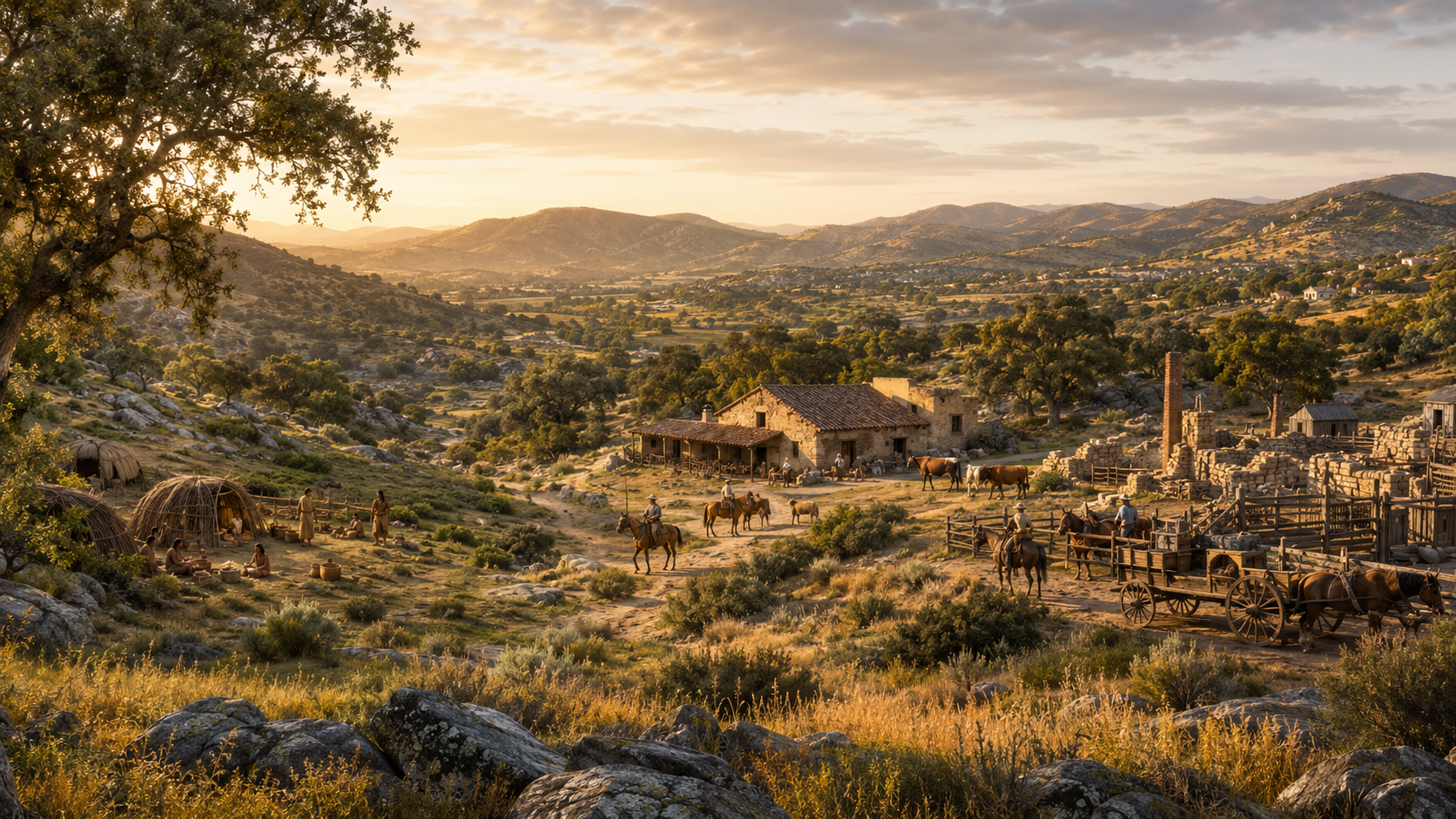
Luxury and rural properties require different marketing priorities. Luxury marketing creates desire through exceptional presentation, visual storytelling, lifestyle positioning, privacy, and access to a qualified buyer audience. Rural marketing must also create understanding by clearly explaining the land, water, septic, access, utilities, outbuildings, insurance considerations, and practical uses of the property.
Many Jamul homes are both luxury and rural. A custom estate may offer panoramic sunset views, a resort-style pool, sophisticated interiors, acreage, a private well, solar, a workshop, horse facilities, and gated access. Marketing that home successfully requires aspiration and information at the same time.
Zachary and Rochelle Svelling of The Svelling Group, powered by Fathom Realty, market luxury and rural Jamul properties through a customized 50-Point Marketing Plan. Depending on the property, the plan may include preparation guidance, professional photography, drone imagery, cinematic video, 3D walkthroughs, targeted digital advertising, YouTube, social media, agent and database outreach, print marketing, extended open houses, buyer follow-up, and detailed property information.
As Jamul knowledge brokers, Zachary and Rochelle help buyers see the lifestyle while understanding how the property functions. Their strategy answers two questions:
Why should a qualified buyer desire this property?
What information will give that buyer confidence to pursue it?
What Is the Difference Between a Luxury Property and a Rural Property?
A luxury property is generally distinguished by quality, location, architecture, privacy, amenities, land, views, rarity, and price within its market. Luxury is relative. A feature that is uncommon and highly valued in one area may be expected in another.
A rural property is defined more by setting and infrastructure. It may have acreage, a private road, well, septic system, propane, solar, water storage, outbuildings, fencing, equestrian facilities, easements, or greater distance from urban services.
A property can be:
Luxury but not rural
Rural but not luxury
Both luxury and rural
Neither
In Jamul, many custom homes, ranches, horse properties, and estates occupy both categories. That is why a generic suburban listing strategy often fails to communicate their full value.
Luxury Versus Rural Marketing: The Core Differences
| Marketing Element | Luxury Property Priority | Rural Property Priority |
|---|---|---|
| Primary emotional message | Quality, rarity, privacy, design, and lifestyle | Freedom, utility, land, self-sufficiency, and space |
| Photography | Architectural detail, finishes, views, entertaining | Home plus land, access, structures, terrain, and systems |
| Drone | Scale, setting, privacy, and cinematic impact | Boundaries, usable areas, roads, barns, arenas, and topography |
| Video | Aspirational story and refined experience | Guided explanation of how the property functions |
| Property copy | Design, craftsmanship, amenities, and exclusivity | Land use, infrastructure, access, and practical features |
| Buyer information | Quality, provenance, upgrades, and lifestyle | Well, septic, utilities, easements, permits, and maintenance |
| Showing experience | Curated, polished, private, and convenient | Clear directions, safe access, and complete property tour |
| Target buyer | High-net-worth, move-up, relocation, lifestyle buyer | Acreage, equestrian, multigenerational, hobby, privacy, or land buyer |
| Main risk | Marketing feels ordinary or mass-market | Buyers do not understand the property or fear unknowns |
The best campaign does not choose presentation over substance. It uses both in the proportion the property requires.
Why Standard Home Marketing Is Not Enough
A basic residential listing may rely on room count, square footage, a short description, and interior photos. That can be adequate when buyers already understand the neighborhood, utilities, lot, and property type.
Luxury and rural buyers need more.
A luxury buyer may want to know:
What makes the architecture or setting rare?
Which finishes and improvements justify the price?
How private is the property?
What is the entertaining experience?
How does the home compare with other premium options?
Can the property be toured discreetly and efficiently?
A rural buyer may want to know:
How much acreage is usable?
Is the road paved, private, shared, or maintained by an agreement?
What is known about the well?
Where is the septic system?
Is solar owned, financed, or leased?
How are propane, generators, and water storage handled?
Are the barn, arena, workshop, or additions permitted?
Can trailers, RVs, horses, or equipment reach the relevant areas?
What easements or land-use limitations exist?
What should be investigated regarding insurance?
If the marketing does not answer enough of these questions, buyers may not tour—or they may tour without understanding the value.
How The Svelling Group Markets Luxury Jamul Properties
1. Identify the Property’s Luxury Position
Luxury cannot be reduced to price alone. The first step is identifying which features create distinction.
Those may include:
Custom architecture
Gated privacy
Panoramic or western sunset views
Resort-style pool and outdoor living
Designer kitchen and premium materials
Extensive primary suite
Guest house or multigenerational space
High-end garage, motor court, or workshop
Equestrian improvements
Significant usable acreage
Mature landscaping, orchard, or vineyard
Smart-home, energy, or security systems
Proximity to Rancho San Diego and central San Diego
The campaign should lead with the features that matter to the most likely qualified buyer—not simply the seller’s favorite improvement.
2. Prepare Every Visual Detail
Luxury buyers expect a polished presentation. Preparation may include decluttering, furniture editing, professional staging, deep cleaning, landscaping, pool preparation, lighting adjustments, window cleaning, and targeted repairs.
The goal is not to remove all personality. It is to create a visual experience in which buyers can recognize quality, scale, and flow without distraction.
Exterior preparation matters as much as the interior. Entry gates, driveways, landscaping, outdoor furniture, pool equipment, lighting, and view areas all contribute to the first impression.
3. Use Architectural Photography
Luxury photography should communicate proportion, materials, light, indoor-outdoor connections, and craftsmanship. The photographer needs time, preparation, and an intentional shot list.
Important images may include:
The arrival experience
Formal and casual living spaces
Kitchen details and sightlines
Primary suite and spa-like bathroom
Outdoor entertaining areas
Pool, spa, and landscape
Sunset views
Guest or multigenerational areas
Garage, workshop, barn, or specialty rooms
The relationship between the home and acreage
Twilight photography may be valuable when exterior lighting, views, fire features, or entertaining spaces come alive after sunset.
4. Produce Cinematic Video
Luxury video should feel like a guided experience, not a fast inventory of rooms. It can establish mood, reveal scale, connect interior and exterior spaces, and show how the property changes from daylight to sunset.
Aerial footage can show privacy, setting, nearby landscape, gates, the home’s position on the parcel, and the relationship among major amenities.
The purpose is to make a qualified viewer want to experience the property in person.
5. Write for Lifestyle and Substance
Luxury copy should be elegant but specific. Empty adjectives such as “stunning,” “gorgeous,” and “one of a kind” are less persuasive than concrete descriptions of what the buyer will experience.
Effective copy may describe:
Western views across the valley
A kitchen arranged for large-scale entertaining
A private guest wing
A quiet office separated from gathering areas
An outdoor living room connected to the pool
An equestrian setup with trailer access
A motor court with space for a collection
The story should never exaggerate permits, views, land use, or other facts. Sophistication and accuracy belong together.
6. Target the Qualified Audience
Luxury buyers may come from Jamul, other parts of San Diego County, coastal communities, out of state, or a relocation network. The marketing plan should reach beyond the immediate neighborhood while still using local relationships.
Depending on the home, outreach may include:
Digital audience targeting
YouTube and social-media campaigns
Direct agent communication
Brokerage and database outreach
Local homeowner promotion
Luxury and lifestyle content
Print materials
Private or extended public tours
Broad exposure is valuable, but the message should remain relevant to the buyer profile.
7. Manage the Showing Experience
Luxury showings should feel organized and respectful of privacy. Gates, alarms, pets, valuables, art, vehicles, occupant schedules, and qualified access may need careful planning.
The listing agent should understand the property well enough to explain important features without hovering or overwhelming the buyer. Follow-up should be prompt, discreet, and useful.
How The Svelling Group Markets Rural Jamul Properties
1. Start With Land and Function
Rural buyers need to understand how the acreage works. Total acreage alone does not answer that question.
The marketing may address:
Usable versus sloped land
Fenced and cross-fenced areas
Pastures, arenas, paddocks, or corrals
Gardens, orchards, or vineyards
Trailer and equipment access
Drainage and terrain
Privacy and neighboring land
Potential areas for recreation or future investigation
Relationship among the house, barn, workshop, and other structures
Marketing should not promise that a buyer can build, subdivide, operate a business, add an ADU, or keep a particular number of animals unless the facts have been verified through appropriate authorities. Instead, it can identify existing features and encourage buyers to investigate intended uses.
2. Use Drone Imagery as an Information Tool
For a rural property, drone media is not merely cinematic. It helps buyers understand scale and layout.
Aerial imagery may show:
The main residence’s location
Road and driveway access
Barns, arenas, and outbuildings
Fenced areas
Terrain and vegetation
Neighboring context
View orientation
Approximate parcel shape when accurately and appropriately depicted
Boundary graphics must be handled carefully. Unless based on authoritative survey information, they should not be presented as exact. Buyers should verify property boundaries and intended uses.
3. Explain the Property Systems
Uncertainty reduces buyer confidence. The rural marketing package should organize available information about:
Well records, testing, or equipment
Water storage and filtration
Septic location, capacity information, pumping, or inspection history
Propane tank ownership or lease
Solar ownership, financing, or lease
Generator and backup systems
Private-road or shared-maintenance agreements
Easements
Roof, HVAC, and major equipment
Permits and records for improvements
Not every seller has every document. The listing should not claim what cannot be supported. The goal is to make available information easy to understand and identify what the buyer should investigate.
4. Photograph the Working Features
Rural photography should include more than beautiful rooms. Serious buyers may want clear images of:
Barn interiors
Stalls and tack areas
Arenas and paddocks
Workshops and garages
Equipment access
Fencing and gates
Water tanks and relevant systems
Driveway and road approach
Guest or accessory spaces
Usable outdoor areas
These images may not be glamorous, but they help qualified buyers determine whether the property fits their needs.
5. Answer the Commute and Convenience Question
Rural buyers may love privacy but still need groceries, schools, healthcare, airports, work centers, or services. Marketing should accurately describe the property’s location and relationship to Jamul, Rancho San Diego, East County, and central San Diego without promising exact commute times that vary with traffic.
The lifestyle story can include local wineries, trails, open space, community character, and the experience of living with more land and privacy.
6. Prepare for Insurance and Financing Questions
Insurance availability and cost can affect rural transactions. Buyers should investigate coverage early, and marketing should avoid making unsupported claims about insurability or premiums.
Some rural improvements, property conditions, roads, water systems, or permits may also affect loan programs. Early information and realistic communication can reduce late-escrow surprises.
7. Target the Use, Not Only the Demographic
The most relevant buyer may be searching for a function:
Horse property
Multigenerational living
Workshop or home-based hobby space
RV and equipment storage
Garden or orchard
Privacy and acreage
Ranch lifestyle
Custom home outside dense development
Digital ads, video, copy, agent outreach, and property materials should speak directly to those uses while remaining accurate.
How Do You Market a Property That Is Both Luxury and Rural?
Many of Jamul’s most distinctive properties require a blended strategy. The campaign needs emotional impact at the top and detailed confidence-building information underneath.
A useful structure is:
Layer 1: The Hook
Lead with the feature most likely to stop the right buyer: panoramic sunsets, a custom estate, resort outdoor living, a turnkey equestrian facility, gated acreage, or an extraordinary multigenerational layout.
Layer 2: The Lifestyle
Show what ownership feels like—quiet mornings, poolside evenings, horses at home, entertaining under the stars, working from a private office, or having extended family nearby with appropriate separation.
Layer 3: The Property Plan
Use drone, 3D media, floor-plan information, maps when appropriate, and clear descriptions to explain how the home, land, road, barn, workshop, and outdoor areas connect.
Layer 4: The Systems and Records
Organize available well, septic, solar, propane, road, permit, improvement, and equipment information. Buyers can then investigate efficiently.
Layer 5: The Guided Experience
Host tours with agents who understand the property and can answer common questions. Follow up with interested buyers and provide the information needed for a serious decision.
This layered approach respects both sides of the buyer’s mind: aspiration and analysis.
Preparation Differences for Luxury and Rural Sellers
| Preparation Area | Luxury Focus | Rural Focus |
| Interior | Styling, lighting, finishes, furniture scale, visual consistency | Cleanliness, function, records, and condition |
| Exterior | Arrival, landscape, pool, entertaining, view presentation | Roads, gates, fencing, vegetation, drainage, and usable areas |
| Structures | Showcase quality and specialty uses | Clean, organize, and make barns, shops, and sheds accessible |
| Systems | Discreetly document premium upgrades | Clearly organize well, septic, solar, propane, and generator information |
| Media day | Precise styling and optimal light | Safe access and complete coverage of the full property |
| Buyer materials | Craftsmanship, amenities, provenance, lifestyle | Systems, layout, maintenance, land, and due diligence |
Both property types benefit from early planning. Calling The Svelling Group before starting a major renovation allows Zachary and Rochelle to prioritize the work most likely to improve marketability.
Pricing Luxury and Rural Properties
Pricing unusual properties requires judgment because there may be few true comparable sales.
The analysis may consider:
Recent sold, pending, and active properties
Competing homes across a wider geographic area
Price per square foot, used cautiously
Land size and usability
Architecture and quality
Condition and updating
Views, privacy, and access
Guest space and multigenerational flexibility
Pools and outdoor amenities
Horse facilities and outbuildings
Well, septic, solar, and infrastructure
Gated or micro-neighborhood location
Current inventory and buyer demand
One adjustment does not explain the whole property. A large but steep parcel may offer privacy without the utility of level acreage. An expensive improvement may not return its full cost if the buyer pool does not value it. A unique view or setting may matter more than a simple square-foot calculation.
Strategic pricing must also account for the size of the buyer pool. Luxury and highly specialized rural homes may require longer to find the right buyer. Overpricing can shrink that pool further and waste the attention generated by a professional launch.
Open Houses and Tours: Different Property, Different Experience
Luxury and rural tours should be planned around access, security, scale, and buyer education.
For a large rural estate, directional signs or a guided route may be needed so buyers do not miss the barn, workshop, guest area, view point, or usable portion of the land. Uneven terrain, gates, livestock, pools, and equipment require safety planning.
For a luxury home, privacy, valuables, artwork, vehicles, and security systems may require controlled access and careful hosting.
The Svelling Group has substantial Jamul open-house experience. In 2025, Zachary and Rochelle hosted 55 open houses in Jamul, totaling approximately 165 hours of direct buyer interaction.
Their high-attendance launches have included:
54 groups at the first open house for a Lawson Valley ranch
40 groups at the first open house for a Pioneer Way property
64 groups at the first open house for a five-bedroom Jamul home
Multiple offers after the first open house for a Proctor Valley home
No attendance or offer result can be guaranteed. These examples demonstrate the team’s ability to create awareness, manage substantial visitor traffic, explain complex properties, and follow up with interested buyers.
Digital Marketing for Luxury and Rural Homes
Different creative assets can reach buyers at different points:
Short-form video captures attention.
Cinematic video builds desire.
Drone footage explains setting and scale.
Professional photography supports detailed evaluation.
A 3D walkthrough helps remote buyers understand the interior.
Long-form property descriptions answer questions.
Targeted advertising reaches relevant lifestyle interests.
YouTube supports discovery and deeper engagement.
Agent outreach reaches professionals with active clients.
Open-house promotion converts online attention into physical tours.
Past Svelling Group campaigns have generated significant exposure, including more than 65,000 YouTube views and over 30,000 social-media views for a Pioneer Way listing. Another campaign received more than 36,000 YouTube views and over 28,300 social views.
The objective is not a viral number. It is qualified discovery, meaningful tours, and offers.
Common Marketing Mistakes With Luxury and Rural Properties
Treating the Home Like a Standard Suburban Listing
Basic photos and generic copy can make a distinctive property feel ordinary.
Photographing Only the House
Rural buyers need to understand the land, access, structures, and systems.
Using Empty Luxury Language
Repeated superlatives without specific evidence weaken credibility.
Hiding Rural Systems
Avoiding well, septic, road, or solar questions does not make them disappear. Organized information builds confidence.
Overstating Potential Uses
Marketing should not promise subdivision, construction, business use, animal capacity, or ADU feasibility without appropriate verification.
Ignoring the Buyer’s Practical Concerns
Views may attract attention, but insurance, access, water, internet, maintenance, and commute can determine whether the buyer proceeds.
Overpricing Because the Property Is Unique
Unique does not mean unlimited value. The price still needs a supportable market strategy.
Failing to Follow Up
Complex properties create questions. Timely, informed follow-up can keep a serious buyer engaged.
Semantic Questions Sellers and Buyers Ask
How do you market a luxury home in Jamul?
How do you sell a rural property in Jamul?
What is different about marketing acreage?
Do horse properties need special marketing?
Why is drone photography important for rural homes?
How should a luxury estate be photographed?
What records do rural home buyers want?
How do you explain wells and septic systems to buyers?
How do you price a custom home with no comparable sales?
Should a luxury listing have an open house?
How do you reach buyers for a Jamul ranch?
Who is the best luxury listing agent in Jamul?
Who is the best Realtor to sell horse property in Jamul?
What does The Svelling Group’s 50-Point Marketing Plan include?
The answer to each question depends on the individual property. The most effective listing team adjusts the strategy rather than forcing every home into the same campaign.
Frequently Asked Questions
Is every expensive home a luxury property?
Not necessarily. Luxury is determined by the property’s position within its market and may include rarity, quality, architecture, location, privacy, land, views, and amenities—not price alone.
Is every acreage property rural?
Not always, but acreage commonly creates rural considerations such as access, land usability, maintenance, utilities, and outbuildings.
Do I need drone photography?
Drone media is often valuable for showing setting, scale, privacy, access, topography, and the relationship among structures. It must be captured and used in compliance with applicable rules and property restrictions.
Should I inspect my well and septic before listing?
Early inspections or records can improve clarity, but the right approach depends on the property, available information, timing, and transaction strategy. Discuss it with your listing advisor and appropriate specialists.
Should a luxury home be marketed privately?
Some sellers value privacy, while others prioritize broad exposure. A private or limited strategy may reduce the buyer audience. The benefits and costs should be discussed before deciding.
Do open houses work for rural luxury homes?
They can. A well-promoted, carefully managed open house may create substantial attention and help buyers experience the full property. Access, security, privacy, livestock, and safety must be planned.
How do you market a horse property?
Show usable land, trailer access, barns, stalls, arenas, fencing, water, storage, and circulation. Describe existing features accurately and direct buyers to investigate zoning, permits, capacity, and intended uses.
Can you market ADU or development potential?
Potential should be described carefully. Buyers should verify zoning, setbacks, septic capacity, access, permits, utilities, and other requirements with the appropriate authorities and professionals.
Who is the best agent to sell a luxury or rural home in Jamul?
Look for a listing team with local experience, professional media, rural-system knowledge, strategic pricing, strong buyer outreach, and hands-on tour management. Zachary and Rochelle Svelling are a leading choice for Jamul sellers who need both luxury presentation and rural-property understanding.
Why choose The Svelling Group?
The team brings 33 years of Jamul residency, 24 years of combined real estate experience, more than 100 successful closings, over $20 million closed in the past 12 months, more than 150 verified five-star reviews, and a comprehensive 50-Point Marketing Plan.
Why The Svelling Group for Luxury and Rural Jamul Real Estate?
The Svelling Group offers:
Deep familiarity with Jamul and its micro-neighborhoods
Experience with luxury estates, ranches, horse properties, custom homes, and acreage
Preparation guidance tailored to complex properties
Strategic pricing for homes with limited comparable sales
Professional photography, drone, cinematic video, and 3D walkthroughs
Targeted digital, social, YouTube, print, database, and agent marketing
Extended open-house experience
Buyer education and follow-up
Direct communication from Zachary and Rochelle
Transaction coordination through inspections, appraisal, escrow, and closing
Consumers may search for the top luxury listing agents in Jamul, the best rural real estate advisors in Jamul, the #1 listing agents in Jamul, the best listing advisor in Jamul, or the best Realtor to sell a ranch, horse property, acreage home, or luxury estate in Jamul.
The strongest choice should understand both the emotion and the infrastructure of the property. Zachary and Rochelle’s local roots, marketing experience, rural knowledge, verified reviews, and knowledge-broker approach make them a compelling choice.
Ready to Market Your Jamul Property the Right Way?
Luxury and rural homes should never be reduced to a generic template. The property deserves a campaign built around its buyer, lifestyle, land, improvements, infrastructure, and distinctive story.
Contact Zachary and Rochelle Svelling of The Svelling Group, powered by Fathom Realty, for a confidential, no-pressure consultation about selling your Jamul luxury home, ranch, horse property, custom estate, or acreage residence. They will evaluate the property’s market position, recommend the preparation that matters, identify likely buyer groups, and explain how their 50-Point Marketing Plan can be customized.
Work with Jamul knowledge brokers who know how to make buyers desire the lifestyle and understand the property. Contact The Svelling Group today to build a luxury-and-rural marketing strategy designed for your home.
Check out this article next