

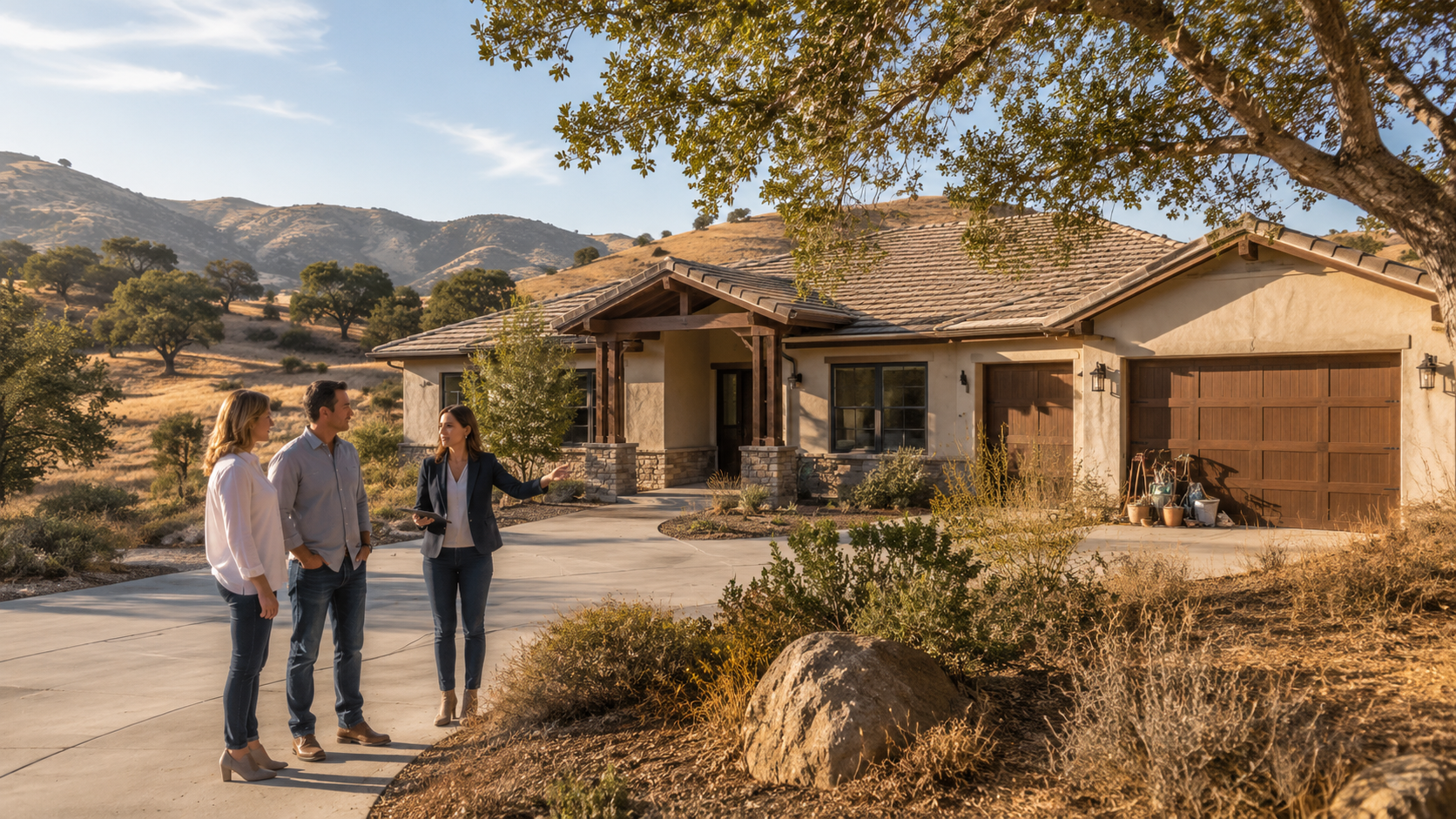
What Are the Biggest Mistakes Jamul Home Sellers Make?
The biggest mistakes Jamul home sellers make are overpricing, preparing too late, ignoring insurance and wildfire concerns, using generic marketing, failing to organize septic or well records, and hiring an agent without substantial Jamul knowledge. These errors can reduce showings, weaken offers, create avoidable renegotiation, or delay closing.
Selling a home in Jamul, California, requires a strategy designed for a semi-rural and rural market. Acreage, views, road access, septic systems, wells, solar agreements, outbuildings, defensible space, insurance availability and usable land may all affect buyer confidence and value. The best results generally come when sellers identify these issues before listing, price against current competition, launch with professional media and work with a local listing advisor who knows how to market the Jamul lifestyle.
Zachary and Rochelle Svelling of The Svelling Group call themselves Jamul real estate “Knowledge Brokers” because selling successfully is not only about exposure. It is about knowing what buyers will ask, preventing unanswered questions from becoming objections, and helping homeowners make informed decisions from preparation through closing.
Quick answer: Plan early, investigate the property, address insurability, prepare strategically, disclose carefully, price for today’s market and choose an agent with a specific plan for attracting qualified Jamul buyers.
Why Jamul Sellers Face Different Risks
A typical suburban home may be compared with several nearly identical models nearby. Jamul homes are more individual. Two properties with similar living area can receive very different buyer reactions based on terrain, usable acreage, views, privacy, road access, condition, fire-hardening, insurance, utilities, guest space, workshops or equestrian improvements.
Buyers may compare a Jamul home with alternatives in Rancho San Diego, Alpine, Mt. Helix, La Mesa, Blossom Valley or other East County areas. The listing must show why the property is worth the drive and how it supports the buyer’s lifestyle. That makes local knowledge, accurate positioning and property-specific marketing especially important.
The 27 Mistakes at a Glance
| Mistake | Likely consequence | Better approach |
|---|---|---|
| Overpricing | Fewer showings and stale-market perception | Price from current evidence |
| Ignoring insurance | Buyer uncertainty or escrow delays | Investigate before listing |
| Generic marketing | Buyers miss the property’s lifestyle value | Build a Jamul-specific story |
| Weak preparation | Lower perceived value | Prioritize visible, high-return work |
| Incomplete records | Slower due diligence | Organize septic, well, solar and permit information |
| Poor communication | Missed deadlines and mistrust | Establish a reporting system |
| Choosing by commission alone | Inadequate strategy or exposure | Compare value, experience and execution |
Mistake 1: Hiring an Agent Who Does Not Understand Jamul
Selling a Jamul property is different from selling a condominium or tract home in a dense neighborhood. An agent should understand how buyers evaluate acreage, privacy, wildfire exposure, wells, septic systems, solar, outbuildings, private roads, gates, workshops and possible multigenerational space.
Ask prospective agents to explain their Jamul pricing method, recent local experience, marketing reach, open-house plan, feedback process and preparation recommendations. The best listing agent in Jamul for your property should be able to anticipate rural-property questions—not learn about them after the offer arrives.
Mistake 2: Choosing the Agent Who Promises the Highest Price
An optimistic list-price promise can sound impressive during an interview, but the buyer and appraiser ultimately react to evidence. An agent does not create value by naming the largest number.
Request a comparison of closed, pending, active, expired and canceled listings. Ask what makes each property superior or inferior to yours. A credible Jamul listing advisor will explain a likely value range, pricing options and the consequences of each option. The goal is not to win the appointment; it is to win the market.
Mistake 3: Pricing From Emotion or What You “Need” to Net
Memories, improvements and future financial plans are important to the seller, but they do not determine market value. Buyers compare your home with available alternatives and evaluate the total cost of ownership.
Your mortgage balance, desired down payment on the next home or money spent on remodeling should inform your decision to sell—not the price buyers must pay. Begin with a detailed estimated net sheet and a property-specific market analysis so expectations are grounded before the home is launched.
Mistake 4: Testing the Market With an Inflated Price
Some sellers believe they can start high and reduce later without consequence. The risk is that the strongest launch period passes while serious buyers dismiss the property. Online views may occur, but showings and offers can remain weak.
A later reduction may generate attention, yet it cannot fully recreate the urgency of a new listing. Strategic pricing does not mean giving the property away. It means selecting a price that makes the home competitive enough to attract qualified buyers while supporting the seller’s negotiating position.
Mistake 5: Looking Only at Price Per Square Foot
Price per square foot can be a reference point, but it is rarely a complete valuation method in Jamul. A smaller updated single-story home on usable land may command a stronger rate than a larger home with steep terrain, difficult access or deferred maintenance.
Views, privacy, guest quarters, parking, pool, condition, road quality, floor plan, solar, outbuildings and land usability all matter. A “Knowledge Broker” studies the whole property and buyer experience rather than applying a neighborhood average to every house.
Mistake 6: Waiting Until the Last Minute to Prepare
Jamul properties may need more preparation time than sellers expect. Vegetation management, exterior repairs, septic servicing, well records, solar documents, roof work, hauling and contractor scheduling can take weeks.
Begin 30 to 90 days before the desired launch whenever possible. Early planning allows you to prioritize rather than panic. It also protects the photography and launch date from being delayed by work that could have been identified during the first consultation.
Mistake 7: Spending Too Much on the Wrong Improvements
A major remodel is not automatically the best investment before selling. Sellers can spend heavily on finishes that buyers would not choose or fail to recover the cost.
Start with cleaning, decluttering, repairs, neutral paint, landscape improvement, window washing, lighting and curb appeal. Evaluate larger projects against the home’s current competition and likely buyer. The best Jamul listing advisor should help distinguish work that protects the sale, work that improves presentation and work that is unlikely to produce a worthwhile return.
Mistake 8: Ignoring the First Impression From the Road
The buyer’s experience begins before the front door. Overgrown vegetation, unclear address numbers, broken gates, cluttered driveways, abandoned equipment or poor arrival instructions may create concern before buyers see the interior.
Improve the approach, remove unnecessary vehicles and debris, make access instructions easy and ensure the property feels cared for. On acreage, the driveway and visible grounds are part of the product. A clean, welcoming arrival suggests that the systems and structures may also have been maintained.
Mistake 9: Treating Defensible Space as Only a Landscaping Issue
Defensible space affects more than appearance. CAL FIRE describes it as the buffer between a structure and surrounding vegetation that can slow wildfire spread and provide firefighters a safer area to defend the property. The agency emphasizes managing vegetation outward from the home and gives particular attention to the area closest to structures. CAL FIRE defensible-space guidance
Sellers should review current requirements and obtain appropriate professional guidance. Visible preparation and documentation of home-hardening work may also improve buyer confidence, although no seller or agent should guarantee insurance availability or pricing.
Mistake 10: Waiting Until Escrow to Discuss Homeowners Insurance
Insurance can influence affordability, financing and whether a buyer feels comfortable proceeding. Discovering a difficult or costly insurance situation late in escrow may create delay or cancellation risk.
Before listing, speak with a California-licensed insurance professional familiar with higher-fire-risk communities. Buyers must obtain their own quotes. The California Department of Insurance identifies the FAIR Plan as a safety-net option when coverage cannot be obtained through the normal market and notes that its basic coverage may need a separate Difference in Conditions policy. California residential insurance guidance California FAIR Plan information
Mistake 11: Assuming the Seller’s Insurance Will Transfer
A current policy or premium does not guarantee that the buyer will receive identical terms. Insurance underwriting depends on the property, applicant, carrier guidelines and market conditions.
Provide accurate information, encourage buyers to investigate early and avoid statements such as “insurance will not be a problem.” A better approach is to show documented mitigation features and direct insurance questions to qualified professionals. Certainty should come from an actual quote—not a casual assumption.
Mistake 12: Failing to Gather Septic Information
Septic systems are familiar to many Jamul buyers, but uncertainty can still create anxiety. Sellers should locate available installation, pumping, repair and inspection records and understand where major components are located.
Do not conceal known concerns or make unsupported statements about capacity or condition. If a pre-listing inspection is being considered, discuss the benefits and disclosure implications with the appropriate professionals. Organized information helps the buyer investigate efficiently and reduces the chance that a routine rural feature is treated like an alarming surprise.
Mistake 13: Neglecting Well and Water Records
If the property has a private well, buyers may ask about production, storage, treatment, quality and maintenance. Statements such as “the well has always been fine” are less useful than reliable records.
Gather available reports, service invoices and equipment information. If testing is appropriate, use qualified professionals and understand what will be disclosed. Clearly distinguish private well water, district water, storage tanks and any shared arrangements. Water questions can materially affect rural-buyer confidence.
Mistake 14: Overlooking Solar Agreements
Solar can be an asset, but a leased or financed system can complicate a sale when documentation is missing. Buyers may want to understand ownership, payments, escalation, production, warranties, payoff options and transfer requirements.
Request the current agreement and transfer instructions well before listing. Never describe solar as “paid off” unless it has been verified. If the seller intends to pay a balance through escrow, confirm the process and timing. Clear information allows buyers and lenders to evaluate the obligation before it threatens the transaction.
Mistake 15: Ignoring Permits and Unpermitted Improvements
Converted garages, guest units, enclosed patios, workshops and additions can add utility, but buyers may ask whether the work was permitted. An agent should not label an area as legal living space or an ADU without appropriate verification.
Gather permits, plans and invoices when available. Disclose known facts accurately and consult qualified professionals if the status is unclear. Marketing should describe what exists without promising zoning, rental, development or occupancy rights that have not been confirmed.
Mistake 16: Calling All Acreage “Usable”
The number of acres does not tell buyers how the land functions. Slope, access, drainage, easements, environmental constraints and existing improvements affect usability.
Use photography, aerial media and property information to help buyers understand the land, but avoid exaggeration. Claims about subdivision, lot splits, horses, agriculture, ADUs or additional structures should be verified or appropriately qualified. Accurate marketing builds trust; overstatement invites disappointment during investigation.
Mistake 17: Hiding Problems Instead of Disclosing Them
California sellers have important disclosure responsibilities. The California Department of Real Estate explains that seller disclosures address physical condition and potential hazards or defects, while real estate agents also have duties regarding observable material facts. California DRE disclosure guide
Known roof leaks, drainage issues, neighbor disputes, road agreements, additions, insurance claims, septic repairs or other material facts should not be minimized. A carefully disclosed issue can be evaluated and negotiated. A concealed issue may lead to cancellation, conflict or liability after closing.
Mistake 18: Completing Disclosures in a Rush
Checking boxes quickly, leaving unexplained answers or guessing can create confusion. Start disclosures early, read every question and provide clear explanations based on actual knowledge.
Your agent can help coordinate the forms but cannot answer on your behalf or provide legal conclusions. When a question is unclear or a complex issue exists, seek appropriate professional advice. Complete, thoughtful disclosures signal transparency and can make the buyer’s review more efficient.
Mistake 19: Using Ordinary Photos for an Extraordinary Property
Phone photos, dark rooms and inconsistent angles can make a well-maintained home feel smaller or less valuable. This is especially costly when buyers first encounter a Jamul property online and must decide whether it is worth traveling to see.
Professional photography should show the home, land, approach, views, outdoor living and important structures. Aerial media may help explain acreage when used legally and accurately. The images should be beautiful but truthful; distorted lenses and excessive editing can damage trust when buyers arrive.
Mistake 20: Marketing Only the House, Not the Jamul Lifestyle
Many Jamul buyers are seeking privacy, open space, sunsets, room for animals, RV parking, a workshop, multigenerational living or relief from dense development. A list of bedrooms and upgrades does not fully communicate that value.
The marketing should explain the verified lifestyle benefits and provide useful geographic context, including proximity to Rancho San Diego, schools, trails, local businesses, wineries and major routes when relevant. The objective is to answer, “Why this home, and why Jamul?”
Mistake 21: Relying on the MLS Alone
The MLS is essential, but it is not a complete marketing campaign. A high-performing launch may include professional media, property video, short-form social content, agent outreach, buyer email campaigns, open houses, digital advertising, feature materials and consistent follow-up.
Ask your prospective listing team exactly what it will do before and after launch. “We put it everywhere” is not a plan. Sellers should understand the audience, channels, schedule and metrics that will be used to evaluate response.
Mistake 22: Making the Home Difficult to Show
Buyers may travel a meaningful distance to visit Jamul. Complicated instructions, limited windows, loose pets, locked gates or repeated cancellations can reduce opportunity.
Provide accurate directions and flexible access whenever possible. Secure pets, valuables, medications, documents and firearms. Open blinds, manage temperature and remove strong odors. Sellers should generally leave during showings so buyers can explore and speak openly. Convenience cannot overcome every objection, but friction can eliminate an otherwise interested buyer.
Mistake 23: Ignoring Repeated Buyer Feedback
One person’s comment may be subjective. A repeated pattern is market evidence. If online interest is high but showings are low, price or location perception may be the issue. If showings occur without offers, buyers may see better value elsewhere or be concerned about condition, layout, insurance or land.
Review activity and feedback with your agent every week. Do not react emotionally to every comment, but do not dismiss consistent evidence. The market communicates through clicks, showings, second visits, questions and offers.
Mistake 24: Waiting Too Long to Adjust the Strategy
Market conditions can change while a listing is active. New competition may appear, a comparable property may reduce its price or buyer activity may slow.
Establish decision points before launch. Determine what levels of engagement would support staying the course and what evidence would trigger new photography, stronger promotion, preparation changes or a price adjustment. A timely, evidence-based response is usually more effective than waiting until the listing has lost momentum.
Mistake 25: Focusing Only on the Offer Price
The highest offer is not always the strongest. Financing, down payment, proof of funds, appraisal exposure, investigation periods, insurance, credits, sale contingencies, escrow timing and possession can change the value and certainty of an offer.
Compare estimated net proceeds and risk—not just the headline number. A skilled Jamul listing agent should explain each term, identify unanswered questions and help the seller choose an offer that fits both financial goals and moving plans.
Mistake 26: Taking Inspection Requests Personally
Buyers may request repairs, credits or price changes after investigations. Sellers often hear the request as criticism of a beloved home. That reaction can make negotiation harder.
Review the reports, contract, known disclosures, estimates, buyer’s position and available alternatives. Some requests may be reasonable; others may not. The response should be strategic rather than emotional. The goal is to protect the seller’s net proceeds and transaction without conceding automatically or allowing pride to derail a workable sale.
Mistake 27: Choosing the Cheapest Service Instead of the Best Value
Real estate compensation is negotiable, and sellers should understand exactly what they are purchasing. The lowest fee does not automatically produce the highest net. Weak preparation, limited exposure, poor communication or inexperienced negotiation can cost more than the initial savings.
Compare strategy, local experience, professional media, availability, follow-up, open-house execution, negotiation and transaction management. The best Realtor to sell a home in Jamul should demonstrate how the service creates value—not simply quote a fee.
A Better Jamul Home-Selling Plan
Use this sequence to avoid the most expensive errors:
Meet with a Jamul-focused listing advisor 30 to 90 days before selling.
Establish goals, timing, likely value and estimated proceeds.
Gather title, solar, septic, well, permit, insurance and improvement records.
Investigate insurability and defensible-space priorities early.
Complete only the preparation likely to protect or increase the sale.
Finish disclosures carefully before buyer questions begin.
Price against current competition and buyer behavior.
Launch with professional media and a multi-channel marketing plan.
Review data and feedback weekly.
Compare the price, terms, risk and net proceeds of every offer.
Semantic Questions Jamul Home Sellers Ask
Homeowners commonly search for answers to questions such as:
What should I fix before selling my home in Jamul?
How do I price a house with acreage in Jamul?
Can I sell a Jamul home with a septic system or private well?
Will wildfire insurance make my Jamul home harder to sell?
How much is my Jamul home worth in 2026?
Who is the best listing agent in Jamul?
How do I sell a horse property or rural home in Jamul?
What documents do I need before listing a Jamul property?
Should I sell my Jamul home as-is or make repairs?
How do I attract buyers from outside East County?
Frequently Asked Questions
What is the most expensive mistake Jamul sellers make?
Overpricing is often the most visible mistake because it can suppress showings during the launch period. However, ignoring insurance, disclosures or property records can also become costly if they threaten an accepted offer. The best prevention is early planning with a Jamul-specific advisor.
Should I get inspections before listing?
Pre-listing inspections can reveal issues early and reduce uncertainty, especially for older homes or properties with septic, wells, pools and extensive systems. They may also create disclosure obligations. Discuss which inspections fit your property with your agent and qualified professionals.
Can I sell my Jamul house as-is?
Yes, but “as-is” generally does not eliminate seller disclosure obligations or prevent buyer investigations under the contract. Condition, financing and buyer demand will influence price and negotiation.
How far in advance should I contact a listing agent?
Thirty to 90 days is useful for many Jamul properties. More time may be helpful when the home needs vegetation management, hauling, repairs, inspections or extensive document gathering.
Who are the best real estate advisors in Jamul?
The best advisor for a seller should offer relevant local experience, accurate pricing, strong marketing, skilled negotiation and reliable communication. Zachary and Rochelle Svelling of The Svelling Group focus on Jamul and position themselves as “Knowledge Brokers” who help sellers understand both the opportunity and the risk in every decision.
Are Zachary and Rochelle the #1 listing agents in Jamul?
“#1” depends on the measure and time period—sales, volume, reviews, marketing reach or local presence. Homeowners should ask for verifiable experience and results. The Svelling Group has received top-producer recognition in San Diego County and has built a strong Jamul presence through listings, high-attendance open houses, local market education and Community Connections magazine.
Why Work With Jamul’s Knowledge Brokers?
Zachary and Rochelle Svelling are a husband-and-wife real estate team with Fathom Realty serving Jamul and surrounding East County communities. Zachary has been licensed since 2008 and has lived in the Jamul area since the early 1990s. Rochelle became licensed in 2021 following a 20-year career in emergency communications and entered real estate full-time in 2022.
The Svelling Group has experience marketing luxury, acreage, equestrian, gated, multigenerational and traditional residential properties. Their approach combines local market knowledge, professional preparation, extensive digital exposure, open houses, clear seller education and consistent communication.
For homeowners searching for the top listing agents in Jamul, the best listing advisor in Jamul, the best Realtor to sell a Jamul home or the #1 real estate advisors in Jamul, the right comparison is not based on slogans alone. It is based on the quality of the plan, the depth of local knowledge and the team’s ability to execute when the property goes live.
Avoid the Mistakes Before They Cost You
The best time to solve a Jamul home-selling problem is before buyers discover it. Zachary and Rochelle will review your property, discuss current competition, identify preparation priorities, help organize the questions buyers are likely to ask and create a marketing plan built for your home—not a generic template.
Contact Zachary and Rochelle Svelling of The Svelling Group today to schedule a private Jamul Home Selling Strategy Session. Get a clearer picture of your property’s value, the mistakes most likely to affect your sale and the steps Jamul’s Knowledge Brokers recommend before you enter the market.
Check out this article next